words: Marcos Leal (freely translated by Raquel Pinheiro); photos: Telma Mota
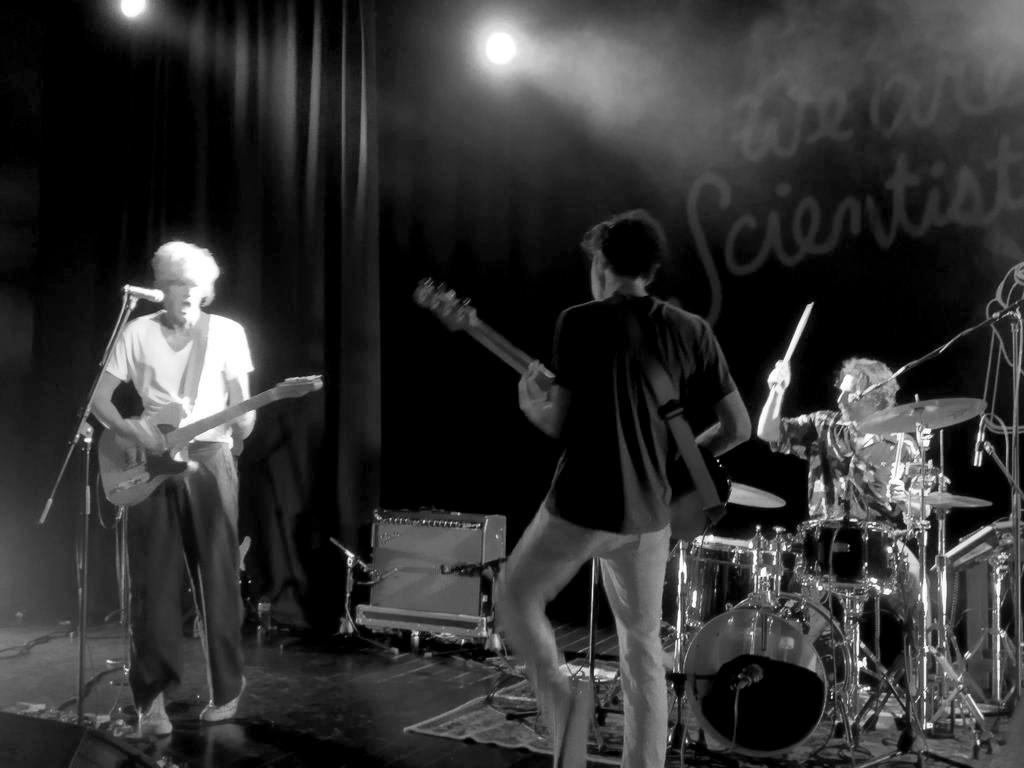
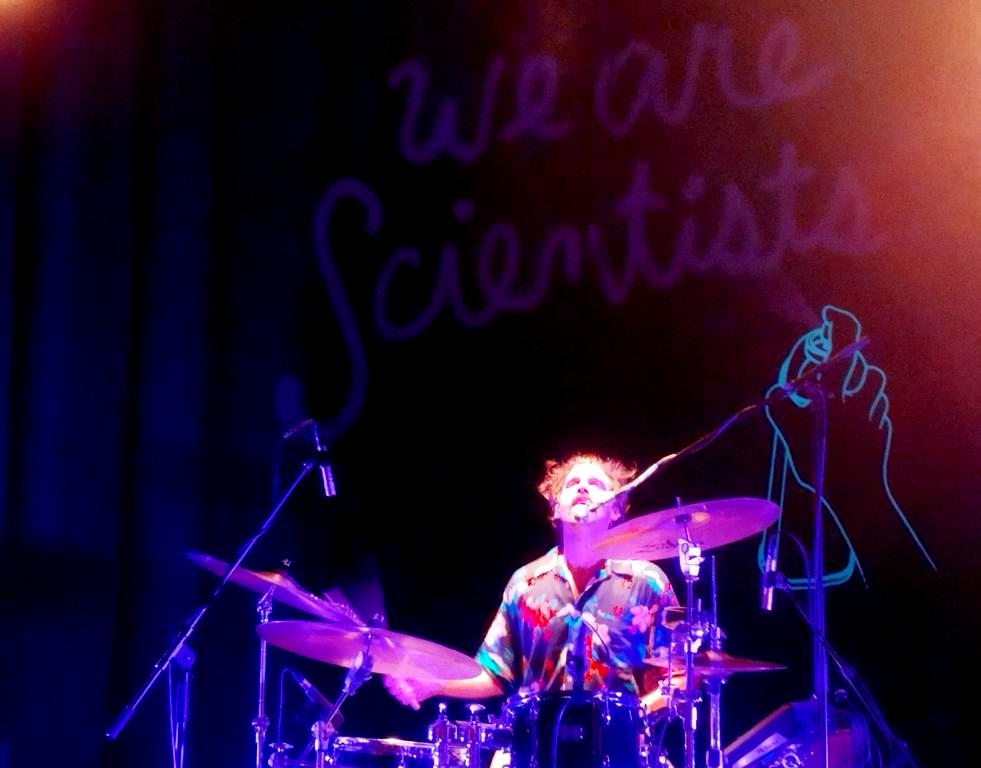
Many years went by after We Are Scientists auspicious debut album With Love And Squalor (2006) with the hit Nobody Moves, Nobody Gets Hurt. However, never reaching the success of some of their contemporary peers and, despite some albums with relative success, as time went by they lost relevance. That could be seen from the reduced human frame present at the auditorium last Wednesday night, highlighting the lost hype of yesteryear.
While having a drink and waiting for the band the doubt hovered … what would We Are Scientists had to offer in 2023?
The concert started lukewarm, but pleasantly, with a song from the new album Lobes (2023), Lucky Just To Be Here, in a way of welcoming the public from Porto who timidly approached the stage, followed by No Wait At Five Years and Contact High, more recent songs from the band’s portfolio. It was necessary to wait for the fourth song of the night to go back to the beginning of their career to listen to Great Escape, a song from their first album, which provoked quite enthusiastic reactions from the audience in theirs 30s and over, in a kind of nostalgia meeting. But, it was much more than that. From then onward it was a sequence of catchy indie songs with danceable and colorful post-punk tones, with Chris Cain’s pulsating groove basslines, the basis on which many of the band’s songs are based and which, together with Keith Murray’s guitar create excellent dynamics.
In addition to the musical sequence that oscillating between older and more recent songs, those more recent songs demonstrating the new material is very well achieved and works very well live, it was evident that more than musical and creative dynamics, the great chemistry between Chris and Keith who, between songs, did small “stand-up” sessions, in their very American way of speaking, playing and interacting with the audience, drawing reactions and smiles. Many of them animated Americans who danced and made the party and Chris thanked their presence, after thanking the Portuguese attending.
At a certain point, members of the audience offered them tonic ports because in one of those conversations between songs they praised the drink. Before the first stage exit came the band’s most successful song, Nobody Moves, Nobody Gets Hurt, which got everyone moving and singing along with the band. On the way back, they played four more songs with great energy making them move to the middle of the audience to dance – said energy delivered throughout the concert. A beautiful final stretch that dispelled any doubts that existed before the concert. We Are Scientists proved to be in excellent shape both in presence and performance, as well as creatively. A super competent and contagious concert in which the band revealed great delivery, despite the reduced audience. Clearly demonstrating that they haven’t lost the pleasure of playing and making music, even if they haven’t achieved great success. They deserved more.
words: Paulo Carmona (freely translated by Raquel Pinheiro); photos: Telma Mota
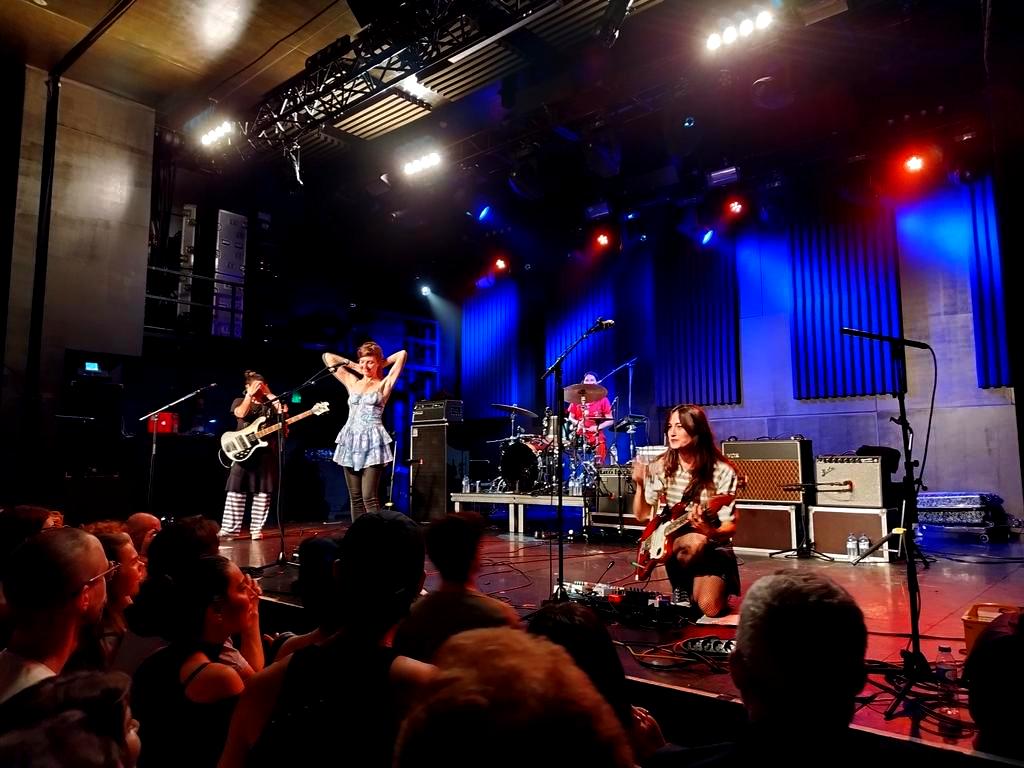
They are four. At times, when it comes to vocal harmonies, they seem like one. Other times they look like two blocks that complement each other perfectly. A rhythm section (bass and drums) and a melodic section (guitars and vocals). Bass and drums deeply mark Warpaint’s songs given their density. Jenny and Stella are cohesive and impose very interesting dynamics on the different tempos of the songs. Emily and Theresa, for their part, are extremely melodic on the guitars in which the notes are distinguished one by one in the beautiful harmonies created by the instruments. Perhaps it is here, in Warpaint’s songs that the so-called dream pop has its most striking expression, all else is indie rock’n’roll in its softest essence.
The Californian band presented at Hard Club an increasing setlist: Stars, Champion, Hips, Bees, Krimson, Undertow, New Song. All in that atmospheric nostalgia so characteristic of Warpaint, like a hand rocking the cradle. The audience enjoyed it and applauded to the point where the band members felt at home with it, which made them loose more and open up into jokes and games. A hand fan came out of a saving hand from the middle of the audience for Jenny to cool off. Soon after, she waved it at Stella’s face, who effusively thanked her for the gesture. The folks liked it, of course they did. How not to? It’s fun!
Warpaint returned to the stage after a highly requested and sweaty encore to treat the crowd to Without; Nudes and Beetles drewing a valiant ovation. There is no doubt that the girls have a remarkable following of fans that shows itself.
The only thing that spoiled the party a little bit was the sultry heat reigning inside the Hard Club’s room. Almost unbearable. The exit door looked like a mirage in the middle of the desert.
The night air brought us the expected relief and the cold liquid of a drink running down the throat did the rest. Everything a Friday Summer night needs. What else …
words: Paulo Carmona (freely translated by Raquel Pinheiro); photos: Paulo Carmona
One thing are jeans that have faded over time and ended teared up by using and time, another a pair of jeans artfully torn here and there, to look rough and the result of a lifetime’s chance. Handmade, of course … no mass manufactured product.
There you have it, perhaps the best analogy I can think of at the moment to explain what Dehd’s indie rock sounds like to me.
The Chicago band, formed in 2015, includes: Emily Kempf (bass, vocals), Jason Balla (vocals, guitar), and Eric McGrady (drums) – uses a very unique sound, characteristic of bands a la Madchester, with the dirt of the short delay guitars and the raw and galloping bass, alternating between melodic and fast riffs and then a nostalgic lull to calm the hordes Things we hear in Stone Roses, Happy Mondays, The Smiths and the likes and that Dehd do a little more dirty with hints of psychedelia, garage rock’n’roll and some modern times digital machinery.
Emily Kempf in the high tones and vocal vibrato reminds Siouxsie Sioux, but when she drags her voice and lowers it to low and dark notes, she is very close to a Brody Dalle, irreverent. She stays there between one and the other. All good people and good references, I think.
On the other hand, Jason Balla is an inexhaustible source of energy. He is delirious. The way he throws himself into every riff! It really seems that the strident sound of his guitar enters his body. A stage monster.
Eric McGrady is in his world. Super focused and competent, he marks the progress of the songs with a very funny, apparent, calm. It looks like it has nothing to do with him.
Between songs from their latest album (Blue Skies, 2022), such as Window, Stars, Bad Love and Palomino and older songs in which Nobody, Loner, and Desire stood out, Dehd feasted the audience at CCOP with a very pleasant and fluid set, never letting the environment go lukewarm.
In the end, the friendly and very affable Jason Balla fraternized with some of those present always with an open and very honest smile.
The night was very agreeable and I didn’t even need to tighten my vest. I went down the pavement rocked by the swing of a summer night. There’s more tomorrow!
words: Marcos Leal (freely translated by Raquel Pinheiro); photos: Telma Mota
As the time for the beginning of the concert by the band responsible for selling out Mouco Hotel’s room approached, the audience filled the room to the sound Homem em Catarse, Afonso Dorido’s solo project. Between guitar, keyboards and voice, the musician painted cinematic soundscapes, sometimes more contemplative to the piano, sometimes denser due to the distortion emanating from the guitar, a well served bridge to the performance of the main band of the night.
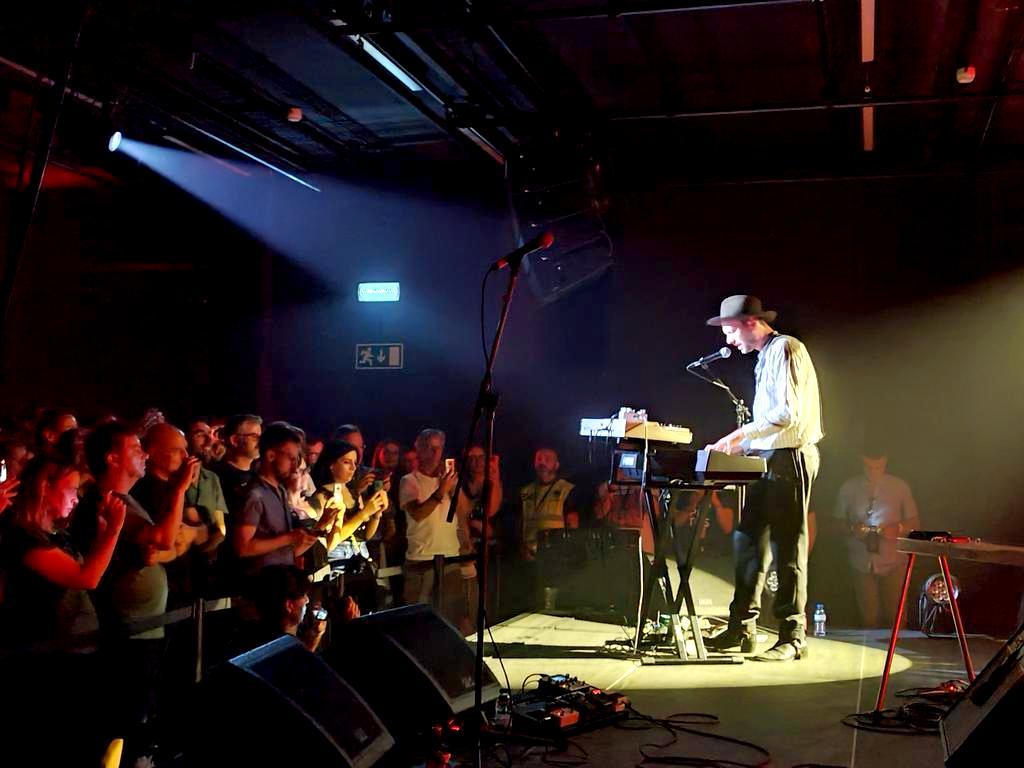
When the time arrived and under a round of applause, revealing the audience’s enthusiasm, The Veils took to the stage and start with Bullfighter. However, Finn Andrews did not appear dressed as a bullfighter, nor does he bring a bullfighting cape with him, which does not prevent him from “fighting” the audience with the mastery that only an experienced artist has. Finn brings with him his characteristic hat and a look that matches the way he gestures, like a preacher, to the sound of his songs.
Between the sacred and the profane, Finn explored some of the most important songs of The Veils’ career with particular emphasis on the recently released album … And Out Of The Void Came Love. The pace of the performance grew with more electric with songs like Here Comes The Dead, Not Yet, Low Lays the Devil and Nux Vomica that lead the audience to a bigger uproar in which Finn seemed to embody a certain Australian neighbour called Nick.
When the encore arrives, Finn returned alone to play two songs. One of which, Leavers Dance, requested by the audience, hasn’t been played live in about 15 years. Understandably, Finn plays it as best as he can without rehearsing, using the internet on his cell phone so he doesn’t get the lyrics wrong. It was a fun and empathetic moment that will remain in Finn’s memory and those attending.
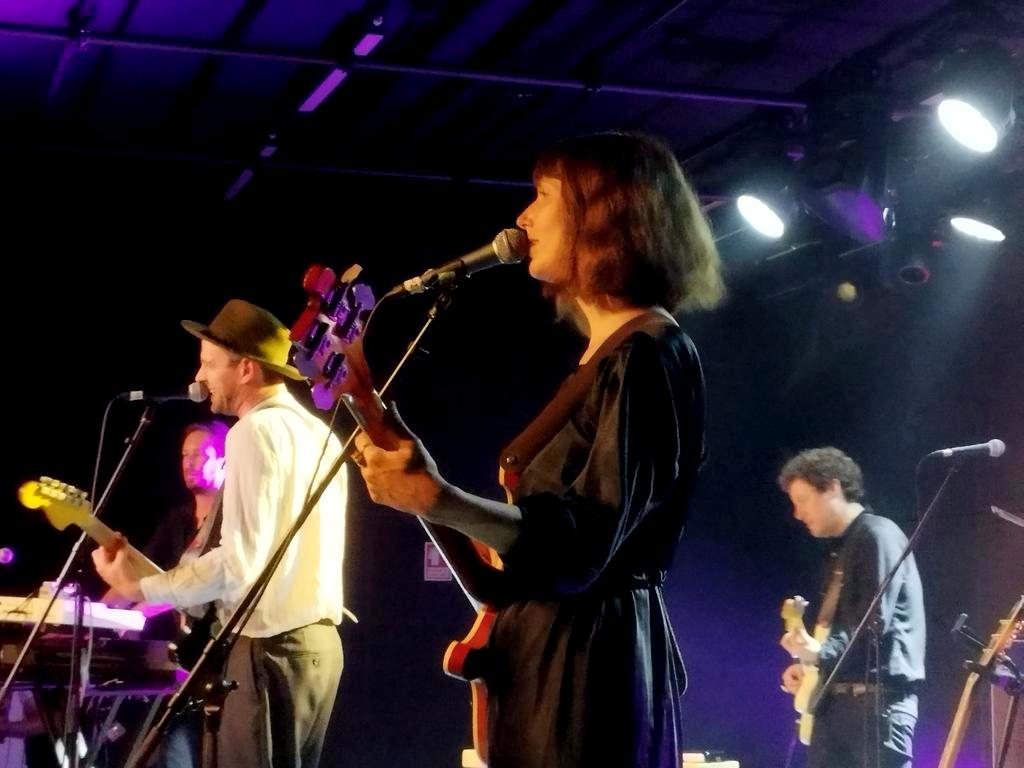
With the whole band back on stage an encore with three excellent songs, Someday My Love Will Find Me and Rings Of Saturn, from the latest album, and Jesus for the Jugular from the album Nux Vomica – one of the most striking song of The Veils’ career – in no way affected by broken strings. Therefore, the band – Finn Andrews (vocals, guitar, keyboards), Cass Basil (bass), Jo McCallum (drums), Tom Healy (slide guitar), Liam Gerrard (keyboards), Dave Khan (violin)-, said goodbye visibly pleased to have ended the tour in Porto where they were so well received by a room sold out promising a return.
text: Neno Costa (freely translated by Raquel Pinheiro); photos: Telma Mota
Actors drew the curtain on their European tour on the stage of Hard Club with a happy return that left no one disappointed. The Canadians, led by Jason Corbett toured the band’s discography for just over an hour, dividing the sound cake mostly between the songs from their latest album Acts Of Worship (2021) and the successful It Will Come To You (2018).
Actors on stage – Shannon Hemmett (keys, vocals), Jason Corbett (vocals, guitar), Adam Fink (drums) and Kendall Wooding (bass, vocals) – opened with Love U More (Acts Of Worship), a brilliant song where Shannon Hemmett’s voice (and keys) wobbled delightfully with Jason Corbett’s, evolving into an infectious rhythm that quickly embraced the room. There’s evolution in continuity – in relation to the two previous albums – with the band showing an enviable ability to conceive well-seasoned songs, energetic beats and pace, with fresh melodies sticking to the skin (or the shiny leather). Slaves, We Don’t Have To Dance, Strangers, How Deep Is The Hole (the song that ended the encore), among others, demonstrated the well filled collection of the best that is being done in the lands of post-punk, with Actors giving body to a vibrant and seamless show.
Os Actors encerraram a cortina da sua digressão europeia no palco do Hard Club, com um retorno feliz que não deixou ninguém desapontado. Os canadianos liderados por Jason Corbett percorreram a discografia da banda ao longo de pouco mais de uma hora, dividindo o bolo sonoro essencialmente entre as músicas do seu último álbum Acts Of Worship (2021) e o bem sucedido It Will Come To You (2018).
Actors em palco – Shannon Hemmett (teclas, voz), Jason Corbett (voz, guitarra), Adam Fink (bateria) e Kendall Wooding (baixo, voz) – para abertura com Love U More (Acts Of Worship), uma canção brilhante onde a voz (e teclas) de Shannon Hemmett pendulou deliciosamente com a de Jason Corbett, evoluindo num ritmo contagiante que rapidamente abraçou a sala. Há, em relação aos dois álbuns anteriores, evolução na continuidade, com a banda a revelar uma capacidade invejável de conceber músicas bem condimentadas, batidas enérgicas e compassadas, com melodias fresquinhas a colarem-se à pele (ou ao couro lustroso). Slaves, We Don’t Have To Dance, Strangers, How Deep Is The Hole (música que encerrou o encore), entre outras, atestaram o acervo bem recheado do melhor que se vai fazendo pelas terras do post-punk, com os Actors a darem corpo a um espectáculo vibrante e sem arestas.
P.S.: Espera-se o seu retorno para o próximo ano, com um novo álbum.
words: Paulo Carmona (freely translated by Raquel Pinheiro); photos: Paulo Carmona
A dusty dirt path, with no end in sight in the middle of nowhere, beaten by the sun, only attenuated by the brim of the hat and the green hills that invite us to stop near a creek of fresh water, for sure the soundtrack for such imaginary would pass through the songs of M. Ward.
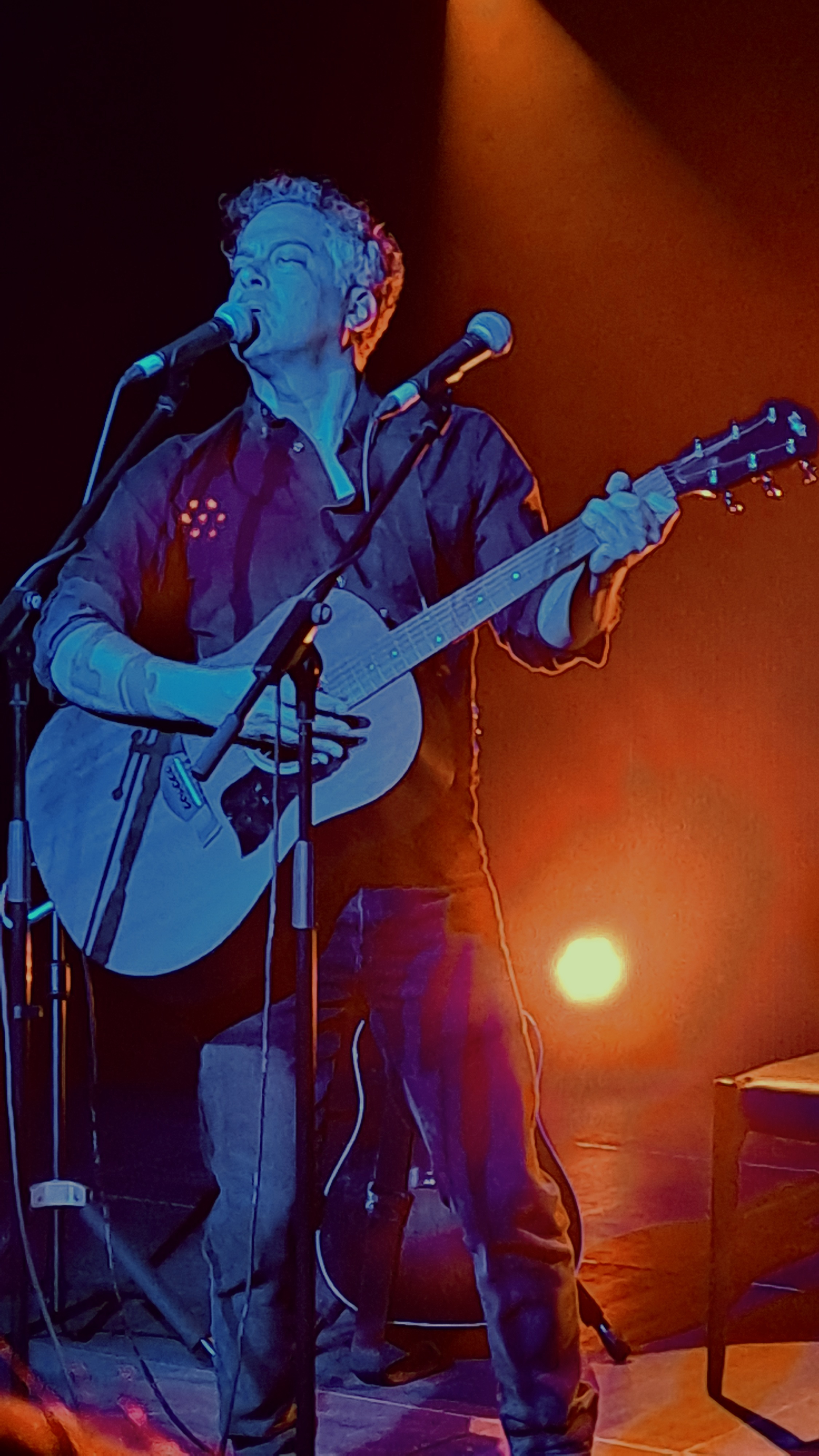
Last Saturday night, an instrumental guitar intro with electrifying strums between short solos and riffs steeped in folk blues was the motto presented on a plate by M. Ward to the audience present at Mouco.
With eyes always closed, now bending his body over the guitar, then appearing as an extension of his arm, the musician feels every note that serves us with arrangements of garish, warm and strong colours. No doubt if it were a bouquet of flowers, they would be wild.
He thanked each applause with tight crossed arms against his chest and a slight bow with a very well pronounced thank you.
If Chinese Translation brought that sweet and melodic joy with the guitar galloping under a simple voice, on the other hand, Supernatural Thing, in that swing mode of a summer night in a dream with the king of rock’n’roll, brought a huskier dragged with high falsettos and guitar solo, backed by a sequenced loop.
M. Ward uses the music’s spaces very well and the crescendos and diminuendos depending on the balance he wants to give it. A lot of talent and a lot of mastery, from someone who goes on stage alone and doesn’t let their set-line fall into monotony. Only someone very bold would risk a Bowie’s cover with just a guitar in his hands and a harmonica. Well, Ward did it and with great class, not only because of the making he gave to Let’s Dance, but because the approach he took to the theme is pleasing and does not discredit the original in any way.
During I’m a Fool to Want You, a couple in love danced in front of me in a “we’re alone among them” mode.
After two short encores he ends with Rollercoaster, very entertaining as is the music he leaves us with. Many well-deserved applause.
It’s raining outside, but not enough to put out the happy flame I carried in my pocket. There are nights like this.
Um caminho de terra batida poeirento, sem fim à vista no meio do nada, o sol a bater de frente, apenas atenuado pela borda do chapéu e colinas verdejantes que nos convidam a parar junto a um riacho de água fresca, e por certo que a banda sonora para este imaginário passaria pelas canções de M. Ward.
Um intro instrumental à guitarra com dedilhados eletrizantes entre solos curtos e riffs impregnados de blues folk foi o mote que M Ward apresentou de bandeja à audiência do Mouco que marcou presença no passado sábado à noite.
De olhos cerrados o tempo todo, ora debruçando o corpo sobre a viola, ora esta surgindo como um prolongamento do seu braço, o músico sente cada nota que nos serve com arranjos de cores garridas, quentes e fortes. Se fosse um bouquet de flores, seriam silvestres, sem dúvida.
Agradeceu cada aplauso com os braços em cruz apertados contra o peito e ligeira vénia com um obrigadíssimo muito bem pronunciado.
Se Chinese Translation trouxe aquela alegria docinha e melódica com a guitarra a galopar sob uma voz singela, já Supernatural Thing, naquele modo de swing de uma noite de verão num sonho com o rei do rock’n’roll, trouxe uma voz mais rouca e arrastada com falsetes altos e solo de guitarra apoiado num loop sequenciado.
M. Ward utiliza muito bem os espaços da música e os crescendos e diminuendos consoante o balanço que lhe quer dar. Muito talento e muita mestria, de quem vai para palco só e não deixa o seu set-line cair em monotonia. Só alguém muito ousado arriscaria uma cover de Bowie só com uma guitarra na mão e uma harmónica. Pois é, Ward fê-lo e com grande classe, não só pela roupagem que deu a Let’s Dance, mas porque a abordagem que fez ao tema agrada e não desprestigia em nada o original.
Em I’m a Fool to Want You , um casal apaixonado dança à minha frente em modo estamos sozinhos no meio destes todos.
Após dois encores curtos termina com Roallercoaster, muito divertido tal como a música com que nos deixa. Muitos aplausos e bem merecidos.
Cá fora chove, mas não o suficiente para apagar a chama alegre que trazia na algibeira. Há noites assim.
Um caminho de terra batida poeirento, sem fim à vista no meio do nada, o sol a bater de frente, apenas atenuado pela borda do chapéu e colinas verdejantes que nos convidam a parar junto a um riacho de água fresca, e por certo que a banda sonora para este imaginário passaria pelas canções de M. Ward.
Um intro instrumental à guitarra com dedilhados eletrizantes entre solos curtos e riffs impregnados de blues folk foi o mote que M Ward apresentou de bandeja à audiência do Mouco que marcou presença no passado sábado à noite.
De olhos cerrados o tempo todo, ora debruçando o corpo sobre a viola, ora esta surgindo como um prolongamento do seu braço, o músico sente cada nota que nos serve com arranjos de cores garridas, quentes e fortes. Se fosse um bouquet de flores, seriam silvestres, sem dúvida.
Agradeceu cada aplauso com os braços em cruz apertados contra o peito e ligeira vénia com um obrigadíssimo muito bem pronunciado.
Se Chinese Translation trouxe aquela alegria docinha e melódica com a guitarra a galopar sob uma voz singela, já Supernatural Thing, naquele modo de swing de uma noite de verão num sonho com o rei do rock’n’roll, trouxe uma voz mais rouca e arrastada com falsetes altos e solo de guitarra apoiado num loop sequenciado.
M. Ward utiliza muito bem os espaços da música e os crescendos e diminuendos consoante o balanço que lhe quer dar. Muito talento e muita mestria, de quem vai para palco só e não deixa o seu set-line cair em monotonia. Só alguém muito ousado arriscaria uma cover de Bowie só com uma guitarra na mão e uma harmónica. Pois é, Ward fê-lo e com grande classe, não só pela roupagem que deu a Let’s Dance, mas porque a abordagem que fez ao tema agrada e não desprestigia em nada o original.
Em I’m a Fool to Want You , um casal apaixonado dança à minha frente em modo estamos sozinhos no meio destes todos.
Após dois encores curtos termina com Roallercoaster, muito divertido tal como a música com que nos deixa. Muitos aplausos e bem merecidos.
Cá fora chove, mas não o suficiente para apagar a chama alegre que trazia na algibeira. Há noites assim.
words: Neno Costa (Freely Translated by Raquel Pinheiro); photos: Telma Mota
New York City based Californian sextet Chk Chk Chk (!!!) returned to Porto, bringing in their luggage, among other musical wanderings, their latest album Let It Be Blue (2022). Opening with This Is Pop 2, a manifesto for the pleasure of uncompromised and easily absorbed rhythms. The celebration of hedonism continued with A Little Bit, Panama, Bang … until culminating in one of the most interesting versions R.E.M.’s Man On The Moon, underlining the creative and irreverent drive of Chk!Chk!Chk!
Finely tuned dance music with funk guitars over a powerful and syncopated bass, samplers and synths, interwoven with the breadth and vocal power of Meah Pace and the grace and passion of Nic Offer several times oozing from the stage into the audience. Contagious rhythm, intense and fluid performance, groove of the best vintages and Chk Chk Chk embodied one of the best performances of this musical year.
O sexteto californiano, radicado em NY, Chk Chk Chk (!!!) retornou ao Porto trazendo o seu último álbum Let It Be Blue (2022) na bagagem, entre outras deambulações musicais. Abertura com This Is Pop 2, um manifesto ao prazer dos ritmos descomprometidos e de fácil absorção. A celebração do hedonismo prosseguiu com A Little Bit, Panama , Bang…até desembocar numa das versões mais interessantes de Man On The Moon, dos R.E.M., sublinhando a pulsão criativa e irreverente dos Chk!Chk!Chk!
Música de dança bem apurada, com guitarras funk sobre baixo potente e sincopado, samplers e sintetizadores, entretecidas com a amplitude e potência vocal de Meah Pace e a graça e a paixão de Nic Offer a escorrer do palco para o meio do público por diversas vezes. Ritmo contagiante, actuação intensa e fluida, groove das melhores colheitas, os Chk Chk Chk deram corpo a uma das melhores actuações deste ano musical.
On Thursday night Portuguese band Desert’s Smoke opened for the mythical The Obsessed. The room was still far from being filled, but those who attended got a good dose of powerful riffs and psychedelics in a formula that forced the audience to shake their heads, proving once again that they are one of the most interesting proposals within the Portuguese stoner and psychedelic rock world. Their concert, lasting about half an hour, was a good warm-up for the night’s headliners who strolled through the room, although some preferred to wait on the esplanade for the night’s main band.
When the time for the start of the concert arrived, The Obsessed entered the stage without delay, into an already better audience appointed room, but which, surprisingly, was not sold out, being the national debut of this historic American band with more than 40 years of career.
The Obsessed came back to be in 2016, with Scott ‘Wino’ Weinrich the only original and founding member of the band, currently accompanied by Brian Costantino on drums, Chris Angleberger on bass and Jason Taylor on rhythm guitar – band members later introduced during the concert – and Wino on vocals and guitar.
Those who went to see The Obsessed would not leave surprised, much less disappointed. The Obsessed delivered what was expected of them, old school doom metal, stoner rock and even upbeat rhythms of an almost punk rock nature that kept the audience in a growing frenzy until the end of the concert, presenting a good catalog of themes that explored the vast repertoire of the band from Maryland, United States, that even managed to present a couple of songs from a new album announced by the band to be released next year.
In the end, the band seems to have left satisfied with the visit to Porto stage, with Wino having said at one point that he was having a good time with Porto’s audience, who responded affirmatively and who, after the concert, rushed to the merch stand to support and salute the band.
words: Marcos Leal (editing by Raquel Pinheiro); photos: Marcos Leal
Tuesday, by the end of the day, mild temperature in the air and on arrival at CCOP it was made clear that the night was going to be warm, with people already crowding up in the street, at the entrance drinking a beer and smoking a cigarette before going up the stairs leading to the auditorium.
While waiting for Sessa and company to enter the Stage, a good part of the audience already present was waiting sitting on the floor, while others went to get a drink to refresh their bodies in an environment that was already guessing hot and that the large air conditioner on one side of the room could not be enough to soften, despite opening a clearing, such was the wind that came out of it.
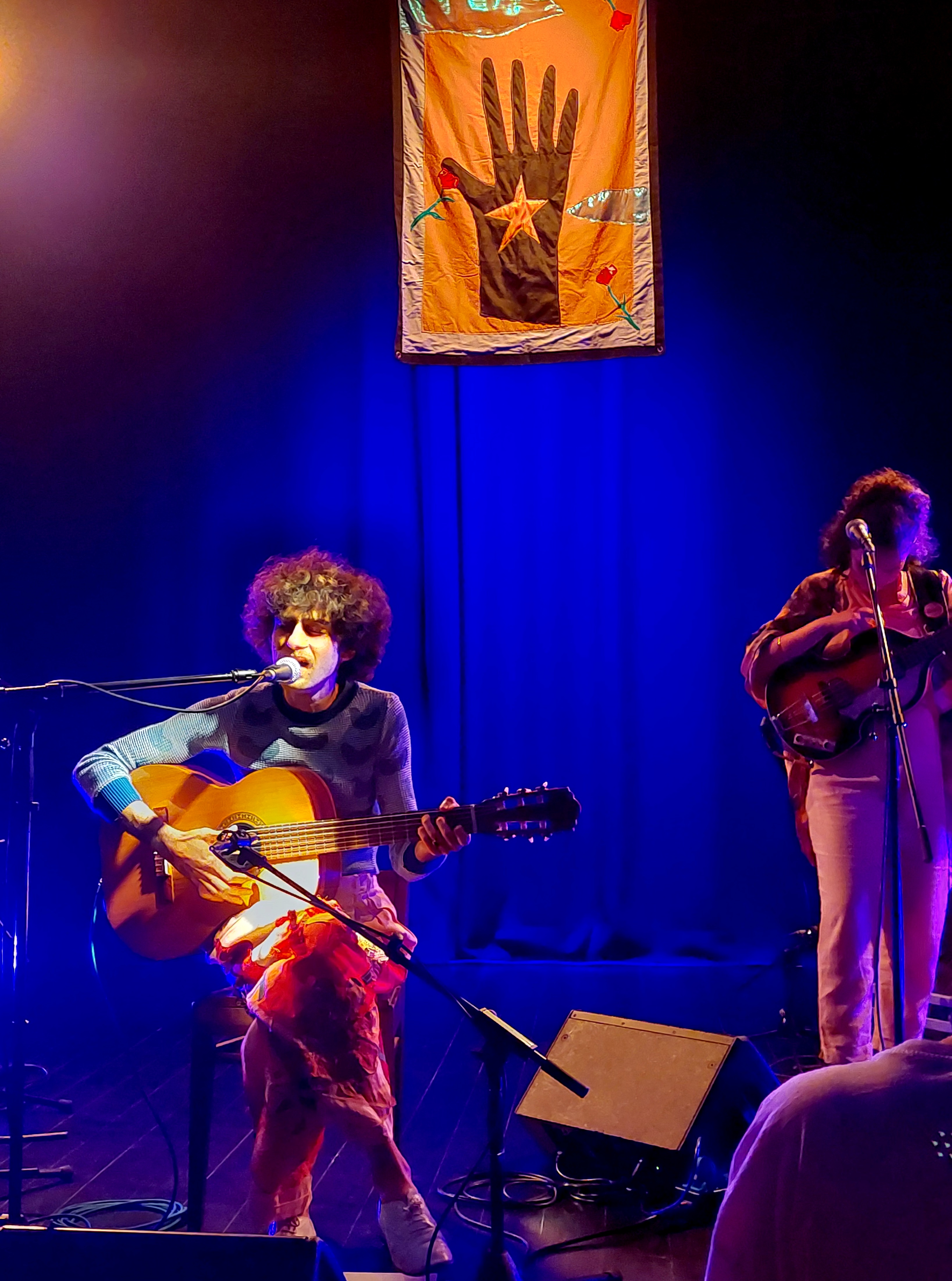
On stage, hanging from the ceiling, three pieces of rectangular fabric with images reminding the visual imagery of the 2022 album Estrela Acesa that Sessa is presenting on this tour.
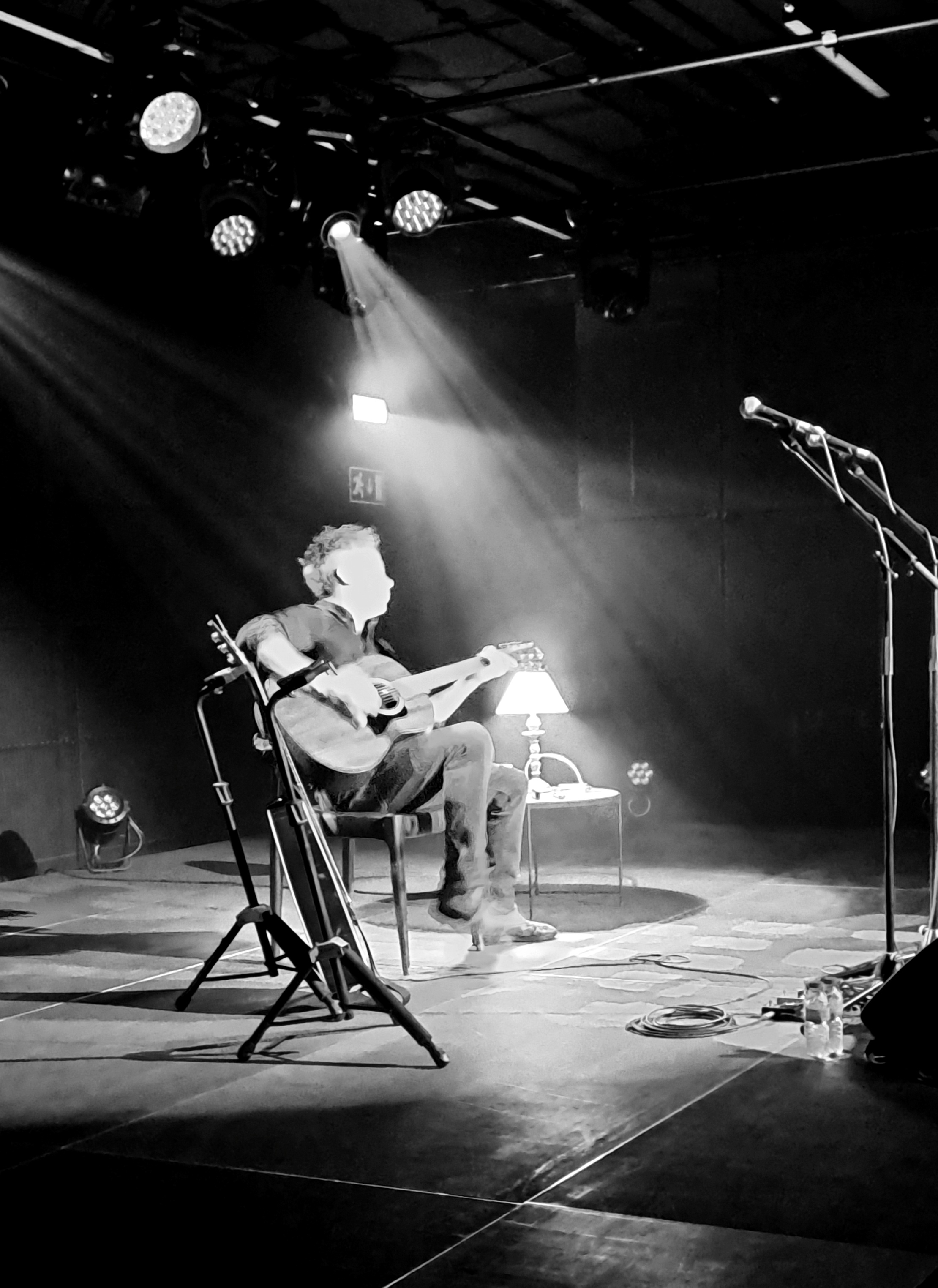
Announced the beginning of the concert by the usual voice recording, the public stands up and applauds the entrance of Sessa and company who take their places in the respective instruments. Sessa sits in the center on a small chair where he remained cross-legged with his guitar during the concert.
The first chords were for Estrela Acesa, the title song of Sessa’s new record. A serene start, as a large part of the concert would be. The sessa music breathes the sea and calm of the late summer afternoon, like a light breeze that, despite the heat in the room, refreshed the soul.
Sessa, Sergio Sayeg’s artistic name, of few words, but always with serenity and sweetness in the voice showing a certain naivety and timidity, highlighting how good it is to play in Portugal with an audience that shares the same language. As he spoke, smiles could be seen from the band and the audience and sighs could be heard between exclamations like “Oh…it’s so sweet…”, “Oh…it’s so cute…”.
After the third song Pele de Esfera, Sessa said the first words to thank and introduce the band that accompanies him on drums, acoustic bass and voice.The concert continued between songs from the two edited works, focusing on the last one, where the Brazilian musical heritage is notorious, from influencial artists like Caetano or Gal from the golden times of tropicália and pop soaked in samba that makes the bodies sway lightly, and with punctual moments of psychedelia .
At one point in the concert, Sessa alone on stage plays two cover songs ‘Quién te Viera’ by Eduardo Mateo and ‘Flor de Maracujá’ by João Donato, then returning to his repertoire with Dor Fodida.
The concert did not end without an encore with three songs Tanto, Língua Geral and Grandeza with which the band said goodbye with thanks, applause, smiles and the feeling of having lived a tender moment.
words: Neno Costa (freely translated by Raquel Pinheiro); photos: Telma Mota
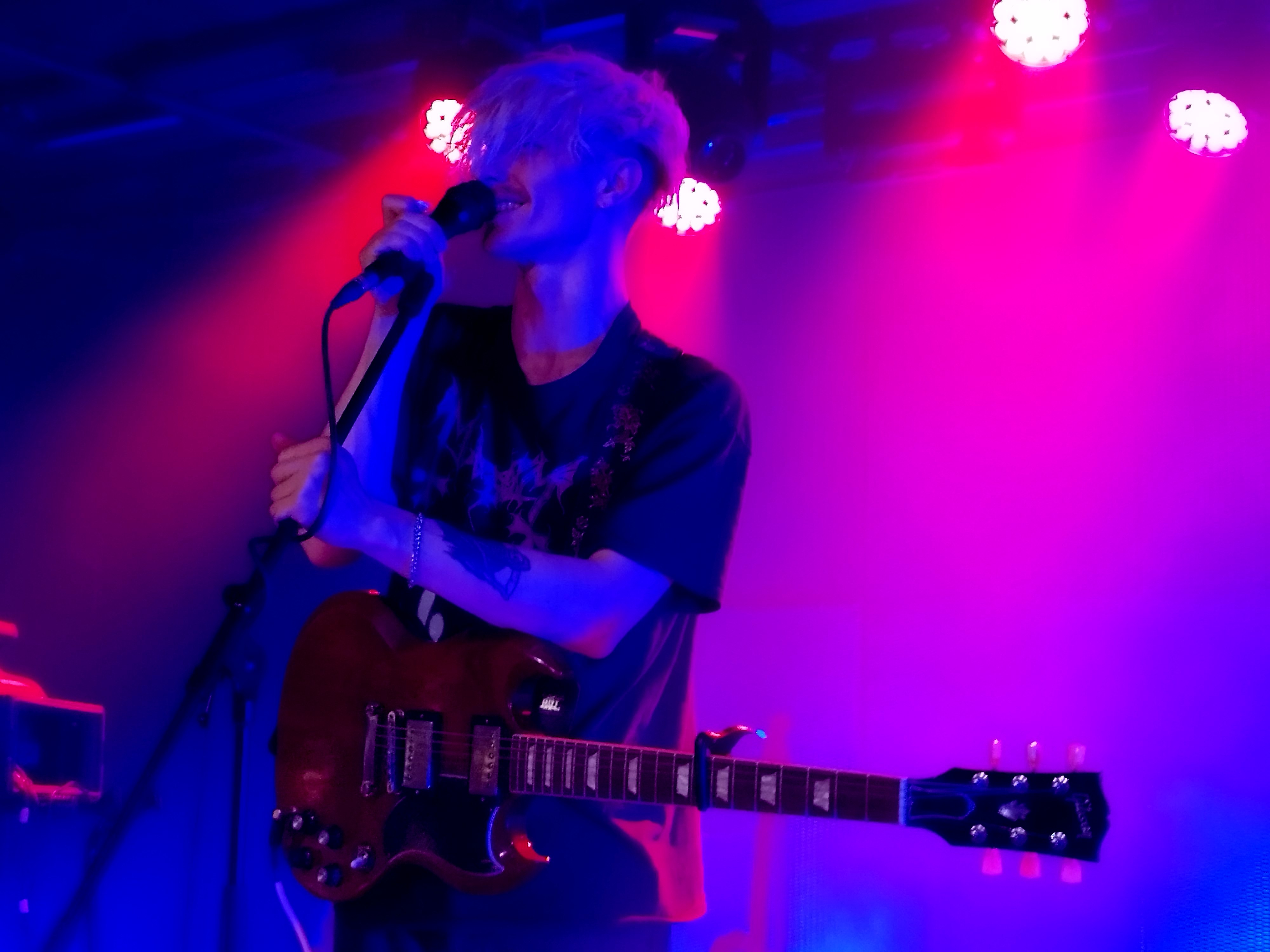
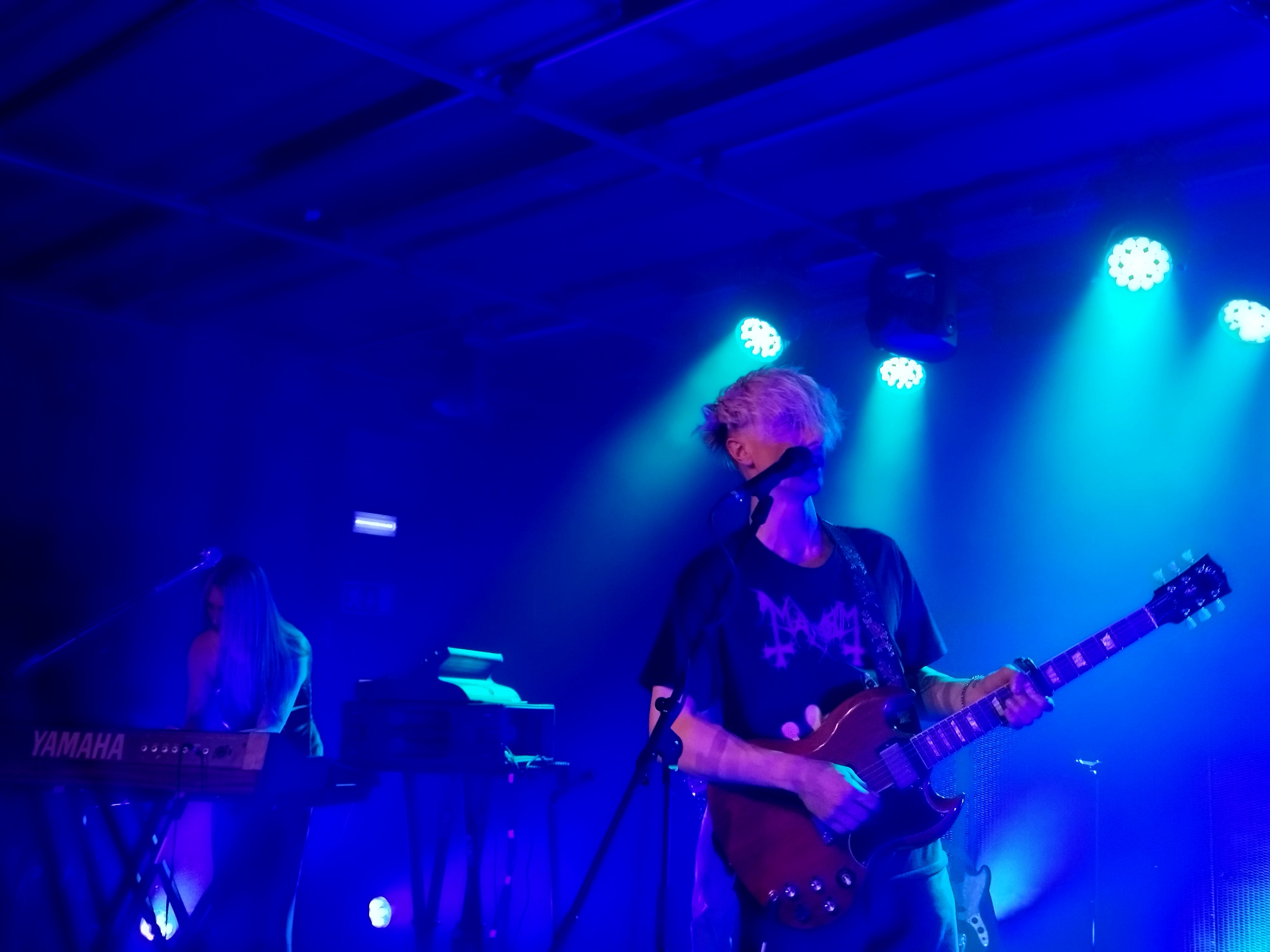
The Haunted Youth debuted in Porto, promoting mostly songs from their first album Dawn of the Freak (2022). At the first chords of Broken the landscape was populated with butterflies in the armpits and chewing gum on the hips celebrating a late adolescence that flew over the course of an hour, to the delight of the audience that rushed to M.O.U.C.O.
Haunted Youth’s music has the haunting success formulas with the guitars evolving into easily digestible melodic riffs, in a dream-pop affiliation that Joachim Liebens’ voice and Anne Smets’ keyboards accentuate, auguring an update of the menus of the nearest dance-floors. An example of the above was the song Gone, referring to a possible holiday soundtrack for a convertible. The Belgian quintet presented a cohesive, well-articulated and relaxed posture on stage, revealing mastery on the art of sound pastry, although stumbling upon a poor lyrical construction, which could be taken from the margins of a school notebook, sometimes in clear contrast with the melodic marzipan (e.g. Fell Like Shit).
All in all, a cute and delicious indie waiting for further maturation.
Os Haunted Youth fizeram a sua estreia no Porto, promovendo essencialmente músicas do seu primeiro álbum Dawn of the Freak (2022). Aos primeiros acordes de Broken, a paisagem povoou-se com borboletinhas nos sovacos e pastilha elástica nas ancas celebrando uma adolescência tardia, escorrendo ao longo de uma hora, para gáudio da assistência que acorreu ao M.O.U.C.O.
A música dos Haunted Youth tem a assombração das fórmulas de sucesso com as guitarras evoluindo em riffs melódicos de fácil digestão, numa filiação dream-pop que a voz de Joachim Liebens e as teclas de Anne Smets acentuam, augurando uma atualização das ementas das pistas de dança mais próximas. Exemplo do exposto foi a canção Gone, remetendo para uma possível banda sonora de férias para descapotável. O quinteto belga apresentou em palco uma postura coesa, bem articulada e descontraída, revelando domínio da arte da pastelaria sonora, embora tropeçando numa construção lírica pobre, que podia ser retirada das margens de um caderno escolar, por vezes em evidente contraste com o maçapão melódico (e.g. Fell Like Shit).
Feitas as contas, fica um indie fofinho e delicodoce à espera de melhor maturação.









 Mondo Bizarre Magazine