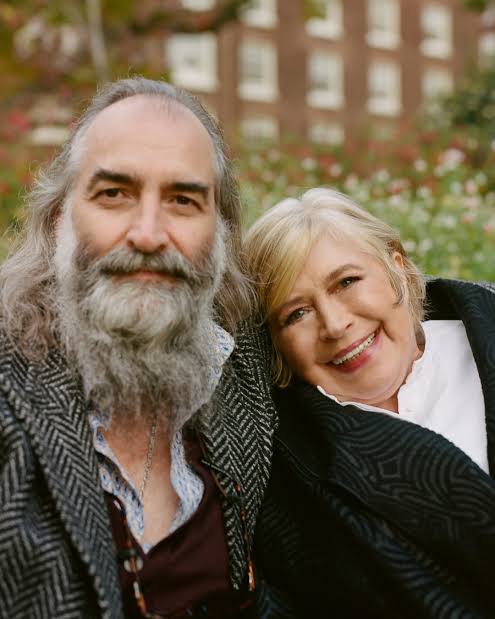
When Sadness Becomes Mortal – On the Death of Marjane Satrapi is a post on The Listening Room HQ – my men’s practice and The Polymath sister site – prompted by The death of artist Marjane Satrapi, said by those close to her to have followed a year of profound sadness after losing her husband, raises questions about grief, loss, the brain, and the hidden impact of sorrow on men’s lives. You can read it on The Listening Room HQ site: https://www.thelisteningroomhq.com/2026/06/when-sadness-becomes-mortal-on-death-of.html
words: Paulo Carmona (edited by Raquel Pinheiro) photos: Daniela Tedim
Ladies & Gentlemen — welcome to the celebration of sound.
I cannot remember attending a concert at the Porto Coliseum, and there have surely been well over fifty by now,with such outstanding sound. And this is precisely where I want to begin. Credit must be given to the entire team of musicians and technicians who allow us to experience music in its purest and most beautiful state.
Father John Misty appeared on stage in all his musical splendour, surrounded by musicians capable of performing at the very highest level of what I consider quality music.
What happened there was magic. It was moving, overwhelming, and capable of making the hairs stand up on the head of even a centenarian with no hair left to stand. Everything in that music was perceptible, everything was tangible, everything was everything.
A consummate performer, possessing the natural poise of his essence as a cult artist, he wandered across the stage like a siren whose song captivates the audience with a visceral diplomat’s passport.
With a set built around 21 songs from his already long career, which from the very first second sent the audience, who almost completely filled the Coliseum, into raptures, there was no shortage of favourites such as Mr Tillman, Chateau, Buddy’s Rendezvous, Mental Health, the joyfulness of Novel contrasting with the nostalgic introspection of Magic Mountain and the agonised, warlike energy of Payoff in flashes of rhythmic poetry. She Cleans Up, of course, and finally the magnificent Mahashmashana.
That scarlet red backdrop, the deep blue tones and the lighting did the rest, and everything was simply… just perfect!
Libby Heaney’s performance was part of Eat My Multiversepart of the Art + Tech x Cosmos programme of Escola das Artes of Universidade Católica Portuguesa, Porto’s campus.
It mixed a live performance combining quantum computing, virtual environments, sound, voice, movement, embodied ritual, and surprises.
Two things instantly drew me to Libby Heaney’s Eat My Multiverse performance: the word multiverse, and a photograph of Libby on Nibble My Multiverse, MU Hybrid Art House, Eindhoven (2026), taken by Hanekke Wetzer.
I work in multiverses. Whether through The Polymath, of which The Polymath is an expression, through The Listening Room HQ, my music, my poetry… It’s no wonder the word stood out as if it had been written in fluorescent pink.
We are in a secluded performance space. Some of us sit on chairs, others on cushions, others still on the floor, all facing a large screen like a canvas.
Someone claps their hands, like a cinema clapperboard. The lights dim.
Libby enters and positions herself in front of the centre of the screen, wearing a nude-toned suit.
Chapter 1 — Multiverse (put in bold)
“Feeding on a special… and stardust, my tissues kick under gravity,” she speaks.
A person moves through the performance space, walking around Libby with a digital torch. Its presence shifting attention across body and screen. Libby moves gently, almost dancing, her red hair catching the light. Her gestures are soft but precise, as if responding to both sound and image.
The screen behind her shows shifting visuals, loosely connected to her words. Movement and image begin to merge, slightly out of sync, slightly blurred.
Libby walks towards the right side of the space, moving closer to the audience.
Something is said about the speed of light.
A constant beating emerges, heart-like, insistent.
“Wake, chest, sleep, repeat…”
She continues moving along the right side, bending, contorting, her breathing becoming audible. Her voice softens into fatigue.
She returns towards the centre, now among the front rows of seated audience members. She keeps speaking throughout.
Head down. One leg lifted. Heavy breathing. A voice that begins to sound physically tired.
She pauses to drink water. Asks us how we are doing.
“How is my multiverse now?”
Libby asks if anyone would like to share their multiverse. “My multiverse likes participation.”
Someone eventually speaks, describing a spiral, hunger, and a sense of disorientation.
“My multiverse is disappointed.” She responds simply, almost candidly since she is not a stand-up comedian; she is not used to this, she says. Adding “We never know how an audience will respond. We have to try new things.”
Chapter 2 — Quantum
Libby opens a transparent box and takes out a viscous, slime-like material.
She begins to play with it, throw it to us, to distribute it among the audience. A small amount lands on my backpack. I gather it into a small sphere; it now sits inside Notebook 25 of my Morning Pages.
A metronomic sound underpins the space, repetitive, grounding, almost mechanical.
“2008 to 2013… cold clustering corridors…”
Now, Libby lies on her back on the floor, speaking and gesturing. The heartbeat returns.
She crawls, then stands. Screens flicker. Sounds fracture into squeals.
Chapter 3 — Digestion
We are asked to stand.
“If you would like to come up and place on my body however you want, come.”
For me, this moment feels more unfamiliar.
I remain seated.
A “light bearer” moves through the space, passing a torch across her body.
“I invite you to join me… let us touch our portals…”
Bodies, space, and attention begin to fold together in a shifting configuration. A heartbeat grows louder.
Libby is on the floor again. “Thank you.”, she says. And for now, for us, her multiverse ends.
We leave the black box, each back to their lives, their multiverses. Mine takes me to an ocean swim.
My radio show Amazing Songs & Other Delights #97 – The Of Sea & Cake edition is broadcasted Monday 1 and 8 June, 3-4pm (London time) on Yé Yé Radio: yeyeradio.com to (or on the app).
For some reason I had the programme title for a while. Probably, because of Sea and Cake, the band that opens and closes the show. Since I recently went ocean swim again and I like cake, it was a perfect match. Ideas and life catching and matching up.
The songs and instrumentals aren’t necessarily about cake, sweets, or the ocean, although enough are. Like Savoy Truffle written by George Harrison for The Beatles’ White Album is literally about chocolates, and was written for Eric Clapton and his love of said sweets. For The Of Sea & Cake edition I picked the live version Dhani Harrison singings his father’s song.
The Beach Boys’ Catch A Wave is another literal song, this time about the ocean and catching a wave to surf.
Tracklist: 01: The Sea and Cake – Four Corners 02: Dhani Harrison (Live at George Fest) – Savoy Truffle 03: Air – La Femme d’Argent 04: Queens Of The Stone Age – Monsters In The Parasol 05: The Beach Boys – Catch A Wave (Stereo/Remastered 2001) 06: Deerhoof – Milk Man 07: Cake – Distance 08: Stereolab – Lo Boob Oscillator 09: Brian Eno – By This River (2004 Digital Remaster) 10: Lupe Fiasco – Cake 11: Can – Vitamin C 12: Everything But The Girl – Temperamental 13: The Sea and Cake – Parasol
Full Moon in Sagittarius, May 31: The Difference Between Knowing and Participating the new post on The Polymath site speaks of on creativity, culture, astrology, symbolism, and exploring the space where knowledge becomes participation. It can be read here.
At the appointed hour, Pomadinha, a quartet from Vila Nova de Gaia, took to the stage at Mouco, all dressed only in boxers. For half an hour, they warmed up the audience with their energetic, predominantly instrumental rock, with some humor mixed in. But nothing prepared us for what was to come.
At 9:30 pm, a new quartet took to the stage, all with slight clownish makeup on their eyes.
Harry Wilkinson, the muscular, shirtless vocalist, immediately established a connection with the crowd, greeting some people in the front row and asking for space in the sold-out venue, creating a brief tension.
Although the rhythm section wasn’t very audible in the initial songs, that didn’t stop the crowd from responding, and the mosh pit exploded to the sound of Bloodsport. With a vocal style between rap and punk, Harry criticizes the social pressures on individuals over a sound that is very much the band’s modus operandi: alternating between intense and serene moments, in a dynamic tension/release, and an original blend of musical genres.
Joe Carroll’s alto saxophone is almost ubiquitous, accompanying the register, sometimes aggressive, sometimes contemplative, where jazz and rock meet. Trenches infuses hip hop into the structure, with the hypnotic saxophone mantra accompanying the incitement to war against bad traditions.
Break The Tension expresses the frustration of modern times over the relentless rhythmic pace of Matt Buonaccorsi and Jacob Hayes, which doesn’t allow the tension to break. Harry briefly descends into the audience and, upon returning, abandons his score of rapper gestures for a hypnotic undulation of his arms above his head.
The debut album, Pain To Power, released last year, is the main attraction, whose live versions are more extensive and turbocharged, but there was also room for older songs, such as Zeitgeist, where a post-punk pulse intertwines with words against large corporations, punctuated by some guitar distortion and saxophone oscillations. The guitar comes in with more force in Thunder, where the discourse intensifies in a crescendo, softens in the middle section and resumes the crescendo.
The beautiful and lengthy Born To Die, in which Harry’s initial spoken word gives way to a virtuoso and powerful vocal performance has various movements, where free jazz swirls noise rock, where vocals and saxophone get lost in arabesques, where a guitar solo is soaked, and where, in a moment of near silence, Joe shouts in the middle of the corridor created in the crowd, purging his and others’ demons through shouts, before climbing back to the stage and resuming the final stretch of the song, returning to the crowd in crowd surf mode.
This is followed by the equally beautiful Saoirse, a hymn to individuality in 3/4, in which the band closes in around the drums and expands physically and musically. Mental health and the need for connection were highlighted before The Invisible Man, and we were invited to hug the person closest to us.
In this song, melancholic beauty alternates with fury and incitement, the saxophone sounds urgent, ritualistic gestures hand in hand with chants, the syncopated rhythms and breaks of the drums create organized chaos, and the deep bass stirs the guts and agitates the bodies. The intense Look Down on Us is followed by Harry’s request to “raise your fists in solidarity and love,” something we gladly did for long seconds.
They ended the concert with the instrumental Resisting Resistance, a post-rock song with the landform of a hill to rest the ears but not the consciences. The people of Palestine (with a flag displayed on stage), Lebanon, Yemen, Ukraine, Sudan, and other conflict zones were not forgotten.
Harry highlighted at the end that this concert is a unique human experience of connection, and this communion was very palpable. Spontaneous hugs at the end between the band members reinforce this truth.
No matter how many words I put here, nothing would compare to the intensity of emotions in harmony during those couple of hours, nor to everything I witnessed. If you can, don’t miss the next opportunity to see Maruja.