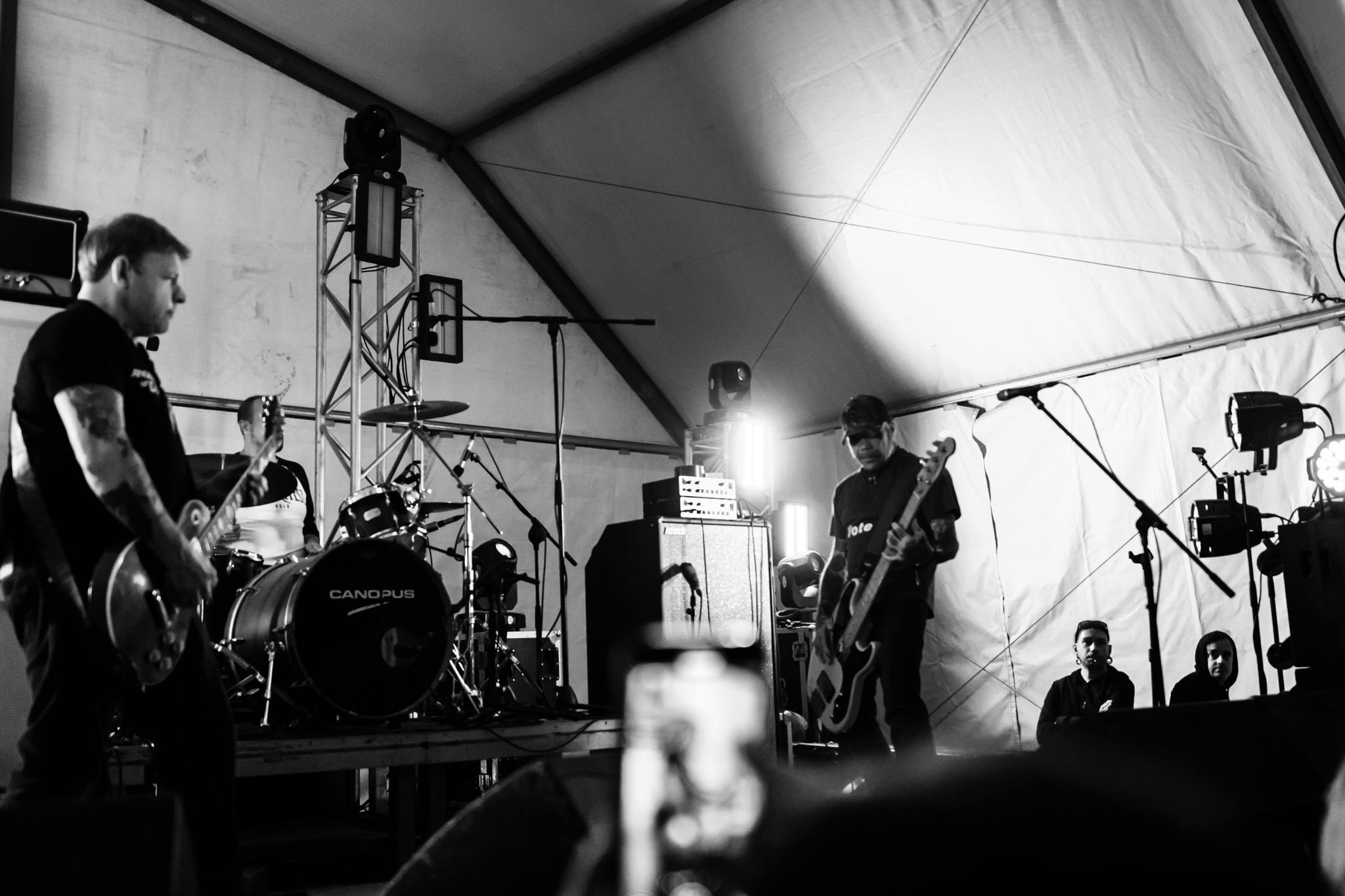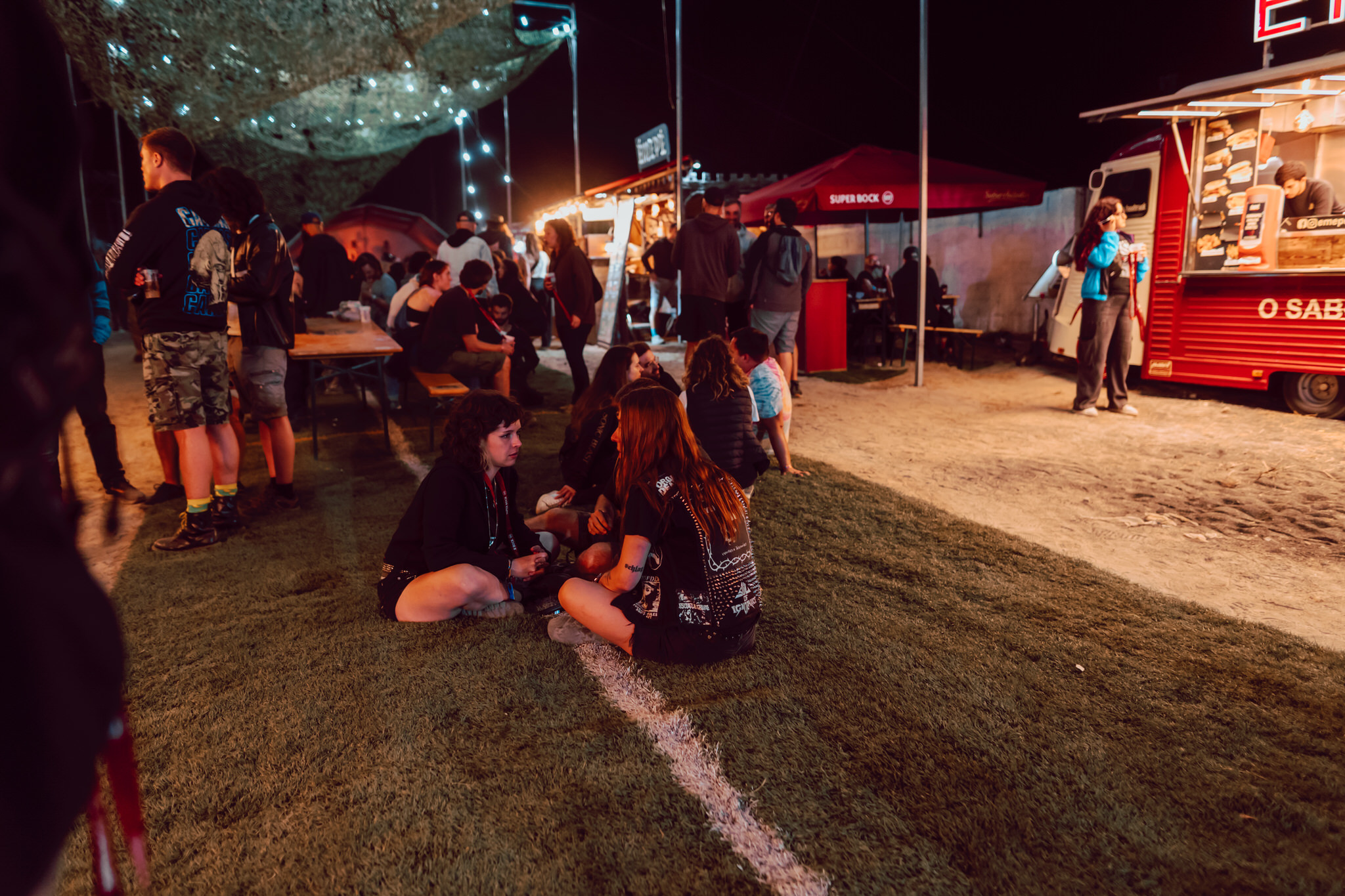
words: Paulo Carmona (edited by Raquel Pinheiro) photos: Daniela Tedim
Ladies & Gentlemen — welcome to the celebration of sound.
I cannot remember attending a concert at the Porto Coliseum, and there have surely been well over fifty by now,with such outstanding sound. And this is precisely where I want to begin. Credit must be given to the entire team of musicians and technicians who allow us to experience music in its purest and most beautiful state.
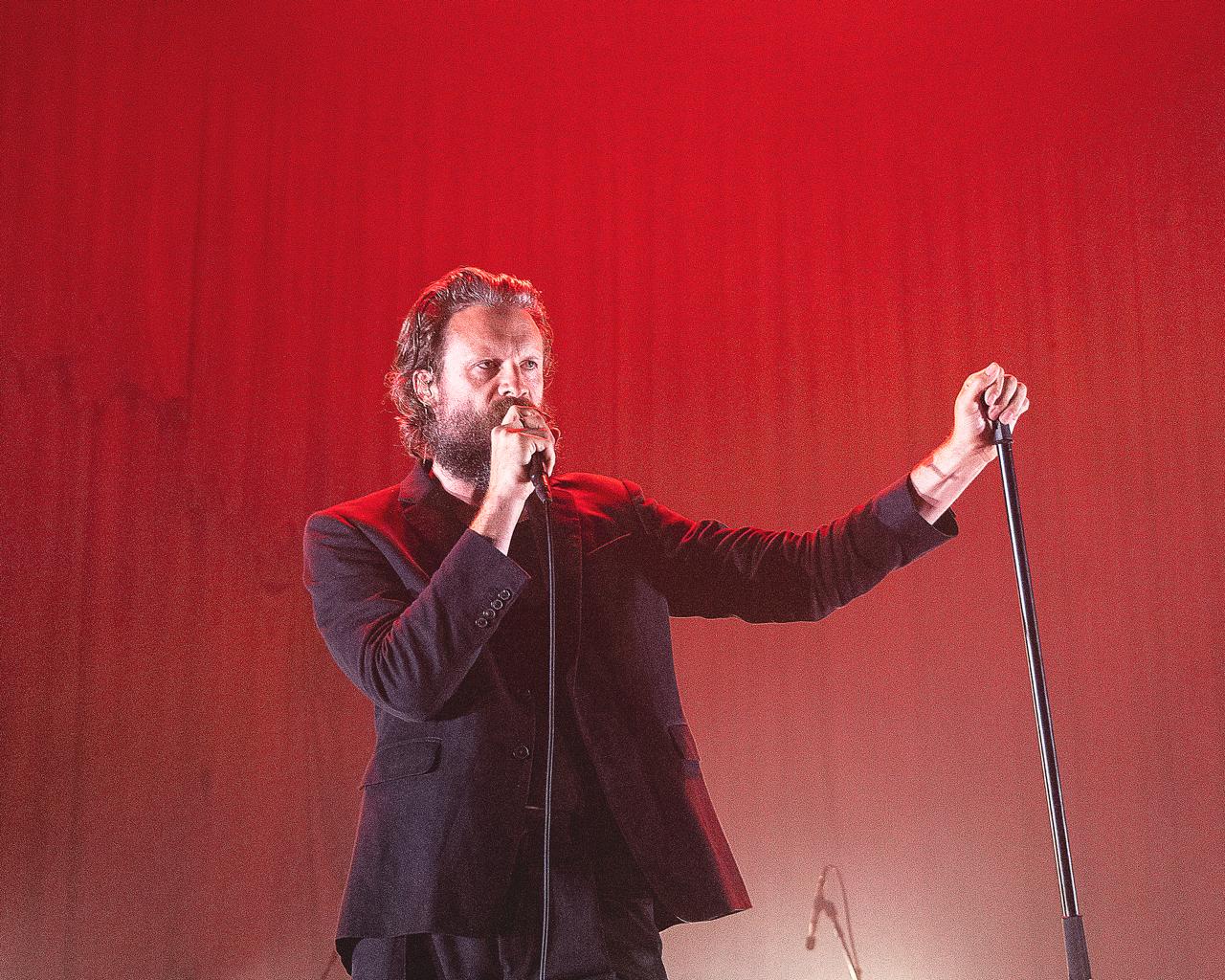
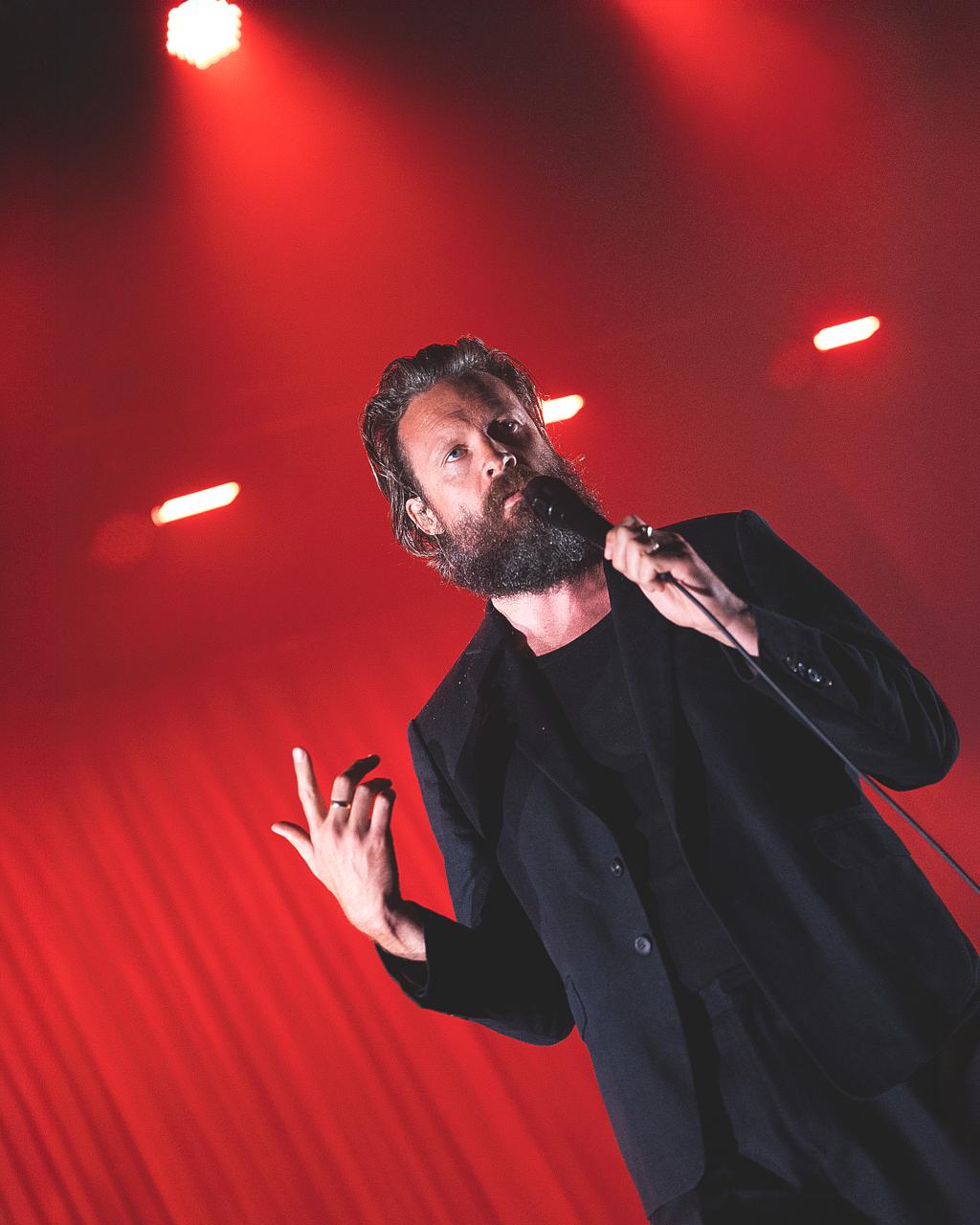
Father John Misty appeared on stage in all his musical splendour, surrounded by musicians capable of performing at the very highest level of what I consider quality music.
What happened there was magic. It was moving, overwhelming, and capable of making the hairs stand up on the head of even a centenarian with no hair left to stand. Everything in that music was perceptible, everything was tangible, everything was everything.
A consummate performer, possessing the natural poise of his essence as a cult artist, he wandered across the stage like a siren whose song captivates the audience with a visceral diplomat’s passport.
With a set built around 21 songs from his already long career, which from the very first second sent the audience, who almost completely filled the Coliseum, into raptures, there was no shortage of favourites such as Mr Tillman, Chateau, Buddy’s Rendezvous, Mental Health, the joyfulness of Novel contrasting with the nostalgic introspection of Magic Mountain and the agonised, warlike energy of Payoff in flashes of rhythmic poetry. She Cleans Up, of course, and finally the magnificent Mahashmashana.
That scarlet red backdrop, the deep blue tones and the lighting did the rest, and everything was simply… just perfect!
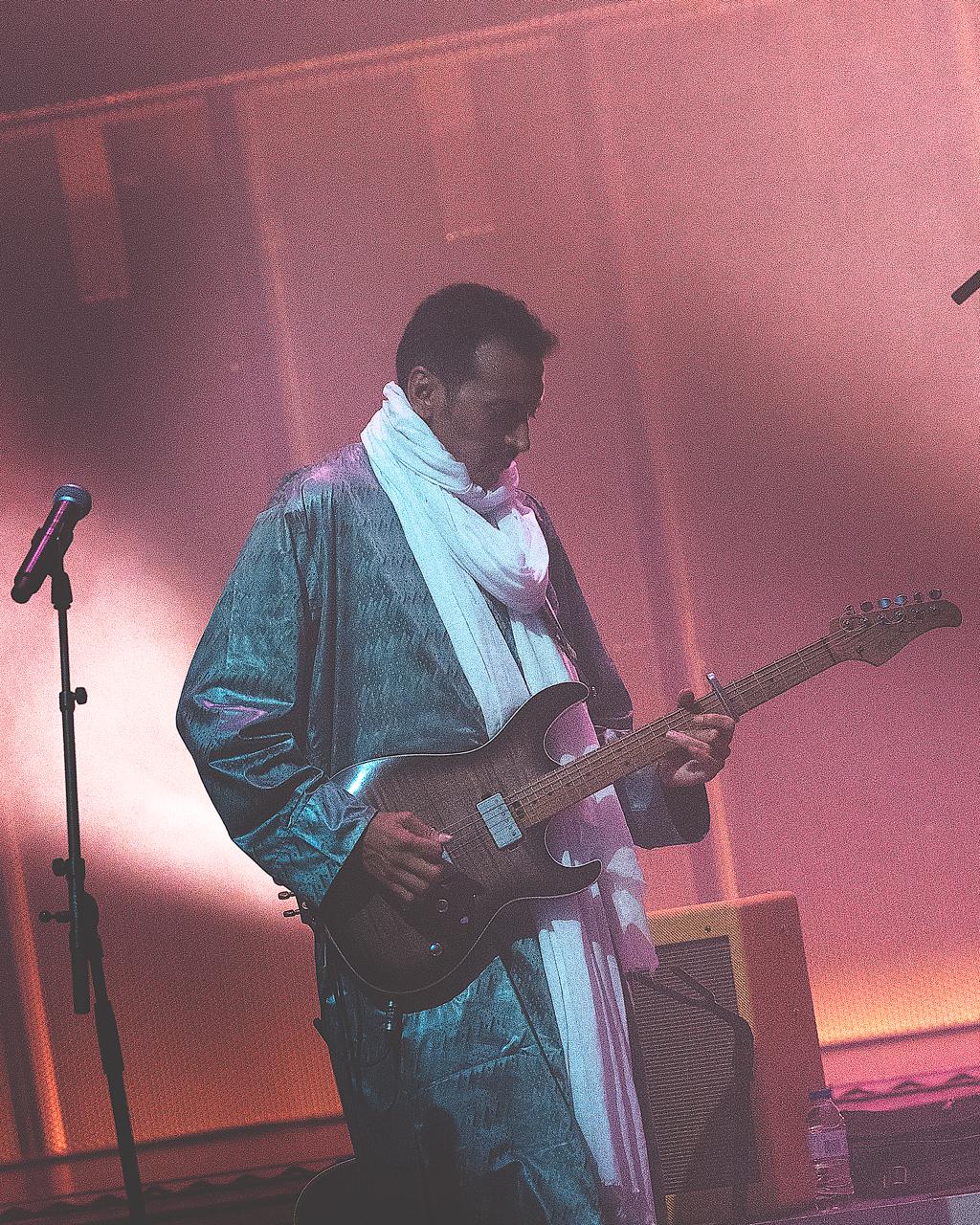
Presenting songs from his latest album, Sahel (2023), Bombino returned with the hypnotic blend of desert blues and rock that has made him one of the most distinctive guitarists of his generation.
Often described as a pioneer of Tuareggae, a fusion of traditional Berber rhythms and rock and roll, Bombino sings and writes primarily in Tamasheq. Watching him perform, however, labels quickly become secondary to the experience itself.
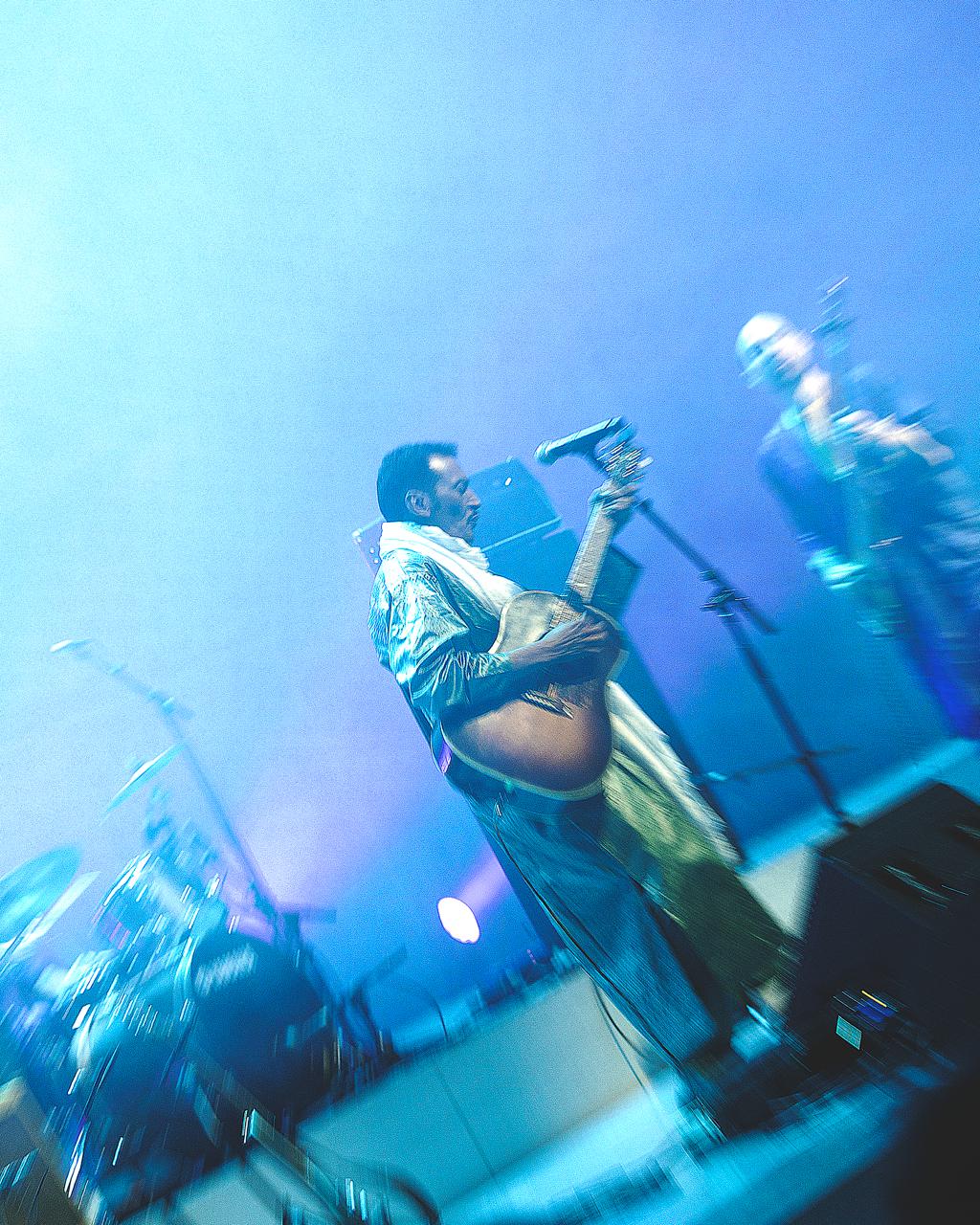
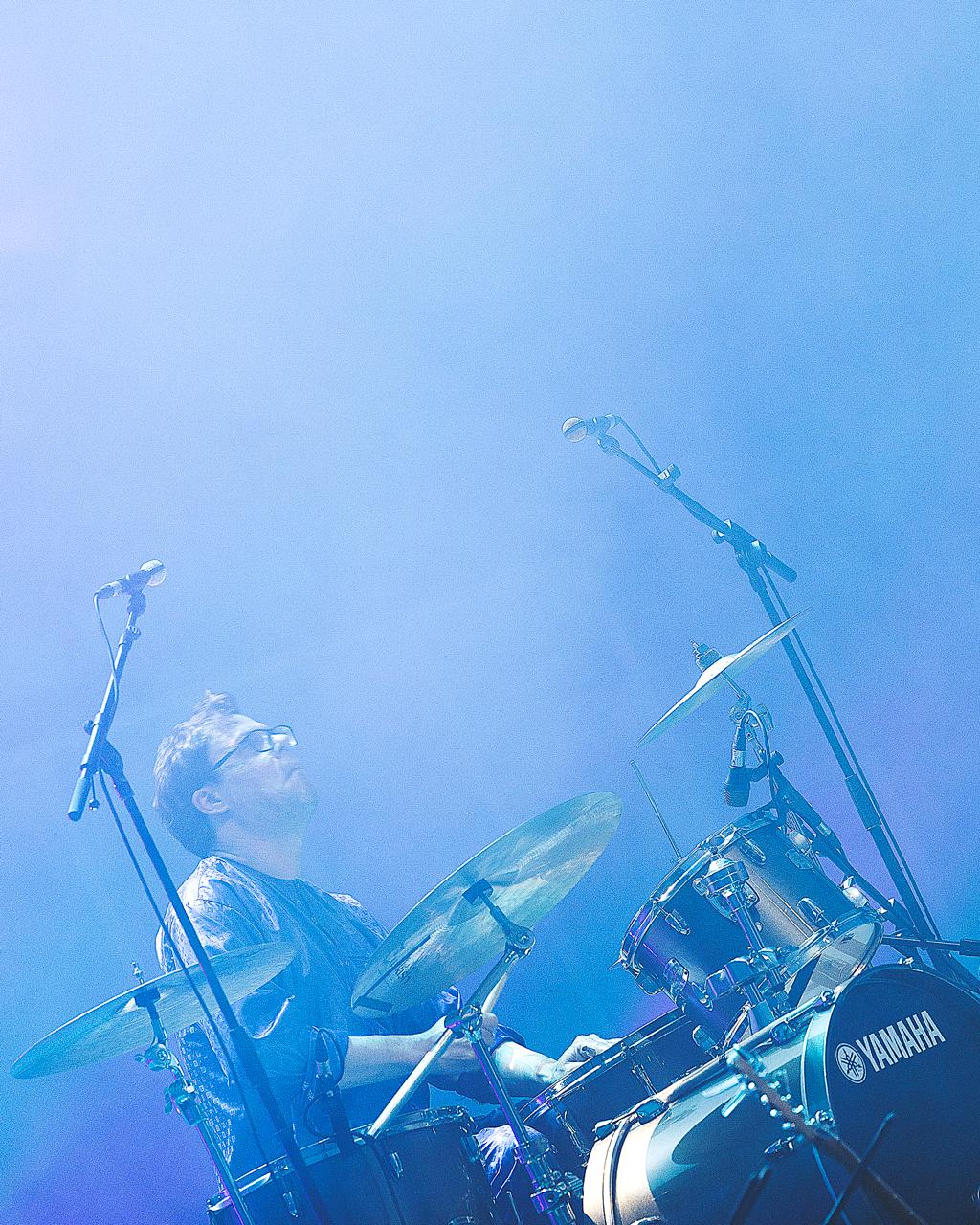
The concert began acoustically. Bombino, accompanied by drummer Corey Wilhelm and a bassist whose name sadly escaped me, eased the audience into the evening with gentle rhythms and fluid melodies. Dressed in traditional Tuareg garments, the trio immediately established an atmosphere that felt both intimate and expansive.
The first songs unfolded with graceful ease. The bass remained smooth and steady beneath Bombino’s singing, while the guitar moved between delicate flourishes and syncopated desert-blues patterns. There were occasional vocal exclamations, almost calls carried on the wind, and moments where the music shifted unexpectedly between melancholy and propulsion.
One particular acoustic number began like a lament, only to transform into something far more rhythmic. What fascinated me was the contrast between the apparent mournfulness of the voice and the increasing momentum generated by the guitar and percussion. It created a tension that felt both ancient and modern.
As the instrumental passages expanded, Bombino and the bassist repeatedly moved face to face, exchanging phrases with a distinctly rock-and-roll energy. The chemistry between them was one of the evening’s recurring pleasures, while Corey Wilhelm’s drumming provided a powerful foundation throughout.
Then came the transition that many in the audience had been waiting for.
The acoustic guitar was set aside and Bombino plugged in.
Instantly we entered the territory for which he is best known: electric desert blues infused with the spirit of Hendrix.
Bombino has often spoken about learning guitar by watching videos of Jimi Hendrix and Dire Straits, and while the influence is present, what emerges is unmistakably his own voice. The economy of movement is remarkable. There are no unnecessary gestures, no theatrical flourishes. The hands move sparingly, yet the sound that emerges is immense.
Addressing the audience in French, Bombino thanked everyone for their support and spoke about the years since his previous visit. The response from the crowd was warm and immediate.
From there the concert steadily gathered momentum. Traditional melodies intertwined with psychedelic textures. Guitar and bass once again found themselves in conversation, sometimes duelling, sometimes dancing around one another. The bassist was extraordinary. More than once I found myself writing the same note in my notebook: “that bass, that bass, that bass.”
One particularly exhilarating piece felt almost like a desert cavalcade. The bass groove was irresistibly danceable, the drums drove relentlessly forward, and Bombino’s guitar soared above it all with long, electrifying solos that somehow felt both effortless and deeply rooted.
As the evening progressed, the audience became increasingly animated. The bassist joked in English that he knew everyone wanted to dance and apologised for the chairs. It was a fair observation. Before long people were standing, moving and swaying wherever space allowed.
I eventually joined those dancing along the upper steps at the side of the auditorium. Down by the stage, one audience member repeatedly appeared, danced enthusiastically and then disappeared again, becoming a small performance within the performance.
The later part of the set moved through a variety of moods. There were moments of traditional singing, extended instrumental passages, slower and almost jazzy sections, and long stretches where the audience clapped along with the rhythm section while Bombino explored melodic pathways on guitar.
One of the final highlights featured a wonderfully grooving drum solo followed by an equally captivating bass feature. Bombino stepped back, danced, and allowed his bandmates to take centre stage before all three musicians returned to a hypnotic, almost primeval groove that felt as though it had emerged directly from the desert itself.
For the encore, Bombino returned alone. Guitar in hand, he began with a solitary groove and a series of twanging phrases before the bassist and drummer gradually rejoined him. It was a fitting ending: a reminder that, whether acoustic or electric, intimate or expansive, Bombino’s music ultimately rests on the power of rhythm, groove and connection.
Desert blues may be the term most often attached to his music, but on this evening it often felt just as much like a rock concert. Not because it abandoned its roots, but because it embraced them with such confidence that they could converse effortlessly with Hendrix, psychedelia, groove and pure rock-and-roll energy.
And judging by the number of people dancing by the end, the audience understood that perfectly.
Libby Heaney’s performance was part of Eat My Multiversepart of the Art + Tech x Cosmos programme of Escola das Artes of Universidade Católica Portuguesa, Porto’s campus.
It mixed a live performance combining quantum computing, virtual environments, sound, voice, movement, embodied ritual, and surprises.
Two things instantly drew me to Libby Heaney’s Eat My Multiverse performance: the word multiverse, and a photograph of Libby on Nibble My Multiverse, MU Hybrid Art House, Eindhoven (2026), taken by Hanekke Wetzer.
I work in multiverses. Whether through The Polymath, of which The Polymath is an expression, through The Listening Room HQ, my music, my poetry… It’s no wonder the word stood out as if it had been written in fluorescent pink.
We are in a secluded performance space. Some of us sit on chairs, others on cushions, others still on the floor, all facing a large screen like a canvas.
Someone claps their hands, like a cinema clapperboard. The lights dim.
Libby enters and positions herself in front of the centre of the screen, wearing a nude-toned suit.
Chapter 1 — Multiverse (put in bold)
“Feeding on a special… and stardust, my tissues kick under gravity,” she speaks.
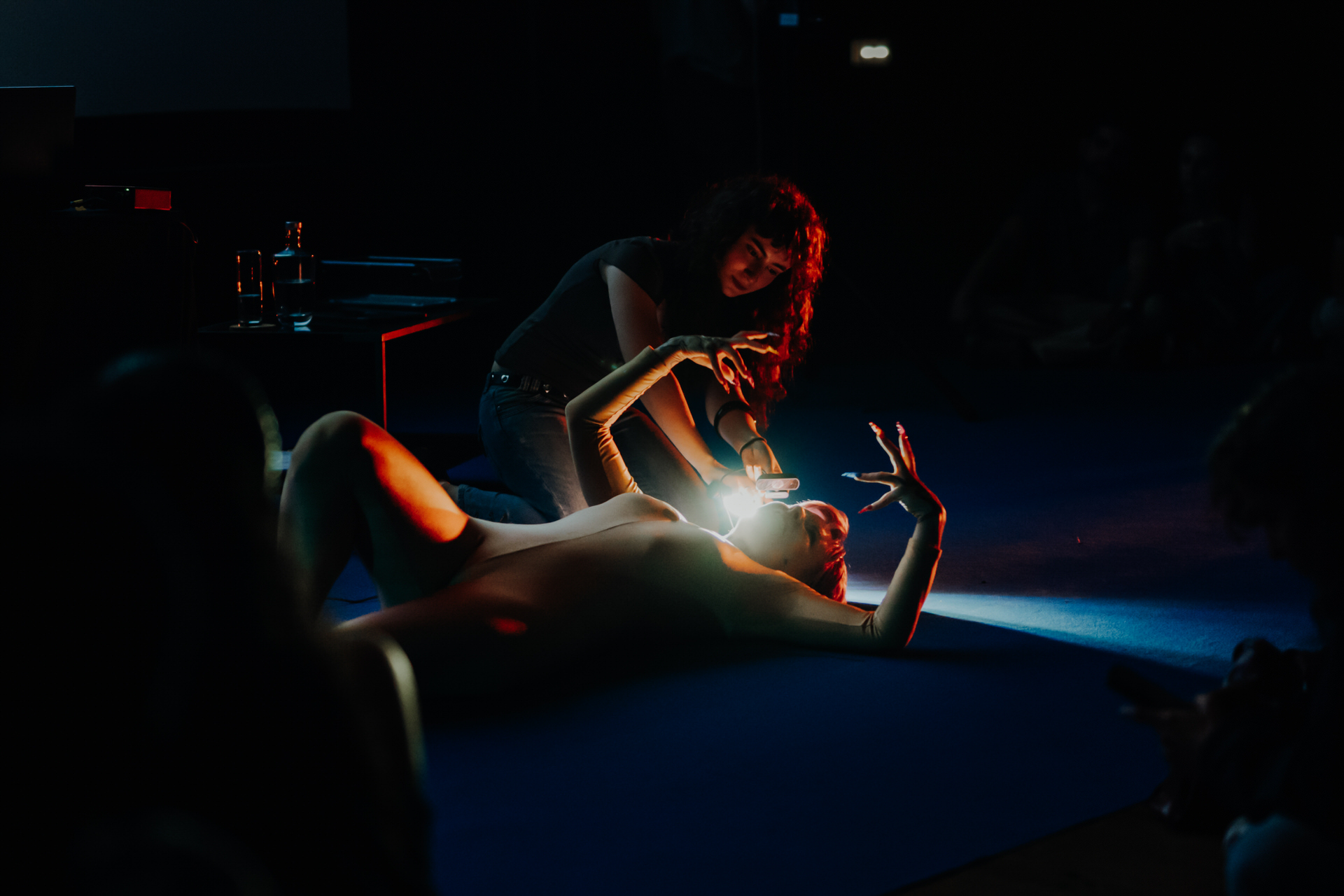
A person moves through the performance space, walking around Libby with a digital torch. Its presence shifting attention across body and screen. Libby moves gently, almost dancing, her red hair catching the light. Her gestures are soft but precise, as if responding to both sound and image.
The screen behind her shows shifting visuals, loosely connected to her words. Movement and image begin to merge, slightly out of sync, slightly blurred.
Libby walks towards the right side of the space, moving closer to the audience.
Something is said about the speed of light.
A constant beating emerges, heart-like, insistent.
“Wake, chest, sleep, repeat…”
She continues moving along the right side, bending, contorting, her breathing becoming audible. Her voice softens into fatigue.
She returns towards the centre, now among the front rows of seated audience members. She keeps speaking throughout.
Head down. One leg lifted. Heavy breathing. A voice that begins to sound physically tired.
She pauses to drink water. Asks us how we are doing.
“How is my multiverse now?”
Libby asks if anyone would like to share their multiverse. “My multiverse likes participation.”
Someone eventually speaks, describing a spiral, hunger, and a sense of disorientation.
“My multiverse is disappointed.” She responds simply, almost candidly since she is not a stand-up comedian; she is not used to this, she says. Adding “We never know how an audience will respond. We have to try new things.”
Chapter 2 — Quantum
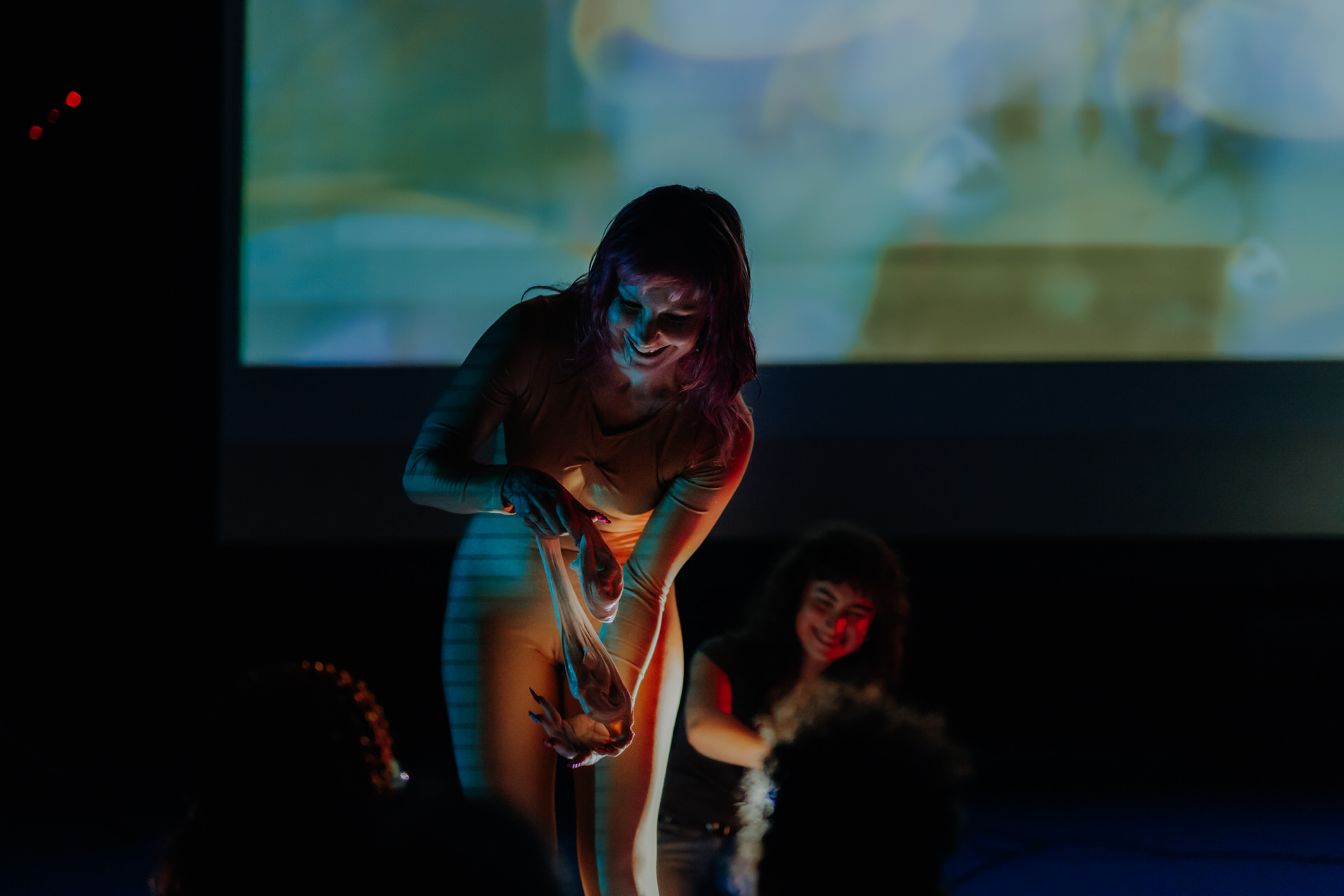
Libby opens a transparent box and takes out a viscous, slime-like material.
She begins to play with it, throw it to us, to distribute it among the audience. A small amount lands on my backpack. I gather it into a small sphere; it now sits inside Notebook 25 of my Morning Pages.
A metronomic sound underpins the space, repetitive, grounding, almost mechanical.
“2008 to 2013… cold clustering corridors…”
Now, Libby lies on her back on the floor, speaking and gesturing. The heartbeat returns.
She crawls, then stands. Screens flicker. Sounds fracture into squeals.
Chapter 3 — Digestion
We are asked to stand.
“If you would like to come up and place on my body however you want, come.”
For me, this moment feels more unfamiliar.
I remain seated.
A “light bearer” moves through the space, passing a torch across her body.
“I invite you to join me… let us touch our portals…”
Bodies, space, and attention begin to fold together in a shifting configuration. A heartbeat grows louder.
Libby is on the floor again. “Thank you.”, she says. And for now, for us, her multiverse ends.
We leave the black box, each back to their lives, their multiverses. Mine takes me to an ocean swim.
My best of 2024 are records, concerts, a book and an exhibition that filled my soul, touched me, or left a strong impression. Art forms that early this year still resonate, and remain close to my heart.
In late April 2024 I wrote an essay with Deep Emotions, a single from Good Grief, Bernard Butler third solo album and his first in 25 years as starting point. It was my second essay for Mondo. Along with, earlier in 2024, the listening parties of Rafael Toral’s Spectral Evolution it was the beginning of marvels, emotional perils and tribulations, and new paths.
The albums by Rafael and Bernard are healing records. Basalto merges melancholia, drama, romanticism. Vini Reilly is a Record Store Day re-issue of the 1989 album by Durutti Column. If there is a musician, composer, guitarist that has been with me since I’m a kid and has an influence how I see, approach, the electric guitar, Vini Reilly is him. I become aware of Ned Swarbrick when Bernard made a shout-out for support acts, and I liked Ned’s music. His ep has been a constant since.
As the Universe would have it, in 2024 Bernard played in Portugal for the first time, solo or otherwise. It was an amazing concert. 2024 was also the year of Old Jerusalem’s last concert. Old Jerusalem and Francisco Silva, the man behind it, have been part of Mondo’s favourites for decades. Francisco also begun being part of mine, in a different capacity, in 2022 when we wrote our first song together. Old Jerusalem last concert was intimate, poignant, a gathering of friends.
Records: Bernard Butler – Good Grief (355 Recordings) Rafael Toral – Spectral Evolution (Moikai/Drag City Records) Basalto – Blunt Knives (self-release) The Durutti Column – Vini Reilly (rsd2024) Ned Swarbrick – Michelangelo EP (self-release)
words: Raquel Pinheiro; photos: João Octávio Peixoto/TMP
We’re literally seated, in the dark, in the Rivoli’s underbelly. My old friend Rafael Toral is presenting his new album Spectral Evolution. Spectral Evolution is a single continuous instrumental track. The concert follows the same format.
“There are already too many ruptures in the world, I’m more commited in peace, integration, healing, reconciliation, and this record assumes it.” said Rafael, on an interview, about Spectral Evolution. I wholeheartedly concur with him.
Spectral Evolution, one of my three favourite records of 2024 so far, does have an healing, a come together effect. It’s brings forward emotions, release, serenity.
Here, live, at least where I was seated, for me that was a little disturbed by the sound in itself. It’s part of the nature and the beauty of live music.
I’m not going into technical details or guitar approaches, many of which I’m not even sure or fully aware of. I’ll go with sensations, emotions, a report of how the sound and music reached me, what I made of it.
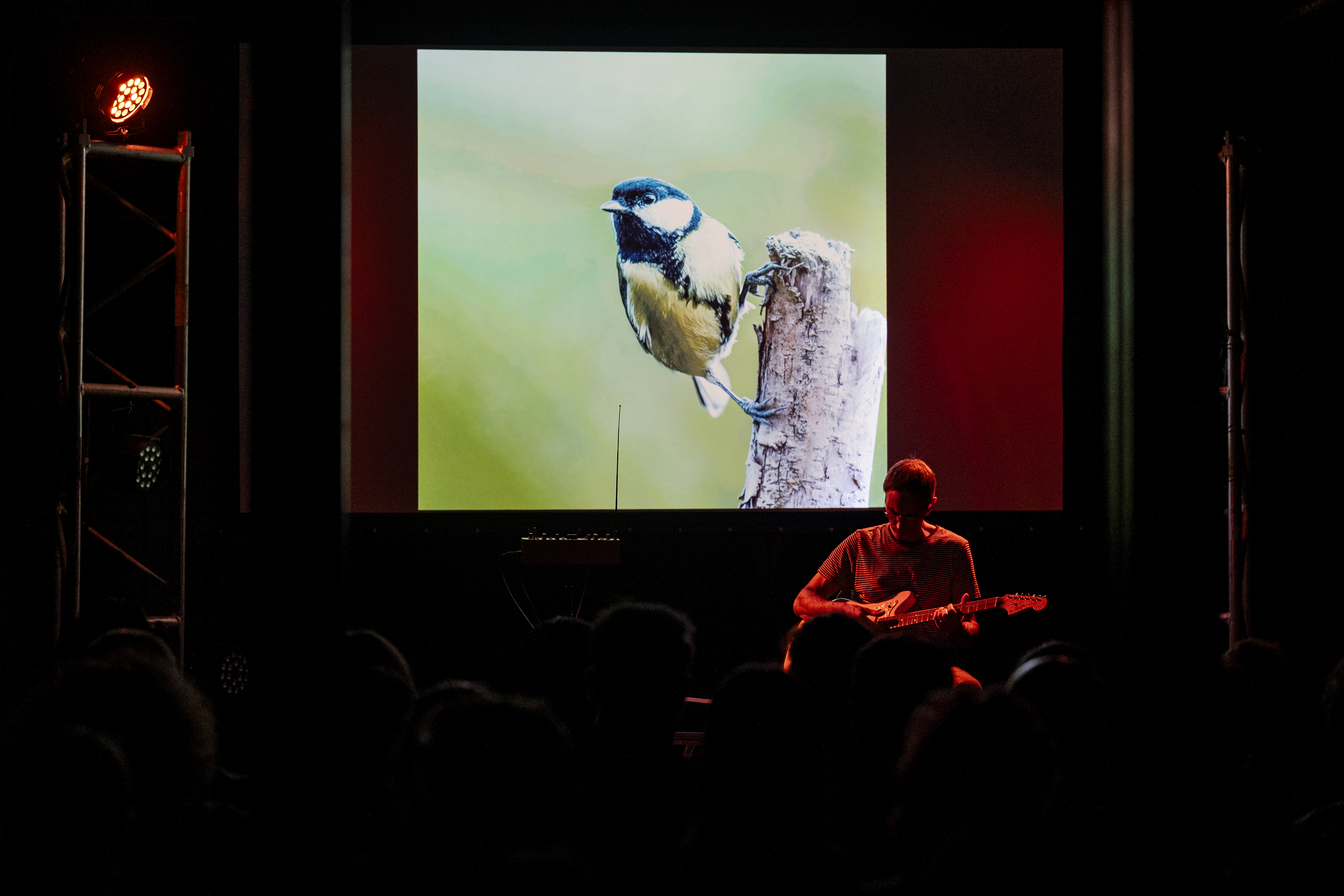
A piercing, erthquakerish, lound sound, under, or along which, church like and birdsong like music appears. Scratches, signals, noises. It moves towards gentleness, a slight return to higher intensity. There’s a coming and going, a departure, an arrival, a departure, an arrival, a departure. It goes up, higher, louder. It recesses. It floats. It pierces the heart, the muscles, the soul, the senses.
Hadn’t seen Rafael in person in a while it wasn’t no much a case of reconciliation, or even reconnection – we connect through his music, and in the usual current ways – more the joy, the affection, the hugs, the kind and godspeed farewell words in the now emptiness of a minutes before filled room. It was a good-bye matching the essence of Spectral Evolution.
Good morning with our Middle of the Week song – Camber Sands by Bernard Butler. Camber Sands is the opening song from
Good Grief is Bernard Butler third solo album and his first in 25 years. Have listened to the song live on assorted youtube recordings I was curious to hear how the album version sounded like. There are shades of Bowie, snippets of lost dancehalls mood, murmurs of a land between countryside and the intangible real.
The video takes me back to an array of memories. Road trips with my dad. Going up and down my country distributing print Mondo or, years before, as a road manager finding myself in numerous small, unknown places.The lyrics “back to 83” when the possibilities were endless. The music to a certain house, by the sea, with its garden, pine tress, endless joy. And another house, close by, in pastels colours, hidden behind walls among an amazing garden.
For me, the song also conveys melancholia of childhood memories, of love found, and lost and found. Songs become ours. Each of us will put their own experiences, feelings, emotions to them. Making someone who hardly cries, me, shed tears is a gesture. Hats of to you, Bernard. Have a nice day everyone.
words: Paulo Carmona (freely translated by Raquel Pinheiro); photos: Daniela Tedim
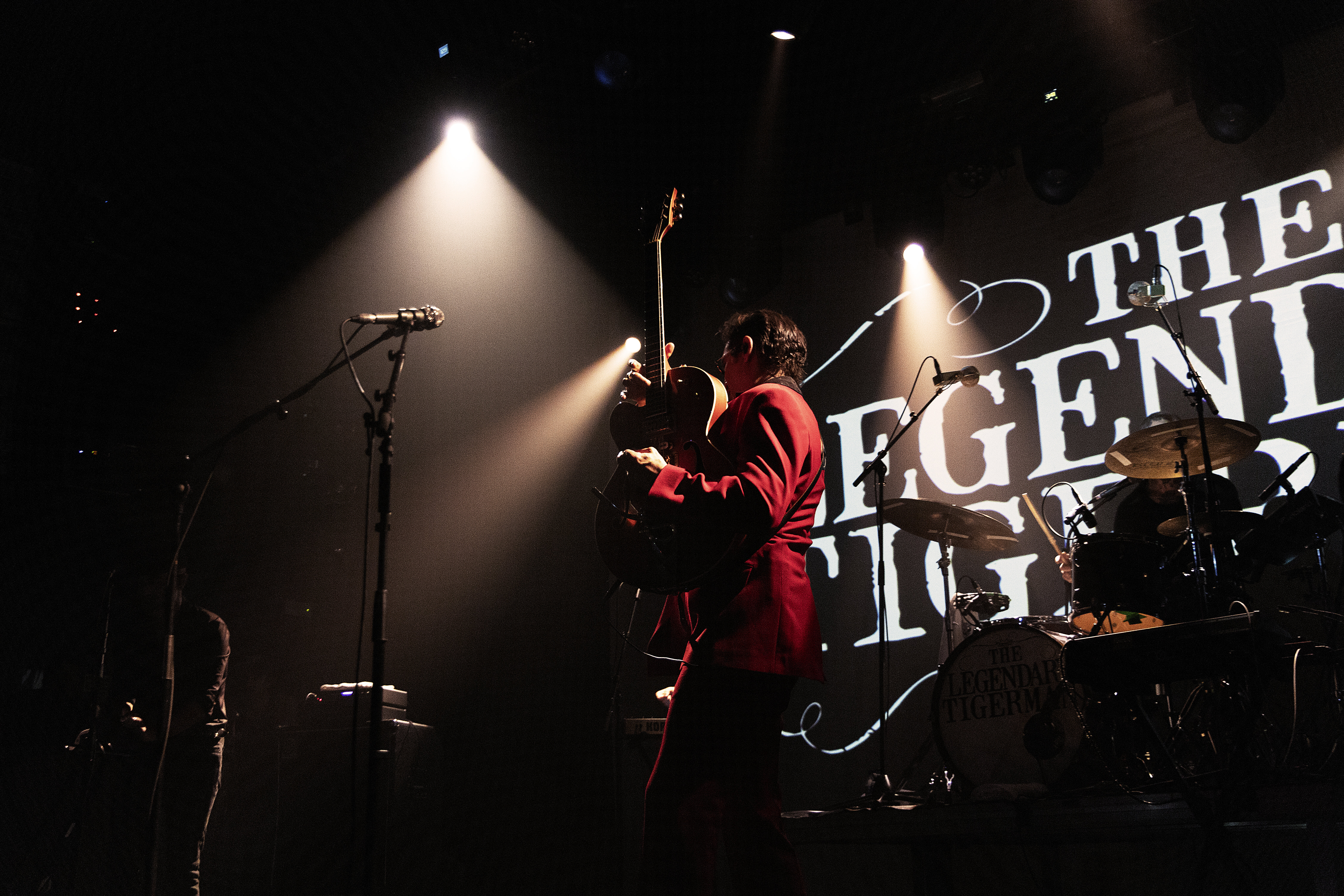
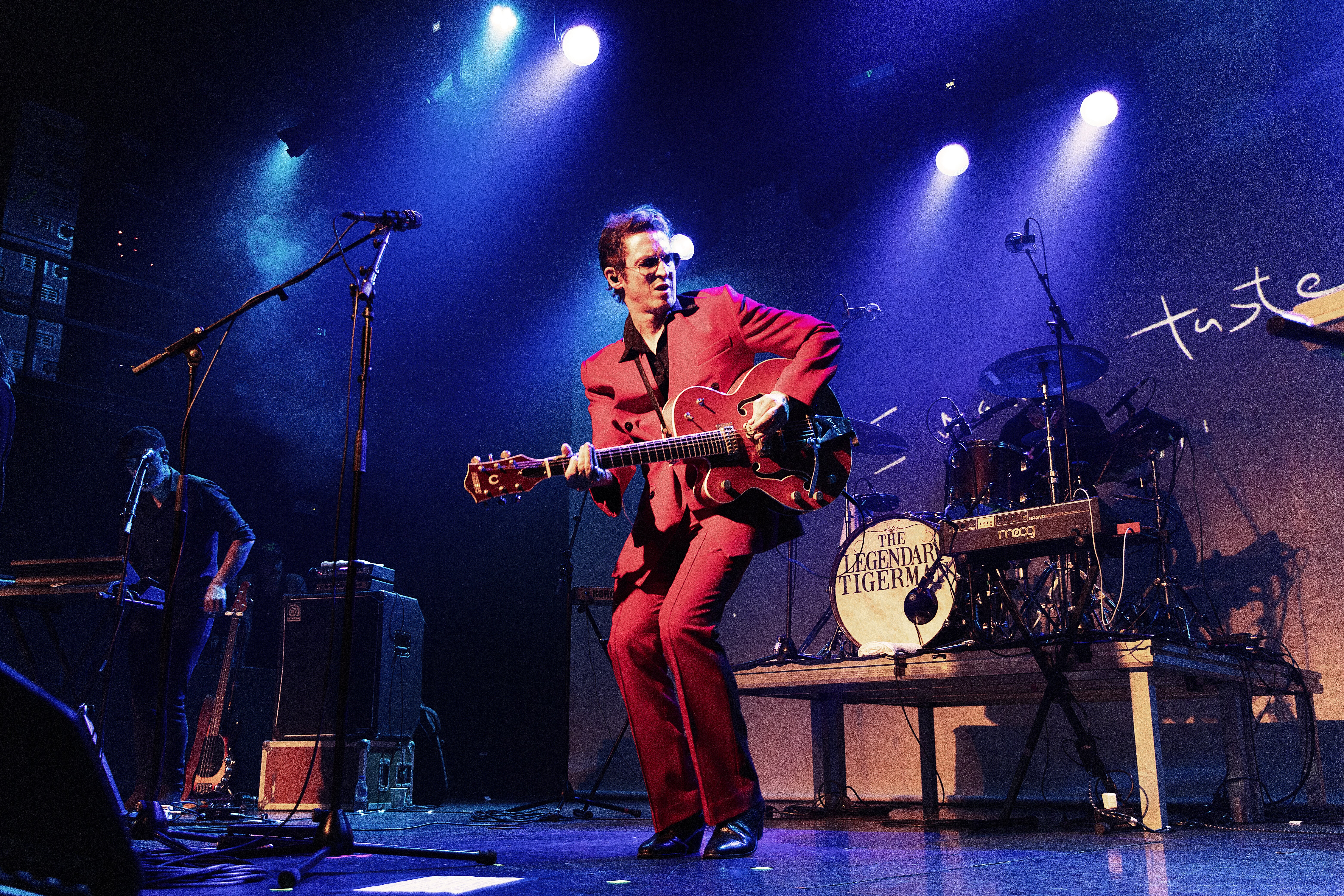
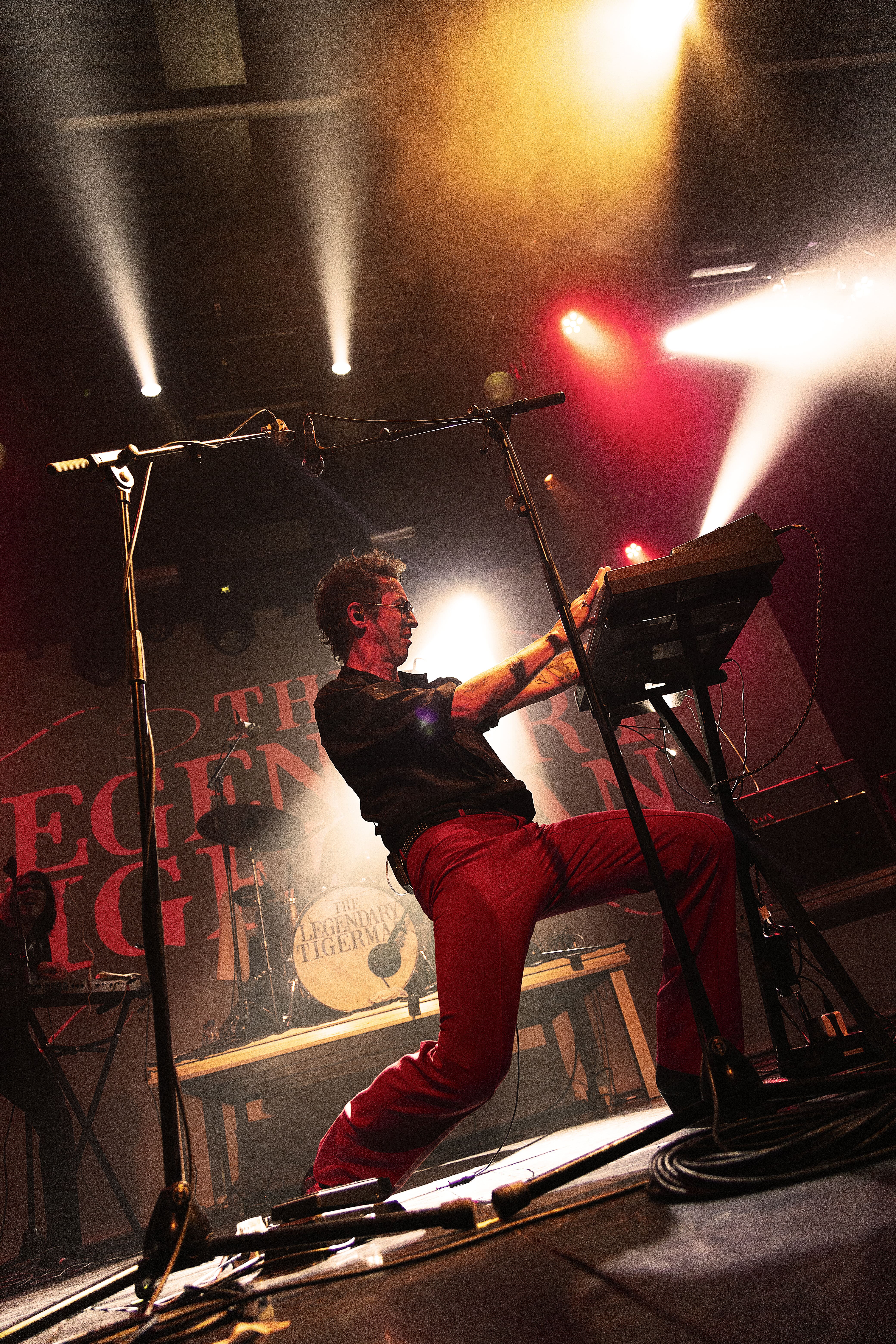
One thing is certain – Something new will happen. The Man is in constant innovation. Is that cool? … It is. In this particular instance it is. There is a coherence in the manner and presentation in synchrony with the idyosincrasies of mi artist-performer. It is in aesthetics and the imaginary that Paulo Furtado’s art of music takes a different short cut, but the vanishing point between rock’n’roll evens goes away and returns to him. A dynamic present on Zeitgeist – the new album played at this concert.
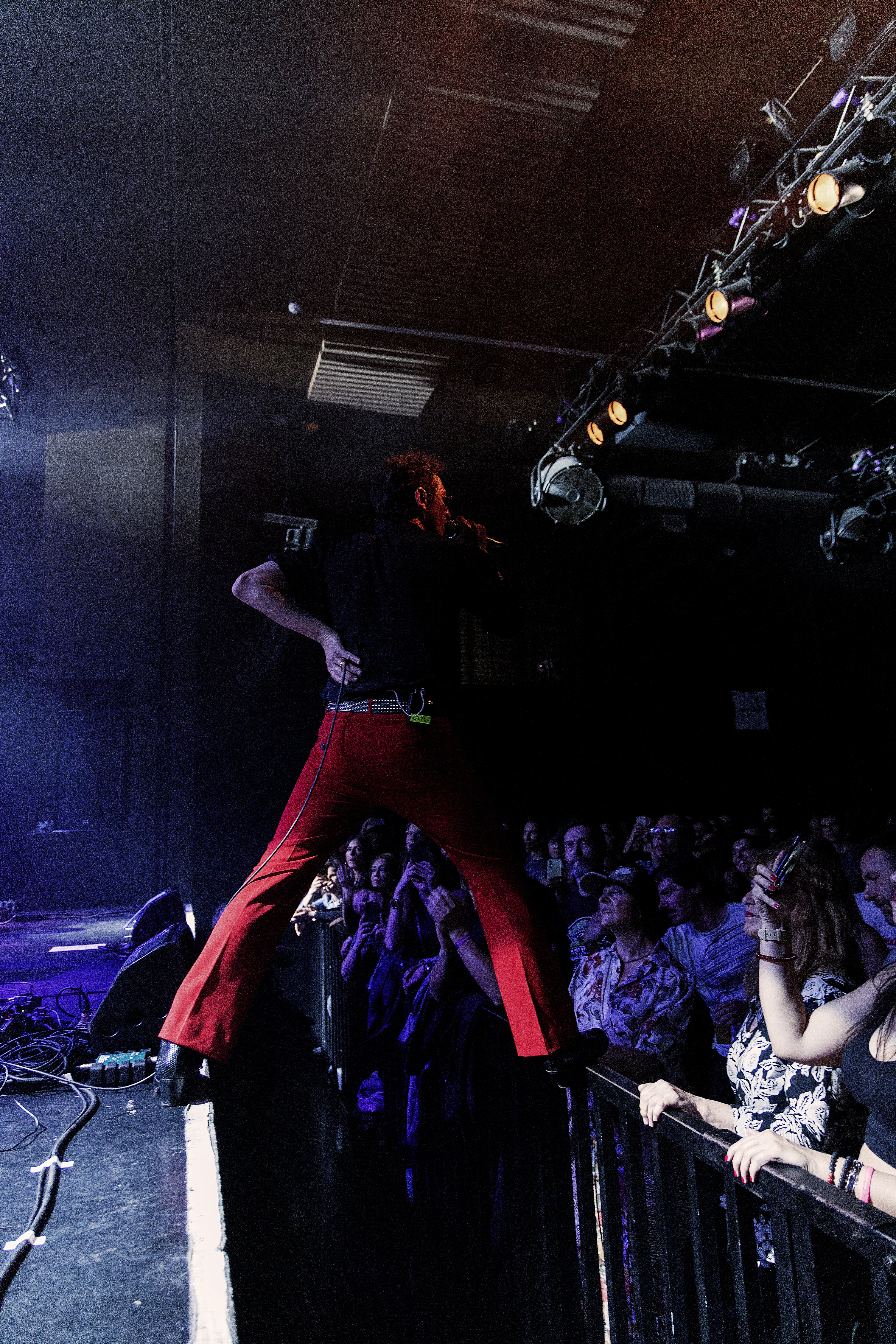
The rebelious gentleman presented a well structured setlist, starting with Everyone, One More Time, Good girl and Naked Blues, wandering between the before and the now in a frenzy of contagious emotions that seethed throughout the room with shades of insolent eroticism that insists on watering our garden on a pouring rainy day. Motorcycle Boy was also played, and, towards, the end Fix of Rock’n’roll.
Very well accompanied on stage by Filipe Rocha (bass), Cabrita (sax), Mike Ghost (drums) and Sara Badalo (vocals) who, with her remarkable and sensual voice has a highlighted role on Zeitgeist. The show never stops because there is no time to waste. We’re on the last round and hips haven’t stop moving at the rhythm of such incendiary rock’n’roll. Guests Ray and Best Youth join the party adding colour to the scenery.
Already among the audience Paulo Furtado punchily asks what is supreme glory. Until someone gets the right answer: Love! He ends up upon the back bar. No one wants a K.O. We all want a mutually agreed and quite sweaty satisfaction. I maintain this Legendary Tigerman is our most genuine case of pure, raw, é o nosso caso mais genuíno de rock’n’roll, even on the latest record in which keyboards and samplers a la carte are enequivally present. With the bar raised quite high, in my view, he remains a rock’n’roll guru. Legendary, no doubt. Vive le Rock!
words: Paulo Carmona (freely translated by Raquel Pinheiro); photos: Paulo Carmona
A contagious happiness, as if was thick fog, immediately came upon the audience. Wolf Manhattan’s cheerful music collides with the time period of its creation – during the pandemic – which leads to believe (I may be wrong) it was a very effective way that João Viera, such an alternative pop music chameleon, found to buffer that distressing period. Among the chaos, an artist soul emerges as one of the best medicines for humanity.
We were given an amusing, intelligent performance, created by sound and improvised theatre. There were rabbits, ghosts and aligattors with raving multiple signs in which shaking your butt dancing, grotesque and fantasy go hand in hand with the rocking of an hypnotic merry-go-round.
As for Wolf Manhattan’s songs, that join juicy electronic pop, alternative indie-pop-rock with a certain beat, Back to Her, Wanna go Back, Voices in My head and, of course, Sometimes attended the celebration. I would have far more to say,but prefer to tie with João Vieira’s own words to us “I want much more than a concert. A performance, a story, an imaginar, an universe, something different than just a music show.”,grounded, according João, in his be all – David Bowie. And he pulled it off. David Bowie??? – What else!
Extra #124 is for the listening party of my friend Rafael Toral new album. Spectral Evolution is put Friday 23rd on Moikai via Drag City.
There are two listening parties for the Spectral Evolution tomorrow, Wednesday 21st. 10am (gmt/London time) and 7pm (gmt/London time). The conversation will e guided by Rafael Toral in Portugal, Jim O’Rouke in Japan and Fred Somsen in London. https://rafaeltoral.bandcamp.com/album/spectral-evolution – Link for listening party.
World hours for London’s time (gmt) Listening Party.
words: Paulo Carmona (freely translated by Raquel Pinheiro); photos: Paulo Carmona
Many went to Mouco to New Castle band Lanterns On The Lake first concert in Porto.
The band started with The Likes Of Us, Real Life and Every Atom. Right there it shows the band is instrumentaly very competent. Be it 9n the rhythm or the melodic section. The harmonic sequences are irreproachable.
Hazel Wilde’s lead vocals are impregnated with loud, vibrating sounds that perfectly dress the songs, fully tailored for her vocal range. As it is said, it fit like a glove. Indie rock set Mouco’s the room on fire with Blue Screen Beams, When It All Comes True and Rich Girls. Paul Gregory’s guitar is so intense that it is impossible for bodies not to vibrate with its riffs.
Before the encore, Hazel jokes a little with the cliché saying they will no behind that door and be right back with a few more song, which generates laughter. After the show, I wandered around and was left with the impression of a friend’s gathering in which between people who did not knew each other well. Music does such things.