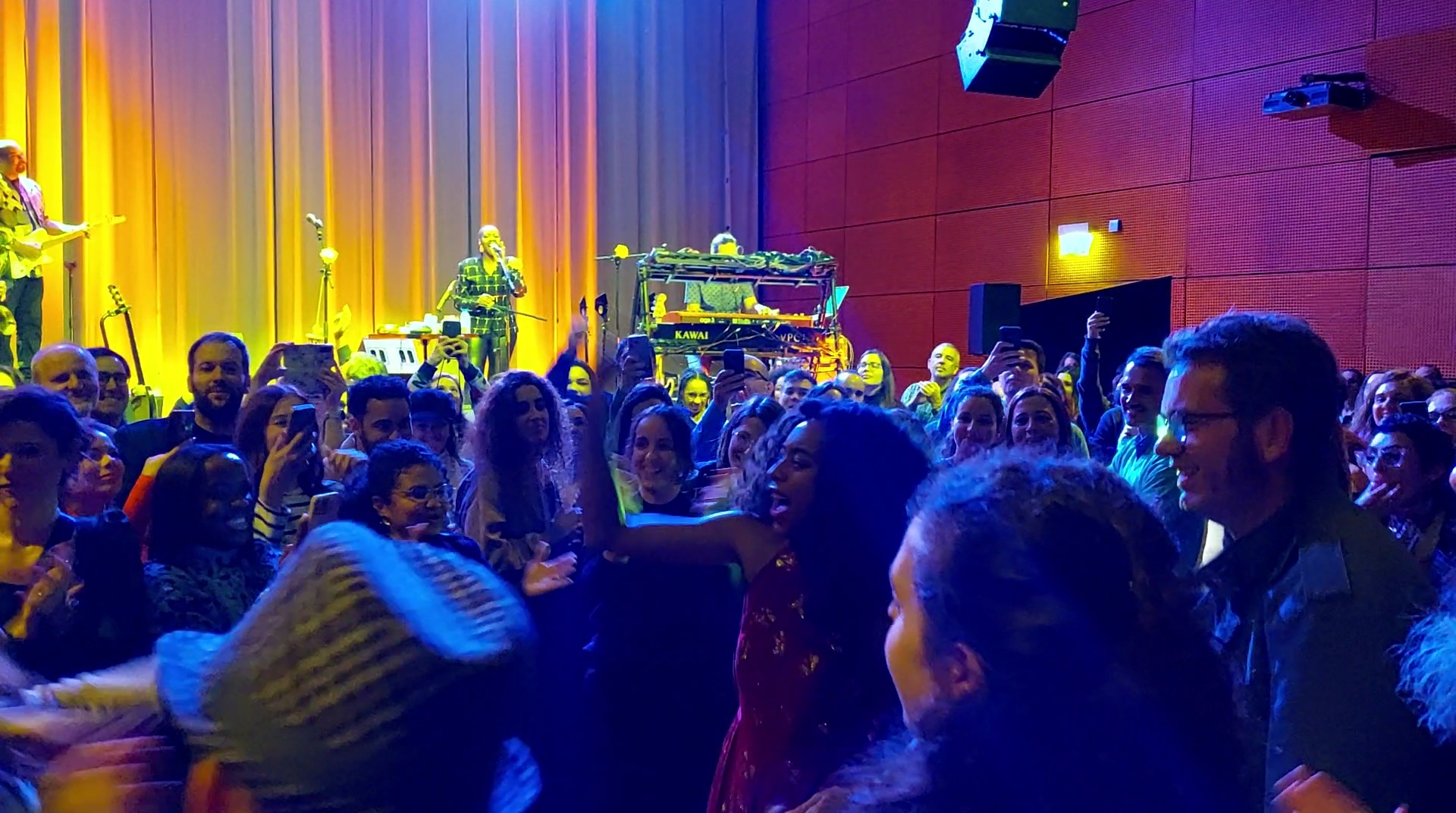
Nadine Khouri | John Grant, Casa da Música, Porto, 22.11.2023. – Misty Fest.

Nadine Khouri © Mondo Bizarre Magazine/Cláudia Lopes

words: Marcos Leal (edited and freely translated by Raquel Pinheiro); photos: Cláudia Lopes

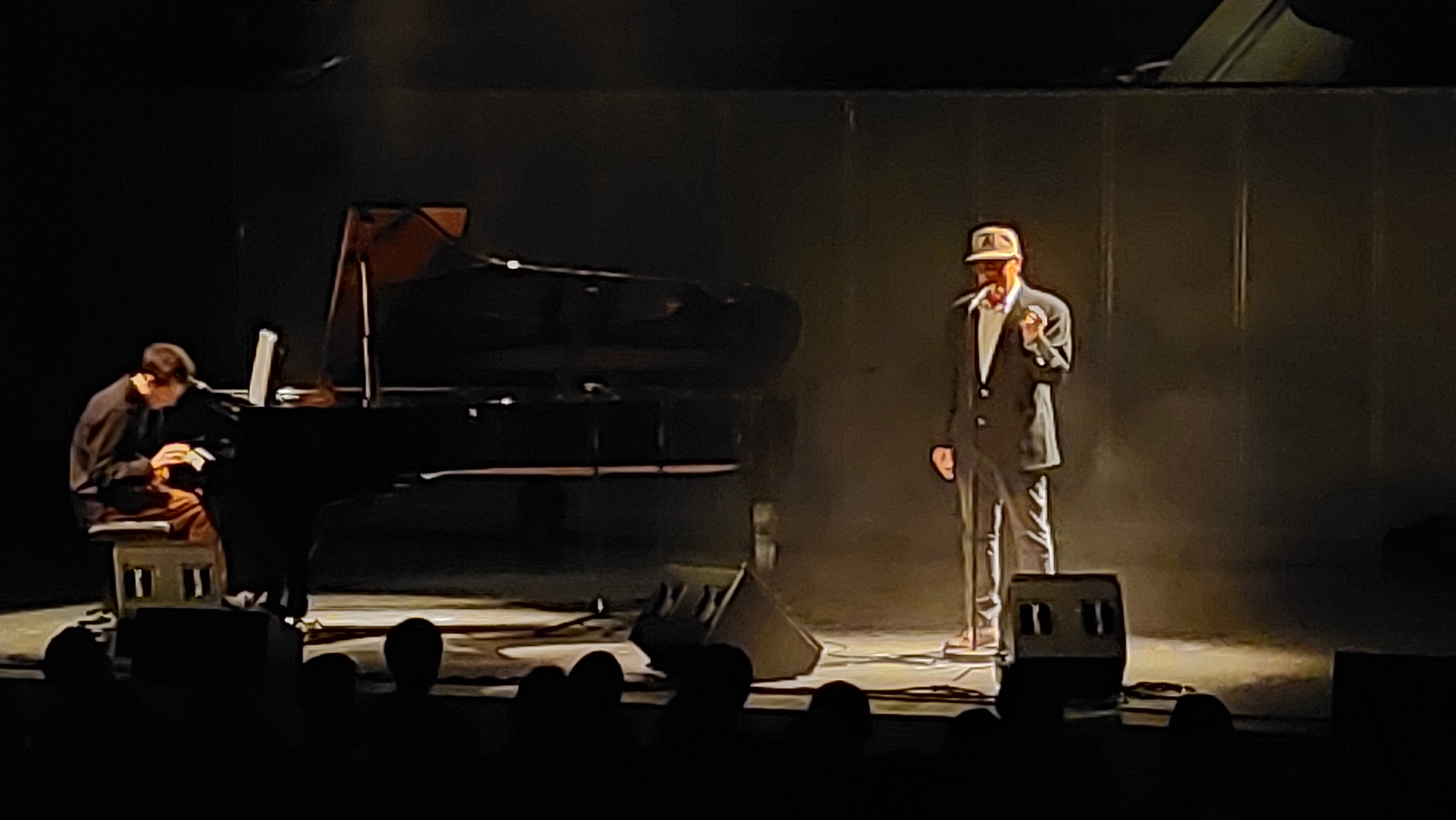
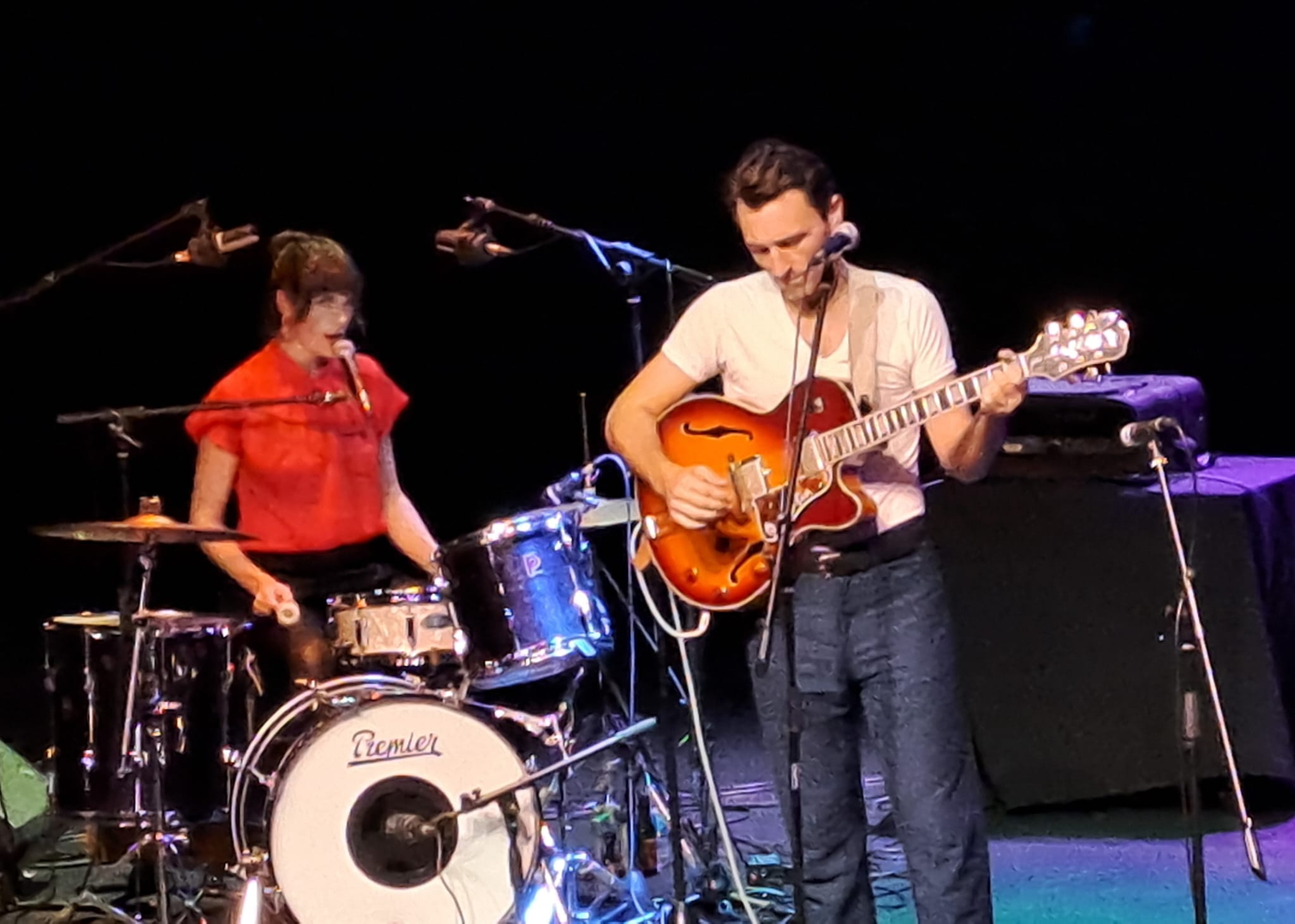
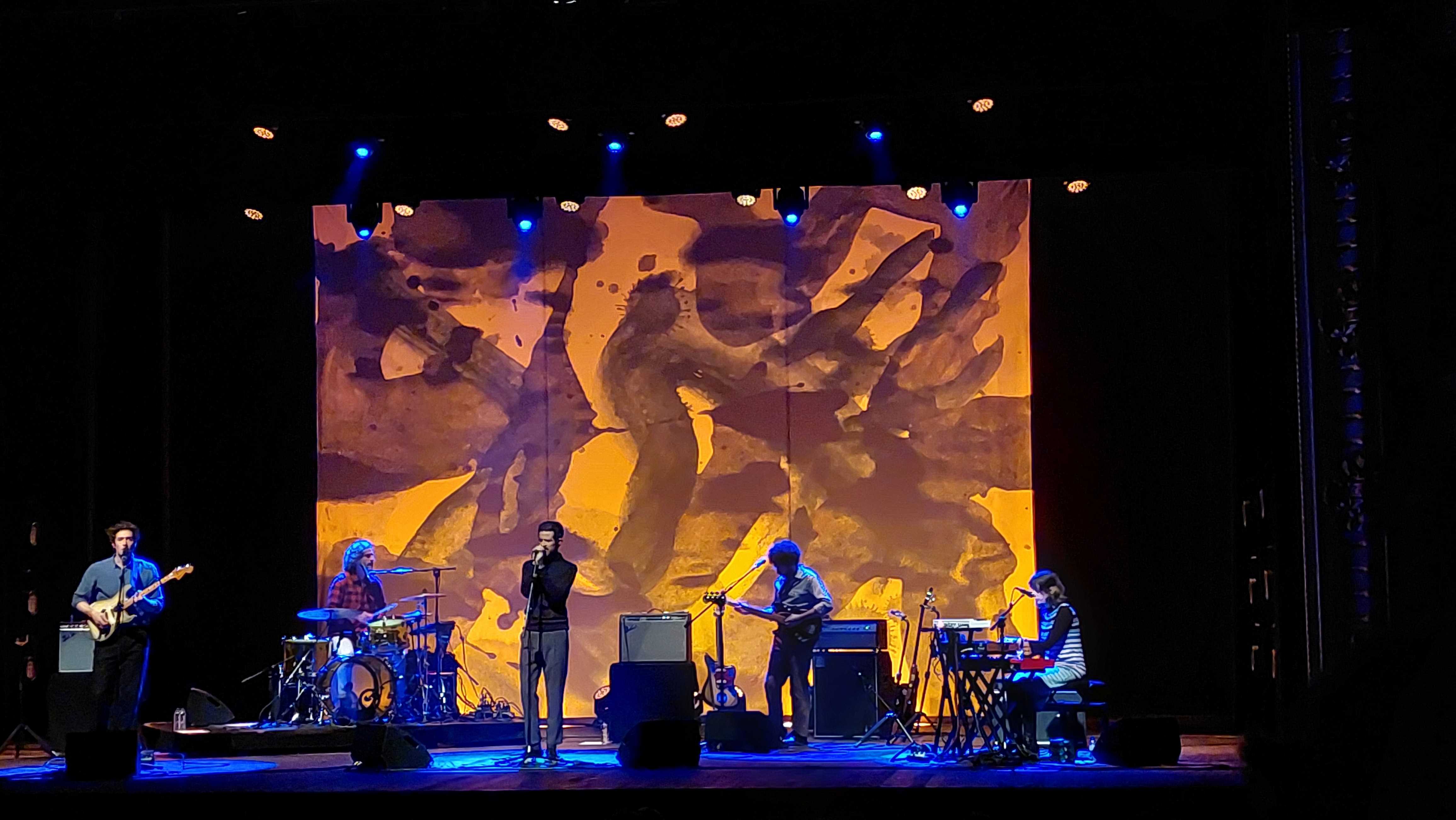
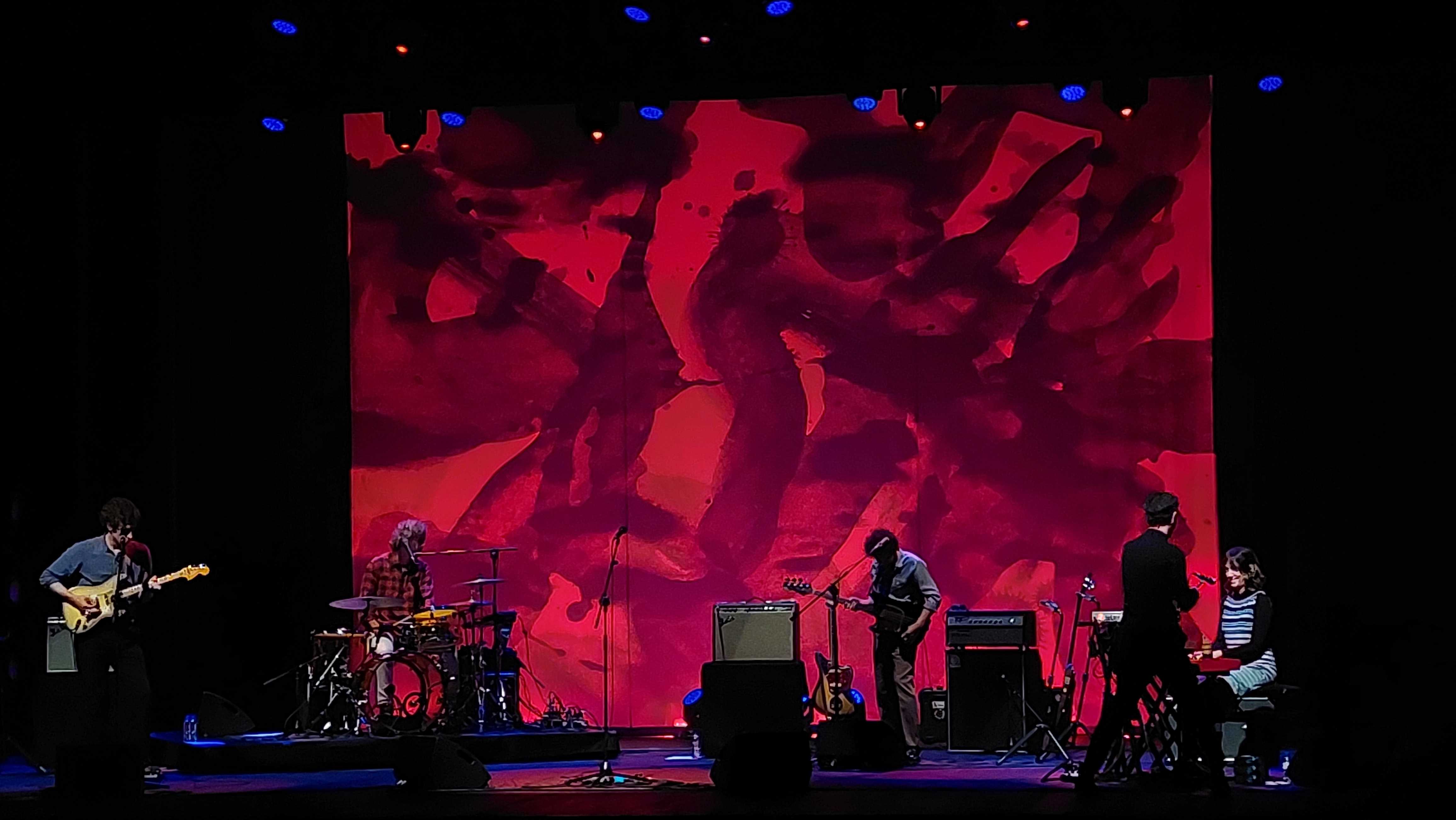
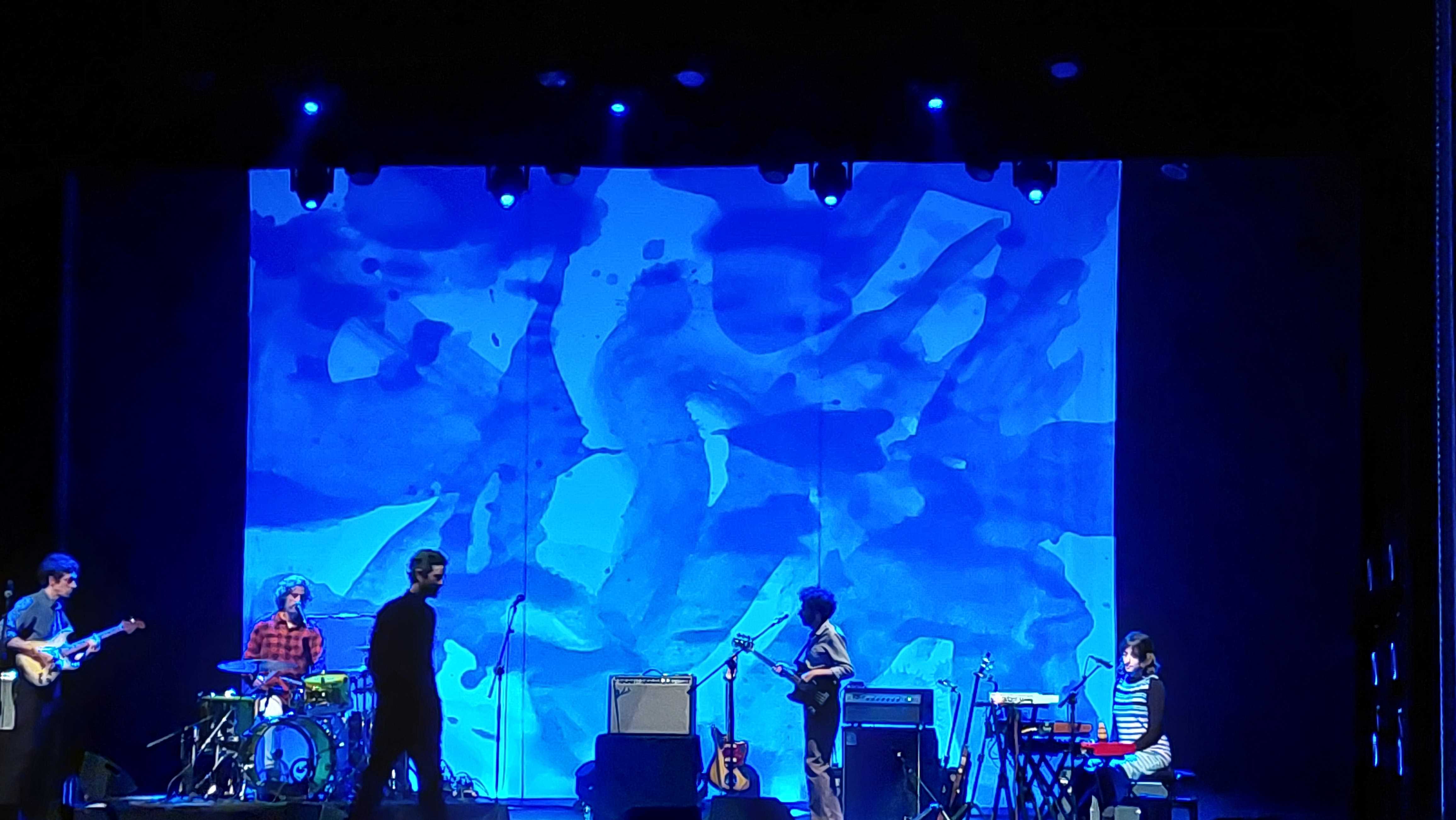
Anglo-Libsnese Nadine Khouri is presenting her latest album, Another Life (produced by John Parish). She comes on stage with a drummer and a keyboardist and picks up her red guitar, before strumming the first chords. Attention is immediately called to her warm, silly voice, inspiring Lebanon deserted landscapes.

The sound draws towards David Lynch and Wim Wenders imagetic scenaries. It is worthy to mention Keep On Pushing These Walls, a song dedicated to Lhasa De Sela, Keep On Pushing These Walls, and another to those that had to live in exile. Her is music, alternative exotic cinematografic, makes us go on a roadtrip without leaving our seat.
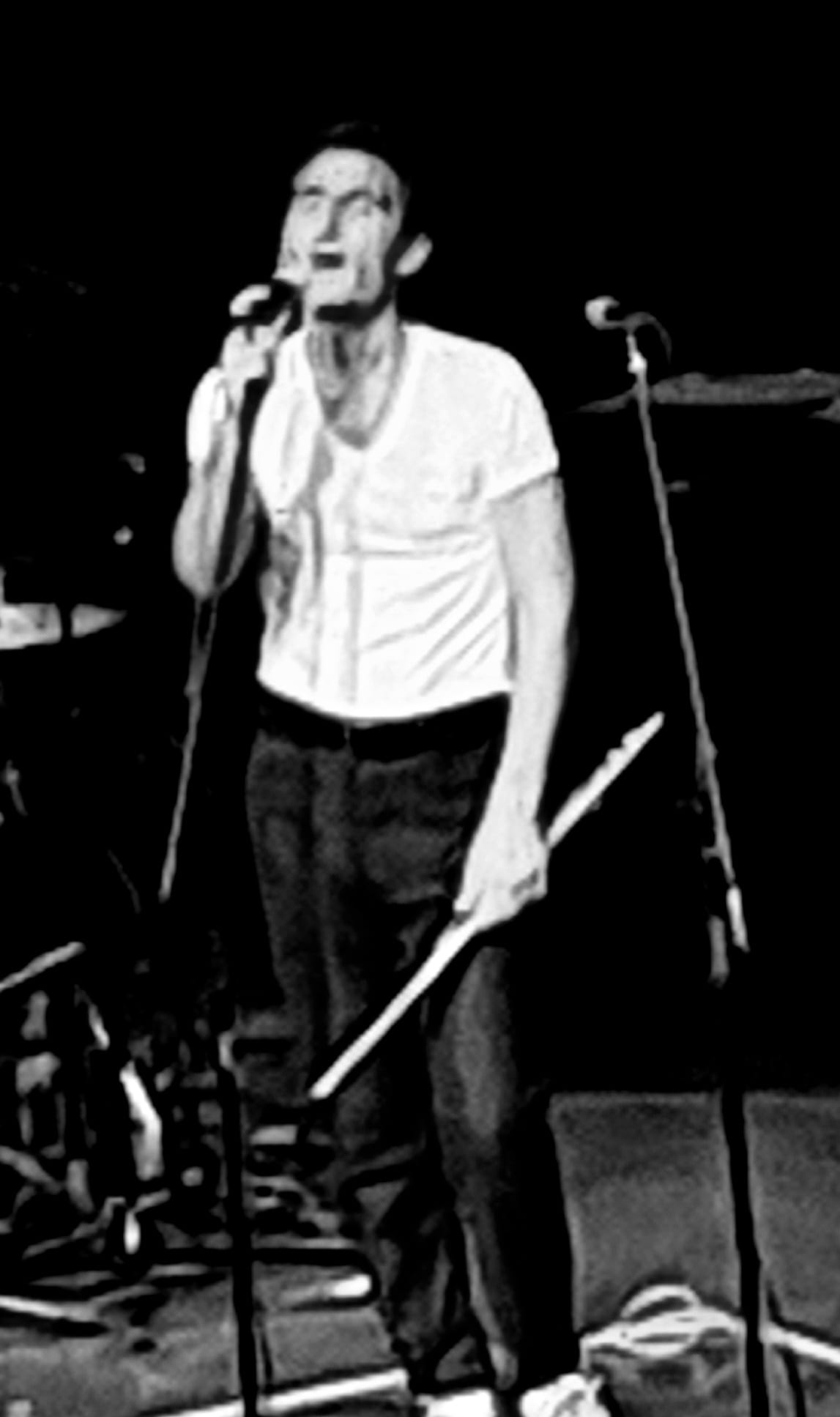
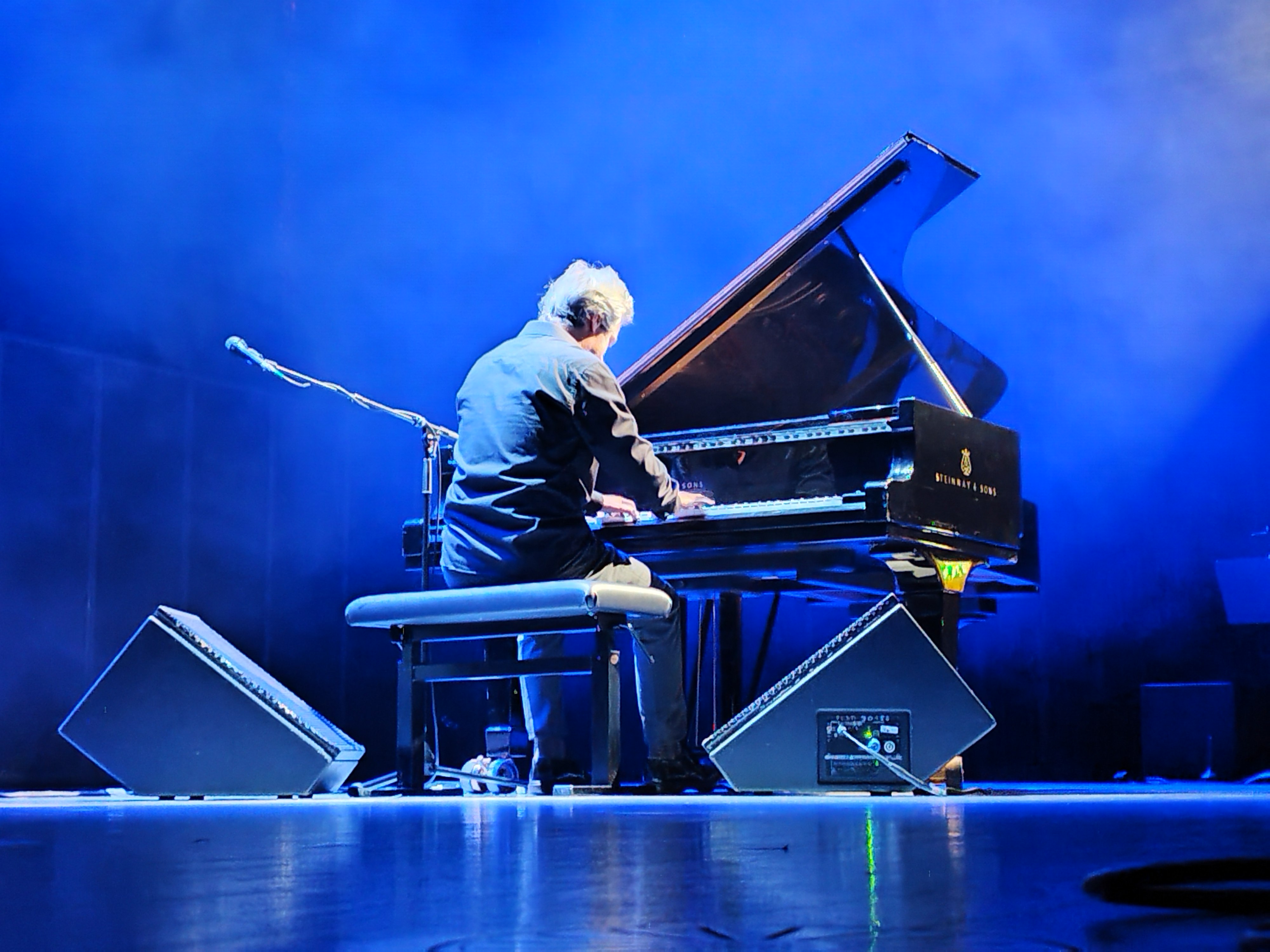
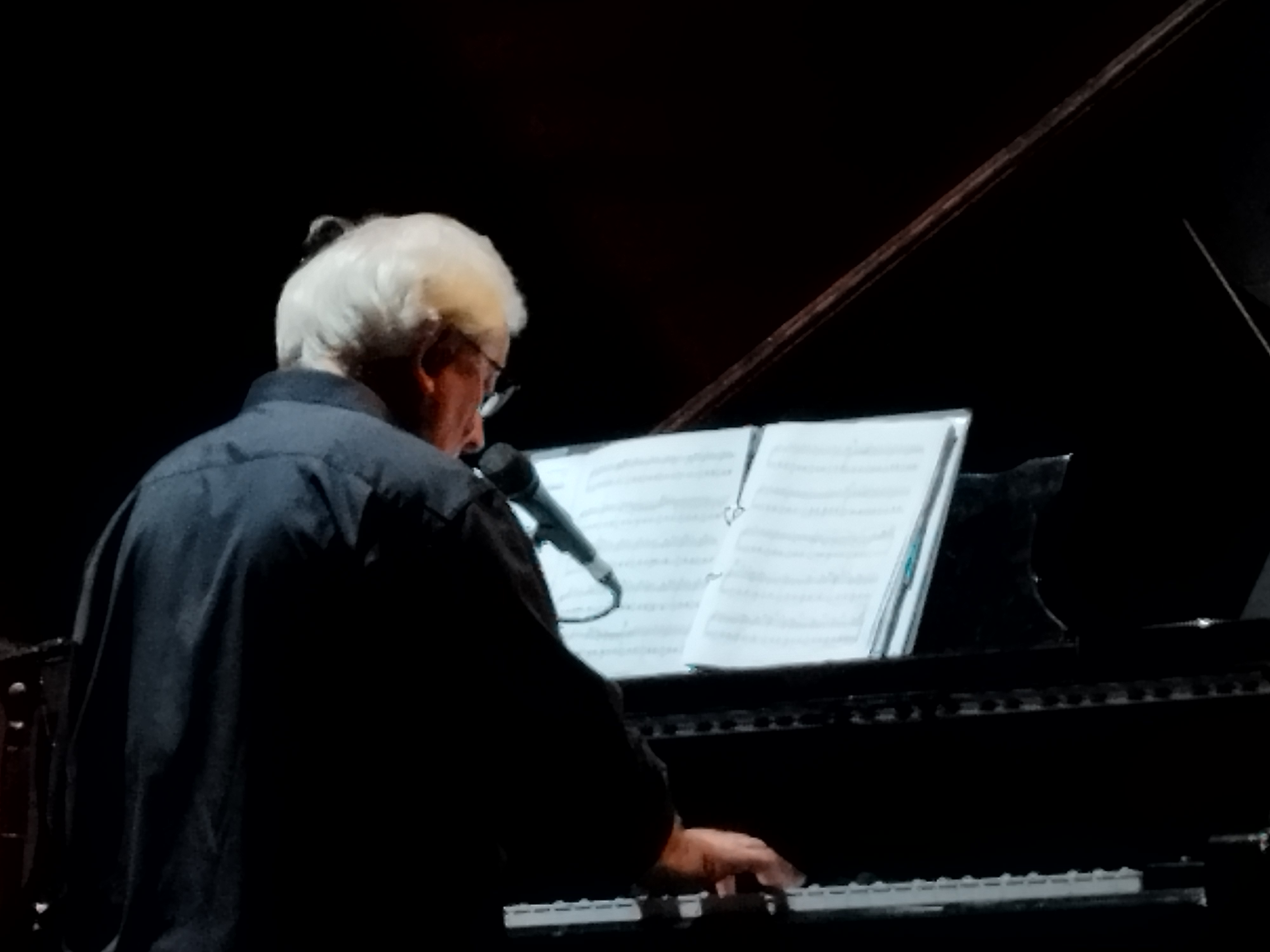
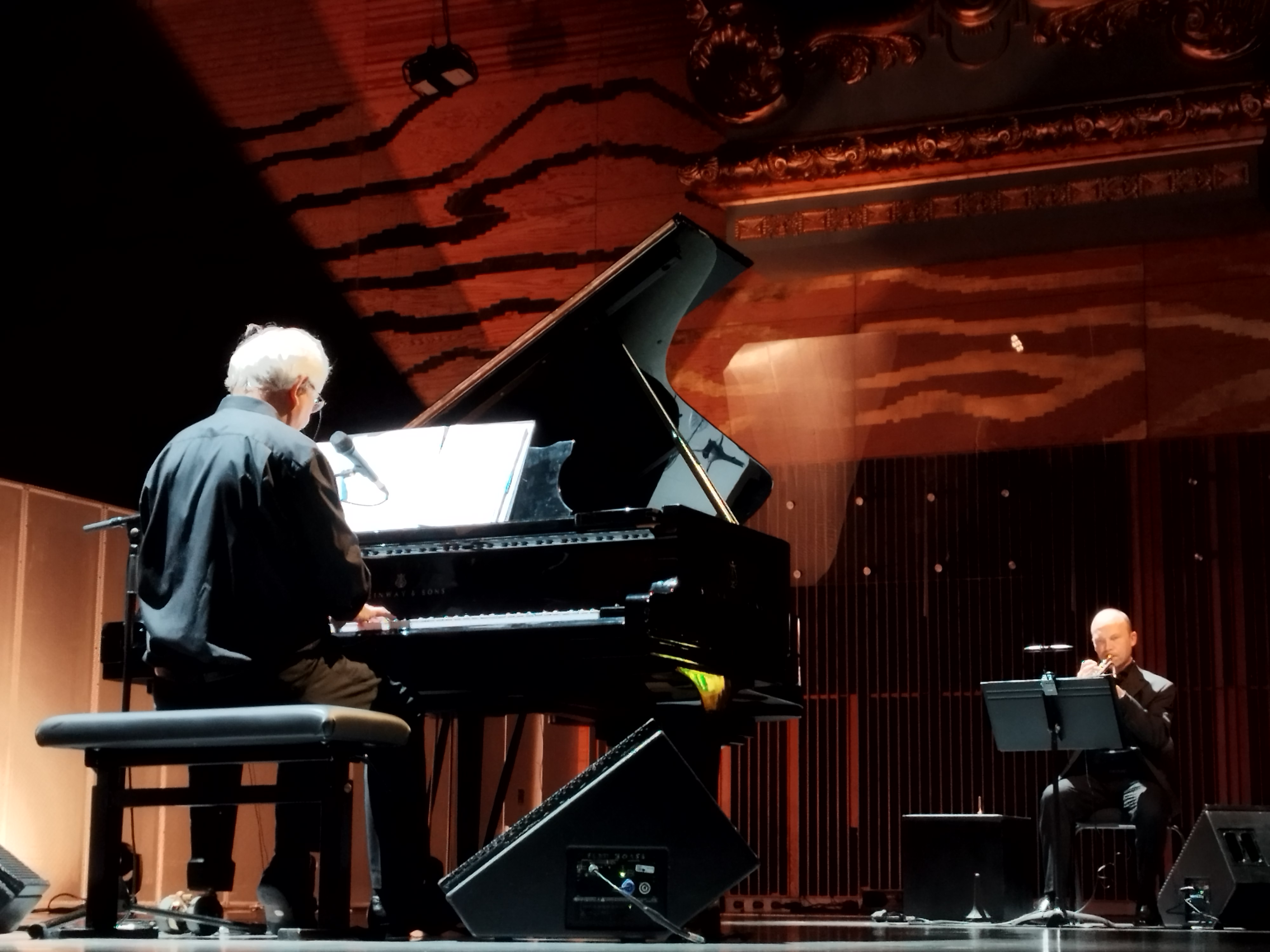
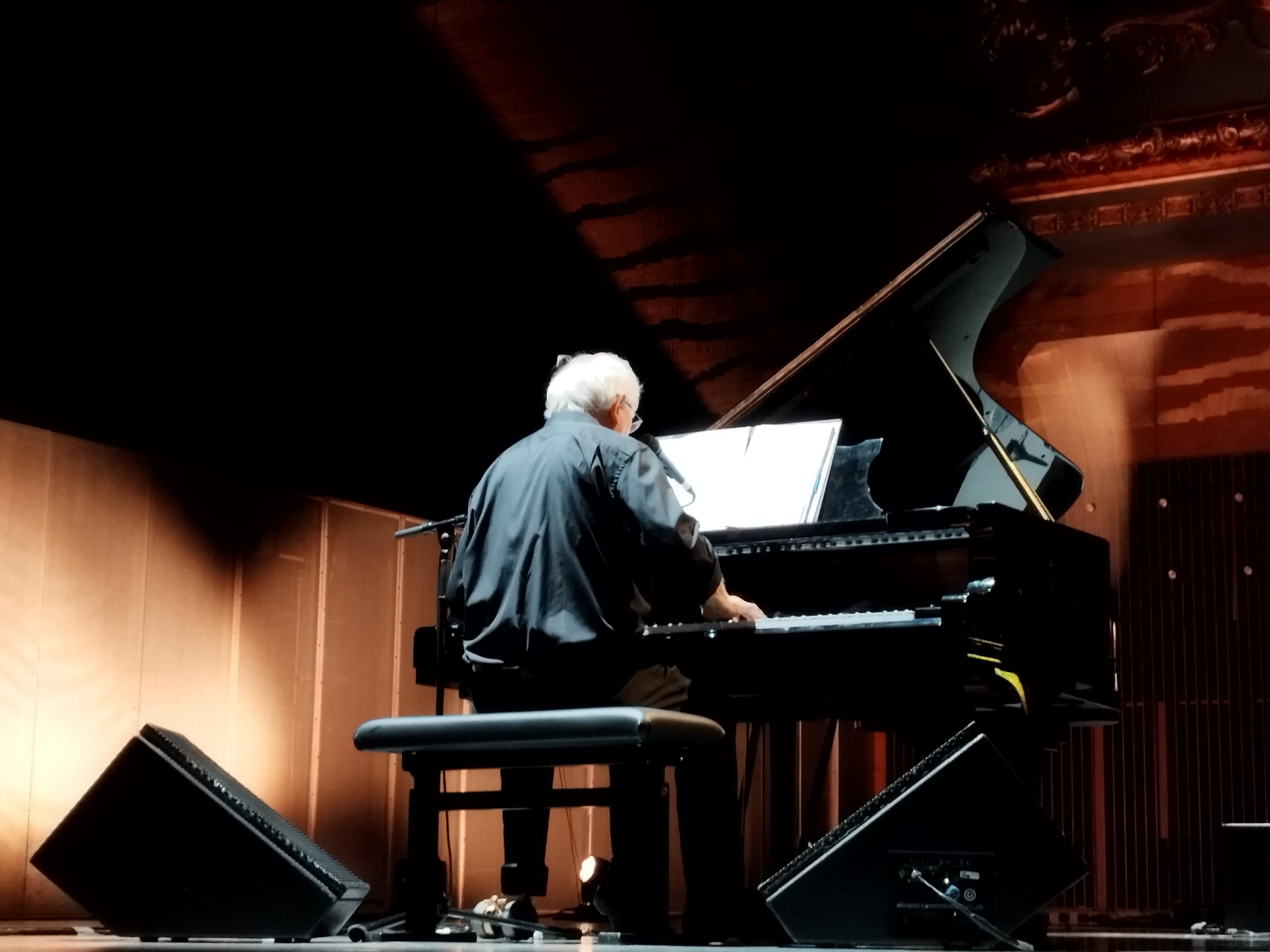
John Grant © Mondo Bizarre Magazine/Cláudia Lopes

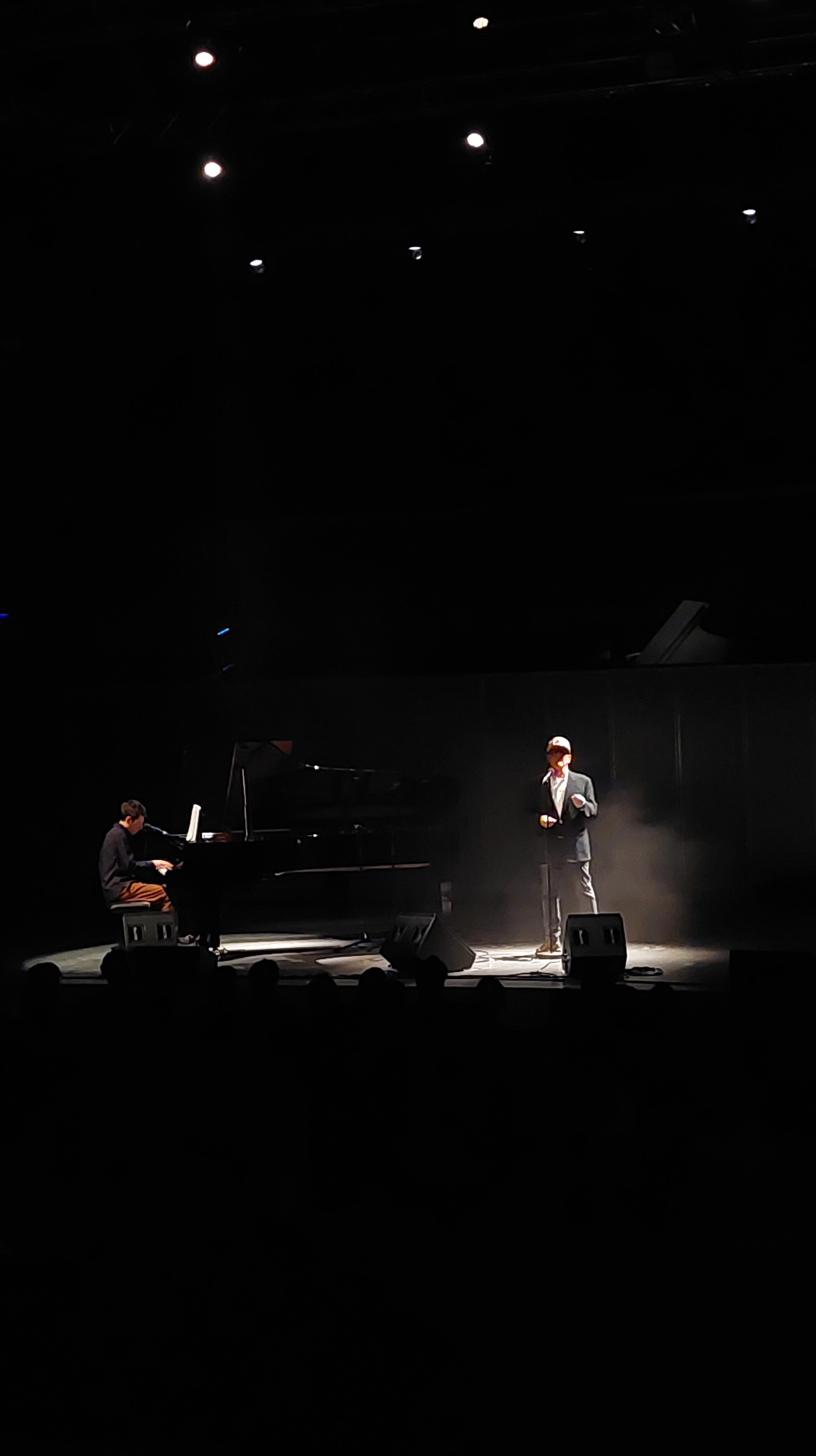
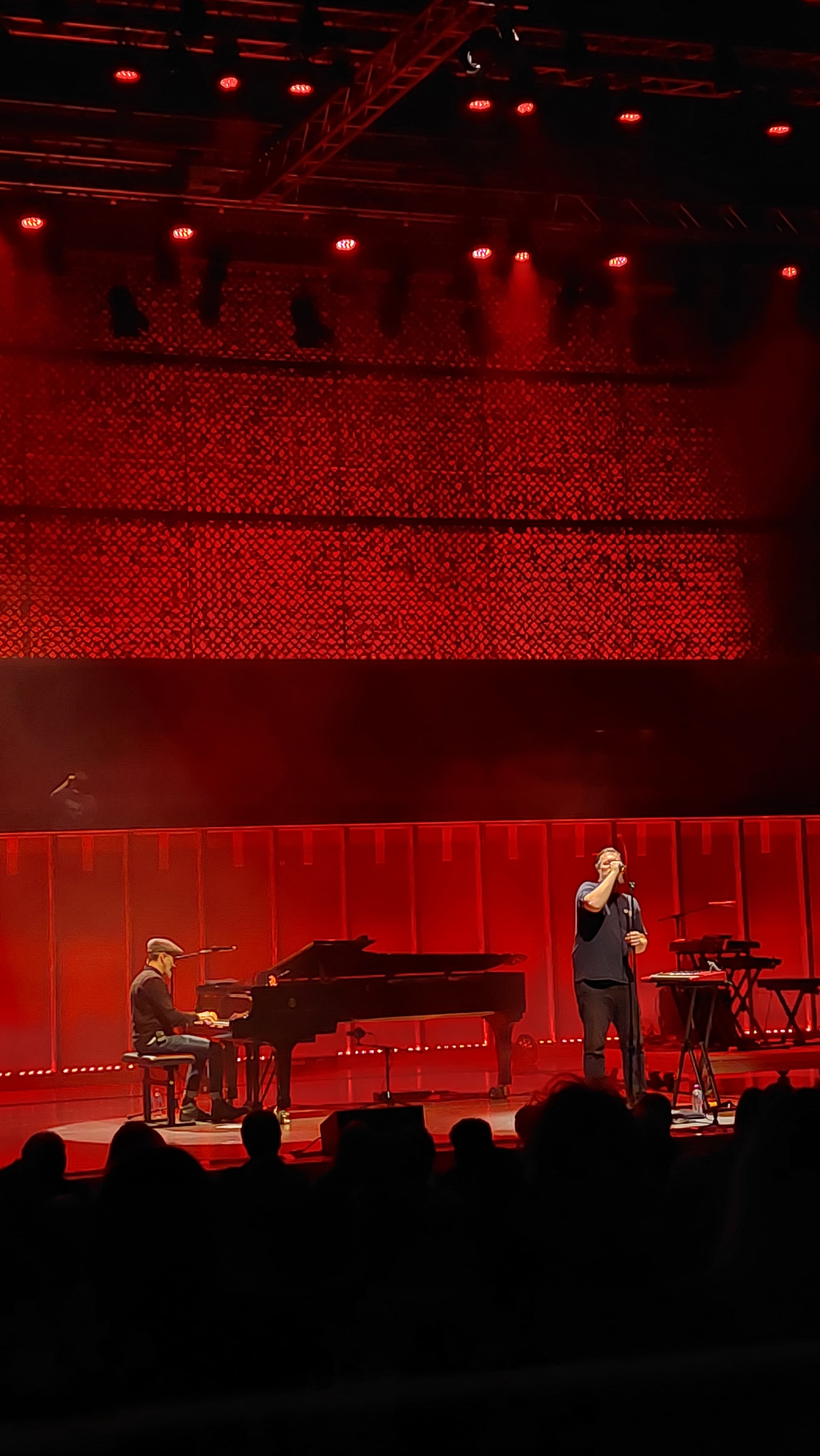
It is John Grant’s time now., also in a redux emsemble: John, in the piano, and a keyboardist-back vocalist. When he starts to play what stands out is his strong voice and it’s tone. What sets him apart is the quality of his lyrics in which, satirically, he approaches human relationships, homosexuality, social issues. For the joy of the his fans, several songs from the debut album, Queen of Denmark, were played. John says he feels comfortable playing those because certain issues remain as corrent. Of notice was also the excellent piano solo by his pianist-keyboardist. One song was left to be played on the encore. The only weirdness in a beautiful performance was a member of the audience that insisted on speaking to John Grant and clap before the end of each song.

John Grant © Mondo Bizarre Magazine/Cláudia Lopes

Alan Sparhawk (Low) | Lambchop – Misty Fest, Casa da Música, Porto, 21.11.2023. 

Alan Sparhawk © Mondo Bizarre Magazine/Marcos Leal

words: Marcos Leal (edited and freely translated by Raquel Pinheiro); photos: Marcos Leal

Alan Sparhawk returns a year after the death of Mimi Parker, his life and musical companion. He is accompanied by three young musicians, one of them his son, on bass, the others bring a drummer and a banjo player., instruments that are characteristic of Alan Sparhawk’s music. The concery start quietly, but quickly the harshness of distortion and feedbacks of the lyrically heavier lyrics, in which Alan seemed to transmit and exorcize darker feelings arriveded. It was a concert with gruge roughness and indie-folk sweetness that received a good clapping at the end.

Lambchop © Mondo Bizarre Magazine/Marcos Leal

As for Lambchop presented a redux version. Kurt Wagner (vocals) and a pianist. A change that seemed to caught a few people by surprise. As the piano first notes were played, Kurt gestured along the music, like a conductor. Placing himself on the mic stand, his first vocals seemed to had caused a shift on the room. Owning a strong, deep voice, he sang song from the latest album, word by word with captivating mastery and presence, contracting with the simplicity of the production design. The lights didn’t even changed colour.

The minimalist approach may had not been for everyone. Those that stayed enjoyed Kurt’s and his pianist astistic quality until the end. They were irreproachandle and deserved the generous clappung before bed, as Kurt said they would go to sleep right after the encore.

Lambchop © Mondo Bizarre Magazine/Marcos Leal

The Saxophones, Auditório Francisco de Assis, Porto, 19.11.2023.

© Mondo Bizarre Magazine/Paulo Carmona

words: Paulo Carmona (edited and freely translated by Raquel Pinheiro); photos: Paulo Carmona .

Recently, a lot has been talked about music as therapy. Sometimes more rightly, others less so. As everything else these days. In a deciduous Sunday, the moon already a companion., a few hundred people, among them myself, witnessed the confirmation of the preamble I’ve just mentioned by watching The Saxophones.

© Mondo Bizarre Magazine/Paulo Carmona

They started with Lamplighter, and right there the atmosphere changed in the blink of an eye.The music melodic smoothness soaked Francisco de Assis with a perfumed swing retro pop, capable to craddle de most attention sentinel of a fortification in danger. It is a very contagious and appeasing sound.

© Mondo Bizarre Magazine/Paulo Carmona

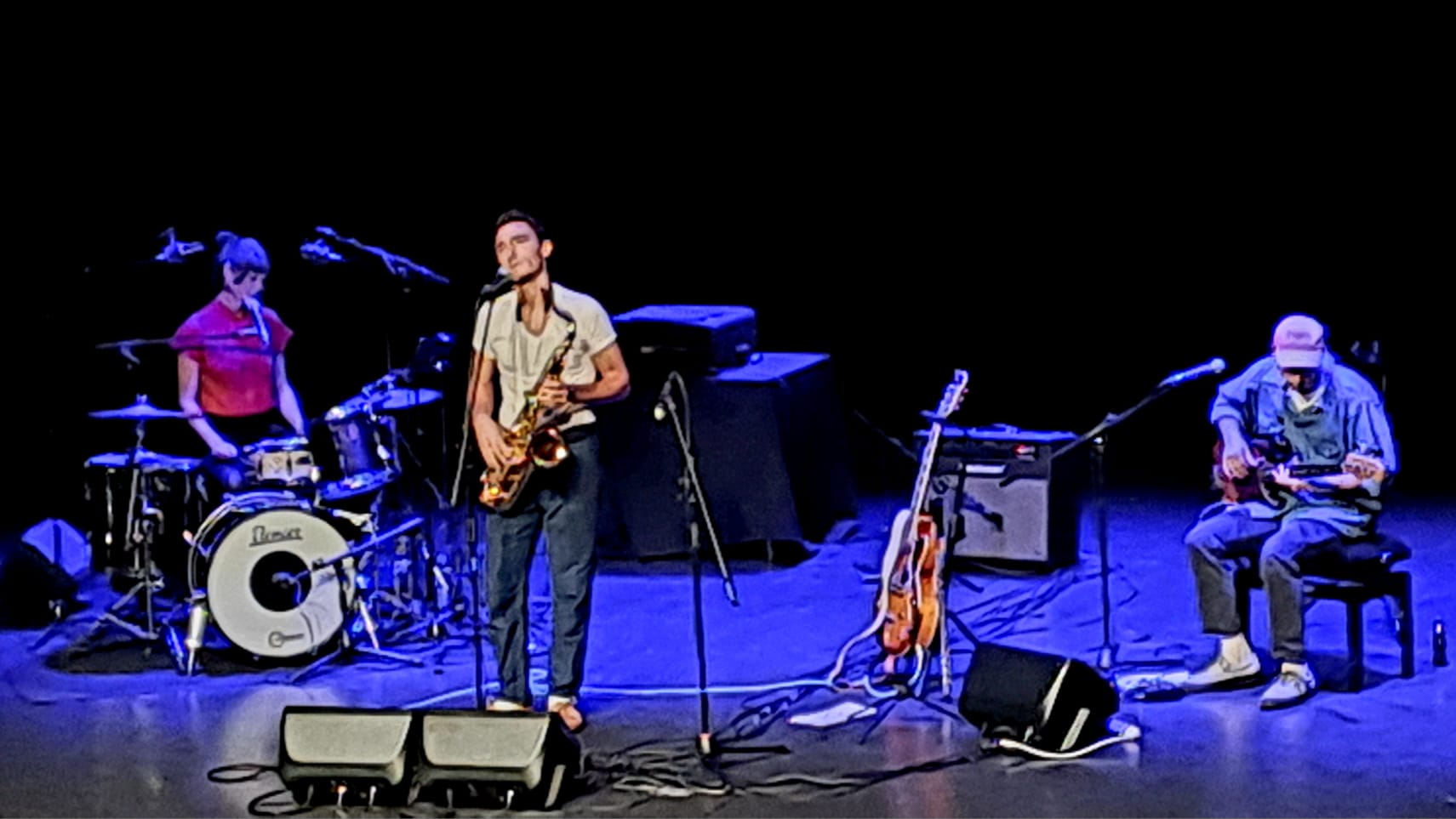
Alexis Erenkov is a very compente and compassionate baritone. He allows the music to and speaks for itself, that he only adorns with his frail, almost naive, verses, at times, here and there, accompanied by Alison Alderlice’s sweet voice.Alternating between saxophone and guitar, and a transverse flute in Boy Crazy, the songs, very aesthetically similar between themselves, appeared in a slow, rhythm, intimate sequence.

© Mondo Bizarre Magazine/Paulo Carmona

Alexis confesses this is the first tour he plays saxophone. The original idea was ever to do so, but times and wills change and it happened. I confess that, to my delight, they played If You’re On The Water on the encore. And right afterwards, as closing, In My Defence. I left satiefied and peaceful among a sea of happy glowing people. As is wished on an early Autumn Sunday evening. Turns out it seemed to had been therapeutic to everyone. All the better.

© Mondo Bizarre Magazine/Paulo Carmona

Francisco Sassetti | Wim Mertens – Misty Fest, Casa da Música, Porto, 13.11.2023.

Francisco Sassetti © Mondo Bizarre Magazine/Telma Mota

Warmness and Strife for Piano

words: Raquel Pinheiro; photos: Telma Mota

It was an evening of Wimtrasts and counterpoints. Warmness, homeness, romanticism, afable communication – Francisco Sassetti – sparcity, dislocation, strangeness, non verbal speak – Win Mertens.

Portugue pianist and composer premiered his debut album, Home, Monday night. Home is a beautiful record filled with intimate, personal, homely, sacred even, pieces. It is also imbued in melancholy, joy, longing, wonder.

Talkative, Francisco told small stories and contextulized every theme throughout his performance. Opening in a nightly mood, with Home’s two nocturnes, Nocturne I and Nocturne II, moving to the journeying title track that leads us home after absense.

Francisco Sassetti © Mondo Bizarre Magazine/Telma Mota

The next three pieces Francisca’s Dream, Francisco’s Jr Theme, Sara is Happy are dedicated, respectively to his daughter, his son and his wife. A little girl with a Ballon, in a carrousel, a young boy slaying a dragon, and a wife, mother, woman litting a room with her happiness. The piano translates the stories magnificently. Or the vignettes are magnificently played, in a reverie, with intensity, upbeatness sorrow, glow.

Francisco Sassetti’s performance ends with the wonderful, slightly somber, but rich is tone and soul, Music For Her.

Wim Mertens © Mondo Bizarre Magazine/Telma Mota

Wim Mertens, , accompanied by trumpeter Ward Hoornaert, presented Voice Of The Living his album homage to all war victims. Voice Of The Living was commissioned by the Chancellary of the Belgium prime minister as part of the commemoration og the Great War (Work War I, 1914-1918).

It is an harrowing musical piece. Playing in November, with all that is going on, two days after Armistice Day (November 11,1918), the day of the end of war it was created to signal, it is sobering, chilling, beautiful, uncomfortable.

Wim Mertens & Ward Hoornaer © Mondo Bizarre Magazine/Telma Mota

Mertens way of playing, more minimal leaning, heighlights the theme of the composition. The Piano runs free, is sound pointllism, while the trumpet holds it filling the atmosphere with a certain joy, at times, verging on exuberant happyness, but never fully crossing into glaring bright light.

In Mertens Voice Of The Living we feel the sense of loss, of desorientation, the discomfort, the wasteland. There are also glimpses of hope, of a better time among uncertainty.

Libreto:

Francisco Sassetti:01 – Nocturne I; 02 – Nocturne II; 03 – Home; 04 – Goodbye; 05 – Filipa’s Dream; 06 – Francisco Jr.’s Theme; 07 – Sara Is Happy; 08 – Inocência II; 09 – Music for Her

Wim Mertens: 01 – Too good, too loose; 02 – Glossary raisonné; 03 – Escape and recapture; 04 – Pondichéry; 05 – On the Zephyrous Peak; 06 – Continuous pushforwards; 07 – Nota notae; 08 – Watch!; 09 – Phaedra; 10 – Constance; 11 – Prudence; 12 – Far; 13 – Struggle for Pleasure; 14 – Close Cover

Wim Mertens © Mondo Bizarre Magazine/Telma Mota

Johnny Jewel, Mouco, Porto, 11.11.2023.

© Mondo Bizarre Magazine/Marcos Leal

words: Marcos Leal (edited and freely translated by Raquel Pinheiro); photos:Marcos Leal

Musician, composer, producer, visual artist are several of the sides multi-instrumentalist John David Padgett, aka Johnny Jewel, Other than his career as a musician in Glass Candy and Chromatics, and owner of record label Italians Do It Better, Jewel gained recognition through producing film soundtracks.

Jewel steps on stage and starts uncovering the black clothing that cover the keyboards and synthsisers with which he will play. Drive and Bronson are two of his best known cinema pieces. It is precisely cinema that fuels his solo debut European tour. As Jewel himself would say towards the end of the concert, an experimental trial tour to see how the audience perceives it.

© Mondo Bizarre Magazine/Marcos Leal

Jewel shows his aesthetic attention by presenting himself in a classic red suit, face painted as shades of characters of films like A Clockwork Orange, that, commanding the synthsisers creates with total harmony and synchrony along the screened film images. Retro aesthetics, violence, sex, mystery, are marked characteristics of the cinema with which Jewel so well creates the atmosphere that leaves viewers immerse in the sound and image experience. The performance developed in a crescendo of intensity, interrupted by a false ending. When returning, Jewel took the opportunity to address the audience and play two more tracks, the last one the remarkable theme of project Desire – Under your Spell from the film Drive soundtrack. That is how the performance ends. With Johnny Jewel wrapping back the instruments in black clothing.

© Mondo Bizarre Magazine/Marcos Leal

Devendra Banhart, Theatro Circo, Braga, 08.11.2023.

© Mondo Bizarre Magazine/Marcos Leal

words: Marcos Leal (edited and freely translated by Raquel Pinheiro); photos: Marcos Leal

Devendra Banhart presented Flying Wig, his new album, at  Theatro Circo in Braga. He was preceed by H. Hawkline, his guitarist. Hawkline warmed the ears and a few arms with his bass tender voice, seated on the middle of the stage gently accompanied by his guitar. 

An unexpected, but very pleasant and well received performance, bringing humour to the audience with his relaxed communication. 

©Mondo Bizarre Magazine/Marcos Leal

Good disposition and at easiness were also present at Devendra Banhart’s performance. Known by his stage eccentricity, here he presented himself in a simple, relaxed manner, a little bit a reflex of Flying Wig’s music, calmer and meditative. 

Live, his, on this album, more ethereal freak-folk,, seemed to hug and cradle. Dispute singing about life’s issue, he does it in a way that breathes calm and  levitates the soul. 

Between songs, Devendra walked around the stage, murmuring away from the microphone, toying with the audience that tried to understand when someone told him to speak louder. Maybe that was the purpose. Devendra toyed a number of times in his quiet manner, always in a sweet tone, at times with an “obrigado” that he found long, often shortened to “obri”or” gado. Or when he presented his backing band. Especially with Welshman H Hawkline, músico galês, going on a comic translation of what the guitarist was saying in Welsh.

© Mondo Bizarre Magazine/Marcos Leal

Devendra is, probably, one of the coolest musicians I’ve had the pleasure of seen live. Given one of his best known songs was missing, the concert could not finish without the traditional encore. Carmensita was farewell from Devendra & Co. with thank and waves you to the audience while heading backstage.

Corinne Bailey Rae – Misty Fest, Casa da Música, Porto, 05.11.2023.

© Mondo Bizarre Magazine/Marcos Leal

British singer Corinne Bailey Rae didn’t lie when, right before playing A Spell, A Prayer, invited the audience to ,“… to a spell of pleasure”. Corinne entered the stage like a wizard, wrapped in cloak resembling Merlin’s one, rocked by her band’s music ready to bewitch.

words: Marcos Leal (edited and freely translated by Raquel Pinheiro); photos: Marcos Leal

At each rest, Corinne spoke of the inspiration behind each song of her latest record, composed after a visit to the Stony Island Arts Bank in Chicado, a 1923 bank building turned arts and archive center for the people of South Side.

An exhibition with strong afro-american and racial segregation in the United States, curated by Theaster Gates, lead Corinne to a number of objects that would be the driving force behind Black Rainbows. Given the diversity of influences and Corinne’ need to properly live express the feelings brought by the inspirational objects the record proved to be very dynamic in concert.

© Mondo Bizarre Magazine/Marcos Leal

Some may had been surprised by such versatility from the singer when New York Transic Queen (an old beauty pageant) was performed in a more rock way, steaming from a photo of former model Audrey Smaltz, that took Corinne to compose a more rebellious and feminist song.
The evening highlight was Put it Down, introduzido by the story of a party at Stony Island Arts Bank in celebration of dj Frankie Knuckles. Corinne tells that at the entrance there was a big jar where people would drop a piece of paper with whatever worried or tormented them.

At a point, fire was thrown inside the jar and everyone danced as a community like what had been written in those pieces of paperhsd stop having so much weight upon people. And that was how,, in Put it Down, the audience was contaminated by the music dancing and smiling along Corinne in the middle of room, a few hugs and emotional words shinning in their faces.

Music really has an incredible power and Corinne and her fantastic musicians turned the night into a celebration and freedom of the worries that torment our days making us forget the outer world for a little bit.

© Mondo Bizarre Magazine/Marcos Leal

The Cinematic Orchestra, CCVF, Guimarães 28/10/2023.

© Paulo Pacheco

words: Marcos Leal (edited and freely translated by Raquel Pinheiro); photos: Paulo Pacheco

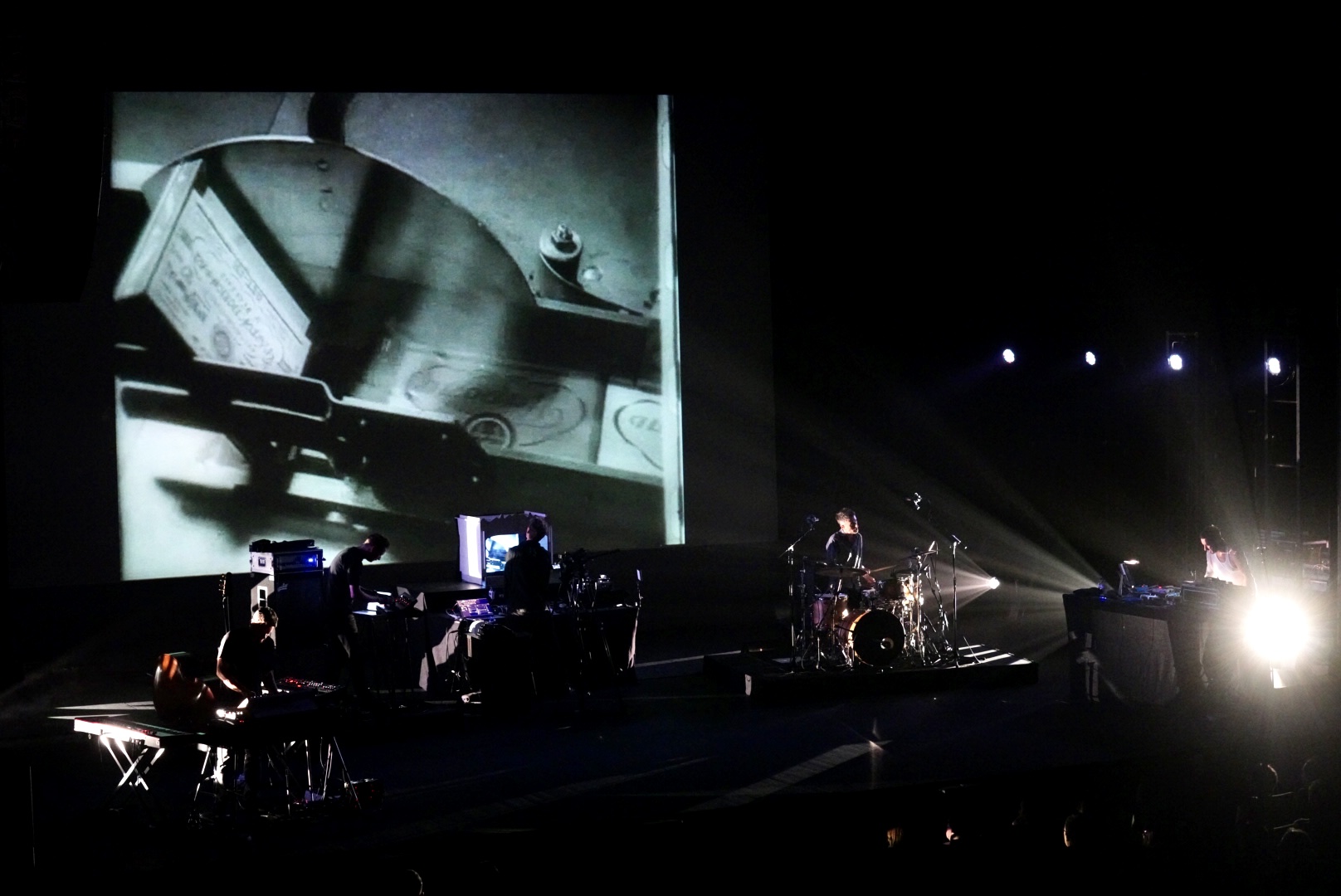
In a downpour night in Guimarães, a sold out room listened to The Cinematic Orchestra. Born in 1999 within the nu-jazz and downtempo electronic aestetic, with a cinematic approach to compositions, as their name gives away, they presented Dziga Vertov’s, The Man With a Movie Camera (1929).

© Paulo Pacheco

The soundtrack was created for Porto European Capital of Culture in 2001 originally presented to a, sold out Coliseu, in Porto. “Dear viewers. What you’re about to witness is an experiment”, appeared on the screen. It was what a, single man seated on stage, wrote on a typewriter, telling the audience what they were about to witness. On the center of the stage, a white frame, with a window to Vertov’s world and a camera that would project upon the big screen for all the audience to see as in a film theater.

© Paulo Pacheco

With a “man with a movie camera” on stage commanding and coordinating the visual side of the performance, Cinematic Orchestra started with The Projectionist”, developing their music in perfect sincrony with the images being worked on stage, to complement the listening experience and arise near transe sensations. The progressive melodies that do not reach climax, leave the listener suspended and the geometric, caleidoscopic images join to hypnotize the viewer. It was really as announced at the beginning, an audio visual experience.

© Paulo Pacheco

The concert did not finish without an encore. Ode to the Big Sea was the chosen track. This time the man with the movie camera targeted the audience that saw itself on the big screen while the camera lens run through the seats. It was funny to see people’s expressions and reactions that stood up to applaud a surprising performance.

© Paulo Pacheco

Sun Ra Arkestra, Casa da Música, Porto, 19.10.2023.

© Mondo Bizarre Magazine/Telma Mota

words: Marcos Leal (editing and free translation: Raquel Pinheiro); photos: Telma Mota

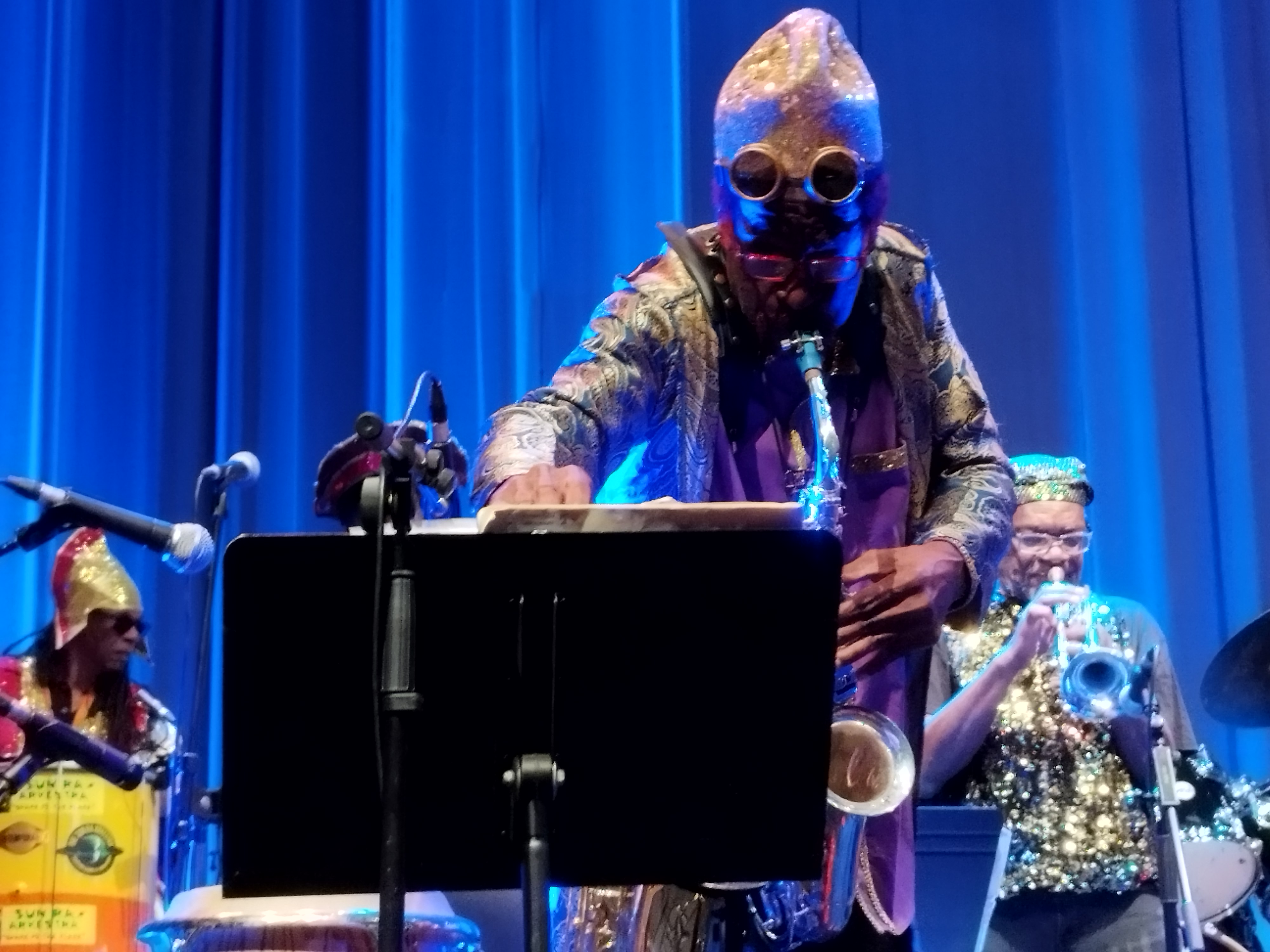
The Sun Ra Arkestra presented itself in Porto, once more, in a rainy Thursday night withinin Outone em Jazz concert cycle.

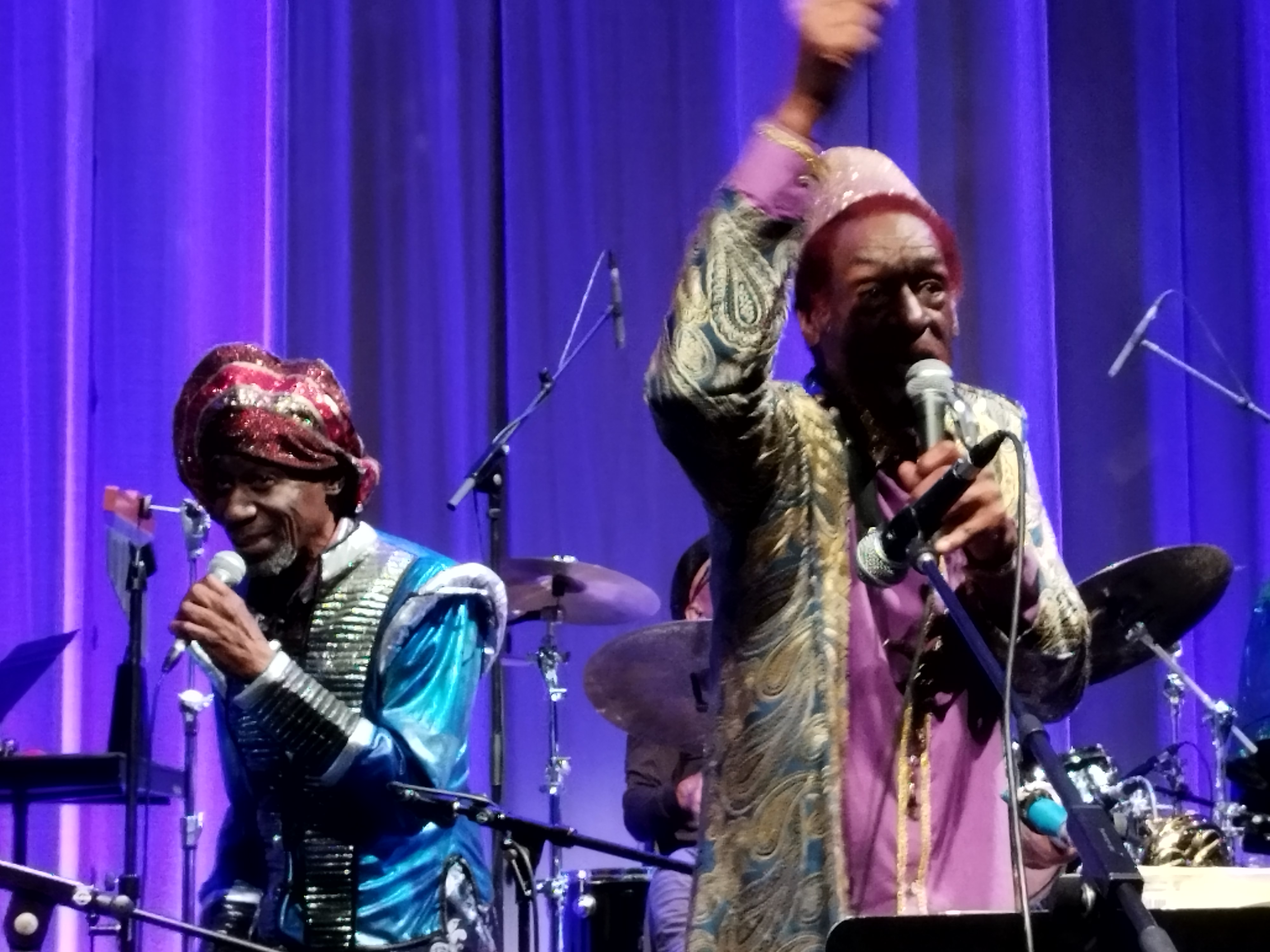
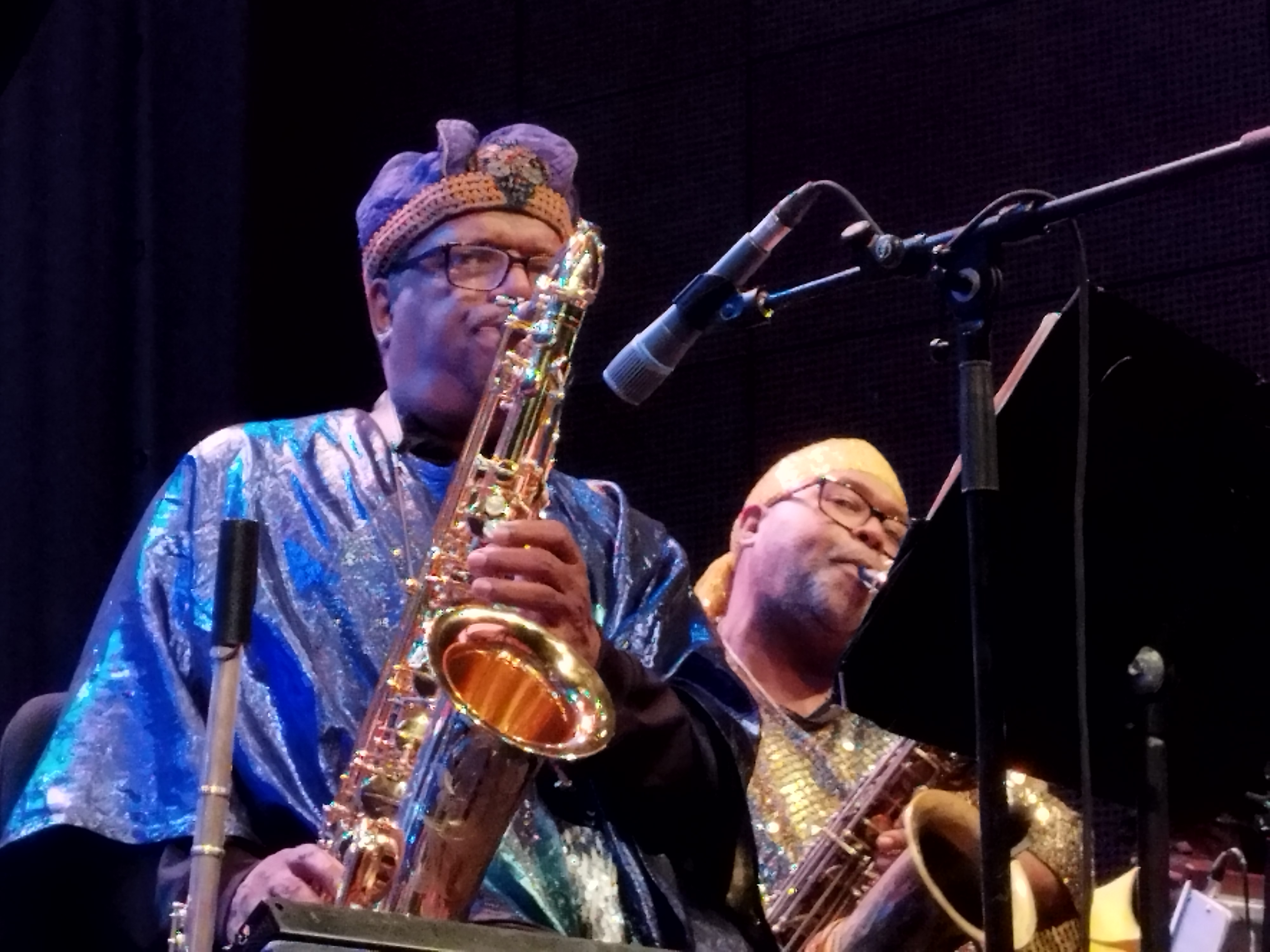
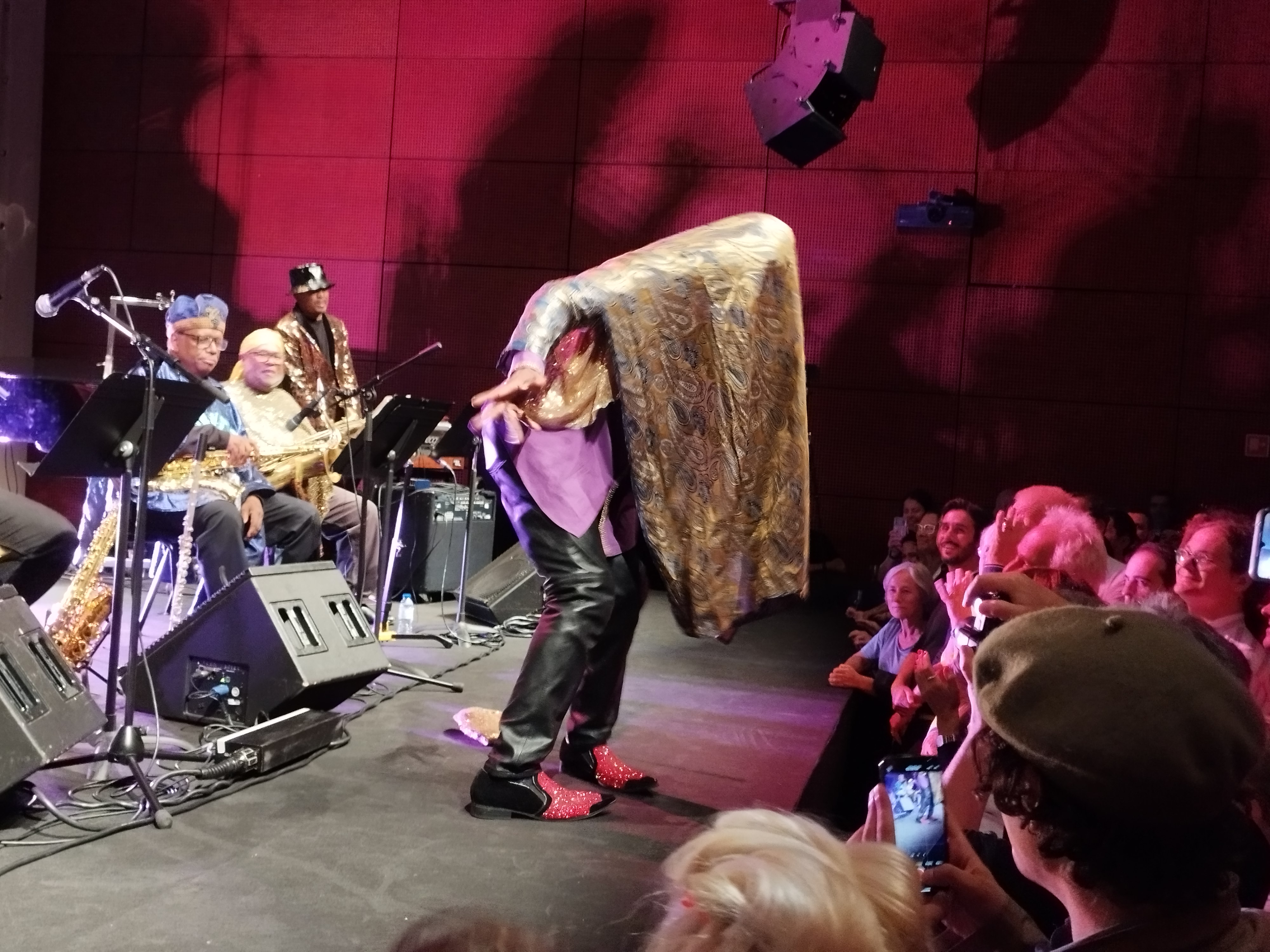
Before an expecting, sharped ear, audience the Sun Ra Arkestra entered the state in shinny colorful sequins that adorned the retro-futuristic garments of the 13 músicos who, slowly, took their place behind their instruments, before starting what would become a journey into time and intergalactic metaphysical space.

The ochestra, created in the 1950s by Sun Ra, one of the greatest names of avant-garde jazz, and it is now directed by another 99 years old alien, Marshall Allen, brought to Porto the philosophy and cosmic sound of its creator, as travellers from another world with a mission to spread piece, harmony, the cosmos.

At times, the cosmos can, initially, sound chaotic, but nothing is random. That is how the performance started. A construction of a dialogue between instruments with rhythms and somehow dissonant and atonal melodies towards a jazzy exploration, challenging those less prepared for it. Tara Middleton vocal contributions were one more instrument in the orchestra sound, releasing sentences of peace and galactic utopia.

© Mondo Bizarre Magazine/Telma Mota

It is in afrofutismo, of which the Sun Ra Arkestra is seen as a pioneer, that the influence in more contemporary jazz is understood, with the incorporation of elements that aren’t natural to jazz like electronic keyboards and synthsisers. It is interesting to highlight that those were some of the musicals elements that caught me ear the most with delightful moments. The Sun Ra Arkestra also gifted those in attendance with more classic jazz big bands like themes making the bodies of the audience to move swing style like.

© Mondo Bizarre Magazine/Telma Mota

In short, a performance that fulfilled both more traditional jazz lovers as well as avant-garde jazz ones, with high quality musicians, that alternate standing out with their solos with a sunny disposition of everyone on stage and memorable moments. Like when one of the older members of the Arkestra demonstrate dance moves enviable to thoso much younger. Other highlights: Halloween in Harlem, to coincide with the approaching date aproveitando a proximidade da date and a short walk among the audience.

© Mondo Bizarre Magazine/Telma Mota

The cosmic message of a band that isn’t, but could be from another world was, therefore, hand down in Porto.

© Mondo Bizarre Magazine/Telma Mota

Canções de Resistência no Mira @ Mira Fórum, Porto, 20.10.2023.

© Manuela Matos Monteiro

words: Raquel Pinheiro; photos: Manuela Matos Monteiro & Raquel Pinheiro; video: Manuela Matos Monteiro

Canções de Resistência a celebratory gathering part of Galerias Mira 10th anniversary were a joyful soulfilling evening of collective singing, on stage and on the audience, at times merged as a single voice

© Manuela Matos Monteiro

Twenty one songs, from seven different countries, five languages. From folk songs which beginnings trace back to the unknown or the XIX century to an assortment of key XX century songs. If the night was cold, dark and rainy, hearts and voices were strong, bright, warm, defient, loud or gentle depending of what the words called for, hopeful.

© Manuela Matos Monteiro

You can hear us all, choir and audience, sing We Hall Overcome – lon the video above – with passion and emotion in a room so full it spilled over to the street so many of us came for the ride. What you cannot hear or see is the downpours that, at times, would bring a shimmering sound into the back of the room, adding another sound and sensory layer to the performance.

© Manuela Matos Monteiro

There is a lot to be said about a room filled with humans singing along, content, joined by a mutual unspoken, sang, understanding. Many of us think we cannot sing, so out of fashion singing become in our daily lives. For the most part, we can all sing, hum, clap, be rhythmic, rock our bodies. Instrumentation, mostly acoustic guitar, but also double bass, electric bass at its most simple and gentle flute, was generally minimal. An accompaniment to the voices. If the all evening was a pleasure, it was a double plessure for me, after many decades, to re-met composer and songwriter João Lóio – musical director of Canções de Resistência – who was a a key figure of my childhood.

© Raquel Pinheiro

Canções de Resistência no Mira:Choir: Ana Afonso, Ana Ribeiro, Fernando Mota, Guilhermino Monteiro, Inês Salsedas, João Lafuente, João Lóio, Luísa Calado, Manuel Salsedas, Octávio Fonseca, Pedro Ramajal, Regina CastroSound: Carlos Rocha Musical Direction: João LóioProgramming & production: Acúrcio Monteiro, Armando Dourado

© Raquel Pinheiro

Libreto:

Maio Maduro Maio (José Afonso, Portugal); Para Não Dizer Que Não Falei Das Flores (Geraldo Vandré, Brazil); Ay, Carmela (XIX century Spanish folk song, Spain); Se Me Quieres Escribir (Spain); Por Trás Daquela Janela (José Afonso, Portugal); Comprade Juan Miguel (Alfredo Zitarrosa, Uruguay); We Shall Overcome (Pete Seager, United States); Canción Para Mi América (Daniel Viglietti, Uruguay;) La Complainte Du Partisan (Emmanuel d’Astier de lá Vigerie, France); Morte E Vida Severina (João Cabral de Melo Neto, Brazil); Benditos (José Afonso, Portugal); Milonga Del Fusilado (Carlos Maria Gutiérrez, Uruguay); Which Side Are You On (Florence Reese, United States); Canta Camarada (José Afonso from a traditional Portuguese song, Portugal); Canción Del Minero (Victor Jara, Chile); El Pueblo Unido (Sérgio Ortega & Quilapayún,, Chile); Strange Fruit (Abel Meeropol as Lewis Allan, United States); La Lega (XIX century Italian folk song, Italy); Todo Cambia (Castillo “Mudanza” & Julio Numhauser, Chile); Construção (Chico Buarque, Brazil) / Operário Em Construção (Vinicius de Moraes, Brazil); Bella Ciao (Italian folk song c. late XIX century, Italy)

© Manuela Matos Monteiro