We spoke with Mick Harvey about his new album Waves of ANZAC/The Journey. Waves of Anzac is the soundtrack of Sam Neills’ documentary Why Anzac With Sam Neill. The Journey is a four piece work in support of #KidsOffNauru a campaign for child refugees and people seeking asylum in Australia who, under Australia’s offshore processing regime, will be put on offshore detention. The conversation approached the ANZACs (Australian and New Zealand Army Corps), war, especially Word War I, refugees, Australia detention centres and more.
by Raquel Pinheiro
Waves of ANZAC
ANZAC Day is April 25th. The record came out April 17. Is there a reason why it was not released on ANZAC Day?
Because April 25th. was a Saturday? Actually I doubt Mute even thought of it as they are English and wouldn’t know when Anzac Day is. I did notice the release date was set for near to Anzac Day but really, it was not important to make the release coincide.
Waves of ANZAC is the soundtrack for New Zealander actor/director/producer Sam Neill’s Why Anzac With Sam Neill documentary. What made you accept to write the score for the documentary?
Because I’m interested in the subject matter and I like working on films when I know I am going to be allowed to develop my own ideas.
Currently how much meaning does ANZAC Day hold in Australia and New Zealand? How does its commemoration differ from Remembrance Day, November 11 (Armistice Day)? Is remembering ANZAC Day still relevant for Australians and New Zealanders?
It’s probably the most important day of remembrance. More important than Armistice Day for Australians and New Zealanders.
How was ANZAC Day celebrated this year, under lockdown?
It was commemorated at home, yes.
Anzac, the landing 1915 by George Washington Lambert, 1920-1922 (oil with pencil on wood panel). Art photo courtesy of the Australian War Memorial.
April 25 is the day of the ANZACs’ first landing at ANZAC Cove, Gallipoli, Turkey in 1915, during World War I. The landing was the beginning of an arduous, if not disastrous, path that would culminate in the evacuation of the Allied forces by December 1915. On ANZAC COVE alone, things got terribly confusing from the star with ANZAC suffering thousands of casualties. Isn’t it somehow odd that ANZAC Day is the day the ANZACs suffered such misfortune?
No, I don’t think so. It is rather more odd that it was an invasion of another sovereign country’s territory, which is hardly something to be proud of but that is not really considered. It is more concerned with the personal sacrifices and I must say you seem to be mixing up notions of commemoration with celebration. It is not a celebration.
The first theme from Waves of ANZAC/The Journey I listened to was The Somme, in the day Mute uploaded to YouTube. I found it striking. A couple of days later, I listened to the whole album. It took me more than two and a half hours to do so. I kept going back and forward on the tracks. Afterwards, I had to go for a very long walk to process the feelings, emotions and images brought by the music.
Seldom does a record affect me in such a way. Were, or are you, aware of the sheer magnitude of the music contained in the album? Of how it can so deeply affect the listener? Are you in some way touched by its music and, or themes, or, as its musical creator, you’re emotionally detached from it?
Well, it’s difficult to know or anticipate the effect one’s own music will have on someone else. Certainly, during the process of writing and arranging one is searching for powerful or effective solutions and in that process one is also hoping affected by what is happening as that is an indicator you have hit on something that might be working but generally you have to move on from that condition and just keep working. Obviously it is hoped that the final result will be impactful. Ultimately I guess I have to be very happy you were affected in this way as it indicates some level of success in my endeavour to provide an emotional soul for what is a very moving and powerful subject matter.
Listening to the soundtrack separated from the documentary – that I only deliberately watched a month or so afterwards – makes it stand out and have an emotional depth that is diluted in the documentary under the narration, the sound of the waves, etc. Had I only seen the documentary I would have most likely forgot the soundtrack. Yet, on its own, it lives, breathes, overwhelms, amazes. Do you relate to it, to how different it sounds and feels, within the documentary and outside of it?
The nature of any soundtrack music is to support or embellish the film it is made for. Morricone does not subscribe to the notion that you should not notice the soundtrack and believes it should be really loud. I don’t disagree with that idea, but it’s not the function I like most of my music to have. I prefer the traditional, conservative position on the function of film music. At the same time, I am sometimes aware that pieces I have produced stand up well in their own right. When I come to put together a compilation of film music works they are the ones that are chosen to be included. It has a certain inevitable logic.
In the documentary, Sam Neill speaks of how unlucky the ANZACs were in France/The Somme. The big losses, Australia not being keen on conscription, etc. Do you think the complications the ANZACs faced were connected to their countries being so far away, or was it due to poor and confusing leadership, ideas and tactics, and a not so good strategy?
The complications or difficulties the ANZACs faced were much the same as troops from any other country faced during WW1.
The ANZACs come to fight many thousands of kilometers from home because their countries were part of the British Empire. Sailing from so far away in ships packed with men must have been daunting. Arriving at Gallipoli and being met with all the difficulties must have had a tremendous psychological effect on the troops. Do you know what was the mood like in Australia and New Zealand 105 years ago? Did news of what was really happening reached back home? That you know of, are there reports from soldiers telling of their real feelings?
News of the casualties at Gallipoli did not reach Australia for some time. No doubt there was some news imparted by telegram messages but a combination of the war information machine and the difficulty of collating all the details meant that the full casualty lists were not published for, I believe, a couple of weeks. My grandmother told us that on the day the papers published those lists people were crying in the streets, so yes, the impact was devastating. As for soldiers telling their real feelings….this happened on occasion but for the most part what I can work out is that it was much later, in the 50s and 60s. For the most part I am consistently given to understand that soldiers did not like to talk about their experiences from WW1.
Waves of ANZAC goes through World War I, World War II and the Vietnam War. Music wise, some of the most intense, disruptive even, themes are In The Archives and The Aftermath. Are war archives and the aftermath of a war more disturbing than war itself?
They can be for those who remain because they are the reminder of those things and are tinged with melancholy and the memory of loss and the ongoing disbelief at what happened. At the time I suspect people are being more pragmatic and aware of the need to survive. Though I doubt the aftermath could be more disturbing in itself than being in
the thick of the action.
Wounded troops on the beach at Anzac Cove on 25 April 1915. Men of the AAMC are treating some of the wounded. Photo courtesy of the Australian War Memorial.
Reading the track list, I was reminded that Australia and New Zealand took part in the Vietnam War. At the time, both countries’ involvement in Vietnam caused controversy at home. Does that persist? Are Australian and New Zealander, Vietnam War veterans seen and treated differently than other veterans?
These days they are mostly respected and understood as having taken part in a misunderstood and unfortunate conflict. They are mostly quite old now so they are also generally respected as war veterans without other negative associations.
Vietnam is a terrifying, harrowing track. One can feel napalm falling, the jungle, the shattering of things and people, the despair, death. It goes up, explodes, then, ends with utmost sadness. Was that, the description of the thunder of war and its devastating effects, followed by a death’s silence what you envisioned when you wrote it?
Umm, I think in my mind’s eye I keep seeing film taken by US troops from planes of them carpet bombing forests.
When we interview you in November 2019, when asked about your interest in World War I you told us “I’m not sure why it holds such a fascination for me, but it’s something I keep coming back to. I had already read quite a bit about WW1 before I even learnt about my Grandfather’s generation’s involvement in it. That just made it that little, but more personal”.
Since, have you become more aware of why World War I holds such a fascination for you? Have you learned more about your Grandfather’s generation involvement in it?
No, my understanding of what interests me about it in particular remains something I can’t define. I always understood the involvement of that generation in WW1 but I do now know a lot more about my ancestors specific stories. But that is just a personal view into specific events – it doesn’t make me more or less interested in WW1 in general.
A while ago, on ANZAC Day, you posted a photo of your great uncle (Rev. Fred Harvey) and grandfather (Ted Harvey). The caption said your grandfather had landed at Anzac Cove with the 2nd Battalion AIF on ANZAC Day 1915. Do you know how your grandfather’s campaign went? Do you know how much he changed between that photo, taken in 1914, and his return to Australia?
Well, the outcome of the campaign is clear. You have described it in an earlier question. My Grandfather lost half a leg after being injured at the Somme and was sent back to Australia in 1917. He looks different in the photos when he is returning home, but that’s not so surprising as he is 22 by then and was only 19 in the photo with his brother.
Rev. Fred Harvey and Pt. E.T.A. (Ted) Harvey photographed in late 1914 in Sydney. Photo courtesy of Mick Harvey.
Do you still read about World War I ? If so, what have you been reading about it?
Sometimes, yes. I have a novel I will be reading soon called ‘The Middle Parts of Fortune’ by Frederic Manning and not long ago I finally watched ‘All Quiet on the Western Front’, the movie from 1930 which, apart from some corny acting by the lead, was amazing. The
interest persists.
While reading a feature about T.E. Lawrence (Lawrence of Arabia) I came across an Australian Camel Corps (The Imperial Camel Corps Brigade – ICCB) in Palestine, during World War I – The ICCB served elsewhere in the Middle East as well. Have you ever heard of them? There is a small propaganda film, directed by Lowell Thomas, called With Allenby in Palestine where they can be seen: https://www.iwm.org.uk/collections/item/object/1060000120
Sounds interesting, I might check it out. I’m aware the Australians were in Palestine but I’ve not heard of the Camel Corps.
After two albums of yours about war/World War I – Waves Of ANZAC and The Fall and Rise of Edgar Bourchier And The Horrors of War (2018) and being part of P.J. Harvey’s Let England Shake (2011), another record about war and World War I, do you think that, music wise, you will still be working on the subject? If so, would you consider doing a record for which you would write the lyrics?
Not in the near future, but you never know. If something interesting comes up…..
Others wars, namely World War II and the Vietnam War, both featured on Waves of ANZAC seem to hold less interest to you. If so, why? What about more recent wars, like the Iraqi or Afghanistan ones?
I don’t know why not. It’s something about the human scale of WW1. The fact that it was not really on a human scale anymore but the people involved were still being used as if it was – the people involved were simply overwhelmed. In later wars the role of the humans has evolved. I am interested in WW2 and have read some things about it, in
particular the one volume history by Max Hastings, and in some ways it is a totally different type of event.
On P.J. Harvey’s Let England Shake (2011), a record about war, you sing the male vocals on The Colour Of The Earth, that tells the story of an ANZAC’s soldier called Louis that runs from the line and disappears. Were you already interested in the stories of the ANZACs and war, especially WWI, by then? Did being part of that album somehow influenced you on, or for, Waves of Anzac and, later, for when you teamed up with Christopher Richard Barker for The Fall and Rise of Edgar Bourchier And The Horrors of War (2018)?
My interest in WW1 goes back to my early 20s. Being involved in Let England Shake had no bearing whatsoever on the Edgar Bourchier album or Waves of Anzac.
Men of the 53rd Battalion in a trench in their front line a few minutes before the launching of the attack in the battle of Fromelles by Charles Henry Lorking, 19 July 1916. Photo courtesy of the Australian War Memorial.
Have you ever attended a dawn commemorative ANZAC service at ANZAC Cove? Or elsewhere? If so, can you describe the experience?
No, I’m not interested in that kind of thing. I’m not into public commemorations which all too often spill over into nationalistic sentiments and related thinking. Not that ANZAC Day is designed or intended to do that. It just has aspects which make me feel uncomfortable.
Artificial poppy : Lest We Forget 1949 (cooper badge). Image courtesy of the Australian War Memorial.
In War, a song written by Norman Whitfield and Barry Strong for Motown in 1969, made famous the next year by Edwin Starr, the lyrics read “War, uhu, yeah/What is it good for/Absolutely nothing…” Do you share the sentiment that war is good for nothing?
Pretty much.
The Journey
Do you, somehow, equate the journey of the refugees and asylum seekers to the one of the ANZACs? I’m thinking about the sea journey, but the thought can be extended to any other commonalities. Also, the first track of The Journey is called Conflict. A war is, of course, a conflict. In that alone, there is already similarity.
I think to conflate the two issues is problematic. It was a common theme in terms of what artwork I could use. The plight of refugees is fundamentally different to the experience of soldiers, especially volunteer soldiers, in that they are trying to escape conflict. The point I am making by using that title is that nearly 100% of refugees attempting to enter Australia as “illegal immigrants” by the definition of the Australian Government are actually genuine refugees who are fleeing civil wars and other similar events – the conflict – who should be given asylum under international law, regardless of how they arrive in the country.
The second track is named Capture (Not Real Refugees). Again, capture happens to soldiers, in the context of refugees, what does capture (being captured?) means to you? Why (Not Real Refugees), what does it mean?
Well, these people are basically detained and put in detention facilities which are really just offshore, open jails in places like Nauru and Manus Island. So they are, quite specifically, captured. The current Australian Government took to calling these asylum seekers from conflict zones “not real refugees” when they referred to them in some attempt to stigmatise them and keep public opinion on the side of the government’s policy. It was clearly and demonstrably a propaganda exercise in simple disinformation as these people are almost exclusively “real refugees” which Australia should be taking care of. That’s why I gave that movement that title.
Since you wrote The Journey how has the situation for those in Nauru, Manus Island and Christmas Island changed, if at all?
Not really, many of them, maybe a bit over half of those there in 2018, have been relocated to the United States under a bizarre deal which was made with Obama but many of them – nearly 50% as I can best work out – remain in the detention centres.
According to the links below, last year, there was a suicide spike among asylum seekers in Manus Island and Australia’s Offshore Detention was considered unlawful by a International Criminal Court Prosecutor. Conditions there must be quite grim. What is the sentiment in Australia regarding the conditions refugees and asylum seekers are met with? What is yours?
Most Australians have been drawn into pretty simplistic protectionist ideas about these unfortunate people and through a campaign of basic disinformation they have been misled into thinking these people pose a threat to our sovereignty. It’s all tied up with a complex piece of nonsense regarding people smugglers and that this is, ultimately, the
humanitarian option. But the whole thing began with misinformation – there was never really a problem in the first place with the numbers of refugees coming to Australia but once the conservative elements in the Australian Government realised the issue had traction they kept using it as a fear policy to help them shore up votes and stay in power.
I fully agree that people smugglers should be discouraged and that that activity should be shut down if possible and indeed, the actions the Australian Government has been taking has seen people-smuggling pretty much disappear in relation to Australia. But in the end effect it’s all a lie. They say they are trying to stop “moneyed-up-queue-jumpers” who just want to come to Australia for a better quality of life but in fact THOSE people have been arriving illegally at airports in huge numbers for years. The people risking their lives on boats after escaping conflict zones are genuine refugees who do not have access to apply for a visa to Australia under the normal processes in their country of origin and are forced to tale extreme action to protect themselves and their families. Huge numbers
of these people have spent years, or are still in, detention camps in shocking conditions. To punish innocent and desperate people is just not the right method to deal with people smugglers. Two wrongs don’t make a right as the saying goes. But it does seem to be a vote winner so it remains what they call a “political football”.
Christmas Island, Manus Island and Nauru where the detention centres are located at.
With the pandemic, have conditions for refugees and asylum seekers in Australia improved or worsened? In Portugal, immigrants with pending request were temporarily legalized so that they could benefit from our National Health Service and other Social Security benefits. It was considered safer for everyone to do so.
They are relatively safe as thus far the islands where the detention centres are virus free. Papua New Guinea had some cases, but they have all recovered.
If refugees and asylum seekers are allowed to stay/live in Australia do they integrate in the community? Overhaul, how do Australians treat refugees and asylum seekers/former refugees and asylum seekers?
For the most part they settle in quite well. I suspect, as with all people who have arrived here over the last 200 years, the generation which first arrives retains many of their connections with their homeland but even the first generation born here is more interested in the prospects of the new world. Geographically it simply feels like a world apart here and there is. o sense of needing to hang on to old prejudices and divisions. Australians in general, however, can be as racist as anyone else AND as welcoming. It all depends.
The last track of The Journey, that is also the album’s closing one, is called Hope. You wrote it hoping the plight of refugees and asylum seekers had an humane outcome. Now, hope seems to be what many think the whole world needs and others seem to have completely run out of it, diving into depression and pessimism. Where do you currently stand on hope, be it for those detained in Australia Offshore Detention centers or for the world as a whole?
Mostly I just think if the world became fairer and there was more economic equality most of these problems would disappear.
In All Art is Propaganda, George Orwell said that “In our age there is no such thing as “keeping out of politics.” All issues are political issues, and politics itself is a mass of lies, evasions, folly, hatred and schizophrenia.” Do you think artists have the duty, especially in times like these, or at least should, bring up social issues and, in their art, make political commentary and, or statements? And that politics is a “mass of lies, evasions, folly, hatred and schizophrenia”?
I have not read “All Art is Propaganda” so I may be speaking out of turn about things which he covers in his book but George Orwell does have a tendency to make sweeping statements. To begin with if he actually argues the idea in the title, that all art is propaganda, then this is a highly selective starting point in that it refers only
to the artist’s connection to art when it is released or made public.
It does not account for the “receivers” of art and the impact it has on people in their lives nor does it show any care for the many people who make art or, indeed, creative crafts, for their own enjoyment.
One can well argue that all issues are political issues but to assert that it is “a mass of lies…etc” is to limit politics to the institutional as well as to misunderstand many politicians genuine commitment to public service blah, blah, blah. Orwell wrote some good books and is an interesting thinker but seems to spend far too much time wrapped up in his own narcissistic, personal totalitarianism – in the perceived greatness of his own thinking or experience. People are also capable of great kindness and generosity, in my opinion.
Artists only have the responsibility to keep doing what they are driven to do not what outside influences or influencers might expect of them. All art has a political aspect even when not in the least political – that in itself is a position.
Do you have, or had (since now everything changed) plans to play Waves of ANZAC/The Journey live?
No, I have no plans for that. Perhaps it could form part of a program of my film music in some future outing, but an arts council or festival would have to back such a show as it would be expensive, complicated and risky to attempt using only my own resources.
* Hope and At Sea were not painted based on The Journey. Hope pre-dates it an and the pandemic. At Sea come afterwards, but it was not until I was editing the interview it come to me it actually reminded being at sea. Hence, the name.
Bruno Ricardo interview KINO – German Language Film Festival’s curators Corinna Lawrenz (CL) and Carlos Nogueira (CN) about the festival, German Cinema and more. KINO runs from 29 January to 5 February at Cinema São Jorge and Goethe Institute in Lisboa and opens with Lara, a film by Jan Ole Gerster. Foco section will be centered on German director Ulrich Köhler.
2020’s KINO seems to follow some themes: the focus on children’s problems; family struggle; the unfulfilled dreams of women. Why does the festival these are the subjects to explore in this year’s edition?
CN: When we are looking for films, we don’t have a particular theme in mind. We simply want to pick the films we consider the best available in a specific year. It is only after the selection is made that some undercurrent features become apparent. And you are right, a number of films this year focus on children and youth mal de vivre, as well as on family problems; we could add a couple of other themes such as the integration of migrants or coping with mental illness.
CL: These themes of course also are not only the result of our choice of films, but also represent a strong preoccupation of filmmakers with certain topics or questions. Thus, they tend to be a reflection of social issues in those countries but also on a more general level.
Ulrich Köhler is a respeced name in German Cinema, but a virtually unknown to the portuguese audience. What can they expect from his movies?
CL: Ulrich Köhler is in fact one of these cases of filmmakers who only once had a film in commercial distribution in Portugal (In my room) although his oeuvre of five films has received a lot of acclaim in festivals around the world and has all the potential to reach a wider audience. His cinematography is quite minimalistic and very coherent (he has worked with the same director of photography throughout his career) and tackles questions that are on the one hand a result of his very personal biography but that are at the same time extremely universal. His films centre around characters that live a quite comfortable life, feeling nevertheless unhappy with their accommodated existence in a capitalist society half a decade after the Second World War, searching for a different way of being in the world.
Das freiwillige Jahr by Ulrich Köhler
Do you feel German Cinema became more established in Portugal after 17 years of the KINO Festival?
CL: It became surely more established in the way the festival itself became more established as a platform for seeing German Language cinema, but of course we owe that entirely to a number of great films and filmmakers that came up during the last years.
CN: We would like to think that KINO played a role in promoting German-speaking films in Portugal, but I am afraid it is more accurate consider that there are a few names that started making films over the last 15 or so years, like Christian Petzold in Germany or Ulrich Seidl in Austria, and whose films showed the public that there were interesting things going on in that part of Europe.
KINO always seems to shed a light on younger and rising filmmakers. Is that purposeful and intentional?
CL: Yes, we see it as one of our most important aims to promote young cinema of the German speaking countries that would not have a big platform otherwise. That‘s why, since last year, we also attribute an audience award to one of the young filmmakers at KINO.
What is the support you feel the embassies that collaborate with KINO have offered you throughout the years?
CL: I wouldn‘t talk of support only, but of a strong cooperation. In fact, the embassies are part of the selection process and depending on each year‘s program they invite filmmakers and organize debates, etc. This mode of coproduction is truly important for KINO as the cinema we present is itself extremely interlinked which becomes obvious if you look for example at the number of coproductions we show each year.
Can you explain the process of selecting the movies you highlight in KINO every year?
CN: Right after each edition, we start preparing the next one. The Berlin Film Festival, that usually pays a particular attention to German and German-speaking films, and that immediately follows the KINO in terms of calendar (this year, Berlinale takes place between 20/02 and 01/03), is our starting point. Either attending festivals or through online platforms, we try to watch as many films as possible. Some distributors send us suggestions and sometimes we directly contact them to ask for screening links. We meet each other regularly and we discuss, sometimes very lively, our choices… Regarding the non-German films, we also have to take into account the respective embassies point of view. In the end we always come to a consensus.
Carlos Nogueira become a Kino co-curator in 2019. What changes has that brought to the selection process?
CN: I don’t think that I changed a lot in terms of the functioning of the festival: KINO was a well-oiled machine with more than a decade long existence when I started co-curating its programme last year. I may have brought a non-German point of view to the selection, which I believe was desired by the Goethe Institut, that may have sensed that the Portuguese audience was not being rightly targeted.
CL: In fact what Carlos mentioned was one of the main ideas: to turn the festival more intercultural, to have two different points of view on the films. And of course the selection process Carlos described is way more interesting in a team. On the other hand we also restructured the festival‘s sections and introduced Visões, Perspetivas and Foco as the new structure of the festival.
Oray by Mehmet Akif Büyükatalay
The Goethe Institute regularly shows German movies to the audiences. How different do you feel KINO’s programming is from the regular one the Institute does?
CL: Our programming throughout the year is usually more topic-focused, whereas KINO is extremely open and only has the sole condition of presenting recent cinema. That gives us a different kind of freedom in programming.
In the last few years, filmes like Toni Erdmann and Never let me go were spotlighted in several movie festivals and events, such as the Oscars. Do you believe this success reflects the nowadays dynamics of German Cinema?
CL: I don‘t agree very much with the idea that the dynamics of German Cinema is reflected in single cases of success of films like Toni Erdmann or Werk ohne Autor, if that’s the film you mentioned. In the first place, because we’re not talking about a homogeneous corpus of cinema, your examples show that quite well. And secondly, the dynamics lie much more in the whole development of a filmmaker like Maren Ade and not only in one big success like her Toni Erdmann.
Can each of you tell us your favourite german movies?
CN: I would like to point out three films by the most important German director of the immediate post-war, Helmut Käutner: In jenen Tagen (Seven Journeys, 1947); Bildnis einer Unbekannten (Portrait of an Unknown Woman, 1954); Die Rote (Redhead, 1962). The quality of these films, that reveal a true modernist, inventor of forms, and poetic filmmaker, shows how the History of Cinema is far from being written.
CL: I consider it impossible to name just one film since there’s a lot of different kinds of cinema I appreciate very much. As Carlos mentions post-war cinema I find a lot of East German film productions of those decades and until the late eighties also very remarkable. One of the most thought-provoking filmmakers for me was for sure Harun Farocki, just as much in his documentary and essayist work as in his collaboration in Christian Petzold’s fiction films. Haneke‘s DAS WEISSE BAND marked me a lot, but I could also mention filmmakers like Angela Schanelec or the Austrian documentarist Ruth Beckermann.
From your pespective, how much has KINO changed since its inception?
CL: It grew from a small film week with only German cinema to something much more diverse in terms of the countries it represents but also cinematically speaking. The context also changed a lot, there’s many more festivals and platforms nowadays so we can give more space to less well known filmmakers.
What fresh take do you believe the “Visões” section brings to the KINO programming?
CL: With the introduction of sections was important to us to give a little bit more orientation to the audience: Visões is where you find more classic narrative cinema and some of the big names of German filmmaking, in Perspetivas you can see more experimental films or works that challenge our ways of seeing – and in both you can discover some of the young filmmakers. Last not least, Foco is dedicated to an author or topic.
Pop Crimes – The Songs of Rowland S. Howard are five performances of Rowland S. Howard’s songs, a commemoration of the 10th anniversary of his departure and of his 60th birthday (Rowland was born 24 October 1959). They will happen
January 26th (Sunday) at Corner Hotel, Melbourne, Australia and February 07th (Friday) at L’Astrolabe, Orléans; 08th (Saturday) at La Maroquinerie, Paris and 09th (Sunday) at Ubu, Rennes in France and on the 12th (Wednesday) at Southbank, London, UK with Genevieve McGuckin, Harry Howard, J.P. Shilo, Mick Harvey, Conrad Standish, Jonnine Standish, Edwina Preston, Bobby Gillespie & Lydia Lunch (Europe) and more.
We spoke with Genevieve McGuckin, Harry Howard, J.P. Shilo and Mick Harvey about Rowland, his music, songs and a number of other things. And end up with an amazing set of answers. Prepare for a long, in-depth reading of all (or almost all) things Rowland. The interviews, Harry Howard’s one aside, are in alphabetical order. Given the nature of the interviews, some questions are the same to all musicians. We have also done minimal edit to the replies (the interviews were conducted by e-mail) in order to preserve the writing style and personality of each interviewee.
Interviews by Amândio Barbosa, Guilherme Lucas, Raquel Pinheiro and William Wernham.
Who come up with the Pop Crimes Tribute idea and why?
I’m not sure who had the initial thought. The idea was literally to pay tribute to and remember and celebrate Rowland’s greatness as a person and a musician. That’s my view on why.
Ten years have passed since your dear brother’s early departure. Glancing at your common past, not only as two exceptional musicians, but above all as accomplices souls, can you share what is most relevant and vital about your relationship?
Rowland and I had a unique connection. Not a better or deeper connection to other important people in our lives but unique. We knew each other from the beginning and we loved each other.
Do you, somehow, feel the weight of being Rowland’s brother?
I know what you are getting at. We all have a weight of our own. Rowland was razor sharp and very talented, sometimes he intimidated me to be quite honest!
What is the more unbearable thing for you to live in this world without Rowland S. Howard?
Rowland is always with me but I miss just being able to ask him how he is and hearing his latest tales. He was a wonderful story teller. He was funny and always amazed by the doings of others. I miss his sense of disbelief, his jokes and his perspective. It was fun to be a part of his strange world.
As a musician and songwriter what have you learned with Rowland? And what have you taught him?
I learnt countless things from Rowland. I was thinking the other day about Several Sins which we co-wrote and how he showed me that song writing really wasn’t that hard or mysterious, that if you had an idea it was actually quite easy to write a good song. Good ideas don’t come cheaply of course.
When you’re playing Rowland’s songs do you feel them as his brother, as a musician, as a fan, all of the above or something else?
All of the above. In some unconvincing personal way, I get to play at being him also.
Do you approach Rowland’s songs differently than you approach someone else’s songs?
Hmm I don’t often approach other people’s songs really. It’s hard. Everyone who is any good has a different musical sensibility, rhythmically and melodically so to take them work on convincingly is a challenge, I find. With Rowland there are other layers of complication for me but also other layers of understanding, which helps.
Rowland was already a living legend, but his departure sparked increased interest in his musical legacy in the younger generations, and was cited by many musicians as a maximum influence. Do you think this is only due to a rare and magnetic combination of music and lyrics, or his iconographic style of sheer abandonment on stage, wielding her Fender Jaguar with an eternal cigarette in the corner of his mouth, wrapped in a vortex of deliciously overwhelming feedback also contributes to the consolidation of this status as one of the greatest in rock ‘n’ roll history?
Yeah of course. He was a hell of a stylish fellow visually. That’s quite important in itself especially in combination with music. A visual and sonic impact that inform each other. It’s all a language. It all sends signals. Communication is subtle and complex rather wondnerful.
Rowland S. Howard
In this concert series of Pop Crimes: A Tribute To Rowland. S. Howard, and doing justice to the same performances that took place October 2014 in Melbourne, there are two songs of his sung by you, These Immortal Souls’ Marry Me (Lie! Lie!) and The Golden Age of Bloodshed. It’s curious that although the bulk of the songs are vocalized by J. P. Shilo in a timbre very similar to your brother, it’s with you that almost replicated his voice. We’ll say it’s a genetic thing. What is the significance of representing him in this tribute to his music and memory?
Yes, there is a genetic thing of course. In These Immortal Souls Rowland always wanted me to do vocal backing parts to strengthen different parts of the songs. Unfortunately,I didn’t have the skills or confidence at the time to carry that off while playing bass. That was quite frustrating for Rowland. I have never been a highly skilled musician in any way except perhaps creatively. It’s strange to have some of his voice in a way but our registers are actually slightly different despite the similarities.
Which are your Rowland favourite songs?
There are so many I like it is really hard to say. I have been learning Still Burning for the upcoming Melbourne show. It’s a fantastic song! Rowland has a large enough body of work that you can flit around (like a moth) and have different favourites at different times. Teenage Snuff Film is definitely his strongest LP for me.
What Pop Crimes, if any, did Rowland commit?
He exposed pop for the lousy cut rate, cheapened shallow, travesty that it really is.
No, I don’t actually believe that, fully. Although on one level it’s true but pop music can of course be pure genius as well. I think he shared that view.
Rowland is being complex. His music is never just pop music as in it’s never easy as pop’s reputation claims it should be (his songs are “much too slow and much too long”). And neither is it ever really popular. Rowland is wittily criticising his own work with the title in a way that also enhances and compliments it by branding it in his own particular ‘cool’ way. There you go, that’s what I’ll say.
At the end of Autoluminescent J.P. Shilo recites from Etceteracide, Rowland’s unpublished novel. Are there plans to bring it to print?
There is a publishable edit of Etceteracide. If we decide to publish it then it will certainly go to print.
Did you, or anyone else in the Pop Crimes shows, contributed to Something Flamable, Gerard Elson’s biography about Rowland? Is the book still going to be published?
Gerard spoke to me and a lot of other people as part of his research process. I’m not sure where he is with that project but it is quite ambitious in scope.
All Rowland fans have been in a state of turmoil since you recently announced on your Facebook page the book edition of This Guitar Belongs To Rowland S. Howard. Since you are the editor, can you tell us more about it, the process of selecting the photos and any texts it may contain, as there is a great deal of secrecy about it at the moment?
It’s not meant to be secretive, sorry that’s my fault as I’m not experienced at publishing anything myself and I’ve been uncertain about what to say about it and what to show of it. Everyone will know what it is soon enough and they can make up their own minds about it.
It is purely a book of images which were taken especially for this one book. It is a detailed record of a culturally facinating object. There aren’t any words, the pictures say more than enough on their own.
Is there anything from the tribute shows, guests aside, that you can unveil for us?
The shows will be great. Expect a big name guest in London (I’m told).
What is your fondest memory of Rowland?
My remembrance of what it felt like to be beside Rowland, to be his friend and his brother and his colleague. It’s an irreplaceable feeling.
Do you have any Rowland unheard stories you would like to share?
That’s a bit hard after answering the previous question.
Rowland told once that when he was sleeping on the couch at our sister Angela’s flat that a moth flew into his ear. He described the sound of huge beating wings magnified by proximity “it was as if a giant bird was in the room”. Eventually he had a thought and poured olive oil into his ear to drown out the wings and drown the moth. The wings stopped but he said the moth never came out, that it was embalmed in his ear. We sat there, half grinning and contemplated the moth that slept in Rowland’s ear.
As a musician and songwriter what have you learned with Rowland? And what have you taught him?
What Rowland taught me. That writing songs from your own emotions moves people far more. Be yourself truly and eventually the world will catch up to you.
What did I teach Rowland? I don’t really know. He taught me a million things. Oh, I taught him how to make corn muffins!
During all these years, in which we have been reading and listening to some of your interviews in the print and radio press, we always got the feeling and the perception of the love and affection that you have always dedicated to Rowland S. Howard, in many moving moments and of unwavering complicity. As a keyboard player (we also know that you play guitar and possibly some other instruments), your collaborations are also mixed with RSH music (shared only with Mick Harvey), which makes you a musician of choice in his musical writing. What was it like working with him? Are there any episodes that you can tell us that are representative of how your creative chemistry developed, both in rehearsals and in the studio?
Working with Rowland was a fantastic experience.
He pushed the boundaries, he pushed me. It could be demanding but it was also fun, and I have not one single regret. Recording Some Velvet Morning with Rowland and Lydia Lunch was my first time in a studio. Knowing I’d be nervous Rowl said “Ok Gen, just play along to the track a few times, work something out, we won’t even be listening in here. I’d played through it once when Rowl said “Ok, come and listen”. That was it. They’d recorded me playing and it was bizarre but great.
So our creative chemistry sometimes involved trickery.
No, we just understood each other in some fundamental way, talked things through, and encouraged each other.
Literature (is) and was also a common passion, mentioned many times in your interviews. We realize that reading inspires for life (and is often much larger than life).Was literature just a comfortable and inspiring extension for both of you to improve your creative process while working the songs, or did it serve as a safe harbor to regain strength from the strenuous creative process with regard to musical composition?
Neither Rowland or I could have existed without books. At his funeral, a friend described Rowland as being like a wicked fairytale! Perfect. We were both greedy readers, and I still am. Whether for entertainment, discovery, curiosity, distraction amusement inspiration, you learn about things you could never experience in your own time and place. Diving into the story of another life in a parallel universe is bliss.
And yes. A safe harbour too.
Watching the 15 LJ Spruyt videos on Youtube, about the 2014 RSH tribute concert in Melbourne, which will be extended to Europe in the coming weeks, you are the musician, along with JP Shilo, which remains stoically on stage in the interpretation of the whole set of songs of the show (except for Wayward Man), while all the other musicians take turns by theme. Your performance is extremely solid and precise, becoming fundamental in the dynamics of all songs. How are you facing this moment of return to the stage and the big shows?
I’m facing it with gleeful anticipation, the odd anxious flutter. I can’t wait to play live again. Being on stage for nearly every song is exhausting and uplifting – I get so completely lost in it. Playing guitar on Sleep Alone is just fantastic!
On a 2013 Q&A on a Rowland Tribute page you said that you refused to sing your own songs. On the 2014 Melbourne RSH Tribute Concert you’re playing keyboards. Will you venture to sing in one, or more, of this new Pop Crimes Tribute shows?
Probably. Not.
Do you dislike your own voice? Do you feel it would not do justice to yours, Rowland’s or someone else’s songs?
I used to be scathing about my own voice, (due no doubt to all manner of tangled neuroses). I’m far more self-forgiving these days. Never say never.
On the same Q&A you said Dead Radio is one Rowland song you know was written about you, or partly about you. Is it hard to been on stage when the song is played? How do you feel when Dead Radio comes on, be in on the Radio or on the shows?
No, not anymore. The words used to affect me more in the 90’s. Especially after hearing a woman in the audience wonder out loud “Who IS this woman who keeps breaking Rowland’s heart?” Her friend piped up “Yes. I want to kill her!” That happened more than once. I’d tell Rowland but he’d just laugh and say “all the more reason to write your own songs Gen”.
I always thought the words were fantastic. The ”You don’t get any older” line grows on me.
There is a still unconvinced market in promoting an RSH brand image, but with a huge financial potential that encompasses: from a Corey Duffel who “signs” an RSH skateboard to the RSH guitar pedal from the Reuss brand, through the RSH guitar strap… not to mention the Fender Jaguar guitar and the Fender Twin Reverb amplifier, which many musicians get in an inspirational fashion way in their honor, and who have gone farther from having models of RSH signature in the near future. What’s your comment about this more commercial reality of his legacy?
The skateboard, the pedal and the guitar strap have all been done with our
permission.Though too many further Rowland gizmos might muddy the waters and end up lessening the impact of his legacy. Rowland himself was not really concerned with the merchandise part of music life.
That said, we are about to flood the world with highly collectable Rowland T-shirts, badges etc. More Teenage Snuff Film vinyls.
What is your opinion about the importance of RSH music nowadays? Do you think it will continue to be relevant to the future generations of music lovers and musicians, within the niche of alternative rock music, for decades to come?
Absolutely. New generations keep discovering him. Good music never dies.
Why have These Immortal Souls, a fabulous band with two fantastic albums, amazing live, ended without reaching great public glory and why?
Brilliant question! Thank you! We hopped into the wrong tardis, moved continents, lost our record company…
“These immortal souls of ours. We take a pen to our lives. And a knife to our lies. Lost in a love of ourselves”. Do you agree and subscribe to it?
The first three lines yes. The Lost in a Love of Ourselves? Thank God, No. Not for a very long time.
Does it ever get tiring doing what we’re doing, talking about Rowland?
Yes, of course. The memories are much easier to pull out than to put back. I wake up later, gnawing over something I should have/shouldn’t have/ said. Maybe a different image of Rowland gets pinned up in my mind.
What Pop Crimes, if any, did Rowland commit?
He saw Pop Crimes all around him. In the music world. In the state of the world. The politics, the populism, the blatant unfairness. The physical state he was in.
Which are your Rowland favourite songs?
Kick the Can, Shut me Down, Exit Everything, Ave Maria, Autoluminescent, Golden Age of Bloodshed, Sleep Alone.
What is your fondest memory of Rowland?
Sorry, I have to keep something for myself.
Do you have any Rowland unheard stories you would like to share?
You’ve possibly already mentioned it in past interviews, but we are not aware of it. We would like to know under which conditions the first personal contact with Rowland occurred. All we know is that there was a time when he was the producer of your band’s – Hungry Ghosts – album (Hungry Ghosts LP, 1999). That seems to be the official time for a very fruitful friendship and collaboration between the two of you… But before that, in what context did the initial contact occur?
When I was in my early teens, I remember he appeared out of nowhere and sat down opposite me on a tram in Melbourne. I definitely knew who he was, (I had developed a very early appreciation of The Birthday Party), though I doubt Rowland would have even noticed my presence, that may have been exactly why he came and perched there, to be unknown.
I remember subtly observing him throughout the journey. Wondering what song he was tapping his fingers along to in his head. Though chose not to engage in conversation, for fear he would fly away.
Fast forward a few more years and at Birdland Studios, I was handed a list of names who I would like to produce the Hungry Ghosts album, Rowland’s name immediately stood out. Within a few weeks, we were in discussions together, how we would like the record to sound. We hit it off immediately, what a relief. In hindsight, it feels rather poignant that he should help create my first record, and that I should help to create his last.
As a musician and songwriter what have you learned with Rowland? And what have you taught him?
I really feel I only ever learned from Rowland. Without a doubt, he was the coolest, with impeccable taste. Unpredictably enthusiastic about all kinds of Art & Culture, on many levels. He was kind-hearted, quick-witted, highly intelligent and always classy. I guess as far as music goes, I probably learned from him the “Less is More” rule.
To be honest I can’t imagine I taught him anything. We shared likes and interests, movies we’d seen, books we’d read, etc. but I doubt I ever actually taught him anything.
He was very inspiring to be around and always encouraged me to experiment with my own styles and follow whatever interested me. Sometimes I’d be playing something, and he’d be looking over my shoulder to see how I was making that sound, like the time we were recording Hungry Ghosts track, Blood, I was playing the guitar with a violin bow, something he’d never tried, but did to tremendous effect, (so good in fact, that it is his take we used on that recording) https://hungry-ghosts.bandcamp.com/track/blood
At best I probably entertained/amused/surprised him – during the Pop Crimes sessions for example – he and Mick and Brian were putting down the basic tracks to Wayward Man, I was in the kitchen of the studio scraping a mirror in time with a plastic cup… He laughed and thought it was such a hideous sound but fit perfectly in the song, and we quickly recorded it. https://www.youtube.com/watch?v=K21XdpWNncw
I think he was probably most impressed by the fact that my music (and approach) sounded nothing really like his, and that I made no real effort to do so. Perhaps that’s why our connection was so complementary and lasting.
Do you approach Rowland’s songs differently than you approach someone else’s songs?
With regard to these particular “tribute” shows, I would of course say yes. Now that Rowland is unfortunately no longer around to perform these songs, my role is very different. When he was alive, I was playing my own parts in the arrangements. Now I have had to learn the songs from a completely different perspective.
I had never actually attempted to play any of Rowland’s parts before I was asked to be involved in these “tribute” shows. I mean I absolutely adore it, but his style and sound seemed unfathomable – beyond replication, like it wasn’t even possible to play it on a guitar! Haha. The ringing shrieks, that barbed-wire twang – there never really seemed to be any traditional or definitive chords being played – so I never even tried.
But saying that, I have spent many, many years absorbing his music as well as helping to create it, but more from a perspective as if it were a shared language, so I understand it fluently, and it does come quite naturally to me.
Rowland’s style of song-writing was very idiosyncratic, so it has to be approached differently, not only in the techniques, but also the tools used to execute it faithfully. I am very grateful to Anders Reuss for creating his RSH signature pedal, based on the MXR Distortion + & Blue Box that made Rowland’s signature sound.
In recent years, I have also been asked to do recordings and performances in honour of other artists who have passed away and whom I admire and have had an impact on me – like the Jeffrey Lee Pierce Sessions Project – and also with The Triffids and the songs of David McComb.
It doesn’t really interest me to pay tribute to those who are still alive. It seems kind of ridiculous, when they are completely capable of “blowing their own trumpet”. The difference is, with these sorts of projects, it feels like a way of keeping their spirit and their songs alive.
I do take great delight in being able to decipher & match tones/sounds, it’s a challenge to crack the code. 😉
But in essence, from my perspective I would say I generally approach performing from exactly the same space whenever/whatever I play. It all comes from the same source.
Back in 2011 Mick Harvey told Louder Than War that you are able to copy Rowland’s guitar playing. Is that true? If so, why do you think you can do it?
I’ve not read that interview so am not sure of the context of those words, but Mick’s statement doesn’t necessarily reference what the role encompasses to channel his style.
Rowland was an incredibly efficient guitarist, so as far as “copying” notes goes, that isn’t a particularly challenging job. If Mick was referring to my ability to inhabit the style of Rowland’s playing, then yes perhaps – I have absorbed his music for some time now, since I was young, so it comes very naturally to invoke an impression of it.
But really it is what’s behind a fist that makes the punch. Notes and sounds are only one part of that equation.
Is it strange to step into Rowland’s shoes and play his songs before an audience, especially when you’re playing his guitar parts?
I feel deeply honoured that our mutual colleagues and his family entrust me with the keys.
If you can close your eyes for a moment during the show, and feel transported by the intensity of the music or presence of the spirit of Rowland in the power of these songs, then I feel like I have done justice to Rowland’s legacy.
We have been following your music career for a long time and have no doubt considering you one of the best musicians that have emerged in the Australian alternative music scene in recent years. Your collaboration as bassist with Rowland S. Howard and Mick Harvey has given, we believe, a global exposure for your music projects and other collaborations.
It was a privilege to work together over the years, and I am deeply indebted to him for being there from the beginning of Hungry Ghosts, to eventually inviting me to record and perform on his songs. I’m very pleased that his fine taste has broadened others’ tastes.
At these RSH memory tribute concerts, you are, say, the frontman of the show, the guitarist who perfectly clones Rowland’s guitar style and sound in a way that impresses by fidelity to the original, as well as vocalizing many of the songs, in a very similar voice tone. Your performance is simply magnificent, period. So, a technical question that is of interest to many musicians, but not only: What is the secret to making RSH’s guitar style and sound so peculiar and unique, not comparable to most of the other guitarists? What have you discovered in all these years, used to his guitar sound, but also to your way of interpreting it, that may help in an accessible explanation of his loudly overwhelming sound, but at the same time romantic and literary?
Thank you, I really don’t feel like I do that much, I literally just plug in, close my eyes and hang on. Once the band kicks in, the song takes over & I kind of disappear somewhere into it.
As I said before, Rowland was an incredibly efficient guitarist, almost to the point of not really being one, in the traditional sense. The idea of having such a huge impact with the least amount of effort really is testament to his artistry and really what was so astonishing about his style. It’s what’s behind the fist that makes a punch.
His attitude and taste seemed to surpass his actual dexterity, but that itself is what elevated his style to be regarded with such reverence. It is hard to replicate because it is a kind of anti-playing, I suspect traditional guitarists would be intrigued at first, but essentially bored by the actual contents, because they can’t see/hear beyond notes.
In technical terms though, I recall him remarking to me once in the studio that the guitar always sounds best when the strings are openly ringing out, to try and leave as many open as possible. And it’s true, like holding chords is somehow compromising the strings highest potential.
This can be best heard in his use of stabbing and flicking harmonics, and the often unpredictable effect that can have. It really is a magic trick, that you can change notes without even holding the strings down, and depending on whereabouts on the neck these harmonics are struck, combined with enough volume/distortion/echo etc, all kinds of blood curdling shrieks and squawks can spark & flash out!
But it isn’t just about the appearance of his sounds, it’s also the sound of his appearance.
The actual sound often appeared effortless, and his virtuosity seemed to shine through his ability to hardly even touch the strings, just to jerk the neck around like a dagger! Like an assassin.
So, to follow on, the same approach goes for chords, if you can keep as many open strings in the equation – do it, and the guitar will ring out.
He really was a master at finding one or two notes that could be played throughout a song, some of his best solos only have 2 or 3 notes.
So many guitarists are measured “great” by their speed, neatness and accuracy of playing more notes than seem humanly possible, and although there is some validity to that, it always seems more like “sport”, the opposite is somehow far cooler! To my ears anyway. I’m allergic to sport.
The tremolo arm “whammy bar” is also a highly useful tool, and can bend notes into a different shape, again without holding down any strings. Notes can soar, then divebomb. Magic.
Rowland never really stepped outside of standard tuning though, except for dropping the E to a D on occasion. To be honest most of the time I suspect he had other more interesting things he’d rather be doing than noodling around on a guitar. “Jamming” is self-indulgent, “rehearsing” – a waste of time. Haha…
Hence what I meant earlier about him not really even being a “guitarist”. Minimum effort, maximum effect. He was much more than just a guitar player. The guitar was merely a tool, like a car or a zippo. (Both have lots of chrome, just like a Fender Jaguar.)
To continue on from his logic though, de-tuning the guitar can obviously open up the potential for letting strings keep ringing. On Mick’s tribute song October Boy, I recorded the “Rowland-esque” guitar part, mainly using harmonics, similar to his trademark style on Jennifer’s Veil. https://youtu.be/6gtSsO2N6uc
Rowland S. Howard with white Fender Jaguar
To what extent is RSH’s guitar style and sound a vital influence on your guitar playing?
I greatly admire his sound & style as you can tell, and what it achieved and added to our vocabulary and musical landscape, but by only playing like that you will only ever sound like Rowland Howard… The essential lesson one should take from it is Less is More, try to find the least amount of notes you can play 😉
My interest has, and always will be in experimenting, I like to use lots of different techniques in my music. I always try to manipulate and push a guitar past what it should do and to not sound like a guitar. I don’t really use or enjoy a lot of pedals that much, that often feels like cheating to me, I prefer to see what different sounds I can get from actually modifying the guitar itself.
What other musicians can you name as fundamental influences on your musical approach to the various instruments you play?
I have quite broad eclectic tastes in music, and most times, things other than musicians influence my approach. Dreams, movies, perfume, paintings, clouds, natural sounds. Birds.
I love gamelans, their almost atonal sounds and hypno-rhythms are beautiful and disconcerting at the same time. I love the numb glowing honey sound of a vibraphone.
Sometimes the guttural honk of a baritone sax can get me going. I can’t really name specific musicians who I follow religiously. Most old ethnic music and instruments get me going in some way or another, because it feels anonymous and foreign, like a portal to another space and time, beyond “Me”.
I love classical orchestras and classical music, but I also like orchestras getting messed up.
Henryk Gorecki can paralyse me. Put him in a blender with Harry Partch and some Silver Apples. Weirdilisations. I love doo-wop, I love rockabilly. I love Eno.
My next album is a live recording of a piece I was commissioned to do by the City of Melbourne on the Grand Organ. The instrument in itself is inspiring.
If you had to choose only one band that is, or was, the most fundamental in your growth as a musician and music lover, which one would it be?
Um… either Beethoven or The Cramps, maybe… hard to say.
There are many remarkable moments of your live performances with RSH, especially the ones of his last year, before his departure, which are fortunately recorded on YouTube for all the fans, but a deeply touching one absolutely stands out. We’re referring to the moment when you play the Hungry Ghosts’ theme Sleep at his funeral. It was your funerary eulogy for a departed friend, and it proved very impactful for all the fans. Ten years have passed since then. What do you keep of most fundamental from this dear friend?
Hmmm, S L E E P wasn’t connected to Hungry Ghosts, that was a solo composition. I had recorded a version of it, (which is the version on my Bandcamp – https://jpshilo.bandcamp.com/track/s-l-e-e-p-1st-movement ) and played it to Rowland after our show at Mt. Buller ATP as we descended the mountain. After it finished, I looked in the back seat of the van, and he was fast asleep, I took that as a good sign, but we never spoke of it.
Apparently after we dropped him home, he told Genevieve (McGuckin) that he had heard my latest piece of music, and loved it. I didn’t know this until I was asked to play it at the funeral. The version I played on the day took on a far more sombre tone to the original, not only in part to how I was feeling I guess, but because I hadn’t touched the violin since our last gig together at the Prince of Wales. When I opened the case on the day and took it out to play, I noticed that the wood had split right up the back, like it had a tear in it.
That was the version that was used in Ghost Pictures’ Autoluminescent biopic.
Recently, on your official Facebook page, you shared the song Invisible You, from your excellent first solo album, released in 2019, also named Invisible You. What caught the most attention on that post was the description of a dream of yours in which you solved (in a humorous way) the mystery that guided the stare that RSH always had in his live performances, as if to contemplate in the distance something that only he could observe. And in that dream, he contemplated… an owl… which is always necessary to spell his name (Rowland). This song also fits him, although it may be for someone else. We assume it is a song dedicated to him, and therefore maybe the entire album, curiously released ten years after his departure. In what way did your autoluminiscent friend influence your music, composition and lyrics?
It is all interconnected. The chrysalis of that song was formed way back in 2006 when I made my first solo album, As Happy as Sad is Blue, some of the titles were from descriptions of the Bardo states in the death process mentioned in The Tibetan Book of the Dead. Rowland mentioned the Book of the Dead a few years later in The Golden Age of Bloodshed, and more recently Mick titled one of his albums Sketches From The Book of The Dead, though I doubt he would be aware of my references in my earlier work.
Rowland’s death, and my dear uncle David’s death, a few years later have had a profound effect on me. In recent years I started putting words to my music and following the dream, the song Invisible You finally took shape. That particular song is reflective of my relationship with Rowland & David – (but not the album as a whole, which draws from many and varied inspirations/experiences.)
I love dreams and dream symbology, and the line “Up there in the Light, Invisible You” definitely relates to Rowland and that fixed stare he had when playing.
In the dream, I actually invited the Owl to come and perch on my shoulder, in my thoughts. It didn’t, but I offered it to.
Interestingly, after having that dream, it was proposed to me that we should do some form of “tribute” shows. Perhaps that is the Owl coming to land.
If our assumption of the previous question is correct, Invisible You joins Mick Harvey’s October Boy song as themes dedicated to the memory of RSH. In that sense, is there any intention of playing them during these upcoming tribute concerts?
No, we will only be playing the songs of Rowland S. Howard
What Pop Crimes, if any, did Rowland commit?
The only crimes I believe committed were against him. It is a crime to think he is only getting the recognition he deserved after his death. Musically & artistically his motives were always true – he rarely put a foot wrong, if only we could all have that same level of conviction.
Which are your Rowland favourite songs?
I really love Ave Maria, it is a wonderfully crafted song, which I am so pleased to have helped create. It shows a depth and maturity that only a 50 year old Rowland could achieve.
Crowned is such an epic masterpiece that really encapsulates all the elements that make Rowland so extraordinary. The sound + his clever use of the English language.
Sleep Alone is a beast. I do have a soft spot for Wedding Hotel also.
As a musician and songwriter what have you learned with Rowland? And what have you taught him?
It’s hard for me to say. One is always learning from the people one is collaborating with – that’s part of the process. I guess more than anything I learnt, through observation, just how determined a musician can be in the quest for his or her own sound and style. Rowland really developed his style through 1979 and 1980 and found his own incredibly unique voice. Seeing that happen was definitely a learning experience.
From Rowland’s side – again, it’s hard for me to say but I did read one interview with him where he talked about working with me and that it was really helpful because I listened to everything in the recording rather than focussing on my own playing and instruments. I can’t know exactly what he may have learnt from me but obviously there was a healthy exchange of ideas going on.
Do you approach Rowland’s songs differently than you approach someone else’s songs?
Not really, apart from the fact that I was pretty much always on the drums with Rowland which is only occasionally the case with other people.
Objectively, you are also the only musician who has collaborated on these two RSH solo albums (which will be deservedly re-edited next month), which in itself says a lot about their quality. Being a musician famous for the disciplined way you put to all your work and referred to as the organizer, the “boss” in the bands you went through, it was very different to work with Rowland on those albums… or was it a natural extension of what you already had done with him at The Birthday Party or Crime And The City Solution? Many of Mondo Bizarre Magazine’s readers are musicians and it would be interesting for them to know a little about how this work process went.
Actually, Brian Hooper also played on both albums but it would be true to say only on 2 or 3 songs on each of them.
With Rowland I was definitely not “the boss”. I was not involved with Rowland’s business or management arrangements. Nor did I take on the role of producer with his solo recordings apart from by default, that is to say, when the musicians are running the process and making decisions about arrangement and sounds and the general approach while they are recording. Then, at those moments, they are producing it together. That’s what happens sometimes if there is a “passive producer” in the control room. Lindsay Gravina is great and took over things, especially as they went into mixing but for the most part he just let us work out what we were playing and how during the basic track recordings and busied himself with making sure that was captured. To that end it was probably similar to how we had worked together in the Birthday Party.
When last October, in your interview with Mondo Bizarre Magazine, we asked you to explain what differentiated Rowland S. Howard from other extraordinary musicians with whom you have also collaborated, you said at the end of your comment, and we quote: “He was a difficult and impractical man but also fantastically entertaining and a true gentle soul. It’s hard to explain the complexity of these situations but I loved making those last 2 solo albums with him. I’m very honored to have been involved in those albums.” Can you describe the mood that guided your collaboration on each album (Teenage Snuff Film (1999) and Pop Crimes (2009)? Is there any curious episode that occurred during the recording sessions, never before revealed, that you may now expose to our readers?
Curious episode? Well, as I have often described, we entered the Teenage Snuff Film sessions as a duo. Brian Hooper was meant to be there but pulled out for some reason at the last moment. He came back and did a couple of songs later but it left us in the position of recording 8 of the 11 basic tracks as a 2-piece – just guitar and drums. That led to a very tight relationship in the playing and of course we had played together enough over the years to have a pretty good understanding of each others playing. When Brian came back we did Sleep Alone and Exit Everything, both of which Brian co-wrote and later they recorded Autoluminescent… when I was off on tour or something.
With Pop Crimes it was a different issue with personnel. Rowland was quite unwell and many, many hours were spent with myself and J.P. Shilo in the studio trying to work out how to keep the process going with Rowland absent. We did a pretty good job but ultimately the project required Rowland to be there… which he was enough of the time, in the end.
Let’s now make a incursion further into the past, when The Birthday Party were a glorious band, completely above all the others that existed at that time. The guitar “game” between you and RSH was profoundly brilliant and unique in the history of underground rock, virtually impossible to replicate today in a musically globalized world, overly labeled and boring, where almost everything sounds the same and with little audacity.
We have lately become aware that you are the author of the Deep In The Woods guitar line theme, and that Rowland was playing it exactly as you developed it. Curious, because we link this guitar line, with all its cinematically sinister ambience, to Rowland in the TBP era, more than any other song in the band.
Can you tell us how this creative process worked among the three, as Tracy Pew (bassist) also came into the equation? Was it a fluid, natural and immediate process … or on the contrary, intricate and with many changes over time, until it reaches excellence?
As with many things in The Birthday Party we didn’t discuss anything very much. Mostly we understood or already knew what it was we were trying to do. Aspects of our instrumental interchange developed quite naturally over time. Usually one or the other of us had the principal riff or musical figure and the other would find a way to intertwine with that. It was always very organic – we never really discussed if someone’s part was interfering with someone else’s as it would usually all fit together quite quickly.
Tracy’s style and delivery led to us writing many parts for him. A whole compositional style developed which was centred around the bass.
But with something like Deep in the Woods, that was the nature of things. There are other songs like A Dead Song where I’m the only guitar player until the end section when Rowland joins in with what is effectively a noise solo or Happy Birthday where I played the main guitar parts on Rowland’s set-up so it sounds very much like he is playing it but it’s an aural trick. Haha!
Will you be playing the drums, as you have done on previous Pop Crimes tributes?
Yes, I’ll just be playing drums. That’s my principle role with Rowland’s work post-Birthday Party.
Do you rather sing, and, or feel more comfortable singing, about Rowland (October Boy) than sing his songs, at least his solo albums ones?
Well, I’d be happy to sing a song or two but I’m on the drums so it would have to be a These Immortal Souls song or a very early work. I did the former – singing The Story Goes – at one of the shows a few years ago and played some of the Young Charlatans songs with Harry Howard and others and sang some of them. Aside from that, most of the songs are not really in my range. To sing them well I would have to raise the key by 2 or 3 semi-tones. Not much but enough to make a difference hitting the lower notes. So, I’m just playing drums.
We’re not sure of this, but due to the very careful viewing of the 15 existing YouTube videos by LJ. Spruyt, of the 2014 Melbourne RSH Tribute Concert, found that there is no live interpretation of your October Boy song, which is nothing more than a song of respect, admiration and love from one musician to another, who departed too soon. It’s a touching song of love and friendship, written by you for Rowland, from an artistic point of view and with a “pointed” humor. Will this great song, so timely in the context of this tribute, be interpreted live, by its author?
There has never been a suggestion that I play this song at a Pop Crimes show. It would certainly take things out of the general concept which is to play songs which Rowland wrote. We don’t play any of the covers from the two solo albums either so I think that is one of the points of focus in the show, that it is Rowland’s songs.
What Pop Crimes, if any, did Rowland commit?
Drifting. Not working on his songwriting craft enough. Otherwise that’s a bit of a silly question.
Which are your Rowland favourite songs?
I don’t know if you’ve ever read any of my interviews but somewhere in almost every one of them these days there is a question about “what is my favourite song or album” by someone I’m connected with or myself. I always say that I simply don’t see things that way – I don’t have favourites. I really don’t.
What is your fondest memory of Rowland?
Nothing I would share in a public space like this.
Do you have any Rowland unheard stories you would like to share?
No. Or rather, if I did or do I would save them for my book anyway – if I ever write one.
Mick Harvey is currently on tour presenting playing Serge Gainsbourg as well as some shows with J.P. Shilo. He will be playing in Portugal on Saturday, 2, Casa da Música, Porto and Sunday 3, Lisboa Ao Vivo, Lisboa. We catch up with him about Serge Gainsbourg, WWI, his legacy with The Boys Next Door, The Birthday Party, The Bad Seeds, architecture, his favourite instruments and more.
by Amândio Barbosa, Guilherme Lucas & Raquel Pinheiro
When did you come across Serge Gainsbourg? What made you take an interest in his songs?
I came across most of his recordings in the mid-80s. Until that time I had only really heard “Je t’aime’, ‘Lemon Incest’ and ‘Bonnie & Clyde’. Obviously he is a great songwriter so that is what made an impression on me – so many great songs that people didn’t really know very well outside France. That offered up some interesting possibilities.
Was it difficult to translate the lyrics into English? What did you value the most, preserving rhythm and meter, the rich images conveyed by the lyrics or making sure they were singable?
It was important to preserve all these elements. Probably the hardest of those is the richness and style of language as that is almost impossible to convert. Each language has its own feel, its own musicality. This is something that is usually lost in translation. It’s nearly impossible for it not to be. From my side I tried to retain all the meter and rhyming schemes as it was essential – these are part of the music. And of course the meaning was very important. I tried hard to insert the word plays and puns where I could but this was also not possible sometimes. So yes, it was a major work to create these English versions and I worked very hard on them.
Is there a difference between recording and playing Serge’s songs live and your own?
Yes, it’s very different. My own songs and most of the work I do with other musicians on their original work is usually very moody and quite dark. The Serge material feels, in comparison, like entertainment and more like fun when it is played live. And it IS very entertaining. With all my other pursuits I am not interested in making it easy for the audience – on the contrary, I think most of my work is quite hard listening. So it was funny to start playing the Gainsbourg material and realise it was in a very different area.
In what do this new Serge Gainsbourg songs’ concerts differ from previous ones?
Well, there are some new songs in the live set from ‘Delirium Tremens’ and ‘Intoxicated Women’ – volumes 3 & 4 – so yes, there are some differences.
Which is your favourite Serge Gainsbourg song?
I don’t have favourites. My mind doesn’t work that way.
Edgar Bourchier, the poet of The Fall and Rise of Edgar Bourchier and the Horrors of War, is a ficitional ones. His poems are similar, and his birth year the same, to Wilfred Owen. Was he based in Wilfred?
Not exactly, no. I think he was an amalgam of a few different war poets. I’m sure Christopher had Siegfried Sassoon In mind and I know he is also interested in a couple of other British war poets so I’m sure he was taking ideas and direction from all of these.
What is your interest in WWI?
I’m not sure why it holds such a fascination for me but it’s something I keep coming back to. I had already read quite a bit about WW1 before I even learnt about my Grandfathers’ generation’s involvement in it. That just made it that little but more personal. Obviously I have worked on several projects which have WW1 connections including ‘Let England Shake’ and this recent ‘Edgar Bourchier – Horrors of War’ album. A few years ago I was also enlisted to compose the score for a documentary by Sam Neill presenting the history of the Australian and New Zealand (ANZAC) troops which took part in WW1 and what happened with that alliance through to WW2. In fact, my next release will be ‘Waves of Anzac/The Journey’, an instrumental album featuring music from the documentary.
How do you choose the musicians you want to play and work with when it comes to another artist, and how do you do it when it is for one of your own projects or records.
To me this is a strange question. I would have thought this was obvious – like hiring anyone for a job based on how well they will do the job. If I am choosing musicians for my own project I have to take into account many factors but mostly their suitability to the music I am trying to make – what they could contribute, which would be their natural style? I don’t ever work with session musicians apart from string players playing my arrangements so it’s all about having a good stylistic connection. The same applies if I am helping other people decide about who to work with.
Which is your favourite instrument to play and which is your favourite instrument to compose.
I think my favourite instrument to play is the drums. For composing I don’t have a preference but obviously most things I compose would be on guitar or keyboards.
In a recent interview with Louder, that challenged you to choose twelve favorite songs from your long musical career, you said of The Birthday Party, and I quote “Our mission in The Birthday Party was to destroy rock’n’roll from within. We knew we wouldn’t, but it was worth trying: by using its own history as ammunition against it, killing it with its own germs. And having fun trying to do it. Unfortunately, we failed.”
Speaking strictly from a musical point of view, we are in absolute disagreement. The Birthday Party were one of the rare, really fundamental and exciting bands of the late 70’s and early 80’s. They saved rock’n’roll by then and still do.
That was my point. You misunderstood what I was saying. Clearly we were trying to make something valuable and relevant by fighting against the accepted version of rock’n’roll. It was something which began with punk and new wave but really, not many people had tried to turn the music upside down. Most of the punk/early new wave stuff was just loud, faster, nastier rock’n’roll. We were trying to say what you can present and play can be so much more than that – find your own voices, stop copying so much of what already exists. But that is the tendency of human nature. And anyway, most music listeners are pretty unadventurous and conservative in what they want to listen to. That is why our mission was always impossible on some level. However, in taking that path we managed to create something unique and exciting. That was our aim, that was the point, ultimately. Our conceptual mission to destroy rock’n’roll from within failed, of course, but the resulting music was what we are left with and that was a great success.
What kind of legacy do you think The Birthday Party left in rock’n’roll history?
I have no idea. I cannot analyse that. For me, I can’t be objective.
On what This measure identifies its aesthetically revolutionary and overwhelmingly creative sound in new generations of bands within your musical niche?
Like many otter bands and artists across the last 30 – 40 years we probably had a large influence on people who are interested to make something original and challenging for the listener. That’s has to be a good thing.
In 2010, in a radio interview with French blog Meltingpod, you spoke about your departure from The Bad Seeds. You were not kind with Nick Cave, enumerating in detail your hurts and disappointments towards him and the band. How do you see the huge success of the Bad Seeds today? What does it feel like to have been primarily responsible for what the group was, and became, and no longer being there to enjoy the laurels?
It’s strange not being in the band anymore but I am very glad not to be there. I think all I’ve ever really said about Nick publiclly is that he was very unkind to ME in the last year of being in The Bad Seeds. If that is unkind to him then it is an endless circle. He was very unkind to me at that time and gave me no option but to leave the band. We are good friends and talk with each other whenever necessary. We have a good relationship. I love the guy. Are you trying to stir up trouble here? It’s ancient history.
A lot has been said and written about your genius, but what was it like to work and be friends with Rowland S. Howard? In your opinion, what is the main aspect that differentiated him from other great artists you’ve collaborated with, such as Nick Cave, PJ Harvey, Anita Lane or J.P. Shilo?
Each of these people have their own style and way of conducting themselves and their ability, or lack of it, with being in the public eye. Rowland was never geared to being on top of the management aspects of having a career or leading a band. He was quite disorganised about this stuff and wasted years sitting around between projects. Drugs played a role in this but it was also a situation created by the fact he was only ever writing 2 or 3 songs a year. In the last 10 years it was even less that that. However, I would always argue for quality over quantity. He was a difficult and impractical man but also fantastically entertaining and a true gentle soul. It’s hard to explain the complexity of these situations but I loved making those last 2 solo albums with him. I’m very honoured to have been involved in those albums.
How important are art and poetry in your life?
Art in general is very important. Poetry? I don’t read much poetry. I have start trying to include it in what I read but it’s not something I connect with as much as I would like. In general I probably spend a lot of time each day listening to music, watching films etc. and reading. I always try to go to exhibitions or galleries if I am travelling and have time off in a city. This is just normal for most artists.
You’ve created an Instagram account to denouce architecural crimes and misdeads in Melbourne – Melbourne Architectural Disasters. How important is architecture and urban planning to you? Are there many Architectural Disasters in Melbourne?
In general this is a worldwide problem driven by capitalists and developers. Controls have been diminished and they are designing and building far too much rubbish, especially in new world cities. That account is just trying to have a bit of fun with it. In general it is a horrible thing and they are ruining the character and soul of some of these places.
In a scale of 1 to 10, how instagramable is Misha, your cat?
How would I know? I can’t review myself.
Whatever Happened to Anita Lane?
Anita is living in Melbourne and has 3 grown boys. I suppose much of the last 25 years was spent raising them and trying to be responsible. It was a bit difficult for me to prioritise working with her any more after ‘Sex O’clock’ (which by the way will be finally released on vinyl soon) because she refused to do any interviews and does not want to perform live which made promoting the album almost impossible. It seems a bit unfair on one level but I have so many things I can be working on that it just seemed better to focus on future projects where months of work was not simply lost. I love my recordings with Anita but I like my time to be well exploited if possible. She is still around and I was hoping to have her sing a couple of songs on ‘Intoxicated Women’ but we couldn’t seem to get it organised so I used other singers.
Thalia Zedek is currently touring Iberia. She will play in Portugal on the 11, Plano B, Porto and on the 13th, Lounge, Lisboa. Her 2018 album Fighting Season was one of Mondo Bizarre’s Magazine albums of the year. We have a brief interview with Thalia about her songwriting, covers and touring.
by Raquel Pinheiro
It has been almost two decades since you have been releasing solo albums. By then, did you found it hard to switch from a band and joint writing to solo writing?
I didn’t find it hard to switch. In Come, even though me and Chris worked collaboratively, we also each wrote separately. In a way it was freeing to write for a solo project because I didn’t have to worry about how the song would fit in with a band’s sound or instrumentation.
How has your writing process changed with time?
It actually has changed very little over the years. Of course technology has changed so now instead of recording my ideas onto a cassette, it’s an MP3 recorder. But it still starts with me picking up my guitar and starting to play. For me, the music usually comes before the lyrics.
Where do you find inspiration? Which subjects are of most interest to you?
Lately , because of all of the crazy stuff going on in the USA I have found my writing to be much more political. But I’m also inspired by dreams as well as real life experiences that me and the people around me are dealing with, love, death, friendship, loneliness etc.
You have recorded and sang several covers. How do you choose a cover?
It’s almost always a song that I’ve loved for a very long time and that connects with me on both a melodic and lyrical basis, though a recent exception is an Arboretum song I’ve been covering called “People Flock Not to the Good”. It came on randomly when I was listening to something on my computer. The song I was listening to ended and the Arboretum song started playing and totally stunned me with it’s beauty.
Which is your favourite instrument to play and which is your favourite instrument to compose?
Guitar and Guitar!
You’re seen as one of rock-indie-alternative great ladies/dames. Do you see yourself as such?
That is not how I see myself. I’m just a songwriter and musician who happens to be female and who has been lucky enough to be recording and touring for many years , and lucky enough to have played in some really good bands over those years.
Do you still enjoy touring? Over the years has your way of touring and performing changed?
I still really enjoy touring, maybe even more so than when I was younger, as I feel less pressure than I have in the past. Or maybe I am just a little more confidant? I play a lot more solo shows now than I used to and I’ve been enjoying that lately. It gives me a lot more flexibility in terms of traveling and logistics and also is a different experience for the audience.
If Robert Forster had decided to disappear in the early 90s and never written a single word after that, he’d still be considered a unique legend and one of the most influential songwriters of the post-punk era. With The Go-Betweens, a band he co-founded with the much missed Grant McLennan, in Brisbane in 1977, he had recorded very well received albums, toured the world and also had a couple of hit songs in the mid eighties. The Go-Betweens were an institution of popular music and influenced countless artists since they began in a room in Australia.
Fortunately, Forster never made such decision. He never stopped. Among other things, he recorded great solo records, reunited the Go-Betweens to record some of the best music of their career and play live around the globe. He even took time to write articles, regularly, about the music that inspired him and the artists that were important to him.
Then, unexpectedly, McLennan died. For Robert Forster, who was supposed to meet Grant later in the evening on that fateful day (at a party at Grant’s house), it was a huge loss. A loss like no other loss before. Like some exceptional artists before him, Forster turned his pain, his feelings and his thoughts into great art. He kept recording, including “Inferno”, his new emotional album recorded in a heat wave during the summer in Berlin 2018.
He wrote a beautiful book, “Grant & and I” about the very close relationship between Robert and Grant. But it’s not your everyday rock bio or memoir. It’s something special. He wrote it with a gentleness and emotion that showed us the intensity of their friendship, the intensity of each other’s idiosyncrasies, the ups and downs of his own life (and there were downs, with some drug and health problems along the way) and, most of all, with a unique literary ability that shows us that Grant had to deal with some very serious issues (issues that eventually led to his premature death, which, as Robert once confessed, was a shock but not a surprise) without being voyeuristic or intrusive.
It’s a beautifully written memoir that, sometimes, reminds us of Patti Smith’s “Just Kids” and the way that Smith writes about Robert Mapplethorpe throughout their lifelong friendship. It’s a privilege to have the possibility of still listening to Robert Forster at the top of his game. He’s very much here and now, writing his best songs for us…and we should listen…).
It’s early morning in Lisbon. Late evening in Brisbane. I was expecting Robert Forster to be tired or somewhat impatient after what must have been a long day of promo interviews for his new album, “Inferno”. I was wrong. My voice sounded weaker than his, actually. and he was the one who seemed to be starting the day. Throughout more than an hour, he was never less than a gentleman, very kind, happy to share his thoughts and his projects and willing to discuss everything, no matter what. The main purpose of our conversation was his new album, and I didn’t know if he would be willing to discuss some other, more painful subjects like, for instance, his thoughts on the departing of his friend and Go-Betweens co-founder Grant McLennan. But he was. It turned out that “Inferno” was only a part of what we talked about. Fortunately, it was only the beginning…
For a change, let’s start at the end, ok? With the new album. I’ve listened to it a lot in the last couple of weeks and I must say that with each listen I get more and more convinced that this is one of your best collections of songs ever. After forty years of making music, you seem to be singing some of your best songs with a voice stronger than ever before…
That’s so great. Really? Do you like it? thank you. It’s fantastic to hear that. I’m happy we’re starting at the end and I’d love to have your thoughts on “Inferno”.
It’s a very cohesive album, your vocals are better than ever, very clear, very upfront and with a great feeling, you seem to sing with more confidence than ever before. The band seems to be very solid. The playing is masterful. Amazing production, really. The album starts with “Crazy Jane on the Day of Judgement”, an original melody behind an iconic poem by WB Yeats that, ironically, was first published in the 1930s in a book called “Words for Music Perhaps”. Scholars of Yeats’s work often say that in these poems Jane’s lunacy (probably a mask for Yeats) co-exists with a deep and powerful natural knowledge, given to her by experience and wisdom. Is it fair to say that this is an album of introspection for you, where you reflect about what came before, about your own life habits, your losses….about your own experiences?
I think that that’s a very very good connection to make. I hadn’t thought about it that way, really. I must say that the main thing that I liked about starting the album with this song was the mood of the track, for which the words are essential. Just look at the way it starts. There is almost a hypnotic feeling that you get from the first words. It just created a mood that I felt comfortable with. Actually, thinking about it, even before I start singing there’s a mood there…the poem and the words asked for that melody. Inspired it. And, of course, the first line is “Love Is All”…which, of course, it’s a really good first line for a song and for an album, I think. But you’re right, of course, in a curious way, the first line of the song, the melody, the words that come after, created a very special mood for the whole album, which makes it special.
Listening to all the songs of “Inferno”, paying attention to the way you’ve structured the order of the songs, made me remember your book, “Grant & and I”, and the way that both the book and this album give us so much about yourself. In the book, there’s a part, when you’re writing about your early years in Brisbane, where you tell your mother that you’d finally found out what you wanted to be when you grew up. You wanted to be retired, just like your neighbor Mr. Smith, who seemed to have such a charming and quiet life. Looking back at that unusual ambition and at everything that happened to you since then, how do you feel?
It’s funny you mention that and I must say that I look at it, at my life, in a most satisfying way, you know. For me, to be retired, and inspired by my neighbor’s life, was to be relaxed, to dedicate your time to something that you really liked. And, with everything I did in life, that’s what happened to me, I think. I mean, really, looking back, I’ve done what I wanted to do with my life. I never wanted to work from 9 to 5 five days a week, never. And I felt that way since I was five or six years old. Of course, then, I didn’t know anything about artists or much about music.
But I sort of knew what I didn’t want to do. When I started to write songs and when I met Grant, that’s when everything started to happen and everything became clear to me. And I’ve been doing something that I really like for 40 years now. It’s been just amazing to me that I’ve been able to do what I wanted to do for such a long time, in my own time, on my own terms. That’s quite incredible. And that’s how important my friendship with Grant McLennan was to me and to what I ended up doing with my life.
You mention a very good point and that’s a very good way at looking at it. You know, at times it has been hard, even financially. But I keep thinking that what keeps me going is that I’m doing the things that I want to do, I can make the records that I want to make, which, actually, is a great luxury, and something that I’m very grateful for.
I understand that. So, let’s go into the album and some of the songs. As I said before, it’s a very strong album, the bands sounds very tight and unified, the sound is very solid . It feels like you were on tour for a year or so playing these songs, and then, when you reached the perfect and powerful sound you were looking for, you and the band went into a studio and recorded it. And it also seems that you’ve been recording with Victor (Victor Van Vugt, the producer) for a long time now, which is not entirely the case, as you only worked with him once before, and that was on your first album, almost 30 years ago, which he engineered.
I’m glad that you talk about the sound of the record and the sound of the band, because it’s so important. Actually, that’s the main reason I travelled all the way from Brisbane to Berlin to record the album. I wanted to work with Victor, who is a great producer and an engineer, like you said. I love that sound that Victor gets, especially with the vocals. So I really wanted to work with him and I thought that he would be perfect for these songs. I’m sure he would be the right person for the sound I had in my mind. And I’m very happy that Victor had the idea of recording the drums, the piano and the guitar together. There’s the sound of unity you kindly mention in your question. To Victor and me, these instruments should and would be played together to get that unique sense of performance to the record. And that’s the special sound, there. Quite simple, but very honest and true to our roots.
Which worked out beautifully since that’s exactly what you get from the album. A unique sense of performance and unity.
That’s what I wanted from Victor and from this album. Thank you for that. You mentioned, a while ago, the sound of my vocals. Do You know how I got it? I felt good. And because I felt so good with the recording method, I felt that I could really perform, I could put a lot of life and a lot of energy in my voice, and that’s why it sounds so clear and upfront. Just because I could rely on Victor. He could just talk to me as a singer in a way that made me really comfortable. He’s very very good with singers. Lead and backing.
How do you think it will work in a live setting, in this forthcoming tour?
We’re already working on it and I trust that it will work out fine. I can’t wait for it. And I think that we’ll be playing live, five or six songs from this album, so we must get it right.
Back to the album. In the song “No Fame”, you mention the idea of writing a novel. Then, in another song, “Life has Turned a Page” (one of my favourites) the lyrics are like a short story in itself. Are you seriously thinking of writing a novel? Is it something that will happen soon?
I’m working on a story. I tried to write something in the 90s. By then, I was writing a lot. Not a novel. Short stories. But it never worked, I must say. I would write 1.000 words or something like that, then, after a couple of days I would read it and I would stop. I never felt happy about it. I tried and I tried and I tried.
But that was in the 90s, like I told you. And then ”Grant & and I” came out in 2017 and the reaction was so great that I started to write another story again. At the beginning, I tried a few things that didn’t work, but then I concentrated on a story that I’ve been working on a lot, since then. And you know what? It’s the first story I think I’m going to finish. My first story that I think I’ll finish. And so, I’m working on that and I think I’ll be working on that for about a year. It won’t be a short story…it will be more like a short novel. I have to finish it, the story itself is quite unusual, so I’ll see if it’s any good in the end and then I’ll decide if I’ll want to publish it or not. Only then I’ll send it to a publisher to see what they think…
Regarding “Inferno”, there’s not, I think, a weak song in the album, all the songs are very good, actually, but there’s a particular segment of the album that is very strong, works as a unit and gave me a feeling of serenity and intimacy, starting with “The Morning”, then “Life Has Turned a Page”, “Remain” and “I’ll Look After You”. It looks like you put a lot of work and thought into the structure of the album.
I agree. And I did. It’s great you get that feeling from it. I do put a lot of thought into the structure of my albums and the writing of my songs. You know, I write one or two songs a year. If I’m lucky, I write three. I write the melody, then the lyrics and I concentrate on it until I have it finished. I’m not one of those writers who go to the studio with bits and pieces. It doesn’t work for me. I can’t make sense of bits and pieces. It’s been like this since the early days of The Go-Betweens. I talk to the musicians about what sort of feeling I’m after, I show them the melody and the lyrics, but I don’t tell them how they should work on their instruments. But the arrangements, I do all of that when I’m writing the songs. Melody, voice, lyrics, chorus, etc. Then, each musician adds the talent and the inspiration.
In the song “Remain”, there are two sentences that, for me, particularly stand-out… “Big City Screens, Big City Dreams Remain” and “I Know What it’s like to be ignored and Forgotten”…what were you thinking when you were writing these words?
Around the time I wrote that song I was playing in Copenhagen with a band, about one or two years ago. And I was feeling very happy about how things were going for me at that time. I was playing live in a great city and life was good. I was in a taxi, when I thought of this song, you know. And then I thought about times in the past when I felt a little bit forgotten, when I felt I was on the outside of everything… it was in the late 90s, I must say, I was just a little bit unfocused. My record company, Beggars Banquet, had dropped me and I was just like, you know, I just felt lost in the whole thing and put aside…in a way, this song is connected with those years…I wrote it thinking about those couple of years when things were not working for me.
The last song, “One Bird in the Sky”, is a very emotional ending to an epic, yet short, album. May I ask you if this song was written thinking of Grant and other people close to you that you lost along the way? Things that you lost or only valued after they were gone?
Not only, I should say. But it’s that feeling, yes. It was more a feeling of myself that… ..ah… this is a very complicated feeling to express…. it’s really about something that happens to me a lot. It’s about appreciating things, giving value to things after they happen or go out of fashion. To me, it doesn’t happen only with people. It happens with the most trivial things. TV Shows, records… you know? There’s always something inside of me that says, I’ll wait. Let all the people see it, let all the people appreciate it…. I’ll get into it when I’m alone, by myself, after the buzz… it happens to trivial things and important people as well, of course, but that’s more complex and difficult to express.
What about the trailer, a 12 minute movie, that you’ve recorded for this album? It’s a great piece of art in itself, very creative and captivating, where you give all of your time and attention to two fans and fanzine writers, including welcoming them into the studio to listen to the album and offer them delicious muffins. Do you always deal with your fans with such kindness and generosity?
I try to be always like that. I enjoy talking to people, even at shows, about the music or about anything they want to talk about. You know, people tell me great stories about their connection to my songs, solo or Go-Betweens songs…and I always find it really interesting to listen to those stories. I learn a lot from it. It can be very inspiring. When you’re writing songs for so many years, sometimes you forget that that there are people outside to whom the songs mean so much. And I always have that in mind. The connections of my songs with people’s lives who listen to them. I always find it very enlightening, it helps me…in a way, it’s one of the reasons why I keep on doing it, I guess. To know that there are people that like what I do, that care for what I do…..and, you know, I realize that I’m not a mainstream kind of artist, not anymore (if I ever was…), so I’m very appreciative of people that search about me and my music.
This takes us to your book, “Grant & and I”, which, for me, is a book about music and friendship. About a unique relationship between two soulmates. Which is funny, since my relationship with your music started that way. Not having money to buy albums, me and a couple of friends, had a kind of a record club, as teenagers, and we bought the albums with the money of the group and circulated the albums between us…or we would listen to it together and play it in garage parties…and that’s when I first come across the Go-Betweens, with “Tallullah” being one of the first three albums we bought (the others being Nick Cave’s “Your Funeral My Trial” and another from a Portuguese band)…I wonder if it’s important for you to know how important that friendship with Grant was (and all the great music that came with it) for thousands of kids around the world that grew up with your music and are still probably listening to your music now, 40 years later?
Of course. I know it from myself. I know how I felt about someone like David Bowie or Roxy Music. How they were important to me and to whom I became. How I felt about Talking Heads or Television. I know that feeling, of being very close to music when you’re a teenager. When you’re a teenager, you listen to it with and intensity and a purity that is very particular. In a way, you never get that feeling again. There’s something about listening to records at that time of our lives that I think is so important, intense and pure. I’m glad we were there for you and other kids of your age, like other bands and musicians were there for me when I was 16. And especially doing it with friends, sharing the records, sharing the feelings you get from songs…it makes it even more intense I think. And when I go and listen back to those albums that I listened to as a teenager, it really does take me back…I can see pictures, I can see movies, I can see faces…it’s very real…just by hearing those songs again…
Were you expecting such a tremendous reaction to the book? Not only from the readers but also from critics? It was considered the most important book of 2017 by magazines like Mojo and Uncut, which is quite an accomplishment…
No, no, not at all. I was not expecting it. Because it was the first book like that that I’d written, I really didn’t know what to expect. You know, I really wanted the book to be accurate, to be right. I wanted to get the story right. I usually hear of rock biographies that take a year to write and that’s it. For me, the details were important. It took me a good five years to write it, honestly. I knew I could only do this one time. To tell the story of Grant and I. The music, the friendship, the band. This had to be done right. I had to make it as good as I could. In the end, I didn’t know how people would react. I thought that people would like it, but I didn’t know how much, I couldn’t tell.
It’s a very intimate book, of course, but it’s always very respectfully to Grant’s and other people’s life habits, except yours. You mention your life and your habits, but there’s a zone (drugs, health problems….) related to others than you, that you don’t seem to want to discuss. Is this right?
That’s beautiful because the idea of being respectful to Grant and to other people there in the story is something that I really wanted to do. It was very important to me. I can deal with my things, with my feelings. But they’re my own and I’m free to express it. I’m very happy that you could see that in the book, that’s really great.
You’ve once said that when the Go-Betweens ended, after the reunion, even, you felt that you were still rising. There was still a lot to do and potential to take advantage of..you were still on your way up. Do you feel that you were never as appreciated as a band as you should have been?
I really don’t think about it as much as people think that I do. Basically, I’m very proud of the music and I really think that we were successful. We made nine albums, we toured around the world, we played great shows…for me these are all signs of success. We could have been bigger? Probably yes, but I’m so happy with what we achieved. I always try not to be a bitter person. It’s not worth it. I’m very happy with how the Go-Betweens are regarded. It’s fine with me.
By the way, should we expect the second volume of the anthology of The Go-Betweens soon?
Yes, I’m very happy to tell you that it’s coming out this year. 2019,
definitely.
What about shows in Portugal? I first saw you live in Lisbon in 1989, in a very unusual venue (Estufa Fria, the sound was not brilliant, by the way…the acoustics of the place were terrible)….it was a remarkable performance…I wonder if you’re including Portugal in this year’s European tour?
I remember that show! Well, regarding this year, I’m trying to. I’m coming to Portugal on an interview tour in March…and then I’ll play there at the end of the year, maybe solo, with no band, but that’s still to be confirmed. I’ve been trying to play Lisbon and Porto for years and years and years and this year I think it will happen.
May I ask you what do you think about your son’s band, the Goon Sax? Their pop sensibility has some influences from your own music. Your influence is there.
I’m really happy for them. Louis, my son, writes some good songs, the band is very good…it’s really a surprise that they’re making albums and things are going so well for them…they’re not even twenty. I think that they’ll grow and get new sounds, new approaches and get even better. They’re only just beginning…
And you, are you still listening to those artists that influenced you so much in the beginning…Bowie, Beatles, Ian Hunter, Roxy Music, Big Star….?
Yes, I do…less than I used to…these days, I do a lot of reading….and that also influenced me a lot. These days, I’m more inspired by books than records. In the last couple of years, with “Grant and I”, this album, the story that I’m writing…I haven’t listened to a lot of music…but those influences are still with me, they’re still an important part of what I do…those records and books are still inspiring me like they used to.
If you’re coming to Portugal, will you take advantage of our legendary waves and surf?
Ah ah, I love the surf culture, its part of me, but I haven’t surfed on a real
board since the late 70s…

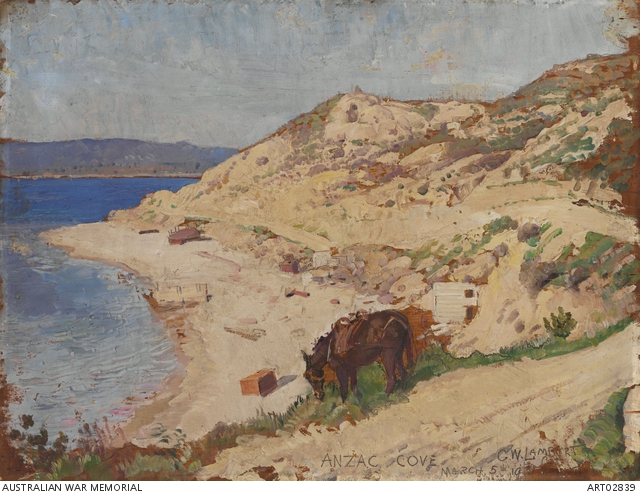




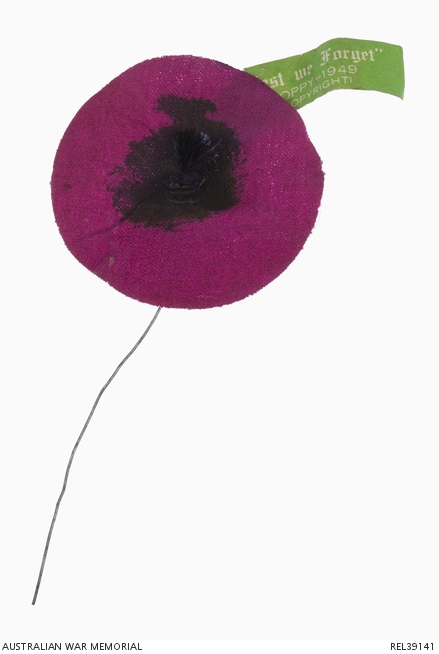


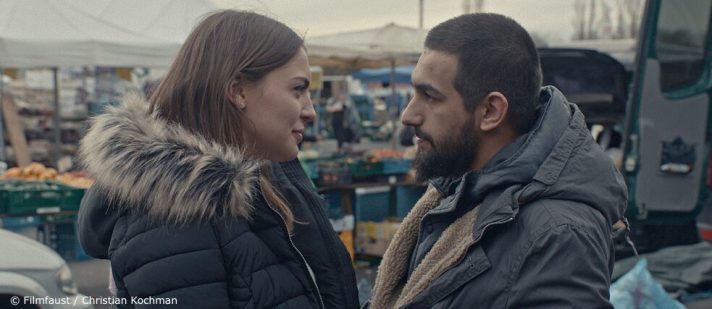


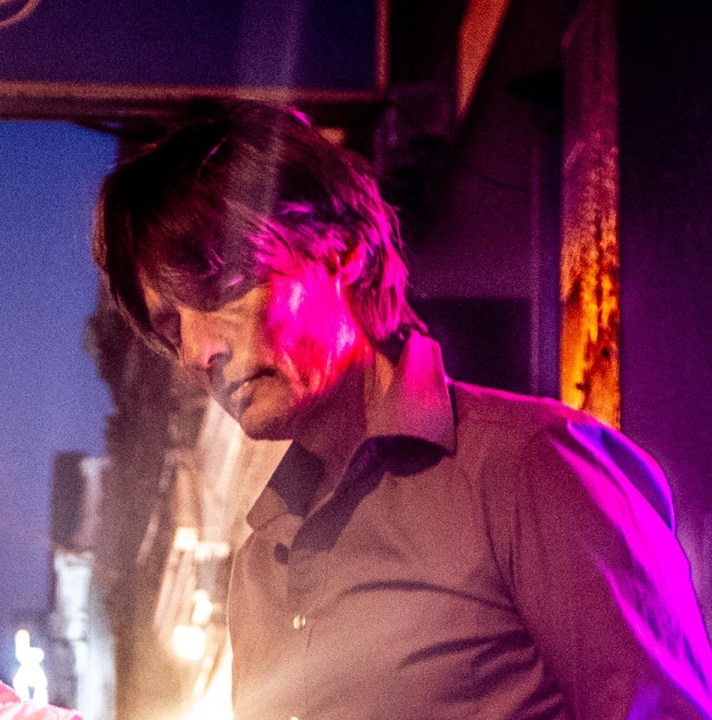

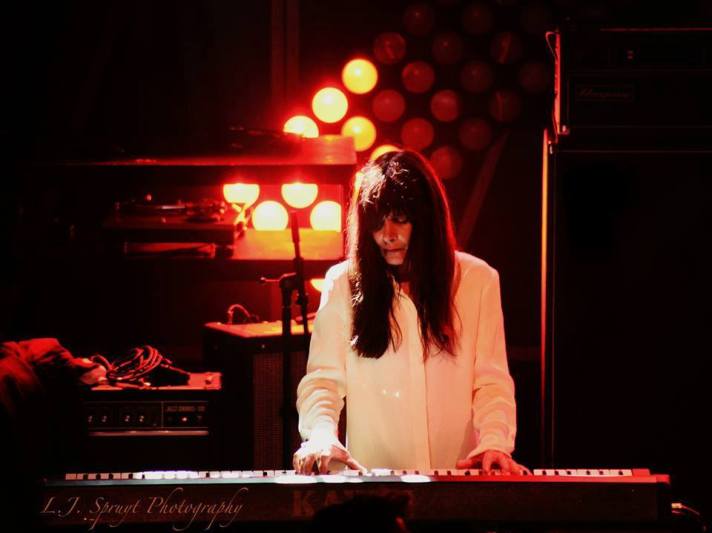


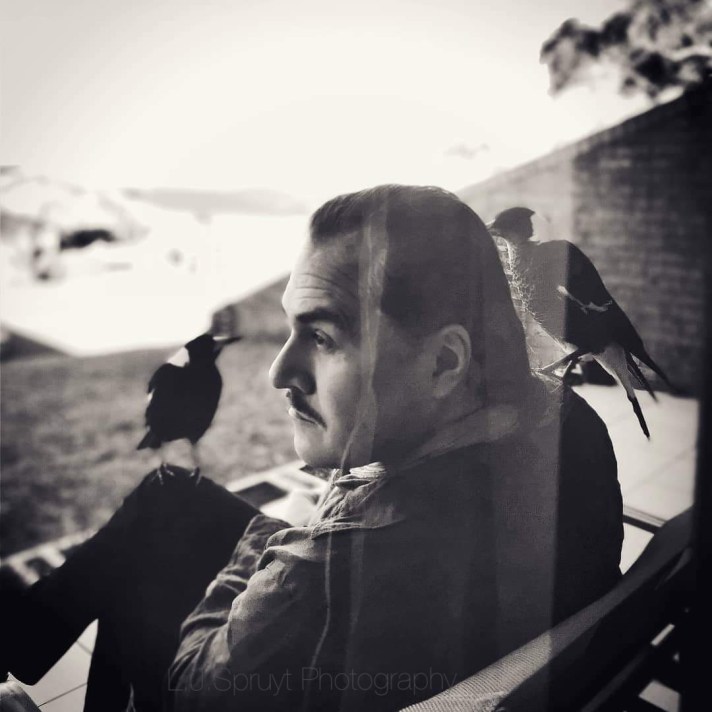


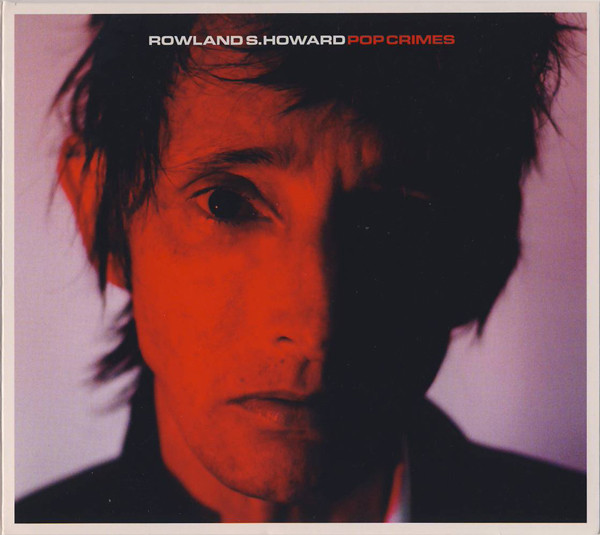
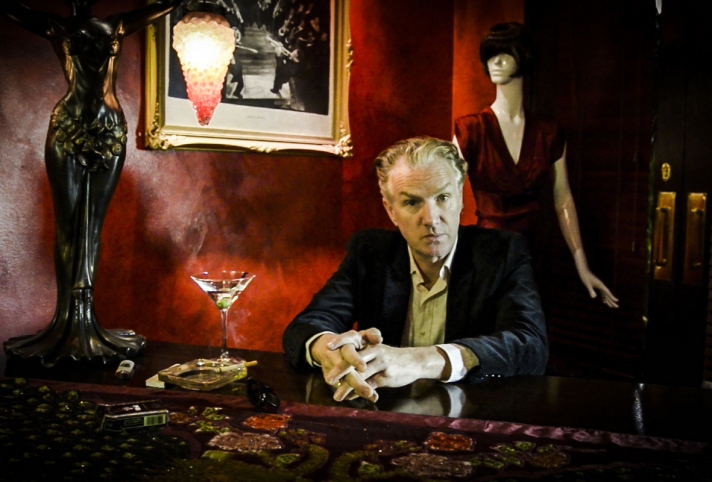
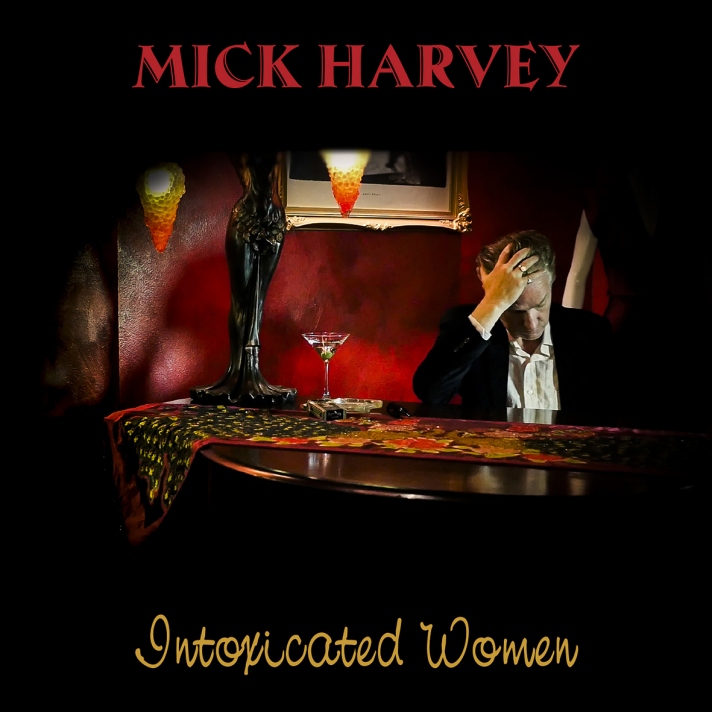
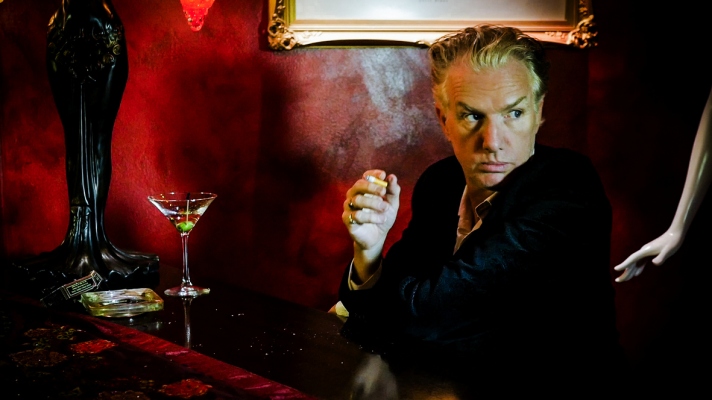


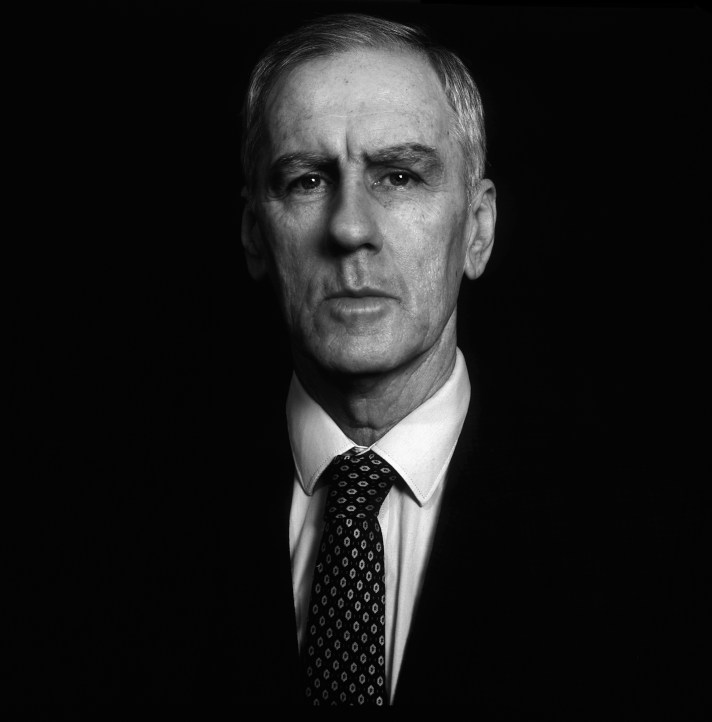
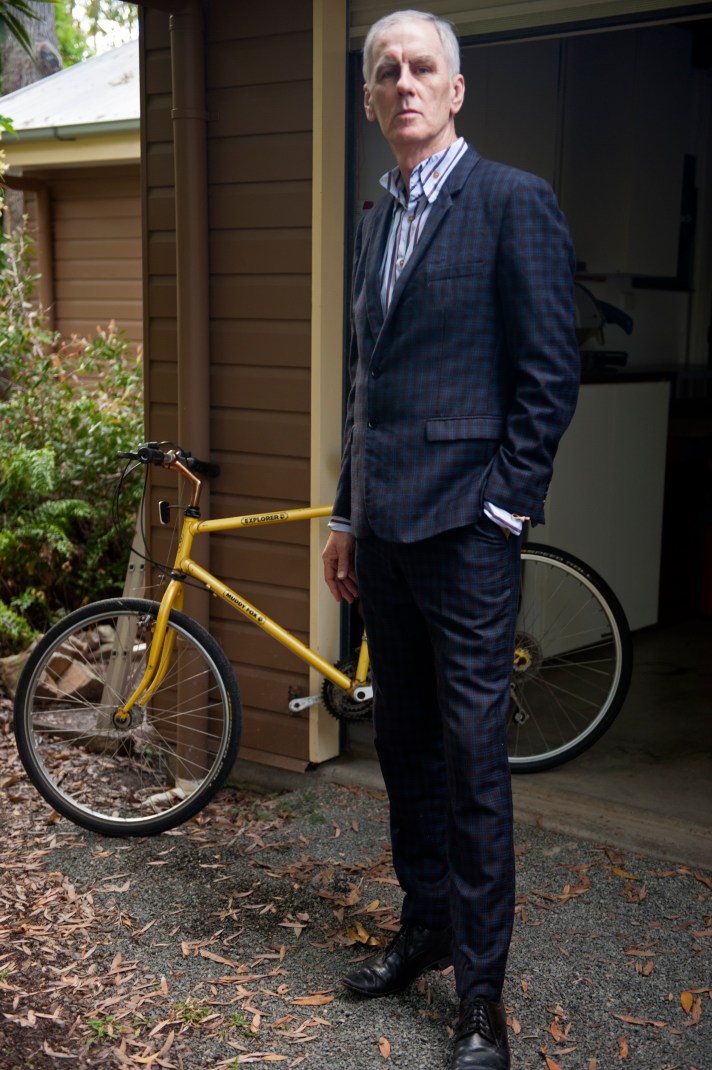

 Mondo Bizarre Magazine