GG RAMONE’s JOURNAL @ Milhões de Festa 2018, Day 3: Vaiapraia & As Rainhas do Baile, PÉ ROTO, Greengo, Gazelle Twin, Nubya Garcia, Electric Wizard, 08.09.2018.
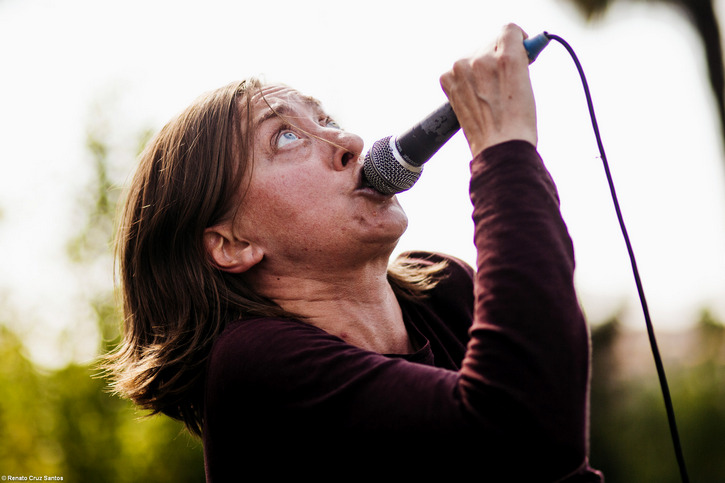
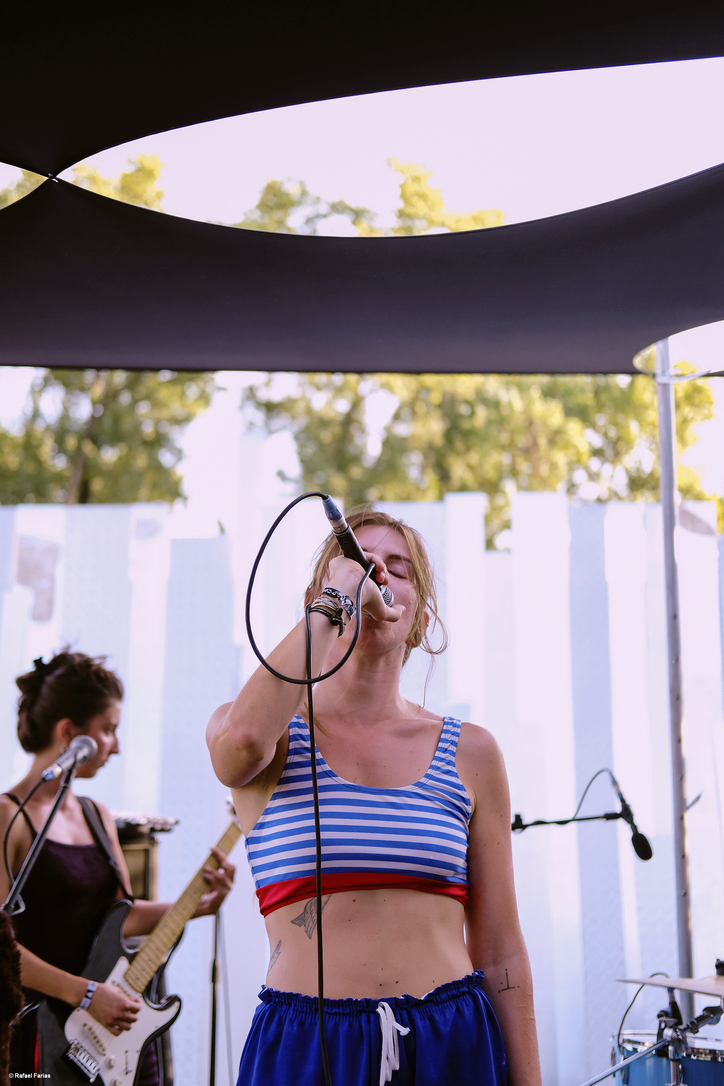
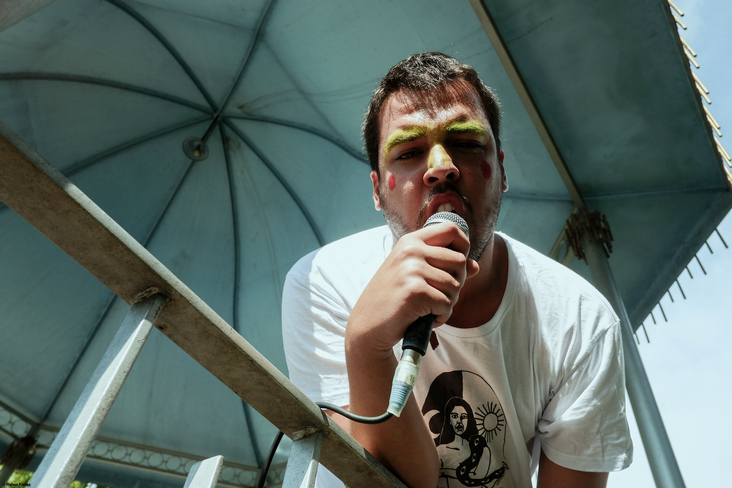
VAIAPRAIA & AS RAINHAS DO BAILE – Its been some time I was looking to see a Vaiapraia’s concert and Milhões made it possible. I find his 2016’s album, 1755, a small gem, still a bit hidden, and punch in the gut of the politically correct, the courage of assuming differences face up in a society of eternal facades. For quick clarification those who may not know who he is. In a very synthetic way, I will say that he is a new emerging pop/rock national star, one of those able to do catcht songs, covered by a crude instrumentention, not to give itself up … and that he writes with determination, and a rare daring about his sexual orientation – which is not that of “good manners” – his love issues and problems. There aren’t many artists like Vaiapraia in this country; a handful or not even so. There is much more to him than someone who writes great songs that are extraordinary in their stylistic field. Vaiapraia represents all those who struggle daily to maintain their freedom and their well-being above water, often suffocated and postponed by a moldy morale of constant bullyings. It is, to a large extent, all that rock’n’roll in essence is. It is in his lyrics that all his struggle for his difference is shaped; the attitude of brave resistance, in a very crude, almost basic and humorous description of his feelings and thoughts. His descriptions are disarming and very direct, bluntly, almost brutalizing and scandalous; it is impossible to be indifferent: either one hates him, or one loves him. Tthe artist’s concert, held in the bandstand of Jardim 5 de Outubro – one of the daily concerts that are held outside the festival grounds – meet my best expectations. Vaiapraia is a stage animal, scandalous, impudent, and with na enormous capacity not to care about the shock it can cause to many. He is a sort of Portuguese Little Richard. Where the American star (a classic rock’n’roll hero) took off his shows and ludicrously displayed them, Vaiapraia defiantly displays his socks. The sound of the band is purely and simply garage rock, punk pop, with even some forays to psychpunk. Musically it works perfectly, coupled with a lascivious, non-sense and fun, that captures attention. What a great early afternoon, I thought to myself.
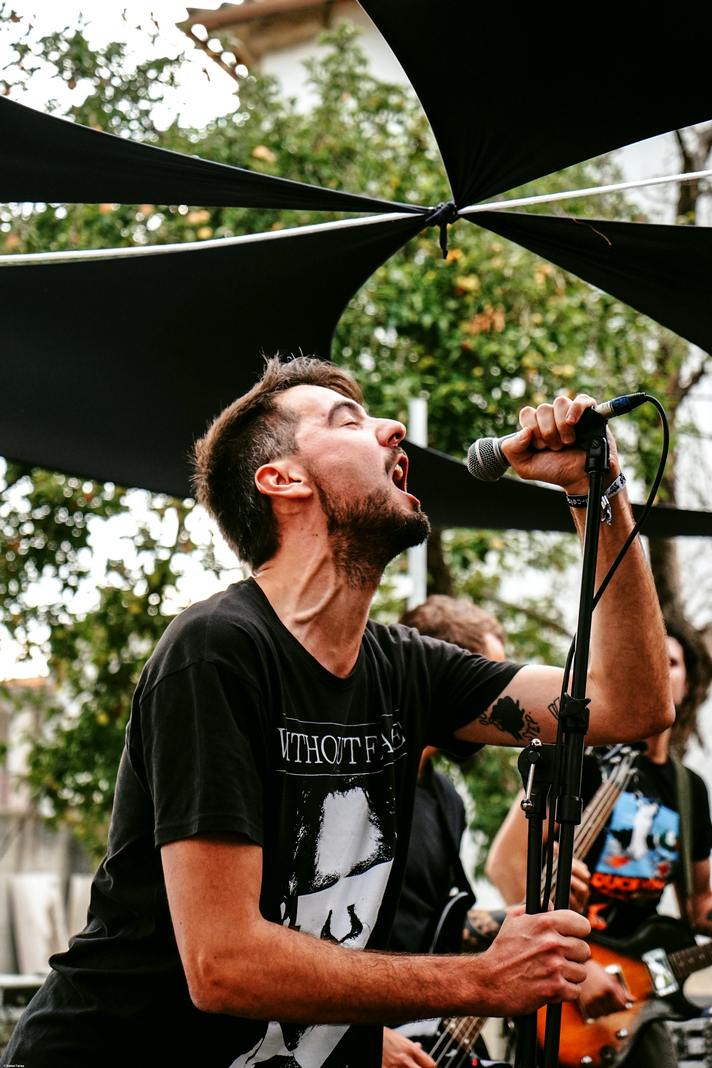
PÉ ROTO – Braga’s Pé Roto started the hostilities the best way on palco Taina on the third day of Milhões, included in the special line-up that handed by SWR Barroselas Metalfest. The idea is that SWR invites bands they support to present themselves live Milhões’ audience . Obviously this context is that of the “bottom of the pit” and of exile; only “extreme” heavy bands enter the house. Pé Roto are masters in the execution of a slow and brutal sound, between doom and sludge, accurate and deep, and because of it, one of the current best national bands within their style. I met them a few months ago, at a concert they gave at Woodstock 69 bar in Porto, and I become an almost instantaneous fan of the band. This time, the group was just like itself, from the impression I had of them before, but playing for a much larger and more diverse audience, which I believe, will serve them very positively to further publicize their project. They are all good musicians and dominate in an enlightened way the musical aesthetics they represent. There is depth in their lyrics, all obscure and in some cases very strong on a suggestive level, as it happens about Braga in Bracara-vitae: Perdido nesta Bracara Angústia, Amarras que me prendem ao fundo do poço (Lost in this Bracara Anguish, Moorings that hold me to the bottom of the well), or Faço a última sopa num culto à folha sagrada, rodo o paiva ao Diabo, mas dou-lhe uma ponta rafada! (I do a last soup in a cult of the sacred leaf, squeeze the devil, but I give him a worn out tip! in Fumar & Beber. I consider them heirs of much of Maõ Morta’s raw, dense spirit to their city, but in a musically distinct style. Different generations, different musical styles … but similar in the same registry of debauchery and loss.
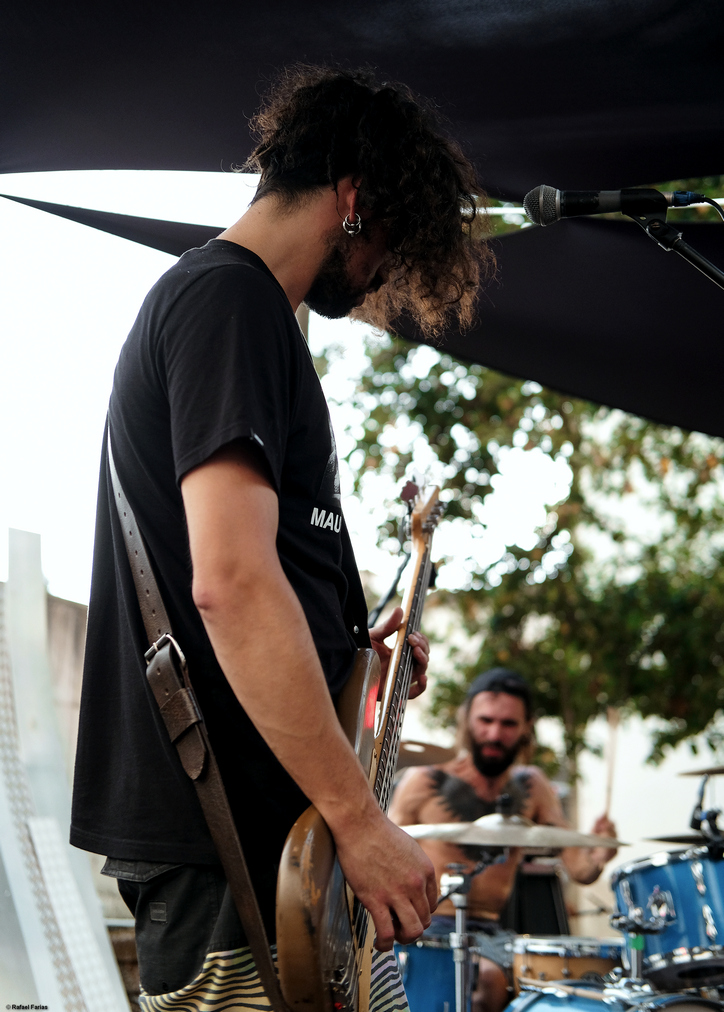
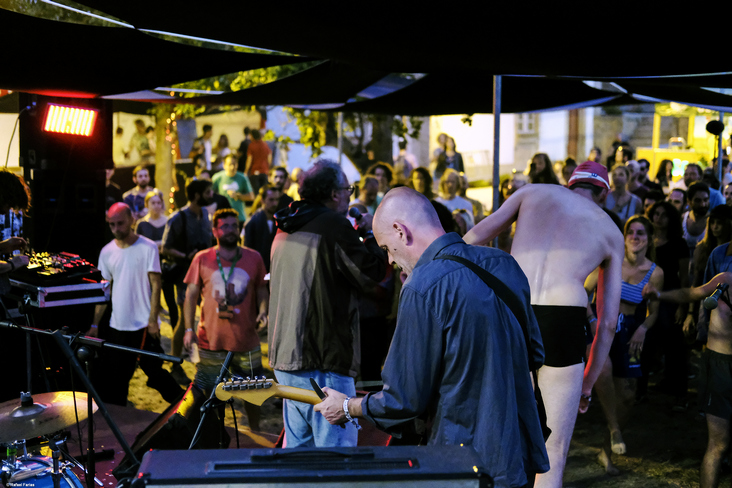
GREENGO – Pé Roto were followed by Greengo. Unlike the previous band, that I only come across at a later date, I have been a fan of this Porto’s band since their first concert in Porto. I find this duo simply fantastic and wrecking in its sound. They are two extraordinary musicians, one in the drums (Chaka) and the other in the voice and bass (Pedro Martelo) … and together they can obtain a completely overwhelming sound, enormous and quite intelligent in a very varied dosage of intensities and rhythmic movements, which impresses those who see them live. I consider Greengo to be a revitalized (or if you prefer, crossover) fusion band within all the more radical sub-genres of heavy and distorted sound of the last decades. They are doom, sludge and industrial; they smell like Motorhead mixed with Sepultura, Killing Joke with Discharge, so the list is immense … As for their concert in Milhões, it was exactly in the same registry as always: they take no prisoners and gloriously imposed their law upon all those present who watched – surrended – to such sound colossus. Great show from a top band. Bring on the next one.

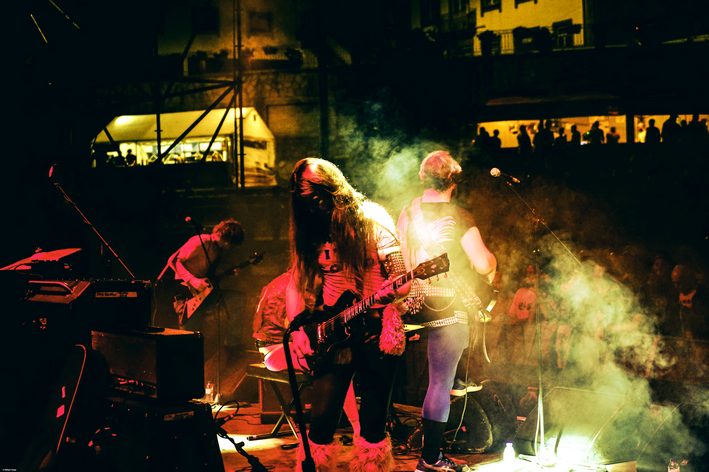
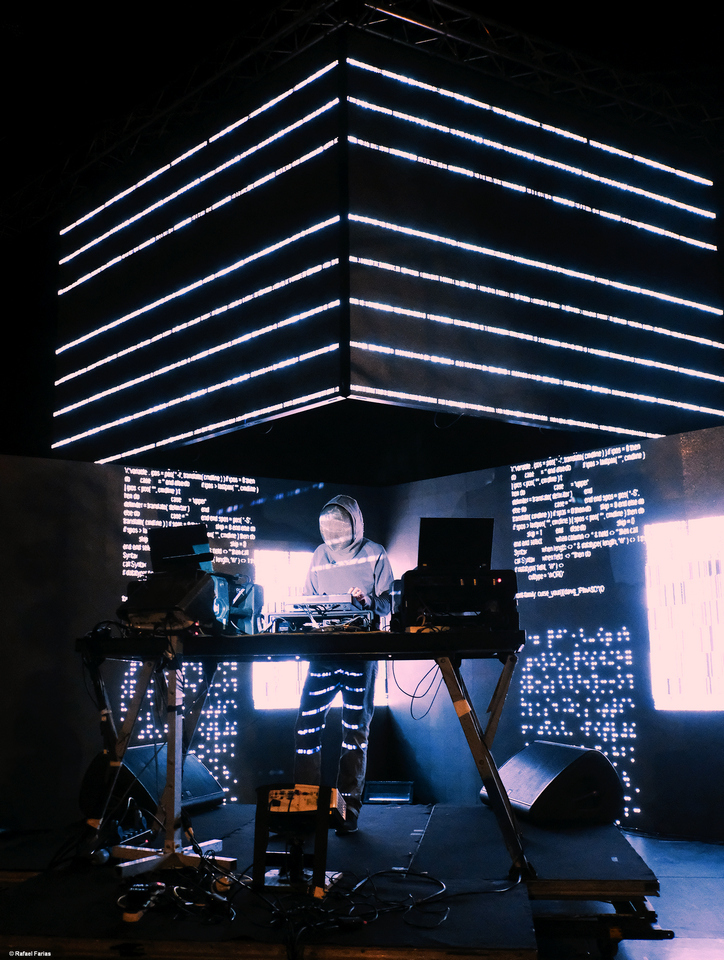
GAZELLE TWIN – Elizabeth Bernholz, a British artist, who uses the stage name Gazelle Twin, performed on Palco Milhões on Saturday night. Her musical project, which is part of contemporary electronic music, in a more avant-garde way, and that has received rave reviews from several sides of the specialized music press, is not easily accessible as a whole because of its proposal, which is about exploring new languages. When this happens (and it always does), there are those who fall in love with something that can make a difference, or those who, on the other hand, cannot find something sensible to presently deserve their attention. It is in such context that I analyze the Briton show in Millhões. I expected more from her performance. Much more, by the way. Not so much from her music – that has undeniably revitalizing aspects – but more for the design of the show presented. I identified imbalances, aspects that should be more fluid. There are very interesting moments, but many others are somewhat disengaged in its continuity and that do not fully work out; there are still rough edges that need to be rounded in order to offer a more vibrant and accessible show to an whole audience, and not only to those who seek only musical novelty, underestimating a live performance as something different and important as dissemination of new concepts. Even because I noticed many musical suggestions in Gazelle Twin, like Bjork or Laurie Anderson, among others, and that readopted to the artist’s language turned out well and perfectly consumable. To conclude, I will say that the alignment of the themes chosen jeopardized the clarification of the project live.
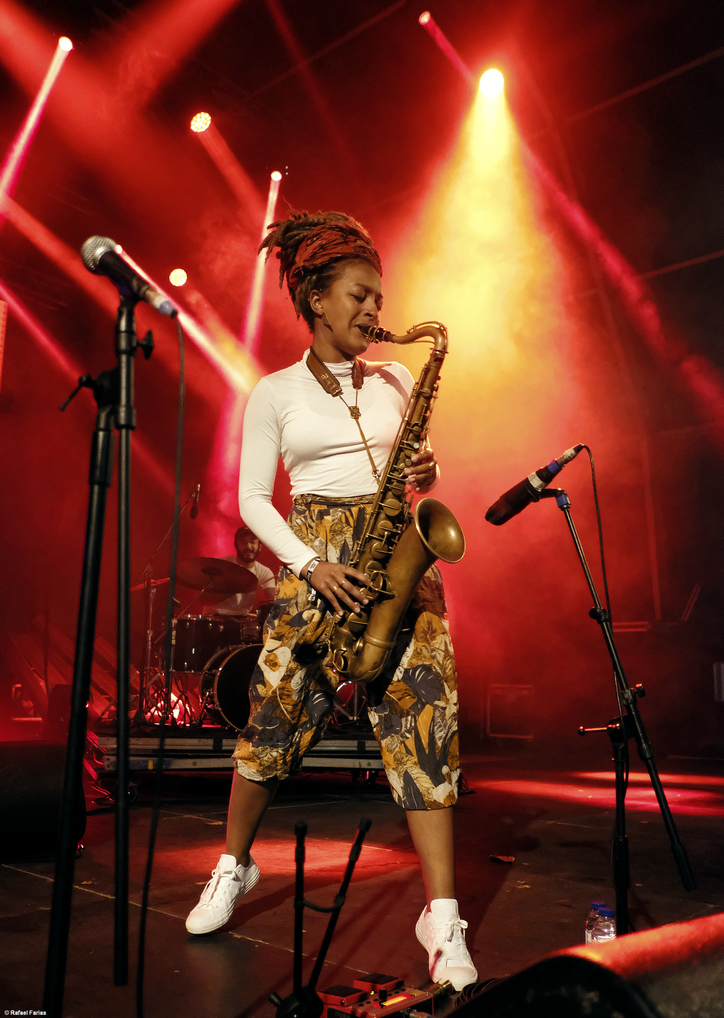
NUBYA GARCIA – It was an enormous concert given by the artist, assisted by a trio of brilliant musicians, offered to the audience on palco Milhões. It was a perfect concert in its entirety. There were no lessen moments; all were great, liberating and therapeutic. Nubya is an exceptional saxophonist; just by listening, you will understand how divine she is. All the other musicians who accompany her are on the same level. They are a perfect jazz orchestra, turned into quartet. Already regarded as one of the newest afrojazz names, the group performed at every moment of the concert in such a way that the music they built was nothing but natural and vibrant and extremely enjoyable to be listened to. The saxophonist very nicely thanked the audience on several occasions its warm reception to the band and expressed how happy she was to be in Milhões. Thank you, Nubya!
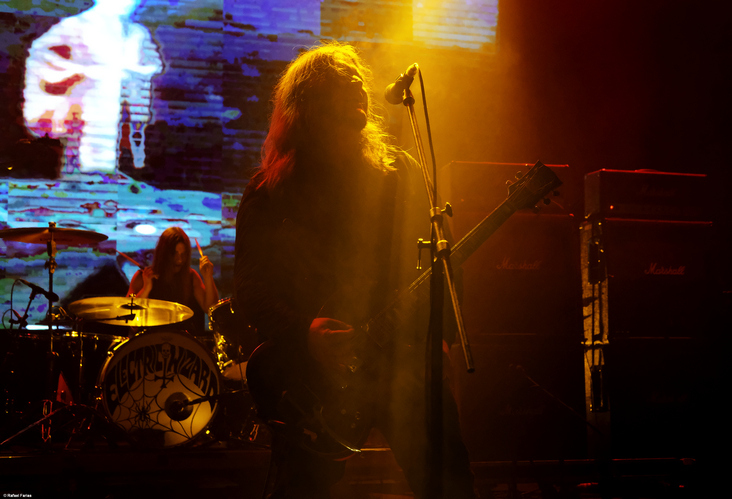
ELECTRIC WIZARD – British band Eletric Wizard were the catchier name of Milhões’ third day One that would gather the greatest interest of the audience that came by Saturday. This cult band, once more at the festival, has returned to show how it defends its credits on stage. By that point the show was what was expected: musically very solid and flawless. I confess that the band far exceeded my expectations, that may be beneath the band’s staunch fans ones. In that regard, things went well for me; It’s always good to have good surprises. The group is an expert practitioner of doom-sludge sounds, with streaks of stoner doom and some acid rock added to the mix. Two things I keep from the band and that I thank them: the solos they perform are good, and are as short as they need not to annoy. I quite enjoyed their mentor’s, Jim Oborn, voice tone, perfect for the genre they play, since it is melodic enough to allow for what is being sang to be understood. If one understands the band that is being talked about is essentially one that boils down to the hail to Satan trilogy, weed and I drink your blood, I realized that they are also a good live band. And let there be no doubt about it. Let it be mentioned that the audience deserved an encore from the band, after the end of the performance. Even because it was an impeccable concert, and that, I would like to believe, pleased most people.
words: Guilherme Lucas (freely translate by Raquel Pinheiro); photos: Marcelo Baptista & Rafael Farias.
original text: https://www.facebook.com/events/880971952100146/permalink/956430897887584/
——-