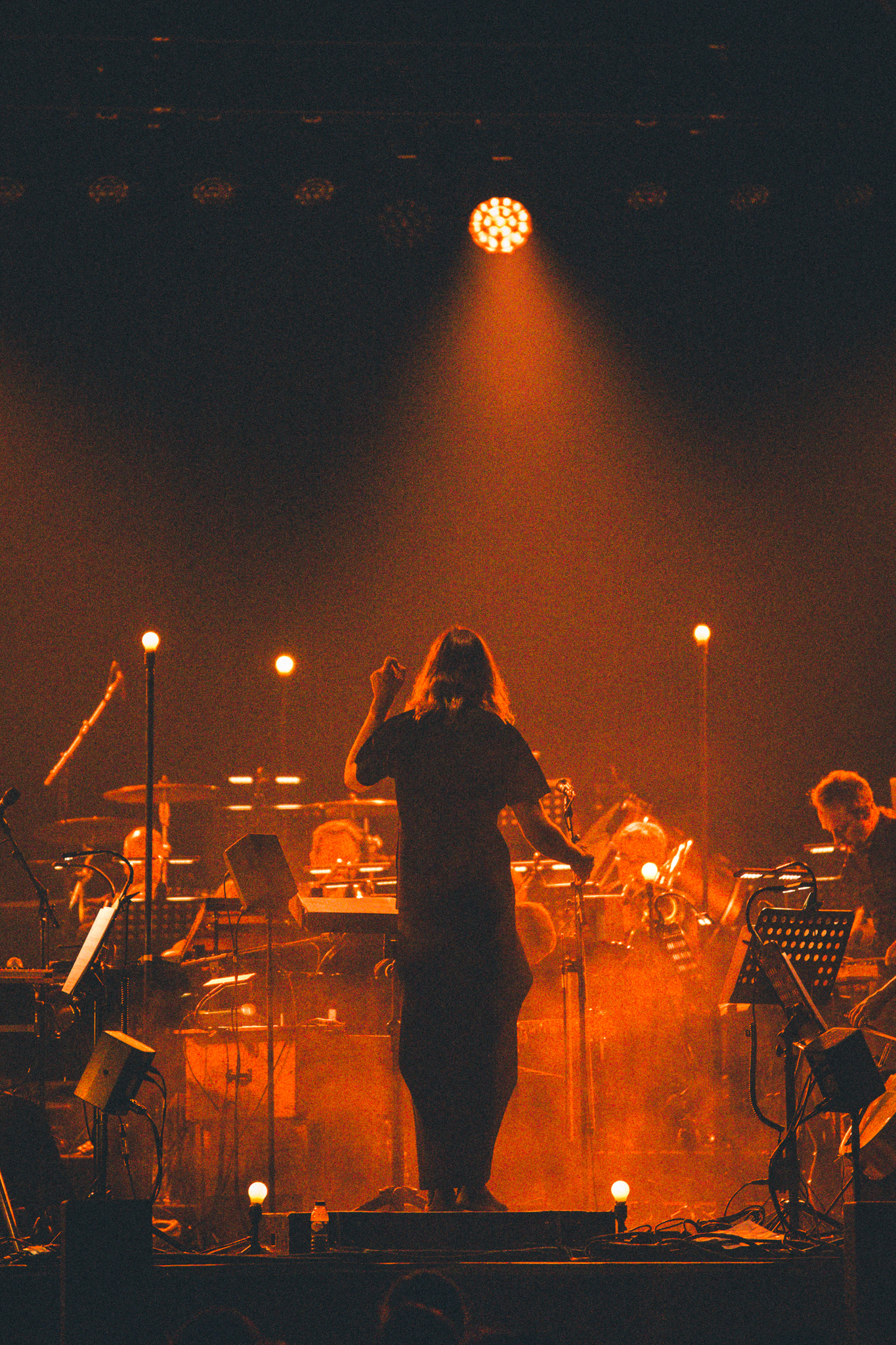
Sigur Rós – The Orchestral Tour with Orquestra Sinfonietta de Lisboa – Sagres Campo Pequeno, Lisboa, 17.09.2026.

© Tiago Cortez / Everything is New

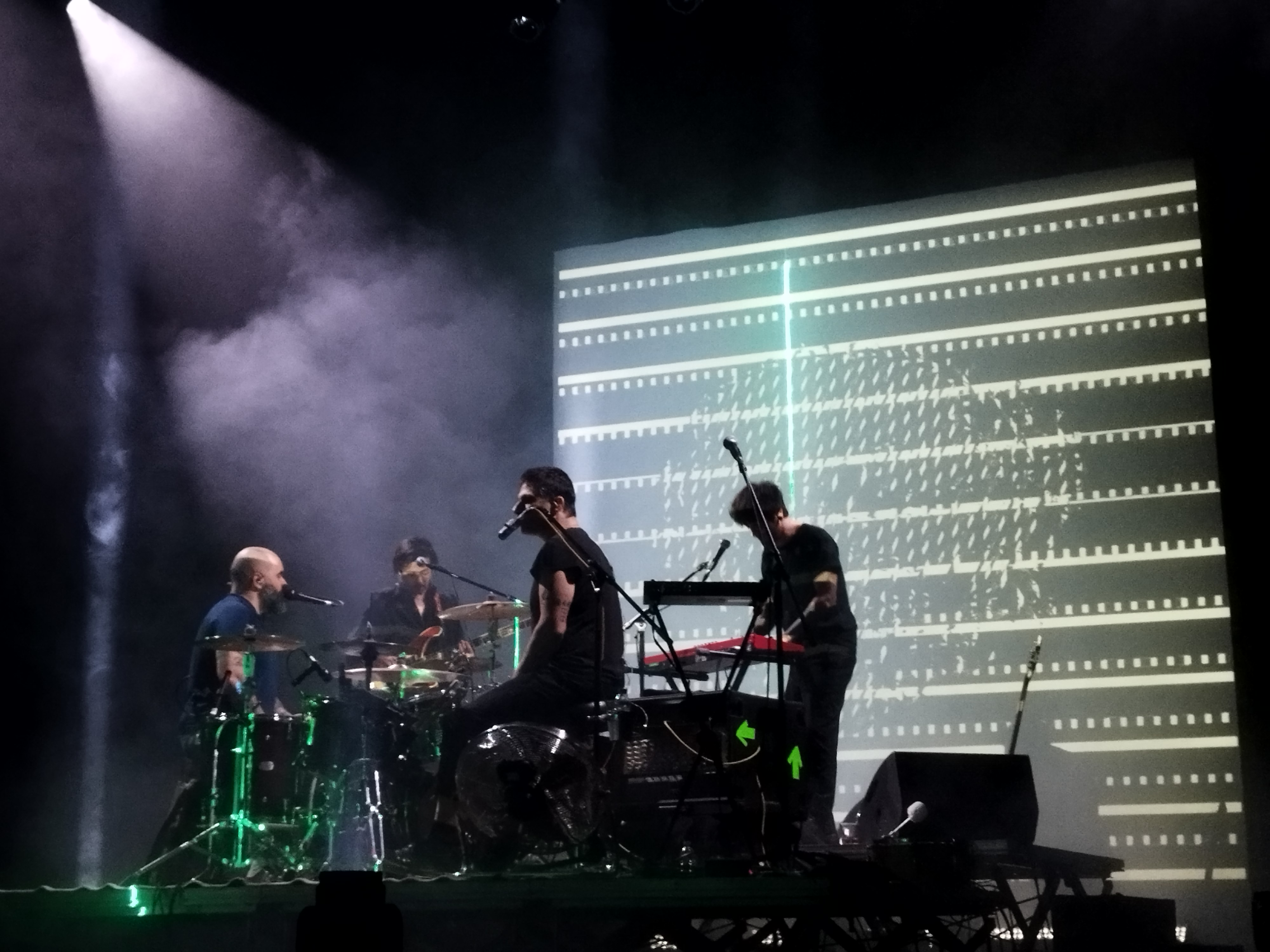
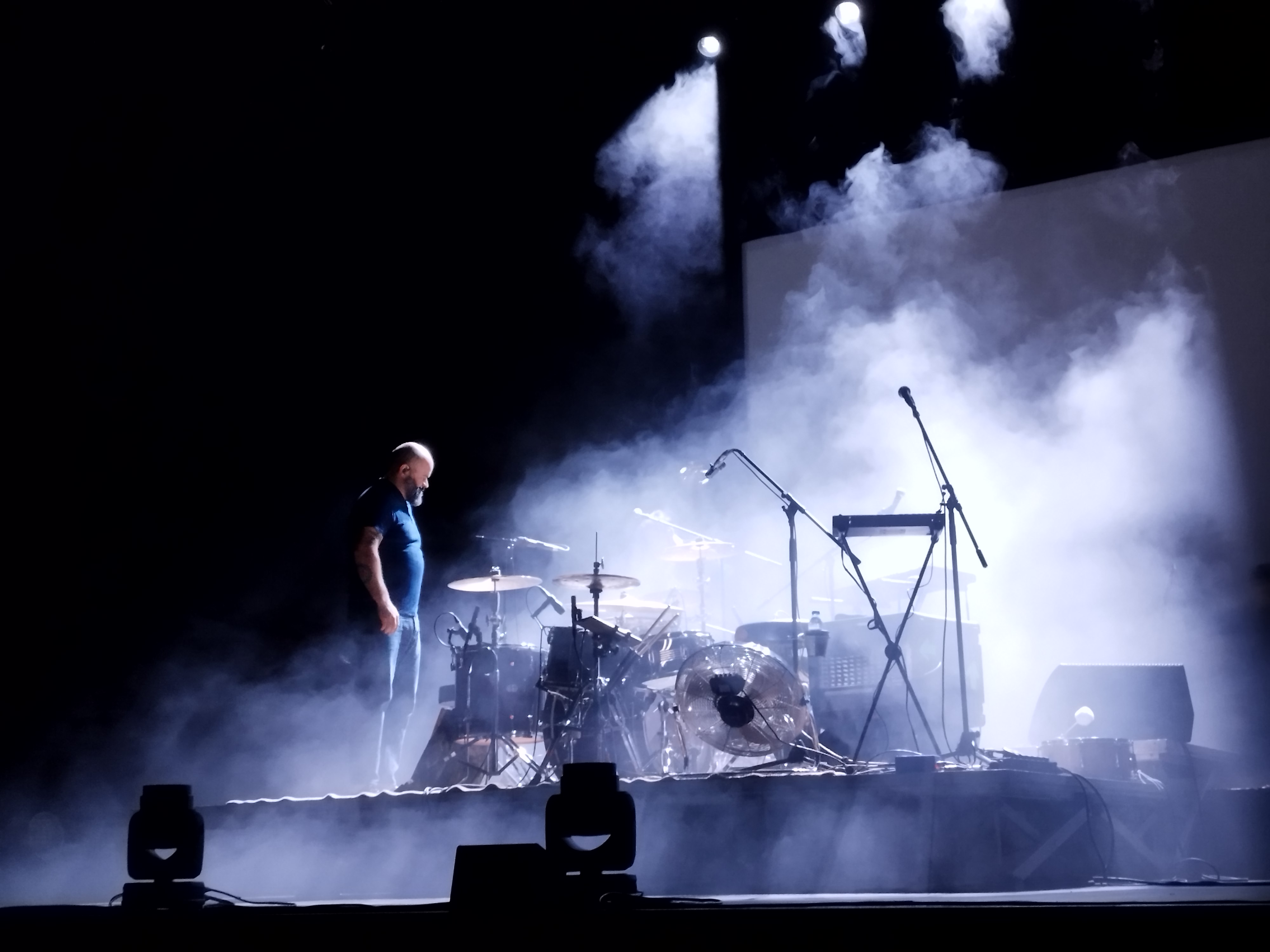
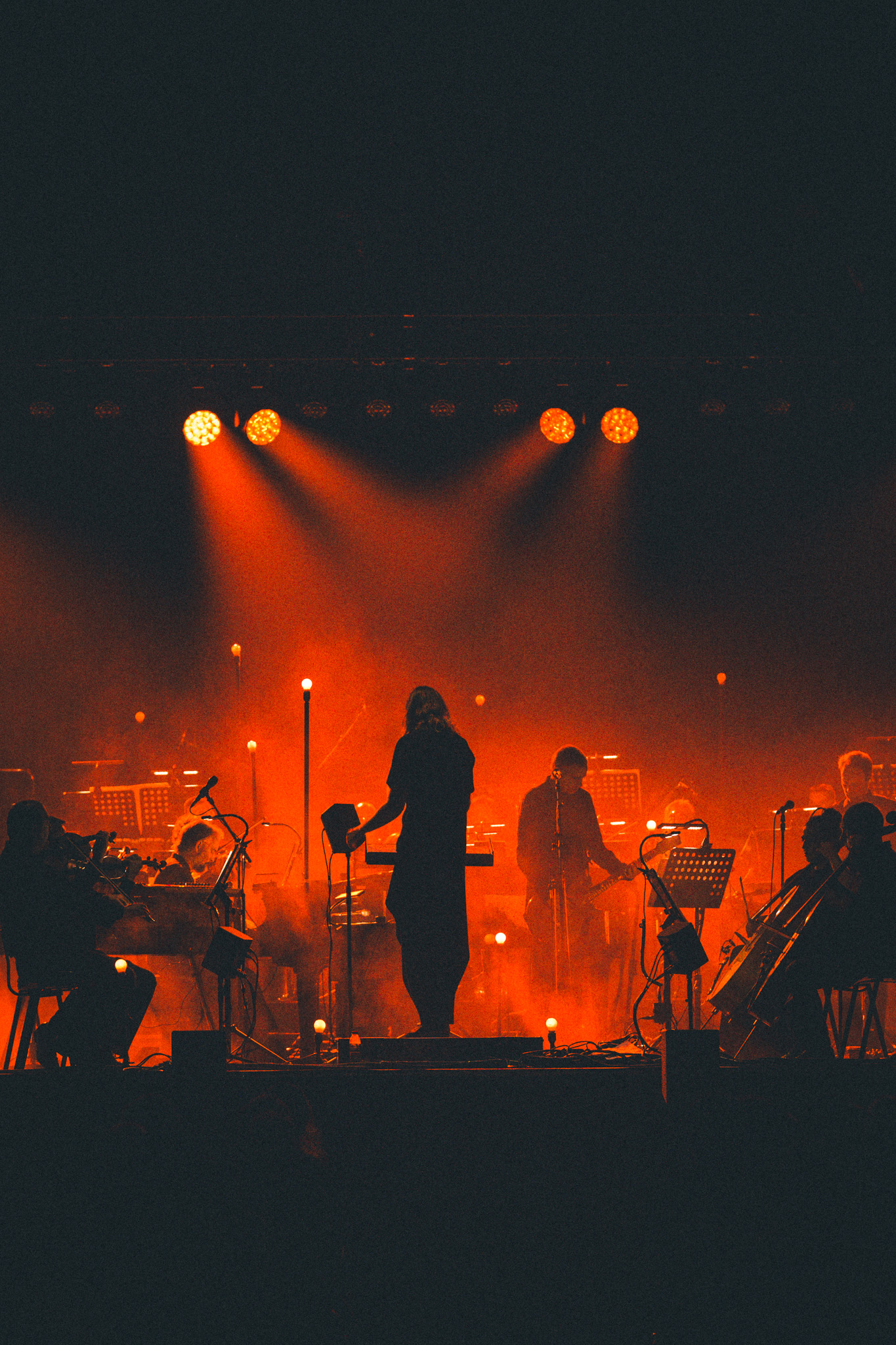
A friend wisely advised me to pack extra tissues for Sigur Rós’ concert – a warning I foolishly brushed off as dramatic. Yet, as the concert began at 9:15pm inside a completely packed venue, the sweeping strings of Blóðberg took hold, and tears were already streaming down my face before the opening piece even finished.

For over three decades since forming in Reykjavík in 1994, the Icelandic post-rock icons – celebrated for Jónsi’s signature bowed guitar, soaring falsetto, and otherworldly lyrics in Icelandic and Vonlenska – have built a legacy on ambient, cinematic grandeur.
© Tiago Cortez / Everything is New

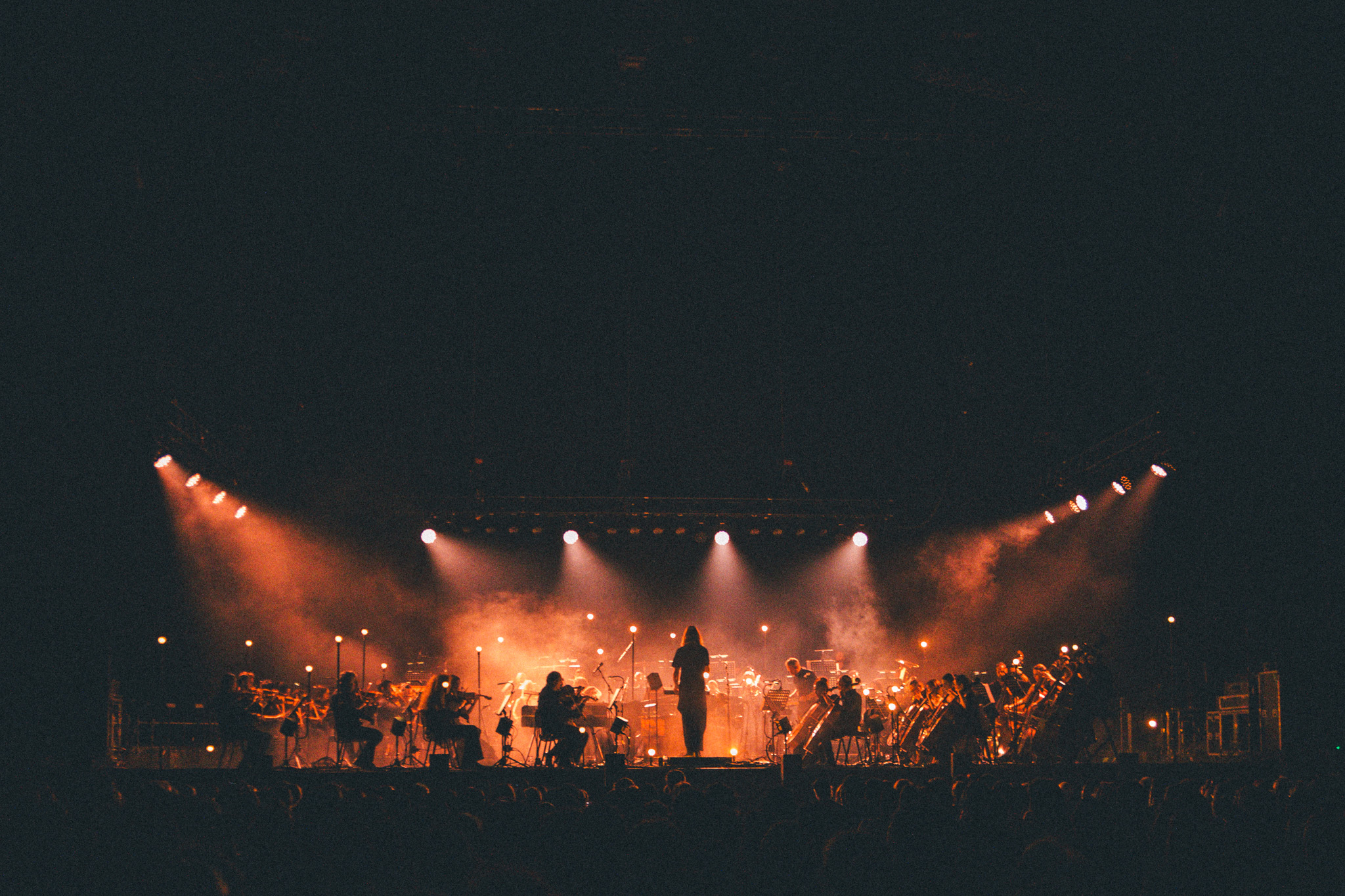
Hearing that catalog backed by the Orquestra Sinfonietta de Lisboa felt like the ultimate realization of their vision. Every added layer of instrumentation continuously elevated Sigur Rós’ already stunning compositions into soaring symphonic experiences across two profoundly emotional sets.The first set unfolded with remarkable intimate power.

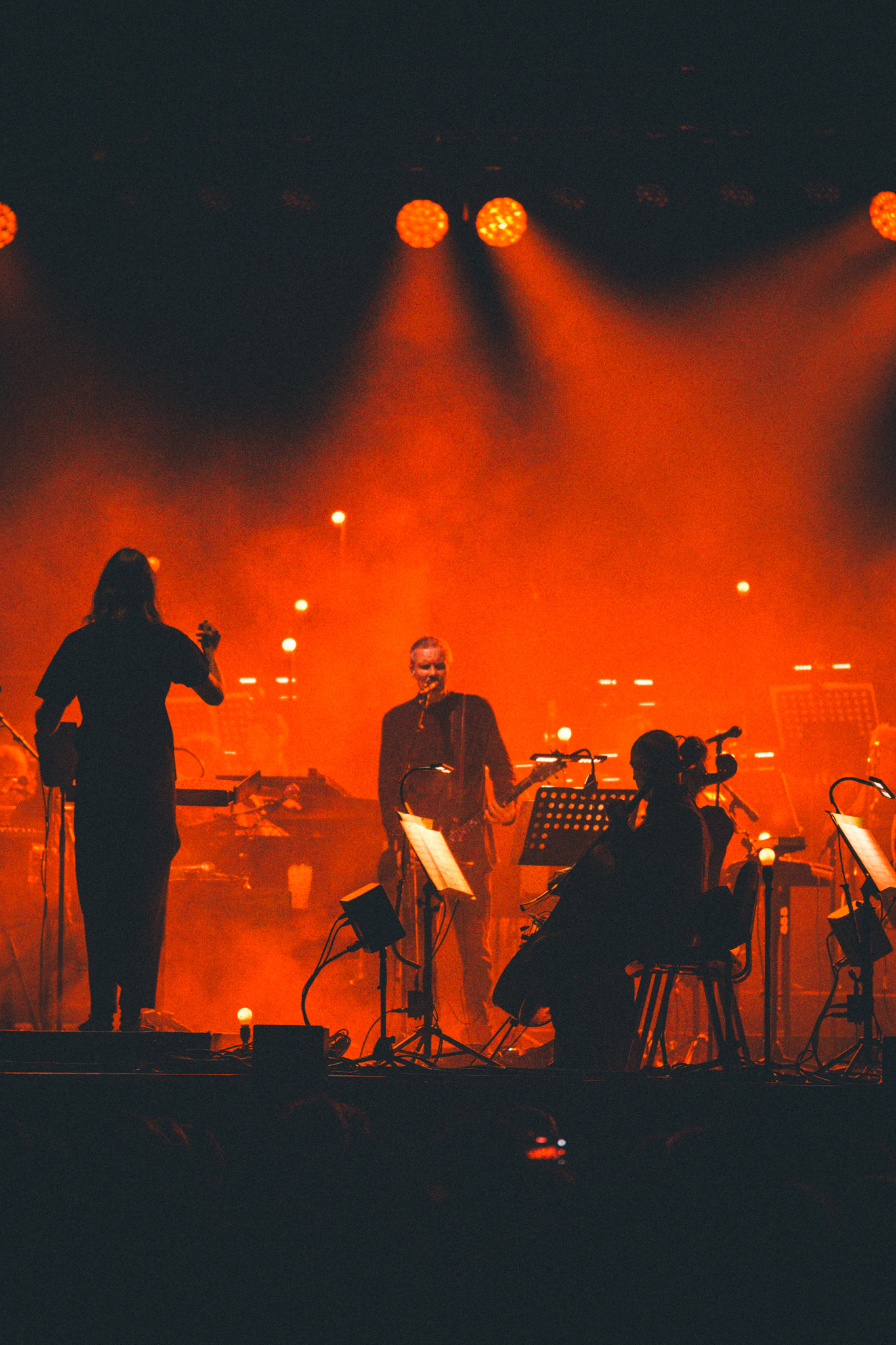
By the fourth song, 8, the mood grew intensely emotional as bright, radiant lights flooded the arena, perfectly mirroring the sheer brilliance and clarity of Jónsi’s voice. Von followed as one of the night’s emotional peaks, drawing passionate applause, but it was with the seventh piece, Starálfur that the texture dramatically transformed.

The instantly recognizable opening notes sparked immediate warmth across the crowd, and as percussion finally entered the soundscape, it injected a rhythmic surge that had the audience bursting with enthusiasm.
© Tiago Cortez / Everything is New

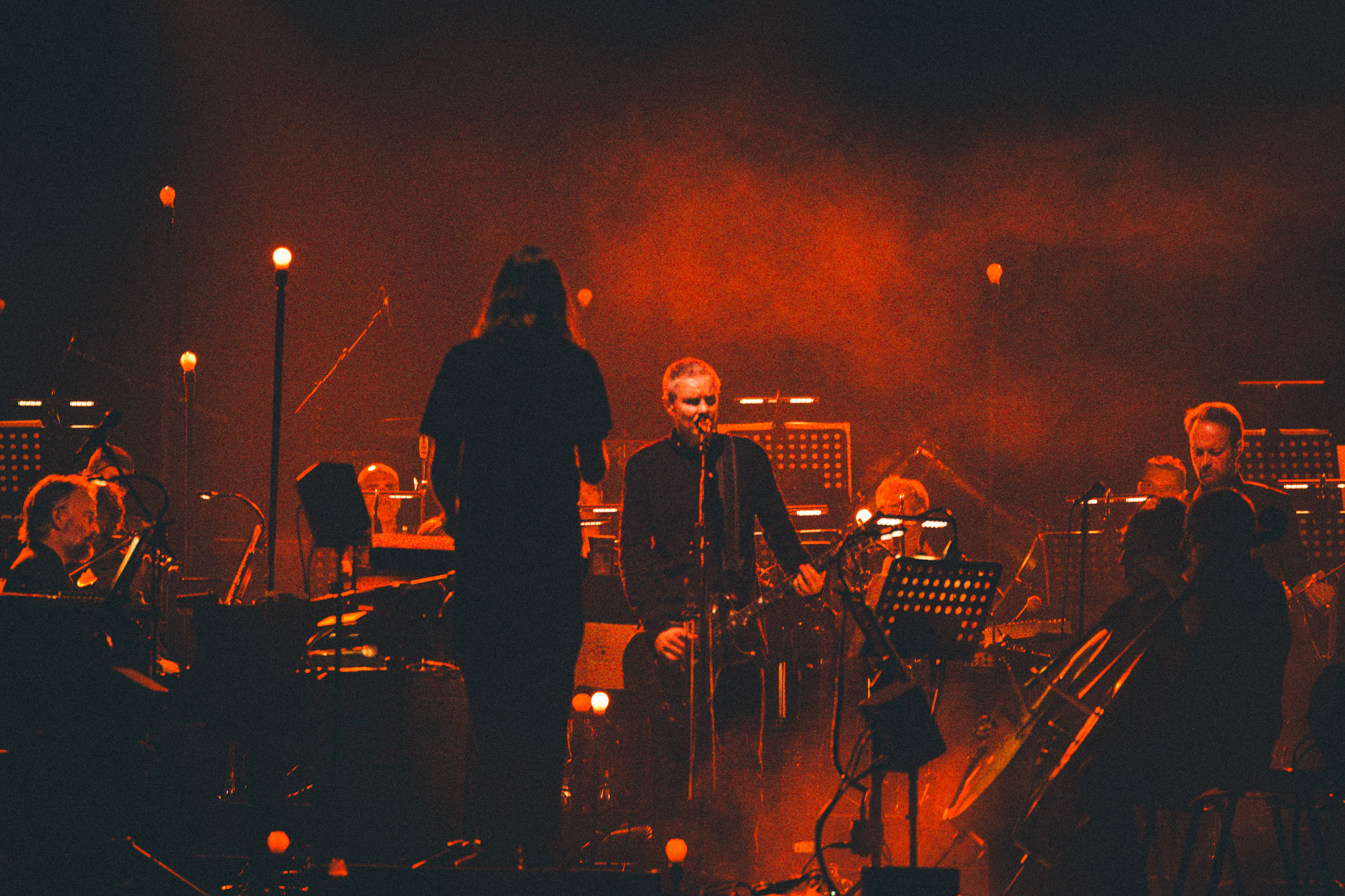
Set I came to an exquisite close around 10:05pm with Varðeldur, featuring a mesmerizing moment where a lyric soloist joined the orchestra, leaving the room spellbound.The emotional intensity only deepened in Set II, which opened to massive enthusiasm with Untitled #1 – Vaka. The band and the orchestra seamlessly balanced delicate instrumental moments – such as the beloved Ylur and the orchestra-focused Sé lest with explosive grandeur.

The undisputed climax arrived during Ára bátur, where the exquisite voices of the Coro Ricercare joined the stage to elevate the music to celestial heights. The choir’s participation brought a staggering, resonant depth to the performance, commanding the most thunderous reaction of the entire night.
© Tiago Cortez / Everything is New

That triumphant energy carried seamlessly into Hoppípolla, with choir, orchestra, and band harmonizing in pure euphoria. By the time the quiet echoes of Avalon faded out, the room erupted into a standing ovation that lasted for long, uninterrupted minutes. A fitting tribute to a night of overwhelming catharsis.

Stepping out into the Lisbon night with tear-stained cheeks, I realized we hadn’t just attended a concert, but shared in a rare moment of pure, collective grace.
© Tiago Cortez / Everything is New

PAUS, Teatro Aveirense, 16.04.2026.

© Mondo Bizarre Magazine/Telma Mota

words: Telma Mota (freely translated by Raquel Pinheiro)
photos: Telma Mota

On 16 April, it was a ‘Happy Day’ at the Teatro Aveirense, with the funeral march of PAUS.

Having announced their end, the band made their fourth appearance of the year in Aveiro with impact and a certain sense of occasion.

They presented their final album in full, in an uninterrupted 30-minute crescendo. As they have accustomed us, this work entitled Enterro is marked by intense, hypnotic and innovative pieces that combine old-school experimental rock sounds, with complex and repetitive rhythms, with touches of indie vocal lines and the psychedelic textures of post-rock.

However, at this stage, arguably more refined and mature, they decided to stop and die in a florid and controlled manner, celebrating their own funeral with a tour that will symbolically end on 19 November 2026, the date on which they began their journey 18 years ago.

© Mondo Bizarre Magazine/Telma Mota

In a relaxed register, they made a few pauses at the beginning and end of the concert, between better-known older songs, in some way justifying that it is far more interesting to die and bury PAUS with dignity than to pass away in a disordered manner.

Happily for me, as I prefer the band’s earlier phase, more visceral, raw and unrestrained, PAUS opened this concert with Mudo e Surdo and closed with Pelo Pulso, both from their first EP É uma Água

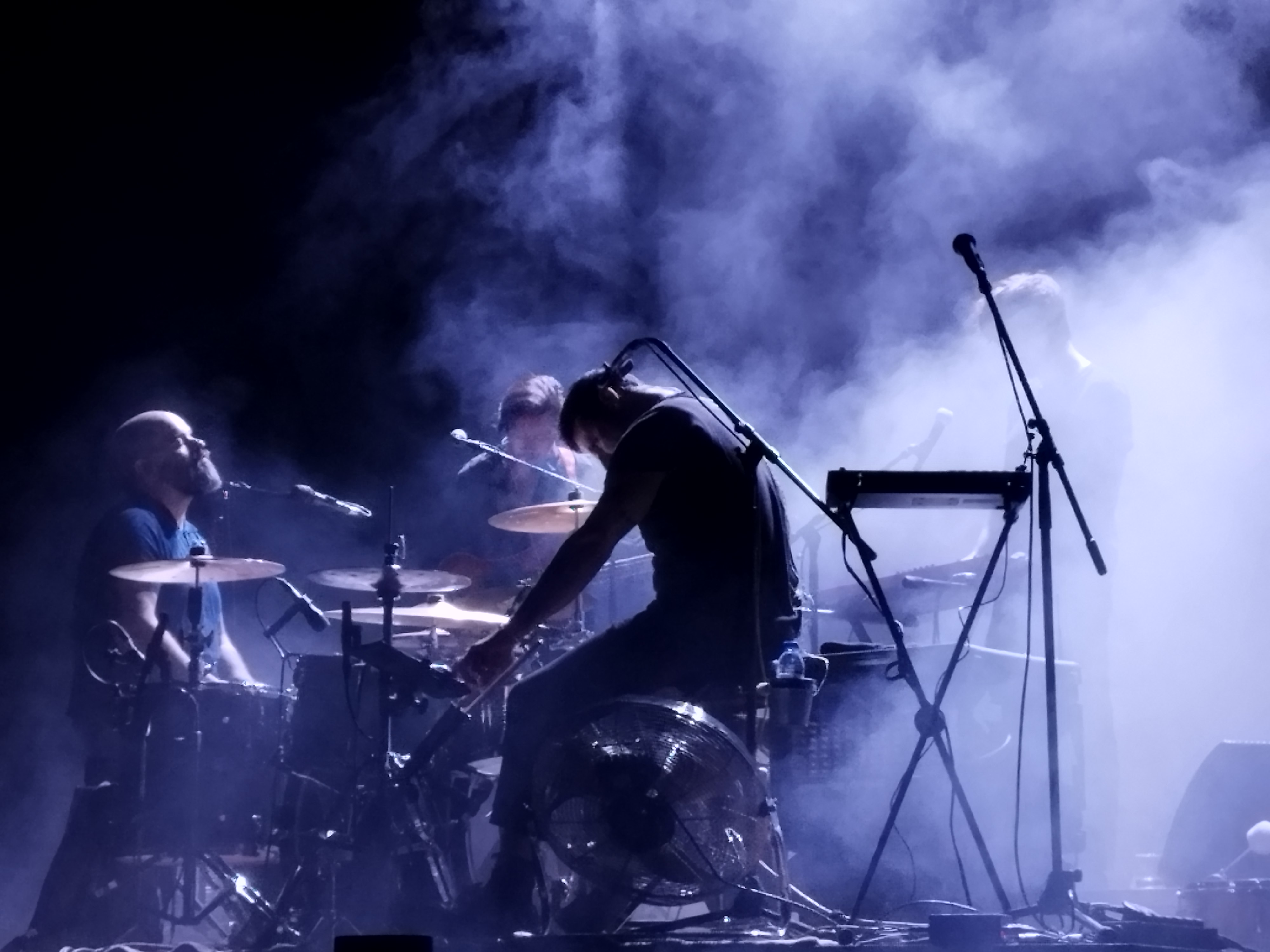
They said goodbye in style, with the intense rhythm of the Siamese drum set played by Quim Albergaria and Hélio Morais, and the striking sounds of Makoto’s bass and Fábio Jevelim’s keyboard. I stood there, clenched my teeth and tapped my foot, wishing only to be somewhere more suited to dancing and exorcising my demons. It is not often one is invited by the dead to their own funeral, but for those present it was certainly a smiling experience.

And they were PAUS. Fare thee well.

© Mondo Bizarre Magazine/Telma Mota

Photo gallery on our Instagram Instagram

God Is An Astronaut, Casa da Música Porto, 08.10.2025.

words: Neno Costa (freely translated by Raquel Pinheiro); drawings: Neno Costa

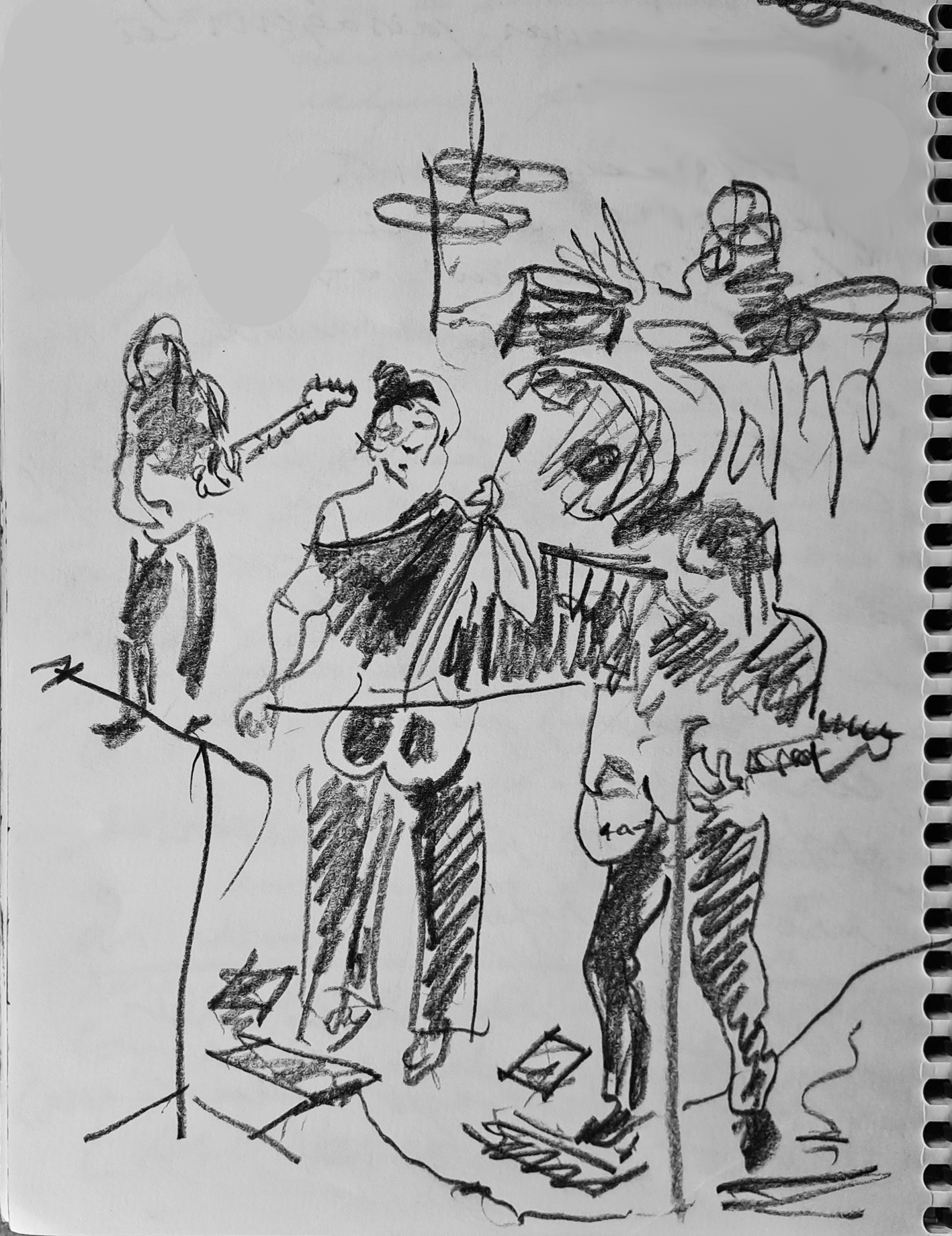
God Is an Astronaut returned to Casa da Música, three years after their last appearance in 2022- this time Sala Suggia – offering, true to form, yet another magnificent concert.

© Neno Costa/Mondo Bizarre Magazine

The Irish trio emerged following a virtuosic solo performance by cellist Jo Quail, who accompanies the band on this voyage, enriching their sound without in the slightest disturbing the post-rock atmosphere. A realm ruled by the voices of instruments and the crafting of vast, interpretative landscapes.

© Neno Costa/Mondo Bizarre Magazine

The sonic voyage began with Falling Leaves, opening the passage into their latest work, Embers (2024). The distinctive picking of Torsten Kinsella’s guitar slipped forth like an invitation to the senses, soon joined by the other instruments to form a scene traversed like an emotional roller-coaster, with epic downpours and nostalgic sunsets. The well-tempered bass of Niels Kinsella and the band’s new drummer Anxo Silveira wove an intricate, enveloping dialogue, further expanded by Jo Quail’s contribution.

It was a solid, soaring performance that carried the audience on a cosmic voyage through highlights of their eleven-album career. With the indispensable All Is Violent, All Is Bright seasoning an already rich setlist, and closing, ouroboros-like, with From Dust to Beyond (2002).

© Neno Costa/Mondo Bizarre Magazine