With All The Feeling and Soul In The World
words: Raquel Pinheiro
photos: Daniela Tedim
Presenting songs from his latest album, Sahel (2023), Bombino returned with the hypnotic blend of desert blues and rock that has made him one of the most distinctive guitarists of his generation.
Often described as a pioneer of Tuareggae, a fusion of traditional Berber rhythms and rock and roll, Bombino sings and writes primarily in Tamasheq. Watching him perform, however, labels quickly become secondary to the experience itself.
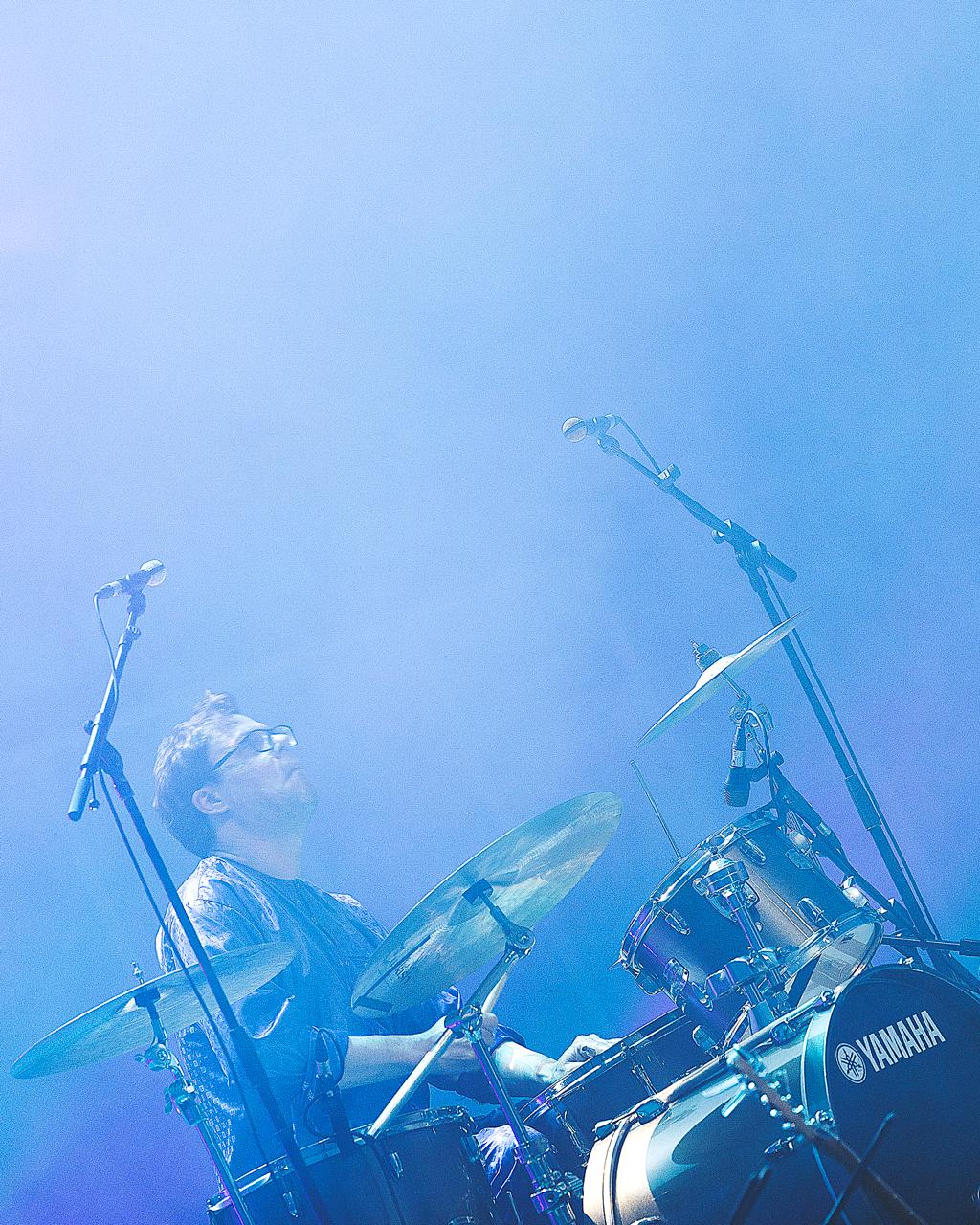
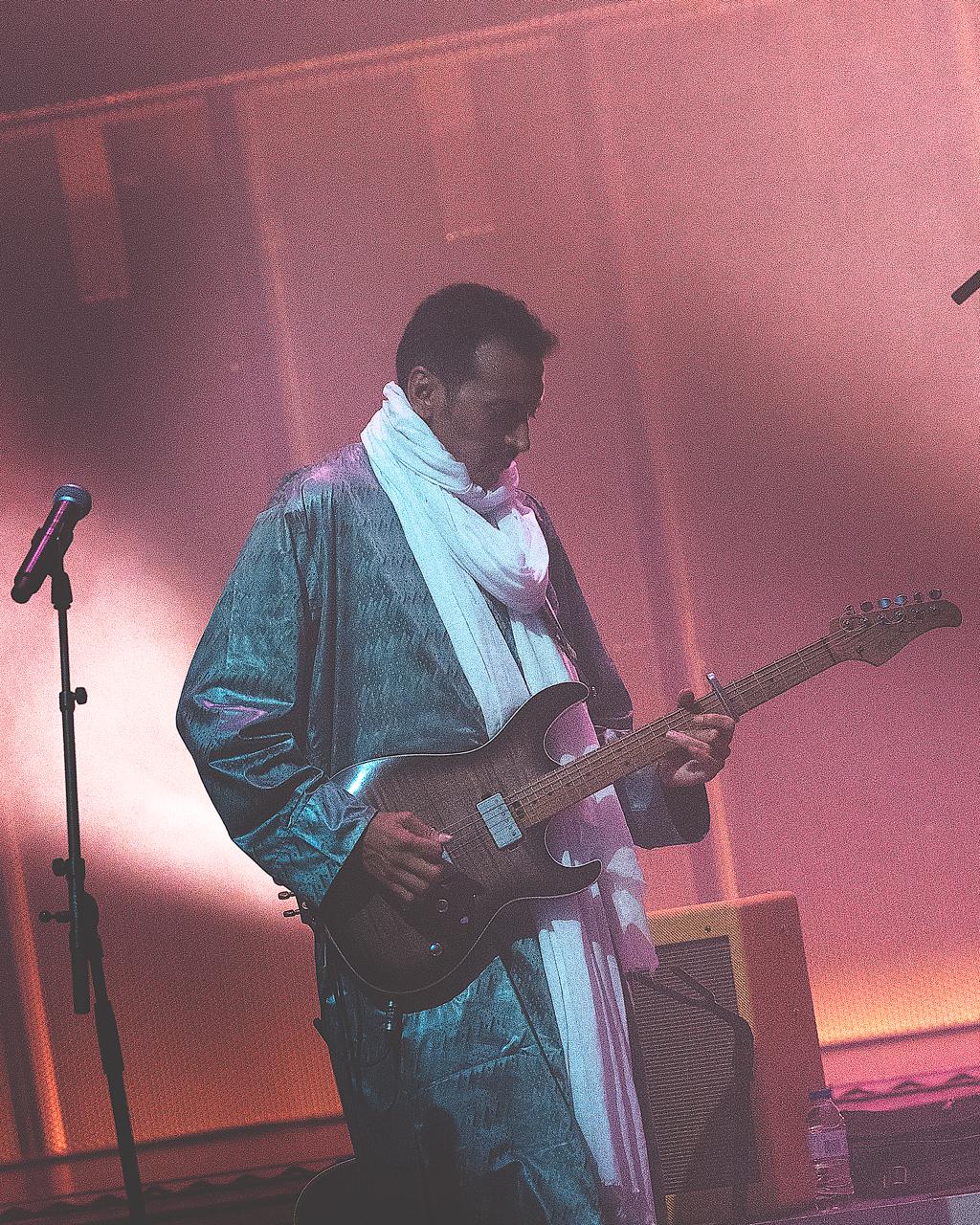
The concert began acoustically. Bombino, accompanied by drummer Corey Wilhelm and a bassist whose name sadly escaped me, eased the audience into the evening with gentle rhythms and fluid melodies. Dressed in traditional Tuareg garments, the trio immediately established an atmosphere that felt both intimate and expansive.
The first songs unfolded with graceful ease. The bass remained smooth and steady beneath Bombino’s singing, while the guitar moved between delicate flourishes and syncopated desert-blues patterns. There were occasional vocal exclamations, almost calls carried on the wind, and moments where the music shifted unexpectedly between melancholy and propulsion.
One particular acoustic number began like a lament, only to transform into something far more rhythmic. What fascinated me was the contrast between the apparent mournfulness of the voice and the increasing momentum generated by the guitar and percussion. It created a tension that felt both ancient and modern.
As the instrumental passages expanded, Bombino and the bassist repeatedly moved face to face, exchanging phrases with a distinctly rock-and-roll energy. The chemistry between them was one of the evening’s recurring pleasures, while Corey Wilhelm’s drumming provided a powerful foundation throughout.
Then came the transition that many in the audience had been waiting for.
The acoustic guitar was set aside and Bombino plugged in.
Instantly we entered the territory for which he is best known: electric desert blues infused with the spirit of Hendrix.
Bombino has often spoken about learning guitar by watching videos of Jimi Hendrix and Dire Straits, and while the influence is present, what emerges is unmistakably his own voice. The economy of movement is remarkable. There are no unnecessary gestures, no theatrical flourishes. The hands move sparingly, yet the sound that emerges is immense.
Addressing the audience in French, Bombino thanked everyone for their support and spoke about the years since his previous visit. The response from the crowd was warm and immediate.
From there the concert steadily gathered momentum. Traditional melodies intertwined with psychedelic textures. Guitar and bass once again found themselves in conversation, sometimes duelling, sometimes dancing around one another. The bassist was extraordinary. More than once I found myself writing the same note in my notebook: “that bass, that bass, that bass.”
One particularly exhilarating piece felt almost like a desert cavalcade. The bass groove was irresistibly danceable, the drums drove relentlessly forward, and Bombino’s guitar soared above it all with long, electrifying solos that somehow felt both effortless and deeply rooted.
As the evening progressed, the audience became increasingly animated. The bassist joked in English that he knew everyone wanted to dance and apologised for the chairs. It was a fair observation. Before long people were standing, moving and swaying wherever space allowed.
I eventually joined those dancing along the upper steps at the side of the auditorium. Down by the stage, one audience member repeatedly appeared, danced enthusiastically and then disappeared again, becoming a small performance within the performance.
The later part of the set moved through a variety of moods. There were moments of traditional singing, extended instrumental passages, slower and almost jazzy sections, and long stretches where the audience clapped along with the rhythm section while Bombino explored melodic pathways on guitar.
By the end, the entire room was on its feet.
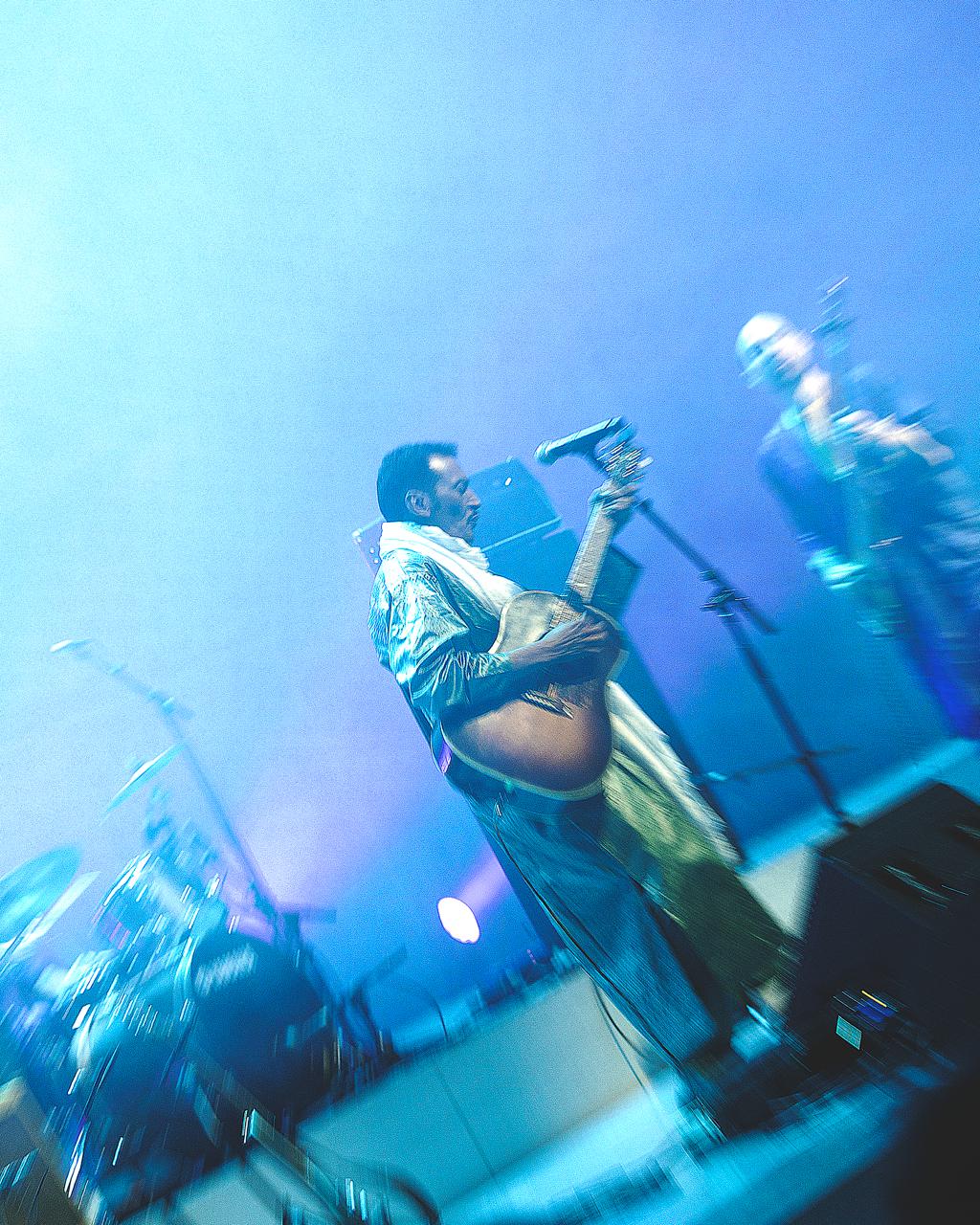
One of the final highlights featured a wonderfully grooving drum solo followed by an equally captivating bass feature. Bombino stepped back, danced, and allowed his bandmates to take centre stage before all three musicians returned to a hypnotic, almost primeval groove that felt as though it had emerged directly from the desert itself.
For the encore, Bombino returned alone. Guitar in hand, he began with a solitary groove and a series of twanging phrases before the bassist and drummer gradually rejoined him. It was a fitting ending: a reminder that, whether acoustic or electric, intimate or expansive, Bombino’s music ultimately rests on the power of rhythm, groove and connection.
Desert blues may be the term most often attached to his music, but on this evening it often felt just as much like a rock concert. Not because it abandoned its roots, but because it embraced them with such confidence that they could converse effortlessly with Hendrix, psychedelia, groove and pure rock-and-roll energy.
And judging by the number of people dancing by the end, the audience understood that perfectly.