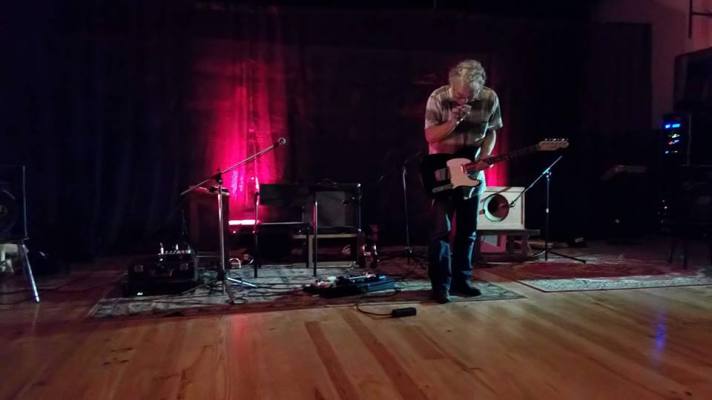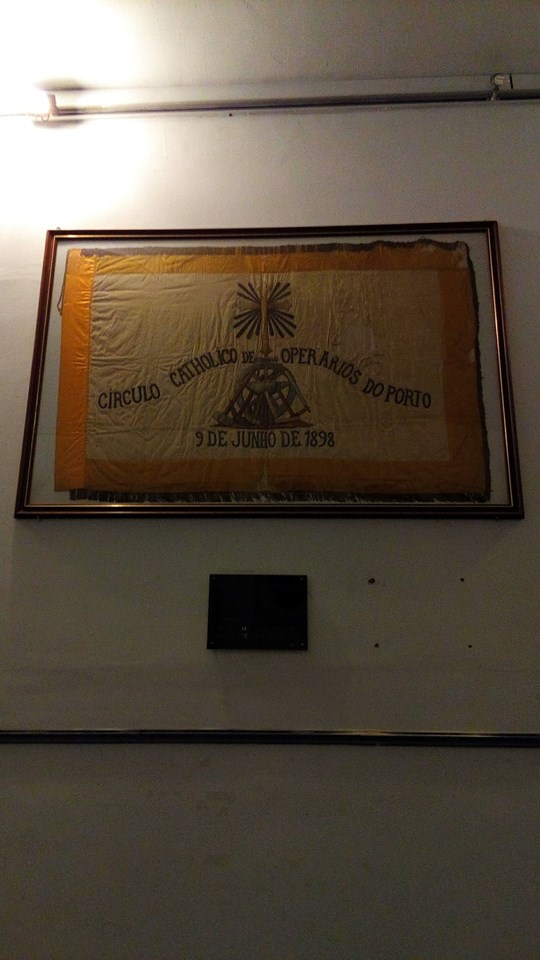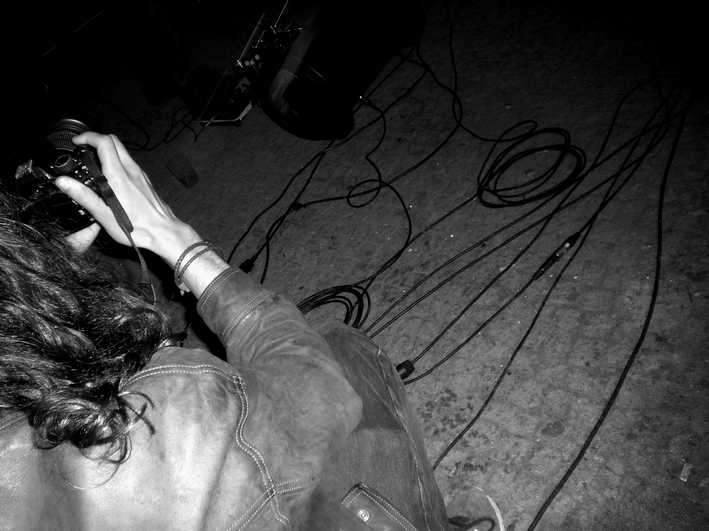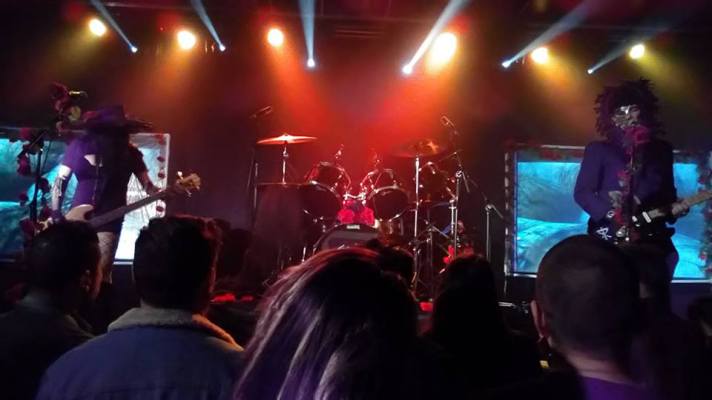
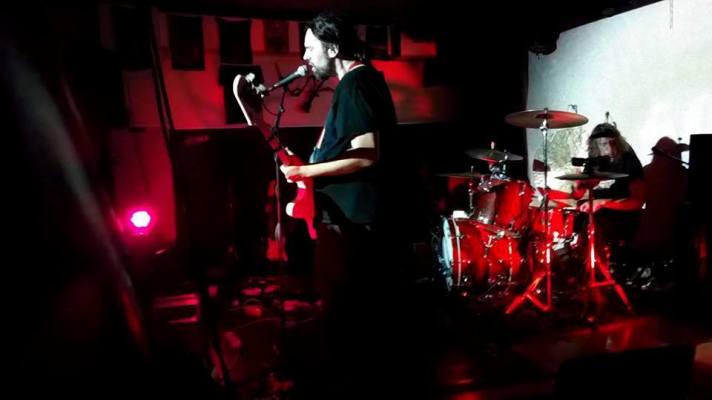
Mars Red Sky, Woodstock 69, Porto, 14.07.2018.

37161248_1779593922129788_2254524154390773760_n
© Guilherme Lucas

Words: Guilherme Lucas (freely translated by Raquel Pinheiro); photos Guilherme Lucas

Mars Red Sky a French trio from Bordeaux played last Saturday at Woodstock 69.

Musically the band places itself within a heavy psychedelic rock sound of 70’s matrix, but with a strong doom component. Therefore, one can consider them an interesting update, by means of renovation within stoner rock, with a very personalized path. The proof lies in their existing prolific discography of great quality with the very curious common feature of being listenable with pleasure and without added difficulties, definitely proof that there is a higher “pop” sense in constructing great psych-doom themes to reach larger audiences. It is no coincidence that they’re a band that has in its curriculum important performances in several international festivals within their style and similar ones.

Essentially, what I come out with from Porto’s concert was the confirmation of two peculiar aspects perceived in their discography, but that are fully confirmed live. Namely: the vocalista- guitarist, Julien Pras, owns a unique voice and a way of singing that makes the difference within this genre. Instead of the traditional rough vocals of the genre, he offers us a calm and fragile voice, in a very melodic, crystalline (and captivating) timbre, leading us into hypnotic and somewhat cinematic landscapes in many of the vocalized moments. That is possibly the biggest difference Mars Red Sky have in relation to many other bands of its ilk. Another retained aspect has to do with the form (which I classify as post-punk and economic) of performing the themes‘s solos. They are psychedelic, but not typically executed and cliché within the genre; there are no elaborate and endless scales to go through, but rather an excellent use of fuzz and wah-wah in a ripped and precise way. This is one of their characteristics that I appreciate a lot and that stems from the conceptual way the band approaches their themes.

In my opinion, there is, however, a less positive point that I have identified in the trio’s performance and that is purely performative: they offer a monotonous and very physically scant performance throughout their show, limiting themselves almost exclusively to “throw” their themes very precisely. If there are many moments in which this type of posture is understood, there are also many others that demand more intervention from the band. But this does not occur, that is, their performance is always at a single speed and emotion from the beginning to the end of the concert. Undoubtedly, in that regards, there is some “gaze” in their performance, and not so much in their music.

Aside from that, I can also conclude that both the audience present (who supposedly knew what they were getting themselves into), and the band, were satisfied enough at the end of the show. The many applause given to the group prove so.


Texto e fotos: Guilherme Lucas

O trio francês, da cidade de Bordeaux, Mars Red Sky, apresentou-se ao vivo no passado sábado, no Woodstock 69.

A banda está musicalmente inserida dentro de uma sonoridade rock psicadélica pesada, de matriz anos 70, mas com uma forte componente doom. Podemos, por isso, considerar que são uma interessante atualização, por via renovadora, dentro do stoner rock, numa direção muito personalizada. A prova disso é a já sua prolífica discografia de grande qualidade e com o muito curioso aspeto comum de que estas se escutam com agrado e sem dificuldades acrescidas, o que é definitivamente prova de que existe um elevado sentido “pop” de construir grandes temas psych-doom para atingir públicos maiores. Não é por acaso que são uma banda que conta já no seu currículo com atuações importantes em alguns festivais internacionais dentro do seu estilo e afins.

Essencialmente, o que retive deste seu concerto no Porto, foi a confirmação de dois aspetos peculiares que se percebem na sua discografia, mas que ao vivo se confirmam plenamente. A saber: o seu vocalista e guitarrista, Julien Pras, é senhor de uma voz muito singular e de uma forma de cantar que faz a diferença dentro deste género. Ao invés da tradicional vocalização rude e agreste do género, oferece-nos uma voz calma e frágil, num timbre muito melódico, cristalino (e cativante), conduzindo-nos para paragens hipnóticas e algo cinemáticas em muitos dos momentos vocalizados. Este é possivelmente o ponto mais diferenciador dos Mars Red Sky em relação a muitas outras bandas do seu género. Um outro aspeto retido tem a ver com a forma (que classifico de post-punk e económica) de executar os solos dos temas. Os solos são psicadélicos, mas não são executados de forma típica e cliché dentro deste género; não existem elaboradas e infinitas escalas a percorrer, mas sim um excelente uso do fuzz e do wah-wah, de forma rasgada e precisa. Esta é uma das suas características que aprecio bastante e que deriva na forma conceptual como a banda aborda os seus temas.

Há contudo, e na minha opinião, um ponto menos positivo que identifiquei na atuação do trio e que é de pendor exclusivamente performativo: estes oferecem uma atuação monótona e muito pouco física ao longo do seu espetáculo, limitando-se quase que exclusivamente a “debitar” os seus temas de forma muito precisa. Se há muitos momentos em que este tipo de postura se entende, há também muitos outros que se pedem mais interventivos por parte da banda. Mas isso não ocorre, ou seja, a sua atuação é sempre a uma única velocidade e a uma só emoção do início ao fim do concerto. Sem dúvida, que nesse aspeto, existe algo de “gaze” na sua performance, e não tanto na sua música.

Tirando este aspeto, posso também concluir que tanto o público presente (que supostamente sabia ao que ia), como a banda, se deram por bastante satisfeitos no final do espetáculo. Os muitos aplausos oferecidos ao grupo são prova disso


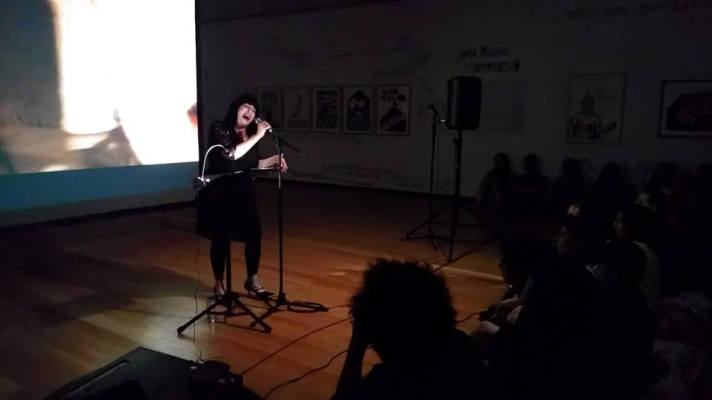
Lydia Lunch Performance, Galeria Municipal, Porto, 07.07.2018.

36846173_1768982699857577_861798004124811264_n
Lydia Lunch © Guilherme Lucas

words: Guilherme Lucas (freely translated by Raquel Pinheiro); photos Guilherme Lucas

Lydia Lunch is one of the most important personalities of New York’s no-wave and post-punk music scene of the 1980s. She’s a pioneer and survivor of a passionate, literary genre, without aesthetic or ideological barriers, the best underground music has given us over the last few decades. She is part of a generation of geniuses and influential personalities when it comes to music, writing and performance, and for that very reason she is living history, or a legend, of popular underground music, depending on how you want to catalog her.

The artist presented herself to the public last Saturday at Galeria Municipal in Porto with her enthralling spoken word work named Dust and Shadows, following the exhibition  O ontem morreu hoje, o hoje morre amanhã  (Yesterday died today, today dies tomorrow) – an exhibitions of emerging local artists with works related to their nightlife experiences, using posters and images for electronic music events, DJ sets and others -, where the biggest name, and possibly the catalyst of this exhibition, is Raymond Pettibon​ the great American artist author of all the graphic aesthetics of the mighty Black Flag, one of the most important and seminal punk-hardcore world’s bands. In short, the black and white aesthetics of grotesque and crude proportions, often minimal and naively “poorly drawn” is what unites all these artists. I strongly a recommend to the exhibition.

Lydia Lunch hypnotically led us to a mind-boggling performance of the word, transformed into a psychedelic device of rambling the urgent and depressing thoughts that plague the mind of the artist and which that is simply astonishing, and leaves no one indifferent. Because what confronts us over 45 minutes is simply a person’s Life in every possible and conceivable way.

Initially focusing on freedom in its more politicized understanding of how the state and corporations control us all, from the mere use of a Visa card to TV or the Internet, it immediately moves into a closed attack on the US and its  varied idiosyncrasies that are fulminantly bare naked, resorting to her personal concept of chaos and its liberating power, taking us to her obscure world of ghost-emotions that torment our memories, warning us in advance, that, one day we will also become one of them. There is an ecstatic dark humor, a violent convulsion in everything the artist approaches, as if there was no salvation. She claims to be a survivor, of all kinds of lives and drugs, real and imaginary. But it is precisely in this apparent negativity that lies all the love for Life, For Mother Nature, and people by Lydia Lunch. When she reveals to us, in an aggressive and defiant manner, that the true and only rebellion is pleasure, it is more than obvious that we are facing someone with huge substance; a rare mind with important things to be listened to. At the end of her show, she writes, in the form of a poignant eulogy, chilling and distressing, about what can be said to someone who only has 30 days of live an ends up only having 30 hours to live and that quickly changes to only 3 hours and only 3 more minute, poisoned with medication, trying to fight for life, trying at all costs to save the hope for a life that is ending … and there are only three seconds left to live and the only thing that can be done is to hold hands with the dying person say that they will quickly become a king and that, in a vortex of light, will enter another dimension, turned into subatomic particles in the ether, in ashes … this is a moment one can never forget, because it a very strong thing, an intensely evident visualization of how the artist publicly exposes herself abour end of life. This moment of the show is very shocking, made with a feeling that hundreds of noisy rock bands of and others will never be able to cross to an audience. The word, when well used, is very powerful … overwhelming.

What I essentially retained from the artist (who has visited us several times in the past) latest performance is that ostensibly, Lydia Lunch is a kind of up-to-date and very peculiar upgrade of the great blues and jazz singers of the past, a diva of debauchery and chaos, pleasure and lust; owner of a powerful voice with a great timbre reach, that proclaims freedom in a way that is neither obvious nor common sense. That is what makes her unique: one among billions. In addition, she is also someone with active political consciousness; always finding a way of relating eminently literary themes and emotive subjects with a hard and crude social reality, attacking in an vitriolic way what in her view of reality has to be destroyed.

Therefore, I believe, that watching one of her performances is always an unforgettable life experience, one of those that will last forever in our memories. At least that’s what happened to me.

Texto e fotos: Guilherme Lucas

Lydia Lunch Performance– Lydia Lunch é uma das mais importantes personalidades do meio musical da no-wave e do post-punk de Nova York dos anos 80. É uma pioneira e uma sobrevivente de um género apaixonante, literário, sem barreiras estéticas e ideológicas, do melhor que a música underground nos deu ao longo destas últimas décadas. Faz parte de uma geração de génios e de personalidades influentes, tanto a nível musical, de escrita e de performance, e por isso mesmo é história viva, ou lenda-viva, da música popular de pendor underground, conforme se a quiser catalogar.

A artista apresentou-se ao público, no passado sábado, na Galeria Municipal do Porto, com o seu apaixonante trabalho de tipologia spoken word de nome Dust and Shadows, no seguimento da exposição “O ontem morreu hoje, o hoje morre amanhã” (uma mostra de artistas locais emergentes com trabalhos orientados dentro da temática das suas experiências de vida noturna – através de cartazes e imagens para eventos de música eletrónica, DJ sets e outros), e onde o nome maior – e eventualmente o catalisador desta exposição – é o enorme artista norte-americano Raymond Pettibon, o autor de toda a estética gráfica dos grandiosos Black Flag, uma das mais importantes e seminais bandas do punk-hardcore global. De forma muito resumida, a estética do preto e branco de proporções grotescas e cruas, em muitos casos minimal e “mal desenhada” de forma naíf, é o que une todos estes artistas. Uma exposição que recomendo vivamente para ser visitada.

Lydia Lunch conduziu-nos de forma hipnótica para uma alucinante performance da palavra, transformada em qual artefacto psicadélico de divagação dos pensamentos urgentes e depressivos que assolam a mente da artista e que é simplesmente assombrosa, e não deixa ninguém indiferente. Porque o que esta nos confronta ao longo de 45 minutos é simplesmente a Vida em todas as vertentes possíveis e imagináveis do indivíduo.
Inicialmente focando-se sobre a liberdade no seu entendimento mais politizado, de como o Estado e as corporações nos controlam a todos, desde o mero uso de um cartão Visa até à tv e internet, de imediato passa para um ataque cerrado aos EUA nas suas mais variadas idiossincrasias que são, de forma fulminante, postas a cru, recorrendo para o seu conceito pessoal de caos e do seu poder libertador, levando-nos ao seu mundo obscuro dos fantasmas-emoções que nos atormentam as memórias, avisando-nos de antemão, de que um dia mais tarde, seremos também um deles. Há um extasiante humor negro, em violenta convulsão, em tudo o que a artista aborda, como se não houvesse salvação. Ela afirma-se uma sobrevivente, de todos os tipos de vidas e de drogas, reais e imaginárias. Mas é precisamente nesta aparente negatividade que reside todo o amor pela Vida, pela Mãe-Natureza, e pelo Indivíduo por parte de Lydia Lunch. Quando nos revela, de forma agressiva e desafiadora, que a verdadeira e única rebelião é o prazer, é mais do que óbvio que estamos perante alguém com imensa substância; uma mente rara com coisas importantes para ser escutada. No final do seu espetáculo, disserta, em forma pungente de elogio fúnebre, arrepiante e angustiante, sobre o que se pode dizer a alguém que só tem 30 dias de vida e que passa só a ter 30 horas de vida e que passa rapidamente a ter 3 horas e só mais 3 minutos, envenenado com medicação, a tentar lutar pela vida, a tentar a todo o custo salvar a esperança para uma vida que se apaga… e só restam mais 3 segundos de vida e a única coisa que se pode fazer é dar as mãos a quem morre e dizer que rapidamente passarás a ser um rei e num vórtex de luz entras numa outra dimensão, feito em partículas subatómicas no éter, em cinzas… este é um momento que jamais se esquece, porque é algo muito forte, de visualização intensamente evidente da forma como a artista se expôe publicamente nesta temática do fim da Vida. Este momento do espetáculo é muito impactante, feito num sentimento que jamais centenas de bandas barulhentas de rock e afins alguma vez conseguirão fazer passar para uma audiência. A palavra, quando bem usada, é muito poderosa… avassaladora.

O que retive essencialmente desta mais recente performance da artista (que já nos visitou por diversas vezes no passado), é que de forma ostensiva, Lydia Lunch é uma espécie de upgrade atualizado e muito peculiar das grandes cantoras de blues e do jazz do passado, uma diva da devassidão e do caos, do prazer e da luxúria; senhora de uma voz poderosa e de grande alcance tímbrico, que apregoa a liberdade de uma forma que não é óbvia nem do senso-comum. É nisso que é uma fora de série; uma entre biliões. Para além disso, é também alguém com consciência política ativa; encontra sempre uma forma de relacionar temas eminentemente literários e emotivos com uma realidade social dura e crua, atacando de forma ácida o que tiver de ser destruído na sua conceção do real.
Por isso, estou em crer, que assistir a uma sua performance, é sempre uma experiência de vida inesquecível, daquelas que perdurarão eternamente nas nossas memórias. Pelo menos foi isso que aconteceu comigo

GATE (M Morley / Dead C), F Felizardo, F Oliveira no CCOP Porto!, Porto, 14.06.2018.

Francisco Oliveira
© Guilherme Lucas – Francisco Oliveira

words. Guilherme Lucas (freely translated by Raquel Pinheiro); photos: Guilherme Lucas

1 – Francisco Oliveira – I appreciated the conceptual approach with which this musician from Porto (also Terebentina‘s guitarist,) approached his concert. Retorting to cassettes with pre-recorded track(s) (at times in reverse), the musician, almost always within an apparent free experimentation and modulated sound acoustics register, managed, in many moments of his performance to execute (or create) imminently chaotic, but equally attractive sound textures within the context in which they were unfolding. I would say that, to a large extent, Francisco Oliveira’s sonic / experimental stance is eminently “rock’n’roll”; it derives in many quarters from Glenn Branca’s fundamental heritage through Sonic Youth re-adapted to the young musician’s taste and effort of constructing a personalized sound speech. The manipulation techniques of functional objects adapted to the electric guitar, to assist its reinterpretation, as well as its enormous potential when distorted, highlight it as a resource previously “discovered” by other musicians and bands of past avant-gardes.

However the musician’s work/performance doesn’t reduce itself to my initial point of view. Even because listening to his work on Holoscene 85 ‘(the name of his solo project), one easily perceives that a whole culture of influences far more wide than those already pointed live there. There is notoriously a taste of pop-rock bands and projects of the last decades that I consider influential, and that is, somehow, processed and re-adapted to Francisco Oliveira‘s experimental building  discourse. If this multidisciplinary musician/artist still shows some connection to influences and forms of interpretation that can be /seem obvious. There already can be found many clues in his performances and there are very good sensations coming from someone that is starting to gave his own style and unique speech.

I found this concert almost always within two constant discourses, between the chaos of experimental distortion and the environmental background. There were times when both collided, and others where each of them had its own defined space, without conflict. I assume that, with time and live sharpening, this last path will prevail. To simplify my discourse and my thinking, I would say that what remains to be determined in this project are the guitar “arrangements”, since the compositional and aesthetic structure seems to me already well achieved and defined.

Filipe Felizardo_2
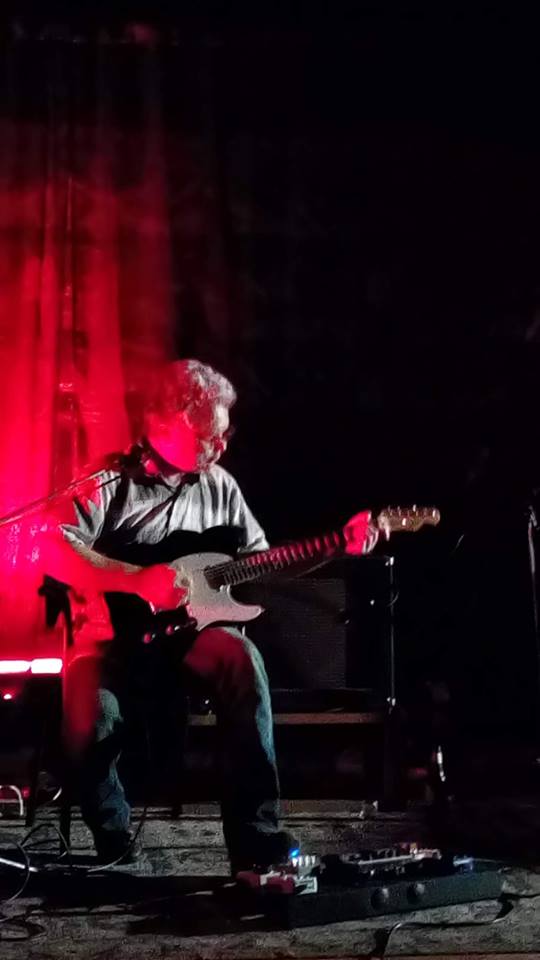
© Guilherme Lucas – Filipe Felizardo

2- Filipe Felizardo –  If I used an analogy with “rock’n’roll” to simplify the understanding Francisco Oliveira’s for Felipe Felizardo I will use “blues” as an analogy. This experimental musician from Lisboa has an action field that I consider risky, but equally challenging. Resorting solely to the distorted sound of the electric guitar, without any base or background support, Filipe Felizardo builds compositional movements between the chaos originated between the distorted feedback and the manipulation of the electric guitar effects pedal, working in the moment the chance of silences and of other sounds that occur from the way one plays/manipulate the guitar. For me there is an intrinsic connection to the blues in an experimental way and during his performance the image of Marc Ribot’s experimental work assaulted me permanently. Not that Filipe Felizardo might have an obvious direct link to Marc Ribot, but the approach he promotes is conventionally attractive for my subconscious to have related this reference.

Many times his sound slides into drone territory, resembling Sunn O)), and there are moments when the extremely loud and violent sound of his distorted guitar tortured us relentlessly only to, at once, get us back to more delicate ambiente outline sound textures. I will say that Filipe Felizardo has, from what he has shown, a practically unique field to progress. Not being my aim to predict the future in a field as fragile as experimental underground music, I am left curious to imagine how this musician can develop within his sound concept, because it is a difficult road, but, as I said before, challenging and interesting.

Michael Morley_6
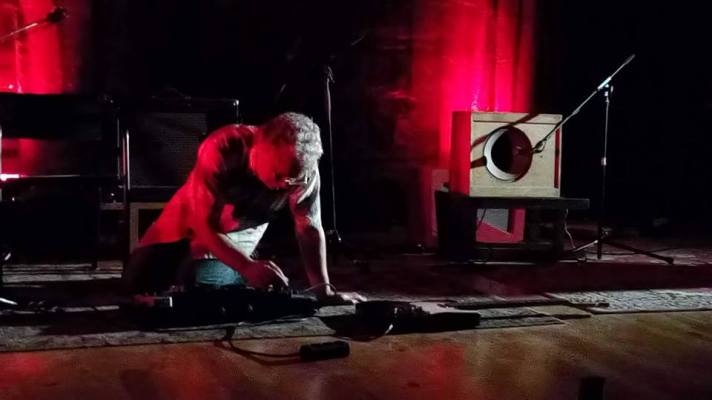
© Guilherme Lucas – Gate (Michael Morley)

3 – GATE – (Michael Morley) – New Zealander Michael Morley, guitarist and lead singer of the mythical The Dead C, quite an influential noise rock avant-garde band from the late 80s to nowadays, within free improvisation experimental music narrow world, offered a very good concert with Gate, his personal project.

Continuing to resort to clarifying analogies, I will say that if before we had “rock’n’roll” with Francisco Oliveira and “blues” with Filipe Felizardo, with Michael Morley we had a dense and obscure symphony directed by an excellent conductor of rock experimental drone and noise. It is notorious, even evident, how this musician masterfully masters what, supposedly, is not manageable. Even when he turns to the declamation with his distressing, whispering or higher voice; a voice that is anything but captivating by common aesthetic standards, makes this customized connection work and in line with the ambient sound textures it builds.

Gate’s music acquires a greater sensory experience when we listen to it with closed eyes, centered solely on the sound (something, I think is recurrent to all experimental music), abstracted from the distracting movements offered by the manipulation of his guitar and laptop. When we attend a concert of a noise experimentalism living legend of, as in this case, we understand more clearly what years of endurance and improvement means within a style that is difficult to understand by most music lovers, but that shows us it is a very specific way that it is always possible to make compositional sounds and structures completely abstracted from the platitudes of formatted mass music. Without ever making a classic rock solo, without ever using a specific melody or harmony, Michaek Morley manages to do them all within his own aesthetic language, eventually using the same rules as others, but always adapted to his speech … showing that sound possibilities are endless.

The conviction that one can also make a long career within a very restricted landscape and world, offering quality and a very personalized sound diversity (because the musician’s work is anything but restricted to only one type of sound) is, possibly, the most important idea I have kept from his concert.


Francisco Oliveira_1
© Guilherme Lucas – Francisco Oliveira

texto e fotos: Guilherme Lucas

1 – Francisco Oliveira – Apreciei a abordagem conceptual com que este músico portuense (também guitarrista na banda Terebentina), abordou o seu concerto. Recorrendo a k7’s com(o) faixa(s) pré-gravada(s) (em algumas situações em reverse), o músico, quase sempre dentro de um registo de aparente experimentação livre e de acasos sonoros modulados, conseguiu, em muitos momentos da sua performance, realizar (ou criar) texturas sonoras iminentemente caóticas mas igualmente atraentes no contexto em que as mesmas iam progredindo. Diria que, em grande medida, a postura sónica/experimental de Francisco Oliveira é eminentemente “rock’n’roll”; deriva em muitos quadrantes da herança fundamental de um Glenn Branca por via de uns Sonic Youth readaptados ao gosto e na aposta do jovem músico em construir um discurso sonoro personalizado. As técnicas de manipulação com objetos de funcionalidade adaptada à guitarra elétrica, no sentido de auxiliar na reinterpretação da mesma, bem como das suas enormes potencialidades quando em distorção, evidenciam isso no sentido de um recurso já “descoberto” por outros músicos e bandas de vanguardas experimentais do passado.

No entanto o trabalho/performance do músico não se reduz só a este meu ponto de vista inicial. Até porque escutando o seu trabalho em Holoscene 85′(o nome do seu projeto a solo), facilmente se percebe que já reside lá toda uma cultura de influências muito mais abrangente do que aquelas que apontei. Há notoriamente um gosto que considero influente por via de algumas bandas/projetos pop/rock importantes e interessantes das últimas décadas, e que é – de alguma forma – trabalhado e readaptado ao discurso experimental que Francisco Oliveira está a construir. Se este músico/artista multidisciplinar ainda evidencia alguma ligação a influências e formas de interpretação que podem ser/parecer óbvias, também já se encontra em muitos momentos da sua atuação pistas e muito boas sensações de quem já começa igualmente a possuir uma forma própria e um discurso singular. Achei este seu concerto quase sempre dentro de dois discursos constantes, entre o caos da distorção experimental e o do fundo ambiental. Houve momentos em que ambos colidiram, e outros em que cada um deles teve o seu próprio espaço definido, sem conflito. Presumo que, com o tempo e o apuro ao vivo deste projeto, venha a ser este último caminho o mais prevalente. Para simplificar o meu discurso e o meu pensamento, diria que o que falta apurar neste projeto são os “arranjos” de guitarra, já que a estrutura composicional e estética parece-me já bem conseguida e definida.

Filipe Felizardo_1
© Guilherme Lucas – Filipe Felizardo

2- Filipe Felizardo – Se usei uma analogia com o “rock’n’roll” para simplificar o entendimento sobre a atuação de Francisco Oliveira, para Filipe Felizardo usarei a analogia do “blues”. Este músico experimental lisboeta tem um campo de ação que considero arriscado mas igualmente desafiador. Recorrendo unicamente ao som distorcido da guitarra elétrica, sem qualquer apoio de base ou fundo, Filipe Felizardo constrói andamentos composicionais entre o caos originado entre o feedback distorcido e a manipulação do pedal de efeitos da guitarra elétrica, trabalhando no momento o acaso dos silêncios e de outros sons que ocorrem da forma como toca/manipula a sua guitarra. Há, para mim, uma intrínseca ligação ao blues de uma forma experimental e durante a sua prestação a imagem de um Marc Ribot assaltou-me permanentemente no que também ele tem de experimental na sua obra. Não que Filipe Felizardo possa ter uma uma óbvia ligação direta com Marc Ribot, mas a abordagem que promove é concetualmente atraente para o meu subconsciente ter relacionado esta referência.

Em muitos momentos o seu som resvala para o drone, lembrando uns Sunn O))), e não são poucos os momentos em que o som extremamente violento e alto da sua guitarra distorcida tortura-nos implacavelmente os sentidos para nos remeter de imediato para outras texturas sonoras mais delicadas e de perfil ambiental. Direi que Filipe Felizardo tem, pelo que demonstrou, um campo praticamente único para progredir e não estando nos meus propósitos fazer futurologia num campo tão frágil como é a música underground e de teor experimental, fico com a curiosidade de imaginar como este músico pode evoluir dentro deste seu conceito sonoro, porque é caminho difícil, mas como disse antes, desafiador e interessante.

Michael Morley_1
© Guilherme Lucas – Gate (Michael Morley)

3 – GATE – (Michael Morley) – o neozelandês Michael Morley, guitarrista e vocalista dos míticos The Dead C, uma banda de noise rock avant-garde, bastante influente, desde os finais dos anos 80 até à atualidade, dentro do restrito meio da música experimental de livre improvisação, ofereceu um muito bom concerto com o seu projeto pessoal Gate.
Continuando a recorrer a analogias elucidativas, direi que se tivemos antes “rock’n’roll” com Francisco Oliveira e “blues” com Filipe Felizardo, com Michael Morley tivemos uma densa e obscura sinfonia dirigida por um excelente maestro do drone e do noise rock experimental. É notória, evidente até, a forma como este músico domina com mestria o que não é, à partida, dominável. Mesmo quando recorre à declamação com a sua voz angustiante, em sussurro ou mais elevada; uma voz que é tudo menos cativante pelos padrões estéticos comuns, faz com que essa ligação funcione personalizada e em consonância com as texturas sonoras ambientais que vai construindo.
A música de Gate adquire uma experiência sensorial maior quando a escutamos de olhos fechados, centrados unicamente no som (é algo, acho, recorrente para toda a música experimental), abstraídos dos movimentos de distração que a manipulação da sua guitarra e laptop oferecem. Quando assistimos a um concerto de uma lenda viva do experimentalismo noise, como é o caso, entendemos mais claramente o que significam anos de endurance e de aprimoramento dentro de um estilo que é de difícil compreensão pela maior parte dos melómanos, mas que nos demonstra de forma muito concreta que é possível sempre fazer sons e estruturas composicionais completamente abstraídas dos lugares comuns formatados da música de massas. Sem nunca fazer um solo clássico de rock, sem nunca usar uma melodia ou harmonia concreta, Michaek Morley consegue fazer todas elas dentro da sua própria linguagem estética, eventualmente usando as mesmas regras que os outros, mas sempre adaptadas ao seu discurso…demonstrando que as possibilidades sonoras são inesgotáveis.

A convicção de que se pode também fazer uma longa carreira dentro de um panorama e de um meio muito restrito, oferecendo qualidade e uma diversidade sonora muito personalizada (porque o trabalho do músico é tudo menos taxativo com um só tipo de som), é, eventualmente, a mais importante ideia que retive do seu concerto.

Michael Morley
© Guilherme Lucas – Gate (Michael Morley)
35360735_1733282683427579_8742169853835608064_n
© Guilherme Lucas

The Men, Maus Hábitos, Porto, 31.05.2018.

34305363_1717169355038912_4837855714879733760_n
© Guilherme Lucas

Words: Guilherme Lucas (freely translated by Raquel Pinheiro; photos: Guilherme Lucas

Bronx New Yorkers, The Men, are anything but a predictable rock band. Their repertoire, condensed in their discography, reveals it: an enormous capacity and genuine interest of the n«band, in their different line-ups, over the years,  in approaching their music from an experimental perspective and without musical barriers within an eminently rocky context . That means, musically and stylistically speaking, it is practically impossible to catalog The Men. But it can be said, without doubt that they are a great rock band.

The Men (currently on tour promoting their latest and most eclectic work called Drift), performed at Maus Hábitos stage showing precisely that: that they can equally start with a brutal and devastating theme that is nothing more than “punk- rock-hardcore-noise with solos like Dinossaur Jr”, and, right away, submerge themselves in an introspective, calm theme of country -folk ambience, with a somewhat irrepressible free jazz  saxophone – at times reminding a few sentences from The Stooges’ Fun House – returning to punk-hardcore fulminating noise … once more followed by intimate themes, musically haunted by American rock memorabilia ranging from The Doors to Johnny Cash, (at times I even noticed something between Bruce Springsteen and Tom Petty) … therefore , it is virtually impossible to accurately identify all their influences; one can only rely on what is suggested by their compositions. The band offered a good concert, though, and as mentioned, with different speeds and very different intensities.

The idea one is left with is clear, The Men are a band, that if they so which, can act in any type of stage, for a very diverse audiences. They can both perform in the most fetid and underground hole of any city within punk, distilling the most violent and abrasive part part of their repertoire, but with the other part of their deeper and more diverse themes that interest more musically purportedly enlightened audiences also perfectly fitting within “charm” spaces like “Music Venues”. This time they performed at Maus Hábitos, the kind of perfect space, placed in between of the two I mentioned. It was, therefore, very worthwhile.


texto e fotos: Guilherme Lucas

Os nova-iorquinos de Bronx, The Men, são tudo menos uma banda de rock previsível. O seu repertório, condensado na sua discografia, revela isso mesmo: a enorme capacidade e o genuíno interesse do grupo, nas suas diferentes formações ao longo dos anos, de abordar a sua música numa perspetiva experimental e sem barreiras musicais dentro de um contexto eminentemente rock. Isso significa que é praticamente impossível catalogar os The Men musical e estilisticamente falando. Mas podemos afirmar, sem margem de dúvidas, que são uma grande banda de rock.

Os The Men (que estão em tour de promoção do seu mais recente – e bastante eclético – trabalho, de nome Drift), que se apresentaram no palco dos Maus Hábitos demonstraram precisamente isso: tanto arrancam com um brutal e devastador tema que nada mais é do que “punk rock hardcore noise com solos à Dinossaur Jr”, para de seguida mergulharem num tema introspetivo, calmo, de ambiência country/folk, com um sax algo free jazz irrepreensível – a fazer lembrar a espaços algumas frases à la Stooges do Fun House – para regressarem ao punk hardcore noise fulminante… seguindo-se novamente mais uns temas intimistas, assombrados musicalmente por memorabilia rock norte-americana desde os Doors a Johnny Cash, (por momentos até percebi lá no meio qualquer coisa entre Bruce Springsteen com Tom Petty)… é por isso praticamente impossível identificar todas as suas influências com rigor; apenas nos podemos basear no que as suas composições nos sugerem. A banda ofereceu um bom concerto, embora, e como referi, com diferentes velocidades e de muito diferentes intensidades.

Fica claramente a ideia que os The Men são uma banda, que se quiserem, atuam em qualquer tipo de palco e para públicos muito diversos. Tanto podem atuar no buraco mais fétido e underground de qualquer cidade dentro do punk, destilando toda a parte do seu repertório mais violento e abrasivo, como perfeitamente encaixam em espaços de “charme” tipo “Casas da Música”, com a outra parte dos seus temas mais profundos e diversificados, que são do interesse de públicos pretensamente mais esclarecidos musicalmente. Desta vez atuaram nos Maus Hábitos, que é o tipo de espaço perfeito, situado a meio dos dois que referi. E valeu, por isso, muito a pena.


FAUP FEST 4.0​, Faculdade de Arquitectura da Universidade do Porto​, Porto, 24.05.2018.

CIMG3988
© Raquel Pinheiro

words and photos: Raquel Pinheiro​.

The plan was to partially photo capture the event from late afternoon onward, and to, at least include Terebentina​ and Ângela Polícia​ scheduled for 10:30pm and 10:20pm.

Rain, bands starting one hour, or more, later than scheduled, and a couple of minor foot injuries called for an early fold.

Talea Jacta​, P A L M I E R S​, The Lemon Lovers​, Sereias​ and Madmess​ were captured.


CIMG3990
© Raquel Pinheiro


IMG_20180524_210630
© Raquel Pinheiro
CIMG4010
Madness © Raquel Pinheiro
CIMG8163
© Raquel Pinheiro


CIMG4009
© Raquel Pinheiro


CIMG8165
© Raquel Pinheiro

4 – (Parva é Parva porque quer # 7) – Terebentina + Sereias + Nu No & FT + Maria de Nada (DJ Set – Lithuania, Italy) + Phantazum (DJ Set – (Lithuania) + Solution & DJ Lynce (DJ Set), Cantinho da Teresinha, Centro Comercial Cedofeita, Porto, 30.04.2018.

CIMG8145
© Raquel Pinheiro

words: Guilherme Lucas (freely translated by Raquel Pinheiro); photos: Raquel Pinheiro & Guilherme Lucas

Parva is a DIY concept of its mentor, musician and artist Pedro Centeno, which includes an independent publisher, project management and the organization of underground cultural events, but also has incursions in fine arts, from what I was able to deduce . And I say deduce, because I am writing this text without having yet managed to reach the informal conversation with its leader to get to know more about his ideas and future plans. There will certainly soon be an opportunity for it, but, and for that very reason, these short lines are only based on my research and interpretative analysis of what already proliferates on the internet about Parva.

All that to introduce a brief thought about the event organized last Monday, April 30 at Cedofeita Shopping Center, in a nightclub called Cantinho da Teresinha, a fado house, and that (as everyone knows ), is always a great, completely improbable, place, where true underground events always make history.

It was a long and fantastic evening, with lots of people participating and attending the concerts of the bands in the line-up, as well as the DJ Sets that followed them. It was a unique moment and that will remain for future memory, which, right now, I classify as a record of the possible post-punk scene (much because of the bands) currently in Porto. And I say it’s a possible post-punk, because there are things in it that are so, and many others that already escape this genre … but post punk always also lived without predefined aesthetic borders, which was always its great virtue. Do not confuse this post punk that I speak of with the post punk gothic variant or deathrock, depressive urban pop- rock from Manchester and the likes, (that also exists in a very representative manner in Porto) … this post-punk that I speak of is linked to Einsturzende Neubauten and Die Haut, 70s & 80s New York of Suicide and Lydia Lunch, or The Birthday Party and Rowland S. Howard’s Melbourne. It is the post-punk of artists, unbalanced geniuses, libertarians, anarchists, chaos and debauchery. It’s my post-punk, the one I’ve always loved.

But this (neo) post-punk that I point to already has its own discourse that goes beyond the musical subgenre I am referring to, and which is, therefore, musically diverse (both formally analogical and digital, or the two simultaneously) , and, when it comes to the bands, they themselves, and in their own way, are able to implant themselves in the city ‘s alternative circuit of the and beyond. And, in that sense, Parva has had an enormous importance, not only because of its catalog of published projects, but also because of the events it has held.

For now I have identified Sereias, Terbentina, Nu No & FT and Era uma vez um tímpano, as bands of this bearing. I also consider 10,000 Russos, Dreamweapon and Summer of Hate in the same league, but in a very different position, much of their sound being krautrock (this is the link they have with post-punk, since it is the greater influence of that genre) and the fact that, live, there ins’t in those three bands the aesthetics of violent and insane chaos, that happens with the other four mentioned above. Let’s say the last three are the disciplined psychedelics of post-punk. This is all very exciting for me, because I have always thought it difficult to find nowadays inheritance and continuity in the city to 80s-90s Guru Paraplégico e os Iconoclastas or Hospital. So if there are any more bands of the genre, I hope to discover and talk about them firsthand. Tha is what drives me.


texto: Guilherme Lucas, fotos: Raquel Pinheiro & Guilherme Lucas

P a r v a é um conceito DIY do seu mentor, o músico e artista Pedro Centeno, que incluí uma editora independente, management de projetos e organização de eventos de cultura underground, mas também tem incursões na área das artes plásticas, pelo que me foi dado deduzir. E digo deduzir, porque estou a escrever este texto sem ter ainda conseguido chegar à conversa informal com o seu responsável para conseguir saber mais sobre as suas ideias e planos futuros. Haverá certamente oportunidade em breve para tal, mas, e por isso mesmo, estas curtas linhas são só baseadas na minha pesquisa e análise interpretativa ao que já prolifera na net sobre a Parva.

Isto tudo para introduzir para um breve pensamento sobre o evento organizado na passada segunda-feira, dia 30 de Abril, no Centro Comercial de Cedofeita, numa discoteca de nome Cantinho da Teresinha, uma casa de fados, e que (como toda a gente sabe), é sempre um excelente local, completamente improvável, onde os verdadeiros eventos underground fazem sempre história.

Foi uma longa e fantástica madrugada, com muita gente a participar e a acorrer aos concertos das bandas em cartaz, bem como aos DJ Sets que se seguiram. Foi um momento único e que fica para memória futura, o qual classifico desde já como um registo do que é a cena post punk possível (muito por via das bandas), no momento atual na Invicta. E digo que é um post punk possível, porque há coisas nele que o são e muitas outras que já escapam a esse género… mas também o post punk sempre viveu sem fronteiras estéticas predefinidas, essa sempre foi a sua grande virtude. Não se confunda este post punk de que falo com o post punk da variante gótica ou deathrock, da pop/rock urbano depressiva de Manchester e afins, (que também existe de forma muito representativa no Porto)… este post punk de que falo está ligado à Berlin dos anos 80, dos Einsturzende Neubauten e dos Die Haut, à Nova York dos 70-80 dos Suicide e da Lydia Lunch, ou a Melbourne dos The Birthday Party e de Rowland S. Howard. É o post punk dos artistas, dos génios desequilibrados, dos libertários,dos anarquistas, do caos e da devassidão. É o meu post punk, aquele que sempre adorei.

Mas este (neo) post punk portuense que aponto tem já o seu próprio discurso que vai para além do subgénero musical que refiro, e que é, por isso, musicalmente diverso (tanto é formalmente analógico como digital, ou até os dois em simultâneo), e no caso das bandas, elas mesmo, e muito à sua maneira, estão a conseguir implantar-se no circuito alternativo da cidade e até já fora dela. E a Parva tem tido, neste sentido, uma importância enorme, não só pelo seu catálogo de projetos editados, mas também pelos eventos que tem realizado.

Por agora já identifiquei os Sereias, os Terebentina, o Nu No & FT e o Era uma vez um tímpano, como bandas desta safra. Considero também os 10 000 Russos, os dreamweapon e os Summer of Hate no mesmo campeonato, mas numa posição muito diferente, por muito do seu som ser krautrock (é essa a ligação que tem com o post punk, já que é para este uma influência maior) e não haver nestas três bandas ao vivo a estética de caos violento e demencial, que acontece com as outras quatro atrás referidas. Digamos que estes três últimos são os psicadélicos disciplinados do post punk. Tudo isto é para mim muito entusiasmante, porque pensei sempre difícil haver herança e continuidade na cidade a uns Guru Paraplégico e os Iconoclastas e a uns Hospital Psiquiátrico dos anos 80-90, nos dias de hoje. Por isso se houver mais algumas bandas do género, espero descobrir e falar delas em primeira mão. É isso que me move.


Shall We Dance
© Raquel Pinheiro

2 – (Parva é Parva porque quer # 7) – Terebentina + Sereias + Nu No & FT – Sereias, Cantinho da Teresinha, Centro Comercial Cedofeita, Porto, 30.04.2018.

words: Guilherme Lucas (freely translated by Raquel Pinheiro); photos: Raquel Pinheiro

Who is there? Who is there? Who is There? Otelo, FP-25, Fascism everywhere. Why do you kill your son? Why don’t you say fuck off? Whois there? Who is there? Who is there? Politicians, bureaucrats, bankers, businessmen … … Otelo Saraiva de Carvalho. Who is there? Who is there? Who is there? Christmas, Easter, Allah’s bombs, April bombs. Who is there? Who is there? Who is there? Everything is rotten … Chaos, apocalypse, Otelo, FP-25 …)

With this urgent introduction, almost a ready-made register elevating the art of poetry of from what is generalist and apparently obvious, António Pedro Ribeiro gave the motto for another crazy incursion with Sireias to the world of mental imbalances, shock culture and chaos.

I no longer have any doubt considering Sereias as the only currently active band, with the most genuinely insane sound and attitude in Portugal – and perhaps also one of the few – in the rest of the world. And do not come to me with other bands and projects that can also compete in the same register niche, because almost all of them will always be within classic types of subgenres, sometimes rock, sometimes metal – or even others – but always in competition within similar registers, which is almost always the one of clichés and obvious formatting, already well-known and identifiable.

Sereias only play within their own league, invented by them. They are like a kind of today’s Velvet Underground, of our urban and social reality, strictly in the sense that they are unique and with a language of their own; the only alternative to them will always be to copy and try to replicate them. More than the moments of complete madness that are perceived throughout their performances, there is an urgent need for interaction with the band and their disorders, as to show that, after all, we are all insane and that we also want to participate in this discharge of dysfunctional energy, in search of catharsis and redemption. And this has always happened in their concerts.
Sereias are the post-punk band who invented post-madness.

texto: Guilherme Lucas, fotos: Raquel Pinheiro


“Quem está aí? Quem está aí? Quem está aí? Otelo, FP-25, Fascismo em todo o lado. Porque matas o teu filho? Porque não mandas tudo pró caralho? Quem está aí? Quem está aí? Quem está aí? Políticos, burocratas, banqueiros, empresários… Otelo Saraiva de Carvalho. Quem está aí? Quem está aí? Quem está aí? Natal, Páscoa, bombas de Alá, bombas abrilanas. Quem está aí? Quem está aí? Quem está aí? Está tudo podre… Caos, apocalipse, Otelo, FP-25”… Com esta introdução urgente, quase que em registo ready-made de elevação a arte poética do que é generalista e aparentemente óbvio, António Pedro Ribeiro, deu o mote para mais uma incursão demencial com as Sereias ao mundo dos desequilíbrios mentais, da cultura de choque e do caos.


Já não tenho dúvida alguma em considerar, neste momento, as Sereias como a única banda, em atividade, com o som e a atitude genuinamente mais insana em Portugal – e talvez também como uma das poucas – no resto do planeta. E não me venham acenar com outras bandas e projetos que também possam concorrer no mesmo nicho de registo, porque quase todas elas estarão sempre em tipologias clássicas dos subgéneros, ora do rock, ora do metal – ou até de outros – mas sempre em competição dentro de registos semelhantes, e que é quase sempre o dos clichés e o da formatação óbvia, já por demais conhecidas e identificáveis. Os Sereias só atuam dentro do seu próprio campeonato, inventado por eles. São como que uma espécie de Velvet Underground do nosso tempo, da nossa realidade urbana e social, estritamente no sentido em que são únicos e com uma linguagem própria; em que a única alternativa a eles passará sempre por os copiar e os tentar replicar. Mais do que os momentos de completa loucura que são percepcionados ao longo das suas atuações, há como que uma necessidade urgente de interação com a banda e com os seus distúrbios, como que para mostrar que afinal somos todos dementes e que também queremos participar dessa descarga de energia disfuncional, em busca da catárse e da redenção. E isso tem sempre ocorrido nos seus concertos.


Os Sereias são a banda post punk que inventou a post loucura.


1 – (P a r v a​ é Parva porque quer # 7) – Terebentina​ + Sereias​ + Nu No & FT – Terebentina, Cantinho da Teresinha​, Centro Comercial de Cedofeita​, Porto, 30.04.2018.

words: Guilherme Lucas​ (freely translated by Raquel Pinheiro); photos: Raquel Pinheiro​ 

It was the second time I saw Terebentina live, after their first and very promising concert at Rés-da-rua last January, this one being the fourth concert of band from Porto in such short time. To me, it turned out to be an opportunity for analyzing any differences occurred in relation to the initial impressions from their debut.

Decidedly they seemed to me much more musically cohesively, but above all much more intense performatively and dramatically gloomy in their performance, confirmed by the very good audience’s adhesion to the band ‘s performance. To this end, Guilherme Oliveira’s attitude change played a great role, in this concert he upon th classic performance of the dark and wild frontman within the typologies of underground rock’n’roll, unlike during the first concert in which (I presume) by conceptual choice, he spend whole concert seated. From all of the above, I clearly noticed an evolution (or positive difference, pick a choice) in the band, always an excellent finding. It seems that they also lost one member (the flautist), now being a sextet. The first time I find them extremely close to Sereia’s sound, this time I seemed to recognize a few different approaches, which although not yet enought to unstick them. give very promising clues to something different in the future.

Musically Terebentina are a post punk band, but within a typical no wave frame, in that sense the construction of their songs generally obeys to a completely free-jazz-punk- noise interpretation, in na apocalyptic and atonal register of what is – the apparent – structure of their compositions. The conception of the musically unrepeatable moment is also one of the defining lines of no wave [as a kind of random sounds ‘ collage in the now, many of which obtained as consequence of technology (noises, distortions) as an alternative aesthetic resource to the traditional path as far as the playing of an instrument is concerned].

But not everything is totally so in the group’s music; there is a part of Terebentina’s repertoire that already accuses the recognition pop’s typology structures , although always played within the no wave model. And it is in that part that, for me, the band has its real interest and, eventually, their best future progression area. Because it was precisely this that I recognized as special in their first concert – and that pleased me a great deal – and which in the latter seems to be consolidating itself, albeit here and there, and not yet as an objective tendency.

There is also, as it might be, a poetic part to emphasize to inTerebentina that, to me, seems quite interesting and deeply grim and and intimate. I say that it seems to me, because, so far, I’ve only been able to access the lyrics of O Outro, through the band’s Bandcamp … and I liked what I read.


After the concert, during na informal conversation with some of the band’s members (Guilherme Oliveira, Bruno Duarte and Francisco Oliveira), I learned that they are working on the release of their debut album, after had released their first single in March, with the song O Outro. They are part of an artists’s collective linked to Belas Artes do Porto, called O Bergado (the name is a private joke among them), and they recognize that the aesthetic and musical concepts applied in the band are also an extension of their artistic conceptions while artists. To give as many concerts as possible within said context is, of course, everyone’s wish.

texto: Guilherme Lucas, fotos: Raquel Pinheiro

Foi a segunda vez que vi ao vivo os Terebentina, após o seu primeiro e muito prometedor concerto no Rés-da-rua em Janeiro deste ano, sendo este já o quarto concerto da banda portuense neste curto espaço de tempo. Por isso resultou para mim como que uma oportunidade de análise sobre eventuais diferenças ocorridas em relação às impressões iniciais, aquando da sua estreia.

Decididamente pareceram-me desta vez bem mais coesos musicalmente, mas acima de tudo performativamente muito mais intensos e dramaticamente lúgubres na sua atuação, confirmada pela muito boa aderência do público à atuação da banda. Para isso contribuíu muito a mudança de postura do seu vocalista, Guilherme Oliveira, que neste concerto assumiu toda uma atuação clássica de frontman obscuro e selvagem dentro das tipologias do rock’n’roll underground, ao contrário do primeiro concerto em que (presumo), por opção conceptual, fez todo o concerto sentado. Por tudo isto, notei claramente uma evolução (ou diferença positiva, é escolher), na banda, o que é sempre uma excelente constatação. Parece que também perderam um elemento (flautista), passando a ser agora seis elementos. Da primeira vez considerei-os extremamente colados à sonoridade de uns Sereias, mas desta vez pareceu-me reconhecer algumas abordagens diferentes, que embora não sejam ainda as suficientes para conseguir descolar, dão pistas muito prometedoras para algo de distinto no futuro.

Os Terebentina são uma banda musicalmente post punk mas num enquadramento típicamente no wave, e nesse sentido a construção dos seus temas obedece geralmente a uma interpretação completamente free jazz/punk/noise em registo apocalíptico e atonal do que é – a aparente – estrutura das suas composições. A concepção pelo momento musicalmente irrepetível é também uma das linhas definidoras da no wave (como que uma espécie de colagem aleatória de sons no momento, muitos deles obtidos por consequência da tecnologia (ruídos, distorções) como recurso estético alternativo à via tradicional, no que à interpretação de um instrumento diz respeito).

Mas nem tudo é totalmente assim na música do grupo; há uma parte do repertório dos Terebentina que já acusa o reconhecimento de estruturas de tipologia pop, embora sempre interpretadas dentro deste modelo no wave. E é nesta parte que a banda tem, para mim, o seu real interesse e eventualmente o seu melhor campo de progressão futura. Porque foi precisamente isso que reconheci de especial no seu primeiro concerto – e que me agradou bastante – e que neste último parece estar a consolidar-se, ainda que a espaços, e não ainda como uma tendência objetiva.

Há também, como não podia deixar de ser, uma parte poética a destacar nos Terebentina que me parece bastante interessante e profundamente soturna e intimista. E digo que me parece, pois só consegui até ao momento aceder à letra do tema O Outro, pelo bandcamp da banda… e gostei do que li.

Finalizado o concerto, e em conversa informal com alguns dos elementos da banda (Guilherme Oliveira, Bruno Duarte e Francisco Oliveira), soube que estão a trabalhar na edição do seu primeiro álbum de estreia, após o lançamento em Março do seu primeiro single, com o tema O Outro. Fazem parte de um coletivo de artistas ligados às Belas Artes do Porto, denominado de O Bergado (o nome é uma piada privada entre eles), e reconhecem que os conceitos estéticos e musicais aplicados na banda são também eles uma ampliação das suas concepções artísticas enquanto artistas plásticos. Dar o máximo de concertos possíveis neste contexto, é, naturalmente, o desejo de todos.

3 – (Parva é Parva porque quer # 7) – Terebentina + Sereias + Nu No & FT – Nu No & FT, Cantinho da Teresinha, Centro Comercial Cedofeita, Porto, 30.04.2018.

CIMG3954
© Raquel Pinheiro

words: Guilherme Lucas (freely translated by Raquel Pinheiro); photos: Raquel Pinheiro

I really enjoyed Nu No & FT’s concert for several reasons. Firstly, because I had already seen them in late 2017 at Maus Hábitos, and although I had identified many aspects of their performance that are dear on na aesthetic and musical level, I found that there was a lack of connection between the intensity of the proposal and the content proposed and exposed. This time, everything happened perfectly and amazingly for me. It was simply excellent.

To decode and simplify Nu No & FT’s’ proposal, one must always start from the project’s key point: it is eminently literary, artistic and conceptual. To ignore that side, by procrastination or another [reason] is to forgo to understand it with more clarity and objectivity. In its aesthetic and philosophical inspiration, it uses avant-garde and artistic breakthrough movements such as Dadaism, Pop Art or Fluxus. The voice is used as an instrument itself, with immense possibilities of application, coupled with radical aesthetic concepts, many of them situated around ​​Surrealism, makes it to be used in large part in pre-language concepts, also appealing to a physiological and physical description of  emotions in the exercise of that same language. As a consequence of this approach, there is clearly also a very direct connection with theater and other performing arts as well as with phonetic poetry.

And then, of course, there also a whole project that is musical and that, in my opinion, is very well executed, not only in relation to the music itself, but above all, because of the perfect interconnection of the two musicians on stage. Nu No is an unusual performer – and I venture to claim unique, within his genre –  very specific and very distiinct. The sort one sees one or two every decade … with luck. As I have already mentioned  it was an excellen performancet, due to all the engagement the two musicians (Pedro Centeno in the programming part), managed to create with the audience; I liked them and it noticed at the end of each theme, with the many applause gushing thank you. I also liked the relatively short performance, that was quite intense and very well carried. There is a lot of Foetus and Blixa Bargeld: Blixa Bargeld in this format that I saw performed, and for me, that for me, na open fan of both, obviously cause for great contentment.

At the end of the concert I had a very interesting conversation with Nu No – Nuno Marques Pinto – (an extremely nice and educated person), so that, informally, I would get answers to some questions that I would like to see clarified. When I asked if there was a link between his project and some of  Einstürzende Neubauten ‘smaterial, especially some of of Blixa Bargeld ‘s solo work (which I consider similar), Nuno answered affirmatively, but not via Blixa, but through all disruptive artistic movements that are common to both. I liked the answer. We talked about possible connections of a more recent musical past in Portugal in which the musician saw himself more, both on a personal taste level as well as of his project. Names like João Peste, Ama Romanta, Nuno Canavarro, Mler Ife Dada, Moeda Noise, Sei Miguel and Fala Mariam, Paulo Eno and his Objectos Perdidos were some of the most mentioned and suject to a closer analysis.

Nu No & FT become one of the projects that I will obligatorily  follow in its next chapters.

CIMG3955
© Raquel Pinheiro

texto: Guilherme Lucas, fotos: Raquel Pinheiro

Gostei imenso do concerto de Nu No & FT por várias razões. Primeiro porque já os tinha visto em finais de 2017 nos Maus Hábitos – Espaço de Intervenção Cultural, e embora tivesse identificado muitos aspetos na sua atuação que me são queridos a nível estético e musical, achei que faltou alguma ligação entre a intensidade da proposta com o conteúdo proposto e exposto. Desta vez, e para mim, tudo aconteceu de forma perfeita e surpreendente. Foi simplesmente excelente.


Para descodificar e simplificar a proposta de Nu No & FT, temos sempre de partir obrigatoriamente do ponto essencial de todo este projeto: é algo eminentemente literário, artístico e conceptual. Ignorar esta parte por procrastinação ou outro é abdicar de entender com mais clareza e objetividade o mesmo. Este recorre, na sua inspiração estética e filosófica, a movimentos de vanguarda e de rutura artística como o Dadaísmo, a Pop Art ou o Fluxus. A utilização da voz como um instrumento em si mesmo, com imensas possibilidades de aplicação, aliada a conceitos estéticos radicais, muitos deles situados na área do Surrealismo, faz com que a mesma seja utilizada em grande parte em conceitos de pré-linguagem, apelando por isso também a uma descrição fisiológica e física da emoção no exercício dessa mesma linguagem. Há claramente, também por consequência desta abordagem, uma ligação muito direta com o teatro e com outras artes performativas, bem como com a poesia fonética. E depois há naturalmente também todo um projeto que é musical e que é, a meu ver, muito bem executado, não só no que à música em si diz respeito, mas acima de tudo pela perfeita interligação dos dois músicos em palco. Nu No é um performer invulgar – e arrisco a afirmar que único, dentro do seu género – que é muito específico e muito singular. Do género que se vê um ou dois em cada década… e com sorte. A atuação foi excelente como já referi, por toda a envolvência que os dois músicos (com Pedro Centeno na parte das programações), conseguiram criar com o público; este gostou deles e percebia-se isso no final de cada tema, com as muitas palmas de agradecimento efusivo. Gostei também do tempo relativamente curto de atuação, mas que foi completamente intensa e muito bem conseguida. Há muito de Foetus (official) e de Blixa Bargeld Offizielle Seite: Blixa Bargeldneste formato que vi em atuação, e para mim, que sou fã declarado dos dois, é obviamente motivo de enorme contentamento.


No final do concerto, tive uma muito interessante conversa com Nu No – Nuno Marques Pinto – (um tipo extremamente simpático e culto), de forma que, informalmente, obtivesse resposta para algumas questões que gostaria de ver esclarecidas pelo próprio.
Quando perguntei se encontrava ligação entre o seu projeto e algum do material dos Einstürzende Neubauten, mas sobretudo com algum do trabalho a solo de Blixa Bargeld (que considero similar), Nuno respondeu afirmativamente, mas que não por via do Blixa, mas sim por todos os movimentos artísticos de rutura que são comuns aos dois. Gostei da resposta. Falamos de possíveis ligações num passado musical mais recente em Portugal em que o músico mais se revisse no seu gosto pessoal mas também do seu projeto. Nomes como João Peste, Ama Romanta, Nuno Canavarro, Mler Ife Dada, Moeda Noise, Sei Miguel e Fala Mariam, Paulo Eno e os seus Objetos Perdidos, foram alguns dos que foram mais referidos e objeto de análise mais atenta.
Nu No & FT passa a ser mais um dos projetos que vou seguir obrigatoriamente nos seus próximos episódios.

CIMG3951

Christian Death – Hard Club, Porto, 27.04.2018.

31369153_1682690071820174_3230657406757811428_n
© Guilherme Lucas

words: Guilherme Lucas (freely translated by Raquel Pinheiro); photos: Guilherme Lucas

Christian Death are one of those rock groups that are unique and perfect to be the subject of an in-depth analysis by any underground rock lover. Not only because they have a very extensive and varied quality discography but also because their entire existence is, to this day, haunted by the presence of its founder Rozz Williams, who initially formed the band by “merging” with the musicians of another band – Pompeii 99 – in an attempt to give a second life to the group.

But from then on, there is an history of musicians coming in and out, culminating with the departure of Rozz himself, claiming tour exhaustion. Valor Kand inherits the band and steers it until today, dispite undergoing judicial storms (won) about a later dispute for the name Christian Death, when Rozz Williams’s new return to the stage, who, again, reclaimed to himself the group that he had created. It is the whole set of eccentric personalities that have passed through the band that gives it its unique imprint, as is the case of Eva O and Gitane Demone. And then, there Rozz Williams’ suicide, April 1st, 1998, done in na enigmatic and cinematic fashion that serves to increase the band’s dark history.

If one connects all that with an anti-religious discourse against established morality,of sex, drugs and pure debauchery and perversion, with shocking initial performances, as well as the connection to the occult and magic of some of its members a long time ago, like the 80s, it can be understood why Christian Death are a pioneering and revolutionary band in lots of what is nowadays current practice in some underground market niches, where many bands that, far beyond them, have reached world success.

If, in its origins, the group owes much to Alice Cooper or David Bowie, to Roxy Music or to The Stooges (assumed at the time as structural influences), it can also be said that without Christian Death, bigger and current names like Nine Inch Nails, Marilyn Manson, or even Diamanda Galas would not have been the same, as they also are aesthetic consequences of this group.

——————————————————————————————————

With a stage serenely decorated with red roses, that involved every stand hardware and the drums, as well as a small memorial dedicated to the founding member of the American band – Rozz Williams – Christian Death, the founders of the American deathrock scene , performed in Hard Club’s Sala 2, their only gig in Portugal included in their current European tour, called the Romantic Death Euro Tour.

They began the show with a long introspective solo, like an intro, and with conviction, attacked with the theme The Nascent Virion, giving the motto to what was to follow. It is with the second theme that the group, managed by guitarist-vocalist Valor Kand, reaches depth and eloquence. Penitence Forevermore is possibly the biggest theme of their latest work, from 2015 album’s The Root of All Evilution, it’s a completely overwhelming theme regardless of the aesthetics in which it is inserted.

From then on, there have been other equally perfect themes as far as intensity of emotions is concerned, highlighting We Have Become (the main riff and the doom tempo are completely and delightfully Black Sabbath; all it takes is listening to it and compare it with Black Sabbath’s theme ); Secrets Down Below, Worship Along The Nile and Iluminazi, on all these themes, Maitri, the bassist- vocalist is just perfect … and fabulously sexy. In the end, and after a much requested encore by the audience, the band withdrew definitively, despite the efforts for them to return for one more theme.

The Christian Death that I saw at Hard Club are a very solid stage band stage, but they do what is strictly necessary to keep a rhythm balanced between themes, that is, they are very directed to offer a concert within a very specific aesthetic, deathrock and gothic. In that sense, since they are not highly evolved instrumentalists (one is often thankful for it, as in the case at hand), they can do a very good job at a collective level. They have in their bass player, the very exuberant Dutch Maitri, a powerful voice, in a soul registry, that dominates the entire spectrum of the songs when she is called to intervene.

I recognize that it is upon drummer Jason Frantz (a non-permanent member) that lives much of what the band reflects live … let’s say he is the one who holds the entire structure and accentuates the details of each theme. And Valor Kand is the band’s warrior and brains, the one who on nights like this pays tribute to the memory of their founder. His solos and electric guitar sound define a whole aesthetic of deathrock subgenre, and in such, he is one of the few existing masters. One can not ask for more than this.

texto e fotos: Guilherme Lucas

Os Christian Death são daqueles grupos de rock únicos e perfeitos para ser alvo de uma análise aprofundada por qualquer amante de rock underground. Não só porque tem uma discografia de qualidade, muito extensa e variada, mas também porque toda a sua existência é assombrada até aos dias de hoje pela presença do seu fundador Rozz Williams, que forma inicialmente a banda por “fusão” com os músicos de uma outra banda – Pompeii 99 – numa tentativa de dar uma segunda vida ao grupo.


Mas a partir daí é todo um historial de saídas e entradas de músicos, culminando com a saída do próprio Rozz, alegando esgotamento de tours. Valor Kand herda a banda e dirige-a até à atualidade, embora tenha passado por tormentas judiciais (ganhas) de posterior disputa do nome de Christian Death, aquando de um novo regresso aos palcos de Rozz Williams que reclamava para si de novo o grupo que havia criado. É também todo um conjunto de personalidades excêntricas que passaram pela banda que lhe dá um cunho único, como é o caso de Eva O e Gitane Demone. E depois há o suicídio de Rozz Williams no dia 1 de Abril de 1998, feito de forma enigmática e cinemática e que serve para aumentar o histórico negro da banda.

Se ligarmos tudo isto a todo um discurso antireligioso e contra a moral instituída, de sexo, drogas e pura devassidão e perversão, com performances iniciais chocantes, bem como a ligação ao oculto e à magia de alguns dos seus membros para uma época já longínqua no tempo, como foram os 80, entende-se porque os Christian Death são uma banda pioneira e revolucionária em muito do que hoje em dia é prática corrente em alguns nichos de mercado do underground, onde muitas bandas que, muito para além deles, atingiram sucesso planetário.

Se o grupo nas suas origens deve muito a um Alice Cooper ou David Bowie, a uns Roxy Music ou a uns The Stooges (assumidos na época como influências estruturais), podemos também dizer que sem os Christian Death, nomes maiores e atuais como uns Nine Inch Nails, um Marilyn Manson, ou até uma Diamanda Galas não teriam sido a mesma coisa, pois são também eles consequência estética deste grupo.

——————————————————————————————————

Com um palco decorado serenamente a rosas vermelhas, que envolvia tudo o que era ferragens de tripés e bateria, bem como um pequeno memorial dedicado ao membro fundador da banda norte-americana – Rozz Williams – os Christian Death, fundadores da cena deathrock norte-americana, apresentaram-se em concerto na sala 2 do Hard Club, na sua única data em Portugal da sua atual tour europeia, denominada de Romantic Death Euro Tour.

Iniciaram o espetáculo com um longo solo introspetivo, em jeito de intro, e atacaram com convicção o tema The Nascent Virion, dando o mote ao que se seguiria. É com o segundo tema que o grupo, gerido pelo guitarrista/vocalista Valor Kand, atinge profundidade e eloquência. Penitence Forevermore é, eventualmente, o tema maior do seu último trabalho, datado de 2015, o álbum The Root of All Evilution, e é um tema completamente arrebatador, independentemente da estética em que está inserido.

A partir daí, sucederam-se outros temas igualmente perfeitos no que à intensidade das emoções diz respeito, destacando We Have Become (o riff principal e o andamento doom é completamente e deliciosamente Black Sabbath; é ouvir e fazer a comparação com o tema Black Sabbath); Secrets Down Below, Worship Along The Nile e Iluminazi, onde em todos estes temas, Maitri, a baixista/vocalista é simplesmente perfeita… e fabulosamente sexy. No final, e após um encore muito pedido pelo público, a banda retirou-se definitivamente, pese os esforços do mesmo para que regressassem para mais um tema.

Os Christian Death que vi no Hard Club são uma banda muito sólida em palco mas que só faz o estritamente necessário para manter toda uma cadência equilibrada entre temas, ou seja, estão muito direcionados para oferecer um concerto dentro de uma estética muito específica e que é deathrock e gótica. E nesse sentido, não sendo instrumentistas muito evoluídos (muitas vezes agradece-se isso, o que é o presente caso), conseguem executar um muito bom trabalho a nível coletivo. Tem na sua baixista, a muito exuberante holandesa Maitri, uma poderosa voz, em registo soul, que domina todo o espetro das músicas quando é chamada a intervir.

Reconheço que é no baterista Jason Frantz (membro não permamente) que reside muito do que a banda reflete ao vivo… digamos que é quem segura toda a estrutura e acentua os pormenores de cada tema. E Valor Kand é o guerreiro e o cérebro da banda, aquele que em noites como esta, presta tributo à memória do seu fundador. Os seus solos e som de guitarra elétrica definem toda uma estética do subgénero deathrock, e nisso é um dos poucos mestres existente. Não se pode pedir mais do que isto.