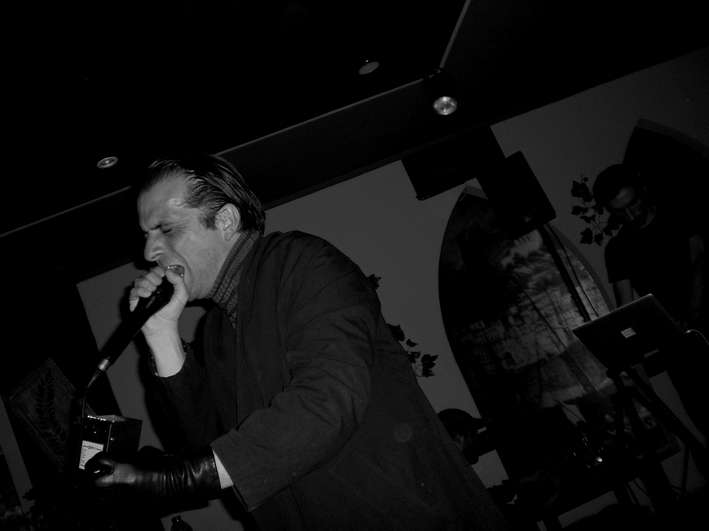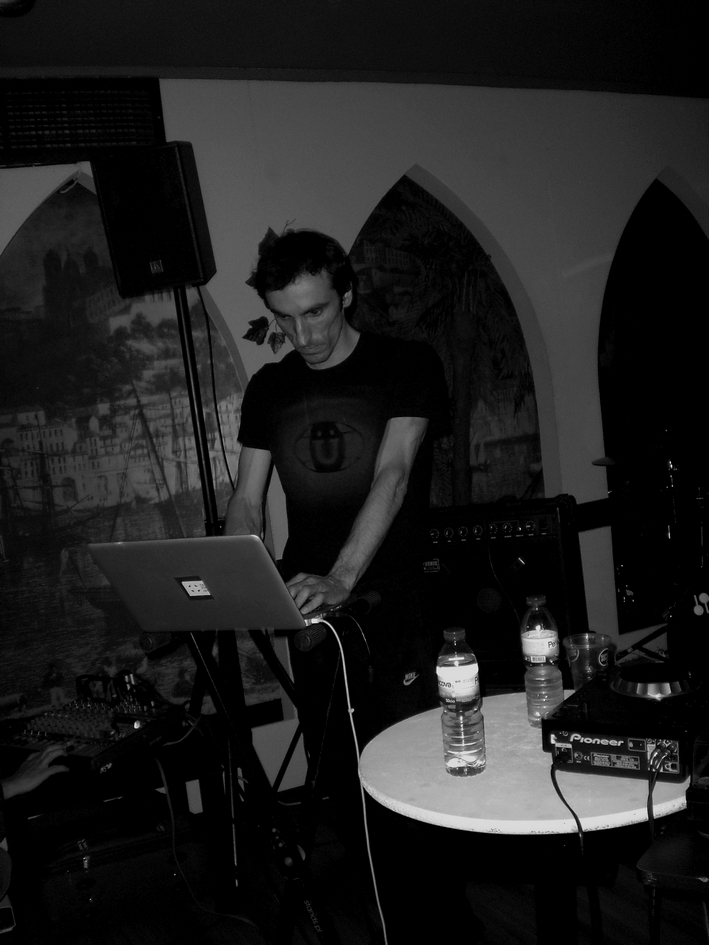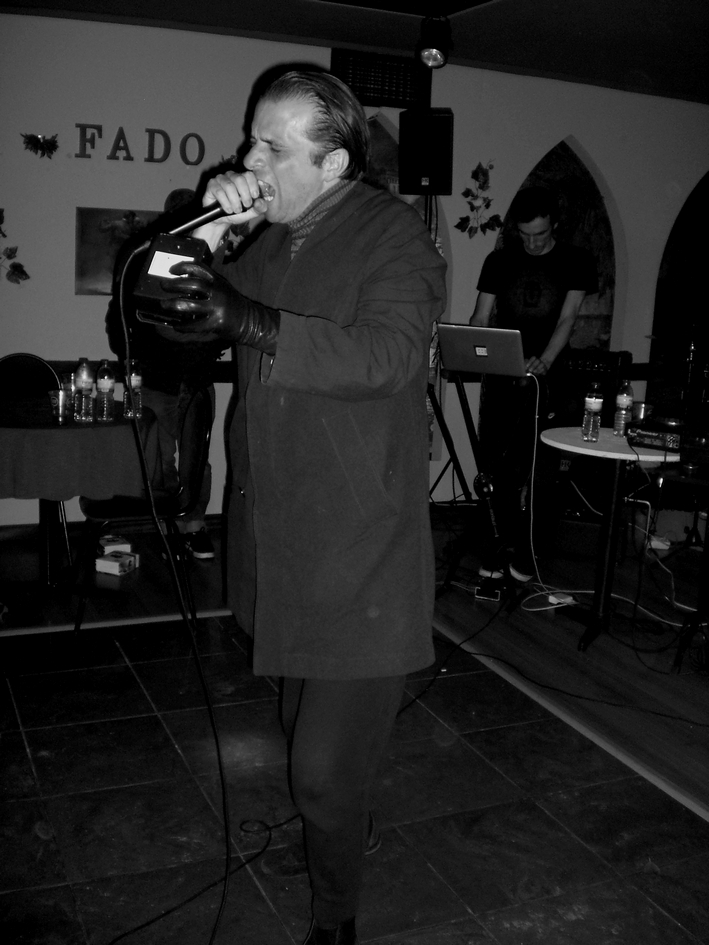
1 – (P a r v a​ é Parva porque quer # 7) – Terebentina​ + Sereias​ + Nu No & FT – Terebentina, Cantinho da Teresinha​, Centro Comercial de Cedofeita​, Porto, 30.04.2018.

words: Guilherme Lucas​ (freely translated by Raquel Pinheiro); photos: Raquel Pinheiro​ 

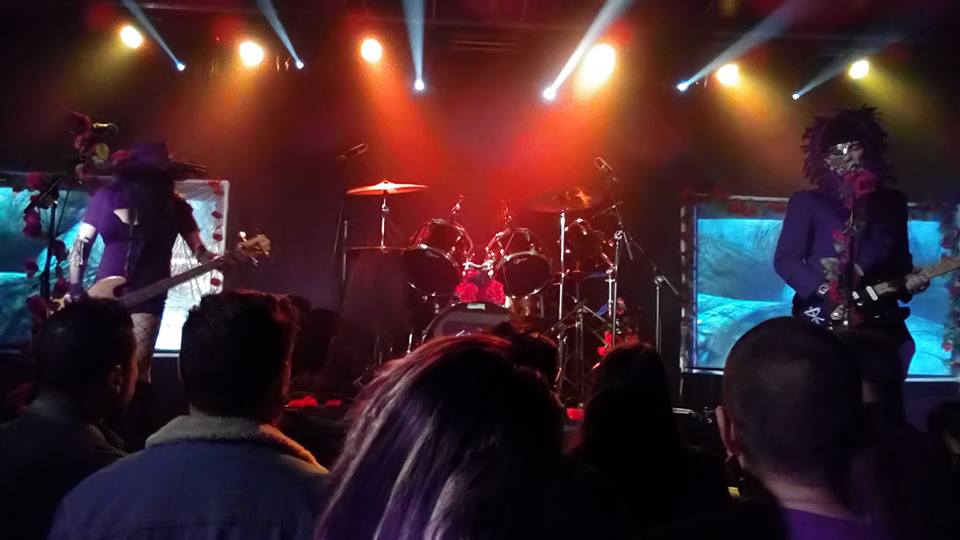
It was the second time I saw Terebentina live, after their first and very promising concert at Rés-da-rua last January, this one being the fourth concert of band from Porto in such short time. To me, it turned out to be an opportunity for analyzing any differences occurred in relation to the initial impressions from their debut.

Decidedly they seemed to me much more musically cohesively, but above all much more intense performatively and dramatically gloomy in their performance, confirmed by the very good audience’s adhesion to the band ‘s performance. To this end, Guilherme Oliveira’s attitude change played a great role, in this concert he upon th classic performance of the dark and wild frontman within the typologies of underground rock’n’roll, unlike during the first concert in which (I presume) by conceptual choice, he spend whole concert seated. From all of the above, I clearly noticed an evolution (or positive difference, pick a choice) in the band, always an excellent finding. It seems that they also lost one member (the flautist), now being a sextet. The first time I find them extremely close to Sereia’s sound, this time I seemed to recognize a few different approaches, which although not yet enought to unstick them. give very promising clues to something different in the future.

Musically Terebentina are a post punk band, but within a typical no wave frame, in that sense the construction of their songs generally obeys to a completely free-jazz-punk- noise interpretation, in na apocalyptic and atonal register of what is – the apparent – structure of their compositions. The conception of the musically unrepeatable moment is also one of the defining lines of no wave [as a kind of random sounds ‘ collage in the now, many of which obtained as consequence of technology (noises, distortions) as an alternative aesthetic resource to the traditional path as far as the playing of an instrument is concerned].

But not everything is totally so in the group’s music; there is a part of Terebentina’s repertoire that already accuses the recognition pop’s typology structures , although always played within the no wave model. And it is in that part that, for me, the band has its real interest and, eventually, their best future progression area. Because it was precisely this that I recognized as special in their first concert – and that pleased me a great deal – and which in the latter seems to be consolidating itself, albeit here and there, and not yet as an objective tendency.

There is also, as it might be, a poetic part to emphasize to inTerebentina that, to me, seems quite interesting and deeply grim and and intimate. I say that it seems to me, because, so far, I’ve only been able to access the lyrics of O Outro, through the band’s Bandcamp … and I liked what I read.


After the concert, during na informal conversation with some of the band’s members (Guilherme Oliveira, Bruno Duarte and Francisco Oliveira), I learned that they are working on the release of their debut album, after had released their first single in March, with the song O Outro. They are part of an artists’s collective linked to Belas Artes do Porto, called O Bergado (the name is a private joke among them), and they recognize that the aesthetic and musical concepts applied in the band are also an extension of their artistic conceptions while artists. To give as many concerts as possible within said context is, of course, everyone’s wish.

texto: Guilherme Lucas, fotos: Raquel Pinheiro

Foi a segunda vez que vi ao vivo os Terebentina, após o seu primeiro e muito prometedor concerto no Rés-da-rua em Janeiro deste ano, sendo este já o quarto concerto da banda portuense neste curto espaço de tempo. Por isso resultou para mim como que uma oportunidade de análise sobre eventuais diferenças ocorridas em relação às impressões iniciais, aquando da sua estreia.

Decididamente pareceram-me desta vez bem mais coesos musicalmente, mas acima de tudo performativamente muito mais intensos e dramaticamente lúgubres na sua atuação, confirmada pela muito boa aderência do público à atuação da banda. Para isso contribuíu muito a mudança de postura do seu vocalista, Guilherme Oliveira, que neste concerto assumiu toda uma atuação clássica de frontman obscuro e selvagem dentro das tipologias do rock’n’roll underground, ao contrário do primeiro concerto em que (presumo), por opção conceptual, fez todo o concerto sentado. Por tudo isto, notei claramente uma evolução (ou diferença positiva, é escolher), na banda, o que é sempre uma excelente constatação. Parece que também perderam um elemento (flautista), passando a ser agora seis elementos. Da primeira vez considerei-os extremamente colados à sonoridade de uns Sereias, mas desta vez pareceu-me reconhecer algumas abordagens diferentes, que embora não sejam ainda as suficientes para conseguir descolar, dão pistas muito prometedoras para algo de distinto no futuro.

Os Terebentina são uma banda musicalmente post punk mas num enquadramento típicamente no wave, e nesse sentido a construção dos seus temas obedece geralmente a uma interpretação completamente free jazz/punk/noise em registo apocalíptico e atonal do que é – a aparente – estrutura das suas composições. A concepção pelo momento musicalmente irrepetível é também uma das linhas definidoras da no wave (como que uma espécie de colagem aleatória de sons no momento, muitos deles obtidos por consequência da tecnologia (ruídos, distorções) como recurso estético alternativo à via tradicional, no que à interpretação de um instrumento diz respeito).

Mas nem tudo é totalmente assim na música do grupo; há uma parte do repertório dos Terebentina que já acusa o reconhecimento de estruturas de tipologia pop, embora sempre interpretadas dentro deste modelo no wave. E é nesta parte que a banda tem, para mim, o seu real interesse e eventualmente o seu melhor campo de progressão futura. Porque foi precisamente isso que reconheci de especial no seu primeiro concerto – e que me agradou bastante – e que neste último parece estar a consolidar-se, ainda que a espaços, e não ainda como uma tendência objetiva.

Há também, como não podia deixar de ser, uma parte poética a destacar nos Terebentina que me parece bastante interessante e profundamente soturna e intimista. E digo que me parece, pois só consegui até ao momento aceder à letra do tema O Outro, pelo bandcamp da banda… e gostei do que li.

Finalizado o concerto, e em conversa informal com alguns dos elementos da banda (Guilherme Oliveira, Bruno Duarte e Francisco Oliveira), soube que estão a trabalhar na edição do seu primeiro álbum de estreia, após o lançamento em Março do seu primeiro single, com o tema O Outro. Fazem parte de um coletivo de artistas ligados às Belas Artes do Porto, denominado de O Bergado (o nome é uma piada privada entre eles), e reconhecem que os conceitos estéticos e musicais aplicados na banda são também eles uma ampliação das suas concepções artísticas enquanto artistas plásticos. Dar o máximo de concertos possíveis neste contexto, é, naturalmente, o desejo de todos.

3 – (Parva é Parva porque quer # 7) – Terebentina + Sereias + Nu No & FT – Nu No & FT, Cantinho da Teresinha, Centro Comercial Cedofeita, Porto, 30.04.2018.

CIMG3954
© Raquel Pinheiro

words: Guilherme Lucas (freely translated by Raquel Pinheiro); photos: Raquel Pinheiro

I really enjoyed Nu No & FT’s concert for several reasons. Firstly, because I had already seen them in late 2017 at Maus Hábitos, and although I had identified many aspects of their performance that are dear on na aesthetic and musical level, I found that there was a lack of connection between the intensity of the proposal and the content proposed and exposed. This time, everything happened perfectly and amazingly for me. It was simply excellent.

To decode and simplify Nu No & FT’s’ proposal, one must always start from the project’s key point: it is eminently literary, artistic and conceptual. To ignore that side, by procrastination or another [reason] is to forgo to understand it with more clarity and objectivity. In its aesthetic and philosophical inspiration, it uses avant-garde and artistic breakthrough movements such as Dadaism, Pop Art or Fluxus. The voice is used as an instrument itself, with immense possibilities of application, coupled with radical aesthetic concepts, many of them situated around ​​Surrealism, makes it to be used in large part in pre-language concepts, also appealing to a physiological and physical description of  emotions in the exercise of that same language. As a consequence of this approach, there is clearly also a very direct connection with theater and other performing arts as well as with phonetic poetry.

And then, of course, there also a whole project that is musical and that, in my opinion, is very well executed, not only in relation to the music itself, but above all, because of the perfect interconnection of the two musicians on stage. Nu No is an unusual performer – and I venture to claim unique, within his genre –  very specific and very distiinct. The sort one sees one or two every decade … with luck. As I have already mentioned  it was an excellen performancet, due to all the engagement the two musicians (Pedro Centeno in the programming part), managed to create with the audience; I liked them and it noticed at the end of each theme, with the many applause gushing thank you. I also liked the relatively short performance, that was quite intense and very well carried. There is a lot of Foetus and Blixa Bargeld: Blixa Bargeld in this format that I saw performed, and for me, that for me, na open fan of both, obviously cause for great contentment.

At the end of the concert I had a very interesting conversation with Nu No – Nuno Marques Pinto – (an extremely nice and educated person), so that, informally, I would get answers to some questions that I would like to see clarified. When I asked if there was a link between his project and some of  Einstürzende Neubauten ‘smaterial, especially some of of Blixa Bargeld ‘s solo work (which I consider similar), Nuno answered affirmatively, but not via Blixa, but through all disruptive artistic movements that are common to both. I liked the answer. We talked about possible connections of a more recent musical past in Portugal in which the musician saw himself more, both on a personal taste level as well as of his project. Names like João Peste, Ama Romanta, Nuno Canavarro, Mler Ife Dada, Moeda Noise, Sei Miguel and Fala Mariam, Paulo Eno and his Objectos Perdidos were some of the most mentioned and suject to a closer analysis.

Nu No & FT become one of the projects that I will obligatorily  follow in its next chapters.

CIMG3955
© Raquel Pinheiro

texto: Guilherme Lucas, fotos: Raquel Pinheiro

Gostei imenso do concerto de Nu No & FT por várias razões. Primeiro porque já os tinha visto em finais de 2017 nos Maus Hábitos – Espaço de Intervenção Cultural, e embora tivesse identificado muitos aspetos na sua atuação que me são queridos a nível estético e musical, achei que faltou alguma ligação entre a intensidade da proposta com o conteúdo proposto e exposto. Desta vez, e para mim, tudo aconteceu de forma perfeita e surpreendente. Foi simplesmente excelente.


Para descodificar e simplificar a proposta de Nu No & FT, temos sempre de partir obrigatoriamente do ponto essencial de todo este projeto: é algo eminentemente literário, artístico e conceptual. Ignorar esta parte por procrastinação ou outro é abdicar de entender com mais clareza e objetividade o mesmo. Este recorre, na sua inspiração estética e filosófica, a movimentos de vanguarda e de rutura artística como o Dadaísmo, a Pop Art ou o Fluxus. A utilização da voz como um instrumento em si mesmo, com imensas possibilidades de aplicação, aliada a conceitos estéticos radicais, muitos deles situados na área do Surrealismo, faz com que a mesma seja utilizada em grande parte em conceitos de pré-linguagem, apelando por isso também a uma descrição fisiológica e física da emoção no exercício dessa mesma linguagem. Há claramente, também por consequência desta abordagem, uma ligação muito direta com o teatro e com outras artes performativas, bem como com a poesia fonética. E depois há naturalmente também todo um projeto que é musical e que é, a meu ver, muito bem executado, não só no que à música em si diz respeito, mas acima de tudo pela perfeita interligação dos dois músicos em palco. Nu No é um performer invulgar – e arrisco a afirmar que único, dentro do seu género – que é muito específico e muito singular. Do género que se vê um ou dois em cada década… e com sorte. A atuação foi excelente como já referi, por toda a envolvência que os dois músicos (com Pedro Centeno na parte das programações), conseguiram criar com o público; este gostou deles e percebia-se isso no final de cada tema, com as muitas palmas de agradecimento efusivo. Gostei também do tempo relativamente curto de atuação, mas que foi completamente intensa e muito bem conseguida. Há muito de Foetus (official) e de Blixa Bargeld Offizielle Seite: Blixa Bargeldneste formato que vi em atuação, e para mim, que sou fã declarado dos dois, é obviamente motivo de enorme contentamento.


No final do concerto, tive uma muito interessante conversa com Nu No – Nuno Marques Pinto – (um tipo extremamente simpático e culto), de forma que, informalmente, obtivesse resposta para algumas questões que gostaria de ver esclarecidas pelo próprio.
Quando perguntei se encontrava ligação entre o seu projeto e algum do material dos Einstürzende Neubauten, mas sobretudo com algum do trabalho a solo de Blixa Bargeld (que considero similar), Nuno respondeu afirmativamente, mas que não por via do Blixa, mas sim por todos os movimentos artísticos de rutura que são comuns aos dois. Gostei da resposta. Falamos de possíveis ligações num passado musical mais recente em Portugal em que o músico mais se revisse no seu gosto pessoal mas também do seu projeto. Nomes como João Peste, Ama Romanta, Nuno Canavarro, Mler Ife Dada, Moeda Noise, Sei Miguel e Fala Mariam, Paulo Eno e os seus Objetos Perdidos, foram alguns dos que foram mais referidos e objeto de análise mais atenta.
Nu No & FT passa a ser mais um dos projetos que vou seguir obrigatoriamente nos seus próximos episódios.

CIMG3951

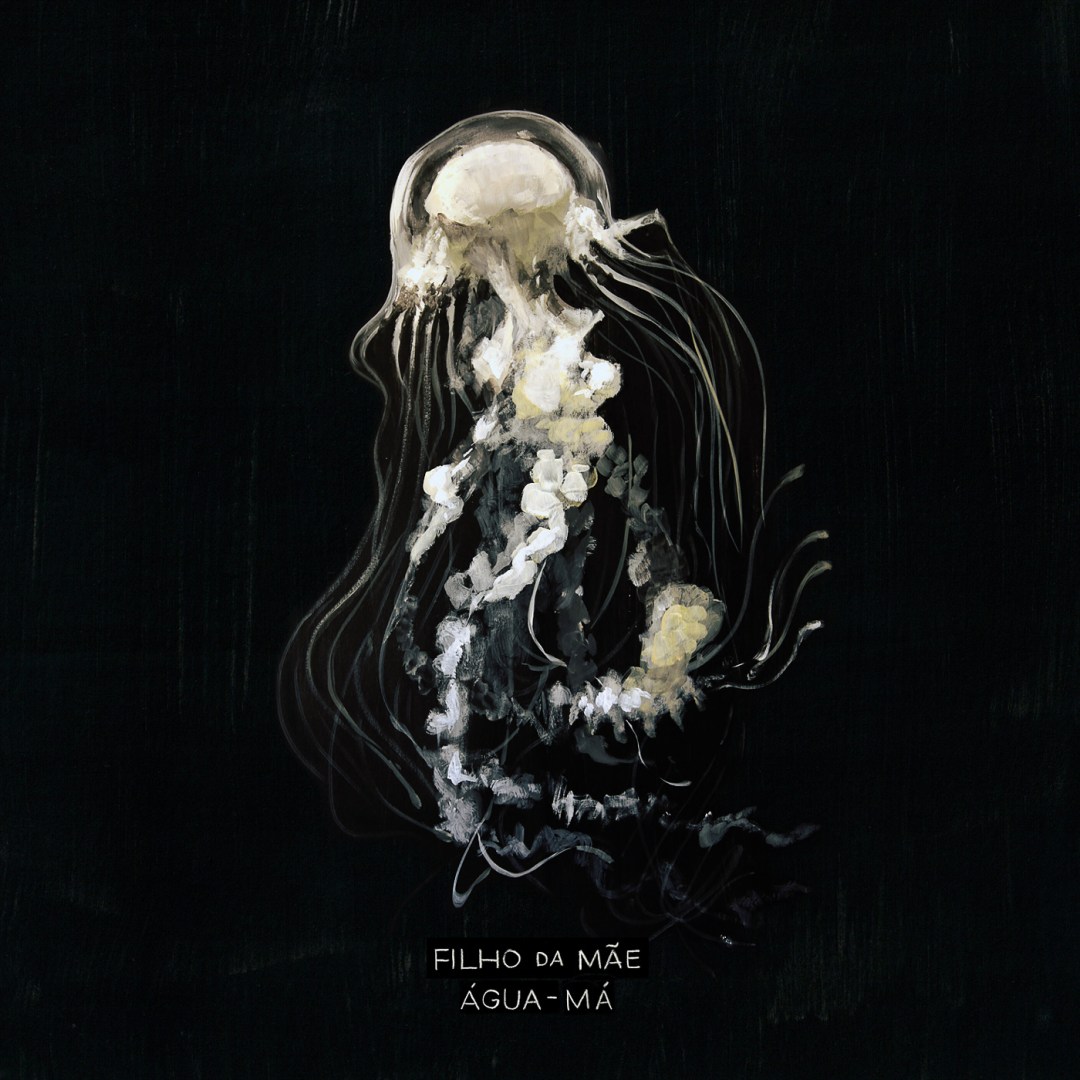
Filho da Mãe – Água-Má

Filho da Mãe - Água-Má

by Raquel Pinheiro

Água-Má [another name for alforreca (jellyfish)] is Filho da Mãe’s fourth album. Like its predecessors, Palácio (Palace), Cabeça (Head) and Mergulho (Dive) it was recording in different locations. In this case between a recording studio, HAUS, in Lisboa, and Madeira, where Rui Carvalho spend a week during an artist-in-residence program working on his alter-ego’s record.

As it is usual with Filho da Mãe, in Água-Má the guitar is a canvas, or a camera, for the images and paintings that are seen when listening to its themes. The literal translation of Água-Má is Mean Water. Couple it with a jellyfish and Madeira Islands, in the middle of the Atlantic, and it is not surprising water, and watery images of every sort, from gentle flow of streams to tumultuous waves crashing against shore, to the continuous simmering splash of a waterfall our mind and eyes.

Filho da Mãe weaves a thread of different intensities, running from the beach (Praia, the opening track), to home (Casa, the closing track), in a crescendo that, after endless adventures, ebbs with the arrival to safety. There are no voice or words or a character in Água-Má, but it wouldn’t be far-fetched to used it as a soundtrack to Ulysses’ Odyssey.

(Lovers & Lollypops, 2018)

Christian Death – Hard Club, Porto, 27.04.2018.

31369153_1682690071820174_3230657406757811428_n
© Guilherme Lucas

words: Guilherme Lucas (freely translated by Raquel Pinheiro); photos: Guilherme Lucas

Christian Death are one of those rock groups that are unique and perfect to be the subject of an in-depth analysis by any underground rock lover. Not only because they have a very extensive and varied quality discography but also because their entire existence is, to this day, haunted by the presence of its founder Rozz Williams, who initially formed the band by “merging” with the musicians of another band – Pompeii 99 – in an attempt to give a second life to the group.

But from then on, there is an history of musicians coming in and out, culminating with the departure of Rozz himself, claiming tour exhaustion. Valor Kand inherits the band and steers it until today, dispite undergoing judicial storms (won) about a later dispute for the name Christian Death, when Rozz Williams’s new return to the stage, who, again, reclaimed to himself the group that he had created. It is the whole set of eccentric personalities that have passed through the band that gives it its unique imprint, as is the case of Eva O and Gitane Demone. And then, there Rozz Williams’ suicide, April 1st, 1998, done in na enigmatic and cinematic fashion that serves to increase the band’s dark history.

If one connects all that with an anti-religious discourse against established morality,of sex, drugs and pure debauchery and perversion, with shocking initial performances, as well as the connection to the occult and magic of some of its members a long time ago, like the 80s, it can be understood why Christian Death are a pioneering and revolutionary band in lots of what is nowadays current practice in some underground market niches, where many bands that, far beyond them, have reached world success.

If, in its origins, the group owes much to Alice Cooper or David Bowie, to Roxy Music or to The Stooges (assumed at the time as structural influences), it can also be said that without Christian Death, bigger and current names like Nine Inch Nails, Marilyn Manson, or even Diamanda Galas would not have been the same, as they also are aesthetic consequences of this group.

——————————————————————————————————

With a stage serenely decorated with red roses, that involved every stand hardware and the drums, as well as a small memorial dedicated to the founding member of the American band – Rozz Williams – Christian Death, the founders of the American deathrock scene , performed in Hard Club’s Sala 2, their only gig in Portugal included in their current European tour, called the Romantic Death Euro Tour.

They began the show with a long introspective solo, like an intro, and with conviction, attacked with the theme The Nascent Virion, giving the motto to what was to follow. It is with the second theme that the group, managed by guitarist-vocalist Valor Kand, reaches depth and eloquence. Penitence Forevermore is possibly the biggest theme of their latest work, from 2015 album’s The Root of All Evilution, it’s a completely overwhelming theme regardless of the aesthetics in which it is inserted.

From then on, there have been other equally perfect themes as far as intensity of emotions is concerned, highlighting We Have Become (the main riff and the doom tempo are completely and delightfully Black Sabbath; all it takes is listening to it and compare it with Black Sabbath’s theme ); Secrets Down Below, Worship Along The Nile and Iluminazi, on all these themes, Maitri, the bassist- vocalist is just perfect … and fabulously sexy. In the end, and after a much requested encore by the audience, the band withdrew definitively, despite the efforts for them to return for one more theme.

The Christian Death that I saw at Hard Club are a very solid stage band stage, but they do what is strictly necessary to keep a rhythm balanced between themes, that is, they are very directed to offer a concert within a very specific aesthetic, deathrock and gothic. In that sense, since they are not highly evolved instrumentalists (one is often thankful for it, as in the case at hand), they can do a very good job at a collective level. They have in their bass player, the very exuberant Dutch Maitri, a powerful voice, in a soul registry, that dominates the entire spectrum of the songs when she is called to intervene.

I recognize that it is upon drummer Jason Frantz (a non-permanent member) that lives much of what the band reflects live … let’s say he is the one who holds the entire structure and accentuates the details of each theme. And Valor Kand is the band’s warrior and brains, the one who on nights like this pays tribute to the memory of their founder. His solos and electric guitar sound define a whole aesthetic of deathrock subgenre, and in such, he is one of the few existing masters. One can not ask for more than this.

texto e fotos: Guilherme Lucas

Os Christian Death são daqueles grupos de rock únicos e perfeitos para ser alvo de uma análise aprofundada por qualquer amante de rock underground. Não só porque tem uma discografia de qualidade, muito extensa e variada, mas também porque toda a sua existência é assombrada até aos dias de hoje pela presença do seu fundador Rozz Williams, que forma inicialmente a banda por “fusão” com os músicos de uma outra banda – Pompeii 99 – numa tentativa de dar uma segunda vida ao grupo.


Mas a partir daí é todo um historial de saídas e entradas de músicos, culminando com a saída do próprio Rozz, alegando esgotamento de tours. Valor Kand herda a banda e dirige-a até à atualidade, embora tenha passado por tormentas judiciais (ganhas) de posterior disputa do nome de Christian Death, aquando de um novo regresso aos palcos de Rozz Williams que reclamava para si de novo o grupo que havia criado. É também todo um conjunto de personalidades excêntricas que passaram pela banda que lhe dá um cunho único, como é o caso de Eva O e Gitane Demone. E depois há o suicídio de Rozz Williams no dia 1 de Abril de 1998, feito de forma enigmática e cinemática e que serve para aumentar o histórico negro da banda.

Se ligarmos tudo isto a todo um discurso antireligioso e contra a moral instituída, de sexo, drogas e pura devassidão e perversão, com performances iniciais chocantes, bem como a ligação ao oculto e à magia de alguns dos seus membros para uma época já longínqua no tempo, como foram os 80, entende-se porque os Christian Death são uma banda pioneira e revolucionária em muito do que hoje em dia é prática corrente em alguns nichos de mercado do underground, onde muitas bandas que, muito para além deles, atingiram sucesso planetário.

Se o grupo nas suas origens deve muito a um Alice Cooper ou David Bowie, a uns Roxy Music ou a uns The Stooges (assumidos na época como influências estruturais), podemos também dizer que sem os Christian Death, nomes maiores e atuais como uns Nine Inch Nails, um Marilyn Manson, ou até uma Diamanda Galas não teriam sido a mesma coisa, pois são também eles consequência estética deste grupo.

——————————————————————————————————

Com um palco decorado serenamente a rosas vermelhas, que envolvia tudo o que era ferragens de tripés e bateria, bem como um pequeno memorial dedicado ao membro fundador da banda norte-americana – Rozz Williams – os Christian Death, fundadores da cena deathrock norte-americana, apresentaram-se em concerto na sala 2 do Hard Club, na sua única data em Portugal da sua atual tour europeia, denominada de Romantic Death Euro Tour.

Iniciaram o espetáculo com um longo solo introspetivo, em jeito de intro, e atacaram com convicção o tema The Nascent Virion, dando o mote ao que se seguiria. É com o segundo tema que o grupo, gerido pelo guitarrista/vocalista Valor Kand, atinge profundidade e eloquência. Penitence Forevermore é, eventualmente, o tema maior do seu último trabalho, datado de 2015, o álbum The Root of All Evilution, e é um tema completamente arrebatador, independentemente da estética em que está inserido.

A partir daí, sucederam-se outros temas igualmente perfeitos no que à intensidade das emoções diz respeito, destacando We Have Become (o riff principal e o andamento doom é completamente e deliciosamente Black Sabbath; é ouvir e fazer a comparação com o tema Black Sabbath); Secrets Down Below, Worship Along The Nile e Iluminazi, onde em todos estes temas, Maitri, a baixista/vocalista é simplesmente perfeita… e fabulosamente sexy. No final, e após um encore muito pedido pelo público, a banda retirou-se definitivamente, pese os esforços do mesmo para que regressassem para mais um tema.

Os Christian Death que vi no Hard Club são uma banda muito sólida em palco mas que só faz o estritamente necessário para manter toda uma cadência equilibrada entre temas, ou seja, estão muito direcionados para oferecer um concerto dentro de uma estética muito específica e que é deathrock e gótica. E nesse sentido, não sendo instrumentistas muito evoluídos (muitas vezes agradece-se isso, o que é o presente caso), conseguem executar um muito bom trabalho a nível coletivo. Tem na sua baixista, a muito exuberante holandesa Maitri, uma poderosa voz, em registo soul, que domina todo o espetro das músicas quando é chamada a intervir.

Reconheço que é no baterista Jason Frantz (membro não permamente) que reside muito do que a banda reflete ao vivo… digamos que é quem segura toda a estrutura e acentua os pormenores de cada tema. E Valor Kand é o guerreiro e o cérebro da banda, aquele que em noites como esta, presta tributo à memória do seu fundador. Os seus solos e som de guitarra elétrica definem toda uma estética do subgénero deathrock, e nisso é um dos poucos mestres existente. Não se pode pedir mais do que isto.