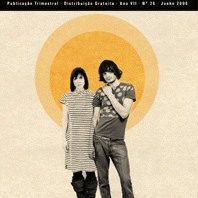
EXTRA! #29 for Pasolini loves Sci-fi Jorge Ferraz’s new video taken from his new album Machines for Don Quixote …et… viva la muerte? that is out today.
music, cinema, photography, art and more
EXTRA! #29 for Pasolini loves Sci-fi Jorge Ferraz’s new video taken from his new album Machines for Don Quixote …et… viva la muerte? that is out today.
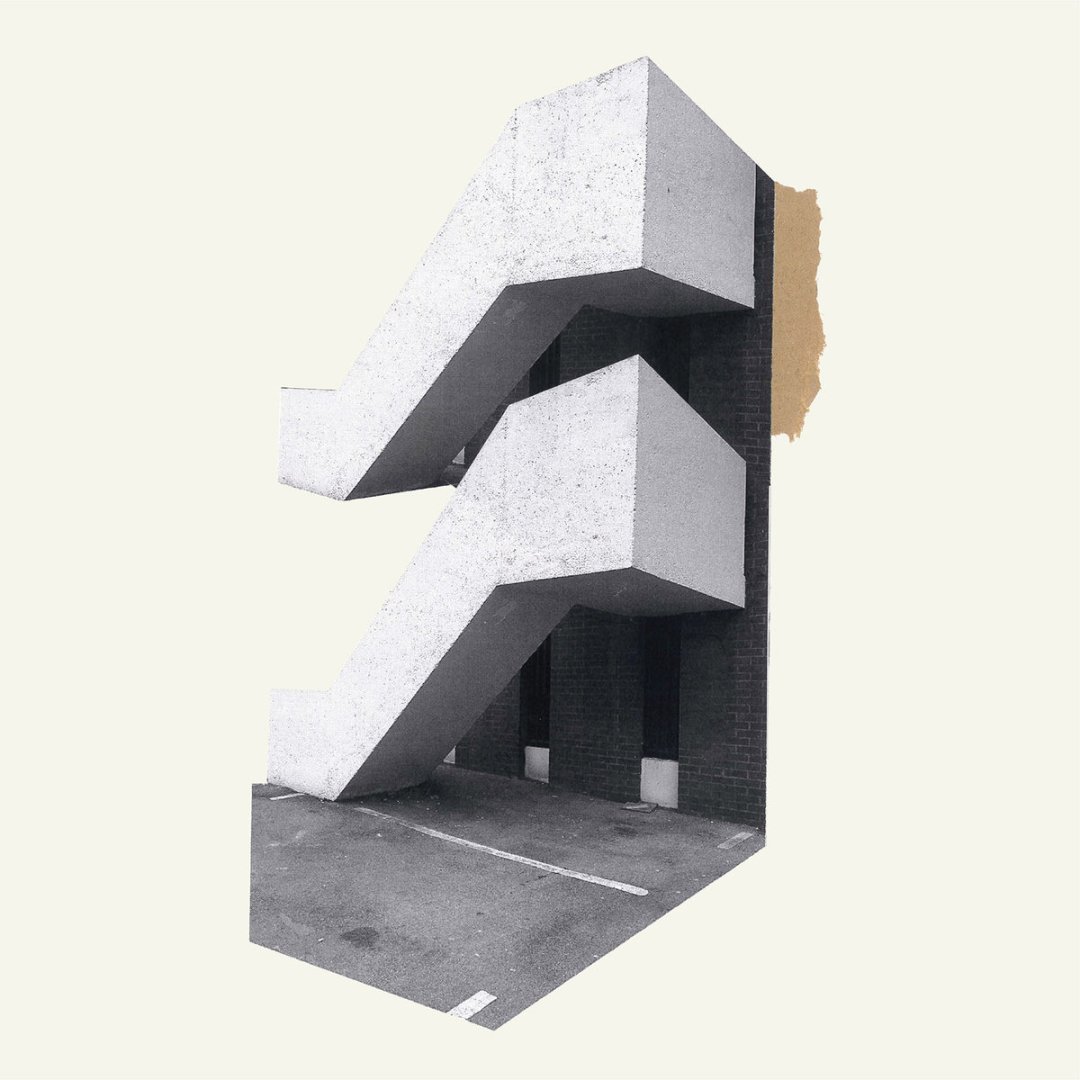
Good morning not with a Middle of the Week Song, but with Spiral an instrumentral track taken from Seymour Reads The Constitution! Brad Mehldau Trio’s new album. Have a nice day.
EXTRA! # 28 for Mathilda‘s Infinite Lapse.
Hi with The Hornet taken from King Cobra The Senior Service‘s new album. Have a nice afternoon.
words: Guilherme Lucas (freely translated by Raquel Pinheiro); photos: Raquel Pinheiro
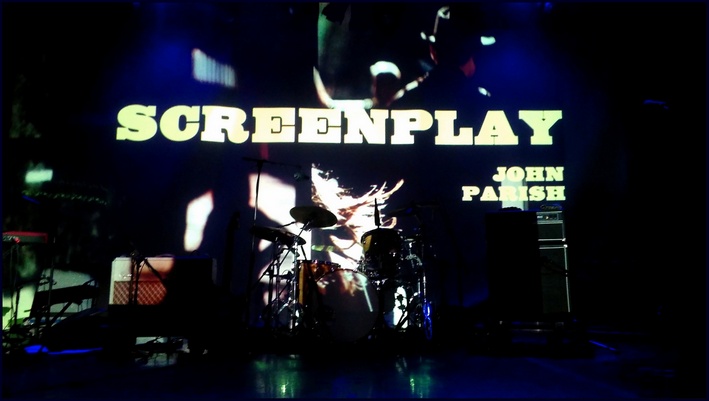
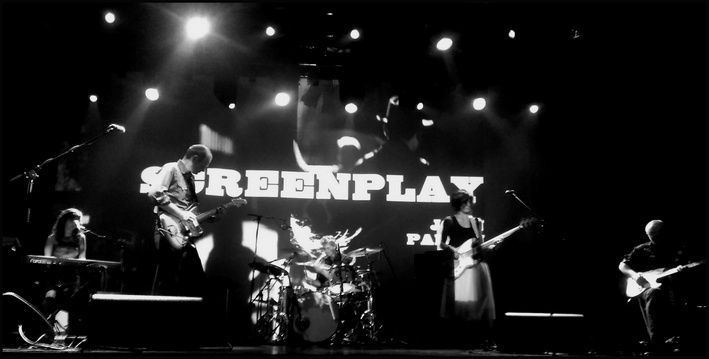
Famous British composer, musician and producer John Parish was in Portugal, to present live, in two concerts – Porto and Lisboa – his film-concert, called Screenplay. Thursday he was at Hard Club in Porto and Friday at Culturgest in Lisboa, the last as part of IndieLisboa International Film Festival programme.
Screenplay, a Parish album released in 2013, made of soundtracks for a movie that does not really exist. The concept is based on the selection of several scenes from various films (nine altogether), of the musician ‘s taste, who decided to compose sequentially with the aim to produce soundtrack for all those excerpts, resulting in nineteen themes. The idea is curious, very valid and the proof is that, after being listened to, it works well in musical terms,.
John Parish performed on Hard Club’s stage accompanied by his private band made up of accomplices (I immediately recognized drummer and multi-instrumentalist Jean Marc Butty, who was part of Mick Harvey’s support band, since he played in Portugal, in 2015). Butty is the service drummer, along with Parish and Jeremy Hogg (another of the guitarists present) of PJ Harvey’s). Marta Collica (keys and vocals) and Giorgia Poli (bass and vocals), the other band members, also are usual musicians from John Parish Band.
In a conceptual and intimate concert, as was the, where fifteen of the nineteen songs were played (not on the album’s line-up), I have clearly and very objectively retained two points to comment:
– Although the projection of some of the film sequences is understandable, in order to provide the audience with more engagement and clarity about the music being played for that very footage, the fact is that in most cases it did not work effectively. If it is visually pleasing to see a band silhouetted in front of a film screen with films projection running, in this case there were many moments when the intensity of the music, and even its volume, could not harmoniously connect with the images, losing kinematic beam. Not always, but most times. Many of the band’s best musical moments happened when it played without the footage projection.
– The John Parish Band is a luxury band, made up of musicians that create excellent music, with extremely elegant and impeccable good taste. It is, therefore, always able to play variable quality material with the same commitment. All that to say that it was obvious to ascertainment that some of the album’s themes are quality rather inferior composition wise when compared to others that are simply excellent, of a touching melancholic beauty. It is, however, understandable that this oscillation (possibly caused by of Parish’s different moods during the creative act that brought them into being, certainly always variable and circumstantial), in the sense that there does not always have to be a perfect album with huge themes. The point is that Screenplay has excellent themes, but also offers so many that are only understood as Parish’s experimental approaches (or even reveries), possibly very valid for him … but that do not reach the greatness and depth of some of the others.
John Parish is a very friendly musician with the audience and was quite pleased with the warm reception he was receiving with clapping at the end of each theme. After the performance, the band returned once again to stage, as a farewell and encore, to play another composition called Buffalo.
In short, I will say that it was, without a doubt, a good concert, but with my best expectations were somewhat disappointed, because from John Parish I only expect nothing less than excellence.


texto: Guilherme Lucas, fotos: Raquel Pinheiro
O famoso compositor, músico e produtor britânico, John Parish está em Portugal, para apresentar ao vivo, em duas datas – Porto e Lisboa – o seu filme-concerto, de nome Screenplay. Ontem esteve no Hard Club, no Porto e hoje estará na Culturgest, em Lisboa, fazendo este último concerto parte da programação da IndieLisboa International Film Festival.
Screenplay é um álbum de Parish lançado em 2013, feito de bandas sonoras para um filme que não existe na realidade. O conceito parte da seleção de várias cenas de vários filmes (nove ao todo), da preferência do músico, que decidiu compor em forma sequencial com vista à realização de uma banda sonora totalizadora desses excertos, resultando em dezanove temas. A ideia é curiosa e muito válida e a prova é que resulta bem em termos musicais, após escuta.
John Parish apresentou-se no palco do Hard Club acompanhado da sua banda privativa feita de amizades cúmplices (reconheci de imediato o baterista e multinstrumentista Jean Marc Butty, que fez parte da banda de apoio de Mick Harvey, desde a última vez que este tocou no nosso país, em 2015). Butty é o baterista de serviço, conjuntamente com Parish e Jeremy Hogg (outro dos guitarristas presentes), de PJ Harvey). Marta Collica (teclas e voz) e Giorgia Poli (baixo e voz), os restantes elementos da banda, são também elas músicos habituais na John Parish Band.
Num concerto conceptual e de pendor intimista, como foi o caso deste, onde foram tocados quinze dos dezanove temas (fora do alinhamento do álbum), retive, clara e muito objetivamente, dois aspetos para comentar:
– Embora seja entendível a projeção de algumas das sequências dos filmes de forma a dar mais envolvência e esclarecimento ao público da música que era interpretada para essas mesmas cenas, o facto é que na maior parte das vezes não resultou de forma eficaz. Se visualmente é sempre agradável ver uma banda em silhueta à frente de um ecrã de cinema com projeção de filmes a decorrer, neste caso existiram muitos momentos em que a intensidade da música, e até o seu volume, não conseguiram ligar-se harmoniosamente com as imagens, perdendo fulgor cinemático. Não em todos os momentos, mas na maior parte deles. Muitos dos melhores registos musicais da banda, ocorreram quando a mesma atuava sem a projeção das cenas.
– A John Parish Band é uma banda de luxo, feita de instrumentistas que fazem excelente música, de forma extremamente elegante e de irrepreensível bom gosto. É, por isso, sempre capaz de interpretar material de qualidade variável com o mesmo empenho. Tudo isto para dizer que foi óbvia a constatação de que alguns dos temas do álbum são de qualidade composicional bastante inferior a outros que são simplesmente excelentes e de uma beleza melancólica tocante. Entende-se contudo esta oscilação (eventualmente por diferentes estados de espírito de Parish aquando do ato criativo que lhes deu origem, e que certamente são sempre variáveis e circunstanciais), no sentido de que não tem de haver sempre um álbum perfeito de enormes temas. A questão é que Screenplay tem excelentes temas, mas também oferece outros tantos que só se entendem como abordagens experimentais de Parish (ou até devaneios), eventualmente muito válidos para o músico… mas que não alcançam a grandeza e a profundidade de alguns outros.
John Parish é um músico muito simpático com o público e mostrou-se bastante contente com a receção calorosa que ia recebendo deste, em forma de aplausos no final de cada tema. Finalizada a atuação, a banda regressou mais uma vez a palco para, em jeito de despedida e de encore, interpretarem mais uma composição, Buffalo de seu nome.
Resumindo: direi que foi, sem sombra de dúvida, um bom concerto, mas com as minhas melhores expetativas algo defraudadas, pois de um John Parish só espero nada menos que a excelência.


Good morning with Tar taken from Anticlines Lucrecia Dalt‘s new album. Have a nice weekend.
words: Guilherme Lucas (freely translated by Raquel Pinheiro); photos: Raquel Pinheiro & Guilherme Lucas
Parva is a DIY concept of its mentor, musician and artist Pedro Centeno, which includes an independent publisher, project management and the organization of underground cultural events, but also has incursions in fine arts, from what I was able to deduce . And I say deduce, because I am writing this text without having yet managed to reach the informal conversation with its leader to get to know more about his ideas and future plans. There will certainly soon be an opportunity for it, but, and for that very reason, these short lines are only based on my research and interpretative analysis of what already proliferates on the internet about Parva.
All that to introduce a brief thought about the event organized last Monday, April 30 at Cedofeita Shopping Center, in a nightclub called Cantinho da Teresinha, a fado house, and that (as everyone knows ), is always a great, completely improbable, place, where true underground events always make history.
It was a long and fantastic evening, with lots of people participating and attending the concerts of the bands in the line-up, as well as the DJ Sets that followed them. It was a unique moment and that will remain for future memory, which, right now, I classify as a record of the possible post-punk scene (much because of the bands) currently in Porto. And I say it’s a possible post-punk, because there are things in it that are so, and many others that already escape this genre … but post punk always also lived without predefined aesthetic borders, which was always its great virtue. Do not confuse this post punk that I speak of with the post punk gothic variant or deathrock, depressive urban pop- rock from Manchester and the likes, (that also exists in a very representative manner in Porto) … this post-punk that I speak of is linked to Einsturzende Neubauten and Die Haut, 70s & 80s New York of Suicide and Lydia Lunch, or The Birthday Party and Rowland S. Howard’s Melbourne. It is the post-punk of artists, unbalanced geniuses, libertarians, anarchists, chaos and debauchery. It’s my post-punk, the one I’ve always loved.
But this (neo) post-punk that I point to already has its own discourse that goes beyond the musical subgenre I am referring to, and which is, therefore, musically diverse (both formally analogical and digital, or the two simultaneously) , and, when it comes to the bands, they themselves, and in their own way, are able to implant themselves in the city ‘s alternative circuit of the and beyond. And, in that sense, Parva has had an enormous importance, not only because of its catalog of published projects, but also because of the events it has held.
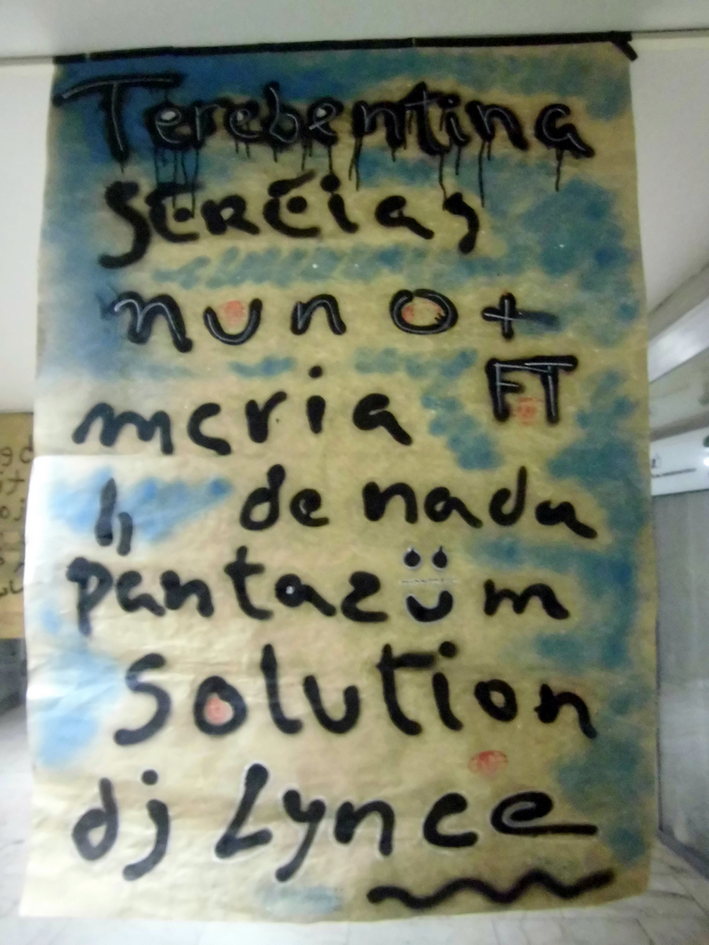
For now I have identified Sereias, Terbentina, Nu No & FT and Era uma vez um tímpano, as bands of this bearing. I also consider 10,000 Russos, Dreamweapon and Summer of Hate in the same league, but in a very different position, much of their sound being krautrock (this is the link they have with post-punk, since it is the greater influence of that genre) and the fact that, live, there ins’t in those three bands the aesthetics of violent and insane chaos, that happens with the other four mentioned above. Let’s say the last three are the disciplined psychedelics of post-punk. This is all very exciting for me, because I have always thought it difficult to find nowadays inheritance and continuity in the city to 80s-90s Guru Paraplégico e os Iconoclastas or Hospital. So if there are any more bands of the genre, I hope to discover and talk about them firsthand. Tha is what drives me.


texto: Guilherme Lucas, fotos: Raquel Pinheiro & Guilherme Lucas
P a r v a é um conceito DIY do seu mentor, o músico e artista Pedro Centeno, que incluí uma editora independente, management de projetos e organização de eventos de cultura underground, mas também tem incursões na área das artes plásticas, pelo que me foi dado deduzir. E digo deduzir, porque estou a escrever este texto sem ter ainda conseguido chegar à conversa informal com o seu responsável para conseguir saber mais sobre as suas ideias e planos futuros. Haverá certamente oportunidade em breve para tal, mas, e por isso mesmo, estas curtas linhas são só baseadas na minha pesquisa e análise interpretativa ao que já prolifera na net sobre a Parva.
Isto tudo para introduzir para um breve pensamento sobre o evento organizado na passada segunda-feira, dia 30 de Abril, no Centro Comercial de Cedofeita, numa discoteca de nome Cantinho da Teresinha, uma casa de fados, e que (como toda a gente sabe), é sempre um excelente local, completamente improvável, onde os verdadeiros eventos underground fazem sempre história.
Foi uma longa e fantástica madrugada, com muita gente a participar e a acorrer aos concertos das bandas em cartaz, bem como aos DJ Sets que se seguiram. Foi um momento único e que fica para memória futura, o qual classifico desde já como um registo do que é a cena post punk possível (muito por via das bandas), no momento atual na Invicta. E digo que é um post punk possível, porque há coisas nele que o são e muitas outras que já escapam a esse género… mas também o post punk sempre viveu sem fronteiras estéticas predefinidas, essa sempre foi a sua grande virtude. Não se confunda este post punk de que falo com o post punk da variante gótica ou deathrock, da pop/rock urbano depressiva de Manchester e afins, (que também existe de forma muito representativa no Porto)… este post punk de que falo está ligado à Berlin dos anos 80, dos Einsturzende Neubauten e dos Die Haut, à Nova York dos 70-80 dos Suicide e da Lydia Lunch, ou a Melbourne dos The Birthday Party e de Rowland S. Howard. É o post punk dos artistas, dos génios desequilibrados, dos libertários,dos anarquistas, do caos e da devassidão. É o meu post punk, aquele que sempre adorei.
Mas este (neo) post punk portuense que aponto tem já o seu próprio discurso que vai para além do subgénero musical que refiro, e que é, por isso, musicalmente diverso (tanto é formalmente analógico como digital, ou até os dois em simultâneo), e no caso das bandas, elas mesmo, e muito à sua maneira, estão a conseguir implantar-se no circuito alternativo da cidade e até já fora dela. E a Parva tem tido, neste sentido, uma importância enorme, não só pelo seu catálogo de projetos editados, mas também pelos eventos que tem realizado.
Por agora já identifiquei os Sereias, os Terebentina, o Nu No & FT e o Era uma vez um tímpano, como bandas desta safra. Considero também os 10 000 Russos, os dreamweapon e os Summer of Hate no mesmo campeonato, mas numa posição muito diferente, por muito do seu som ser krautrock (é essa a ligação que tem com o post punk, já que é para este uma influência maior) e não haver nestas três bandas ao vivo a estética de caos violento e demencial, que acontece com as outras quatro atrás referidas. Digamos que estes três últimos são os psicadélicos disciplinados do post punk. Tudo isto é para mim muito entusiasmante, porque pensei sempre difícil haver herança e continuidade na cidade a uns Guru Paraplégico e os Iconoclastas e a uns Hospital Psiquiátrico dos anos 80-90, nos dias de hoje. Por isso se houver mais algumas bandas do género, espero descobrir e falar delas em primeira mão. É isso que me move.


words: Guilherme Lucas (freely translated by Raquel Pinheiro); photos: Raquel Pinheiro
Who is there? Who is there? Who is There? Otelo, FP-25, Fascism everywhere. Why do you kill your son? Why don’t you say fuck off? Whois there? Who is there? Who is there? Politicians, bureaucrats, bankers, businessmen … … Otelo Saraiva de Carvalho. Who is there? Who is there? Who is there? Christmas, Easter, Allah’s bombs, April bombs. Who is there? Who is there? Who is there? Everything is rotten … Chaos, apocalypse, Otelo, FP-25 …)
With this urgent introduction, almost a ready-made register elevating the art of poetry of from what is generalist and apparently obvious, António Pedro Ribeiro gave the motto for another crazy incursion with Sireias to the world of mental imbalances, shock culture and chaos.
I no longer have any doubt considering Sereias as the only currently active band, with the most genuinely insane sound and attitude in Portugal – and perhaps also one of the few – in the rest of the world. And do not come to me with other bands and projects that can also compete in the same register niche, because almost all of them will always be within classic types of subgenres, sometimes rock, sometimes metal – or even others – but always in competition within similar registers, which is almost always the one of clichés and obvious formatting, already well-known and identifiable.
Sereias only play within their own league, invented by them. They are like a kind of today’s Velvet Underground, of our urban and social reality, strictly in the sense that they are unique and with a language of their own; the only alternative to them will always be to copy and try to replicate them. More than the moments of complete madness that are perceived throughout their performances, there is an urgent need for interaction with the band and their disorders, as to show that, after all, we are all insane and that we also want to participate in this discharge of dysfunctional energy, in search of catharsis and redemption. And this has always happened in their concerts.
Sereias are the post-punk band who invented post-madness.


texto: Guilherme Lucas, fotos: Raquel Pinheiro
“Quem está aí? Quem está aí? Quem está aí? Otelo, FP-25, Fascismo em todo o lado. Porque matas o teu filho? Porque não mandas tudo pró caralho? Quem está aí? Quem está aí? Quem está aí? Políticos, burocratas, banqueiros, empresários… Otelo Saraiva de Carvalho. Quem está aí? Quem está aí? Quem está aí? Natal, Páscoa, bombas de Alá, bombas abrilanas. Quem está aí? Quem está aí? Quem está aí? Está tudo podre… Caos, apocalipse, Otelo, FP-25”… Com esta introdução urgente, quase que em registo ready-made de elevação a arte poética do que é generalista e aparentemente óbvio, António Pedro Ribeiro, deu o mote para mais uma incursão demencial com as Sereias ao mundo dos desequilíbrios mentais, da cultura de choque e do caos.
Já não tenho dúvida alguma em considerar, neste momento, as Sereias como a única banda, em atividade, com o som e a atitude genuinamente mais insana em Portugal – e talvez também como uma das poucas – no resto do planeta. E não me venham acenar com outras bandas e projetos que também possam concorrer no mesmo nicho de registo, porque quase todas elas estarão sempre em tipologias clássicas dos subgéneros, ora do rock, ora do metal – ou até de outros – mas sempre em competição dentro de registos semelhantes, e que é quase sempre o dos clichés e o da formatação óbvia, já por demais conhecidas e identificáveis. Os Sereias só atuam dentro do seu próprio campeonato, inventado por eles. São como que uma espécie de Velvet Underground do nosso tempo, da nossa realidade urbana e social, estritamente no sentido em que são únicos e com uma linguagem própria; em que a única alternativa a eles passará sempre por os copiar e os tentar replicar. Mais do que os momentos de completa loucura que são percepcionados ao longo das suas atuações, há como que uma necessidade urgente de interação com a banda e com os seus distúrbios, como que para mostrar que afinal somos todos dementes e que também queremos participar dessa descarga de energia disfuncional, em busca da catárse e da redenção. E isso tem sempre ocorrido nos seus concertos.
Os Sereias são a banda post punk que inventou a post loucura.


