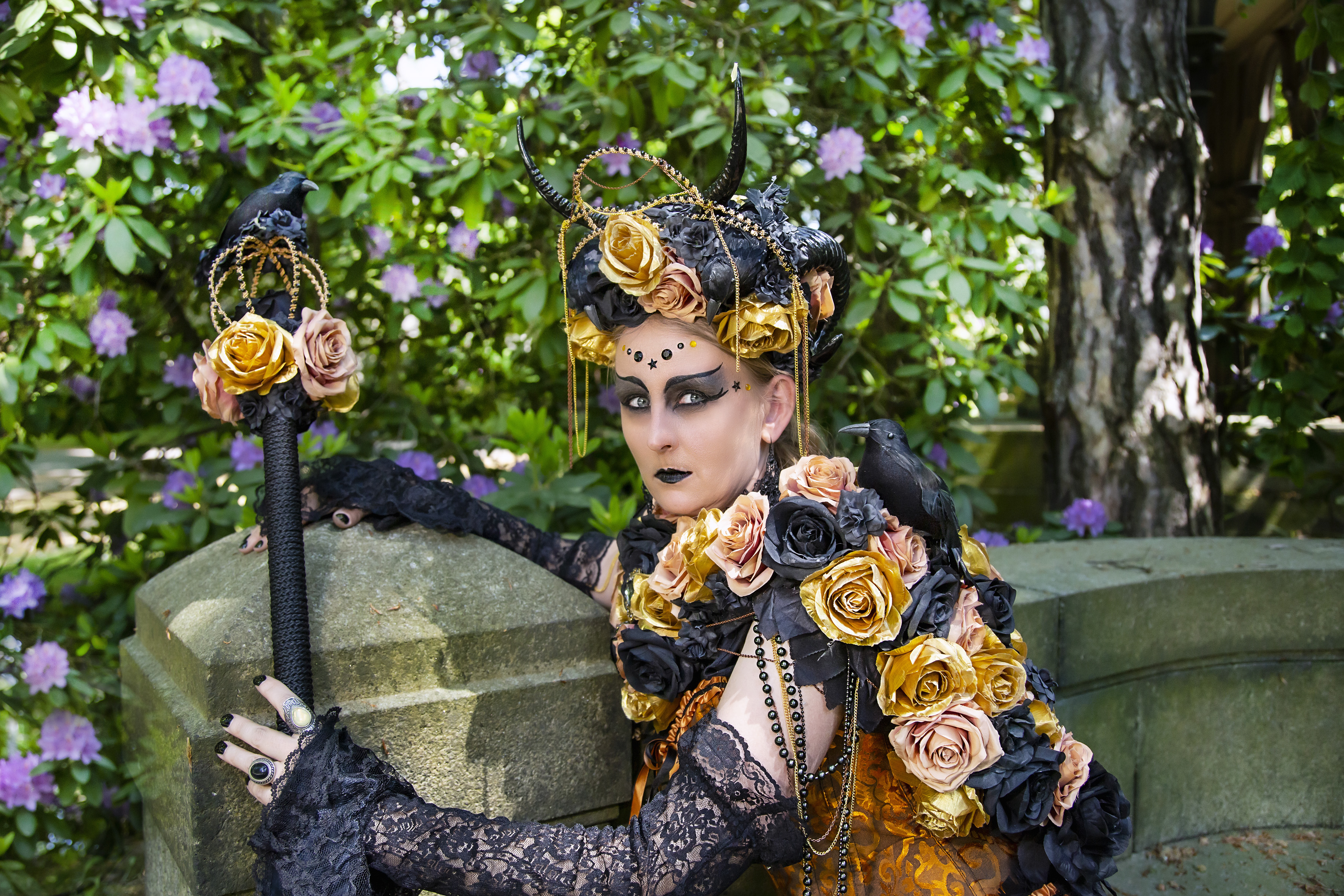
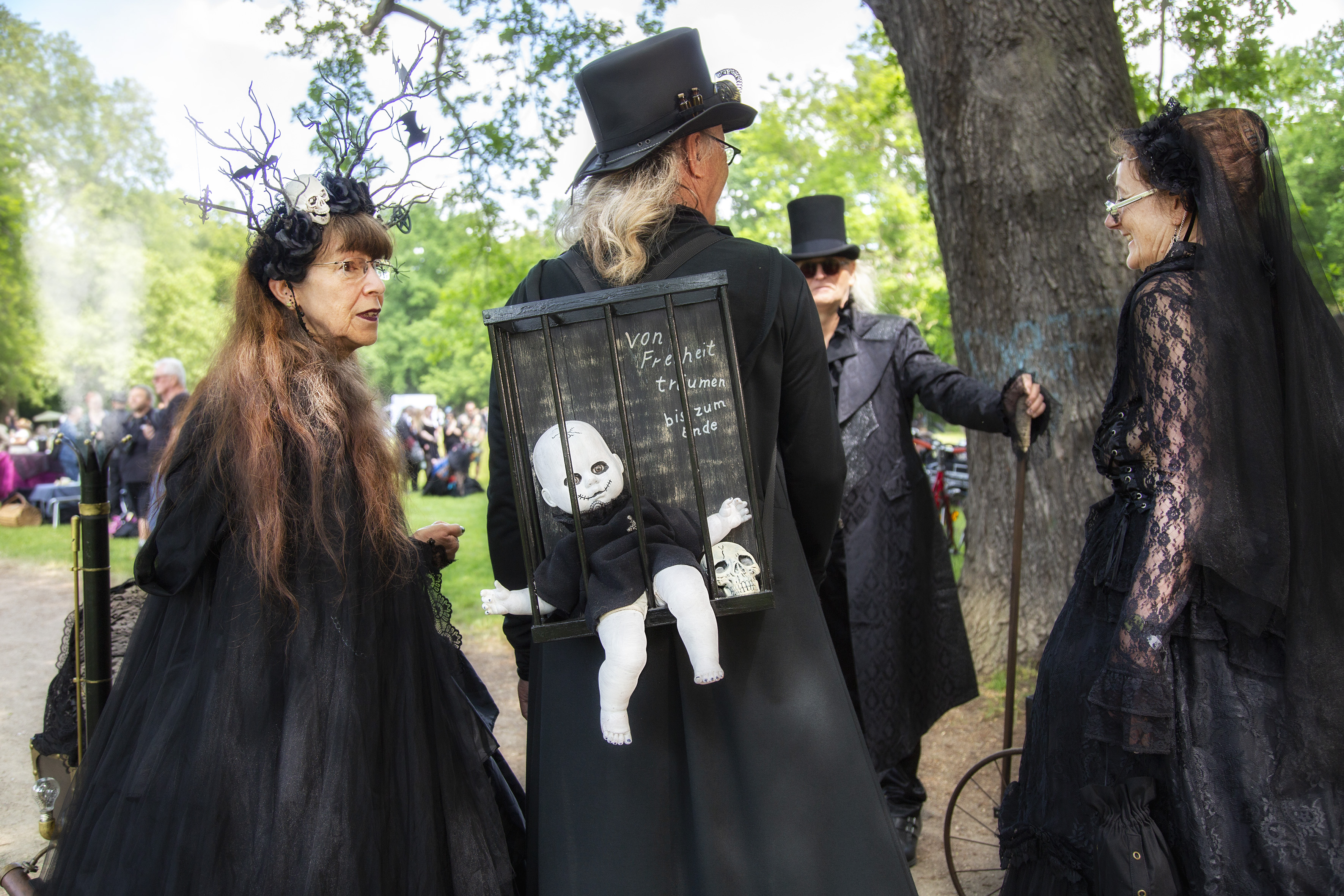
Gustavo Hochman photographed Wave-Gotik-Treffen Festival 2023, in Leipzig, for Mondo Bizarre Magazine. What better time to showcase is amazing photos than the mourning and festive season of Halloween/All Saints Day/Dia de Los Muertos?
You can see more of Gustavo’s photos from Wave-Gotik-Treffen on our Instagram: Instagram.com/mondobizarremagazine over the next few days.
words: Marcos Leal (editing and free translation: Raquel Pinheiro); photos: Telma Mota
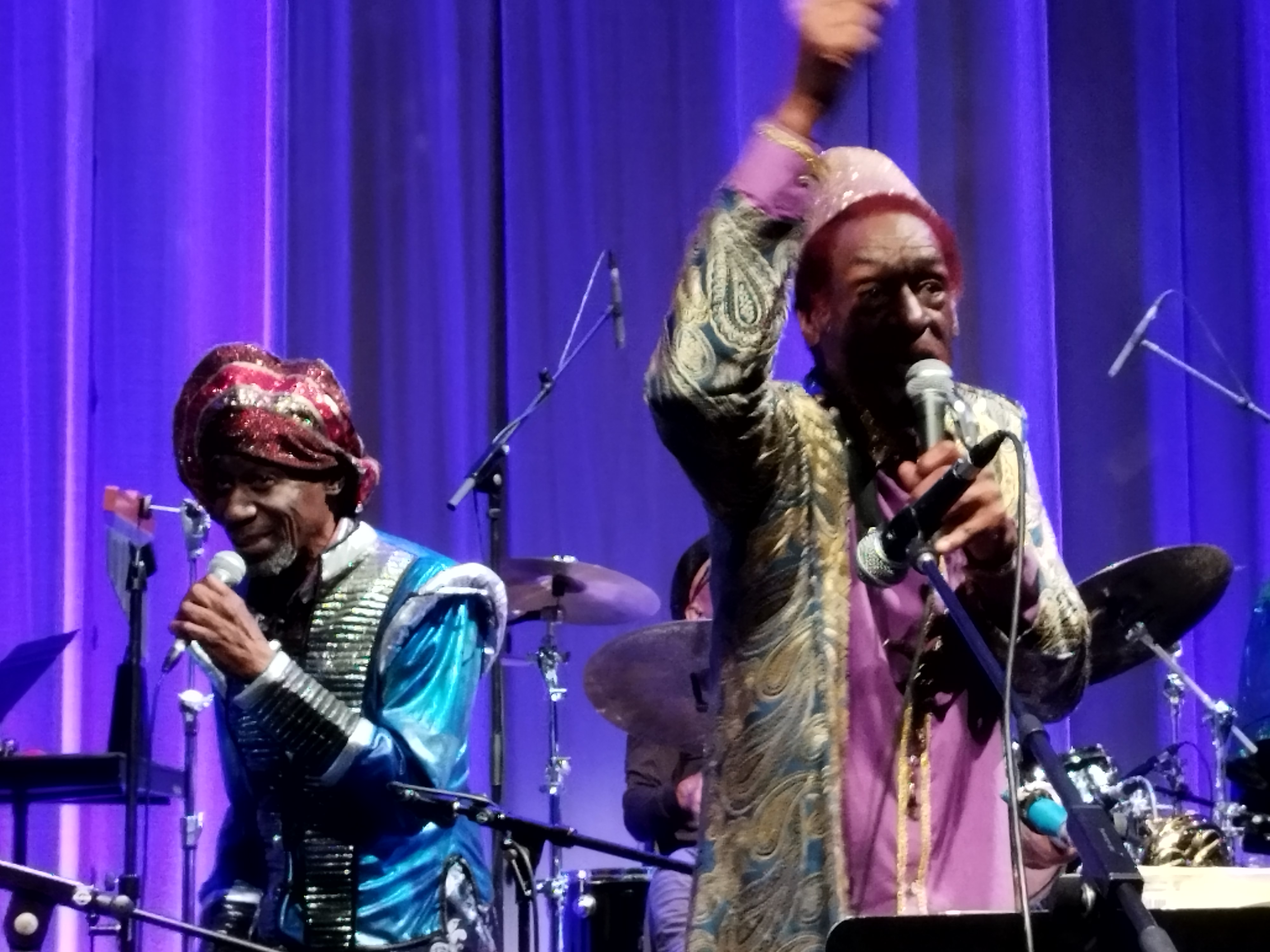
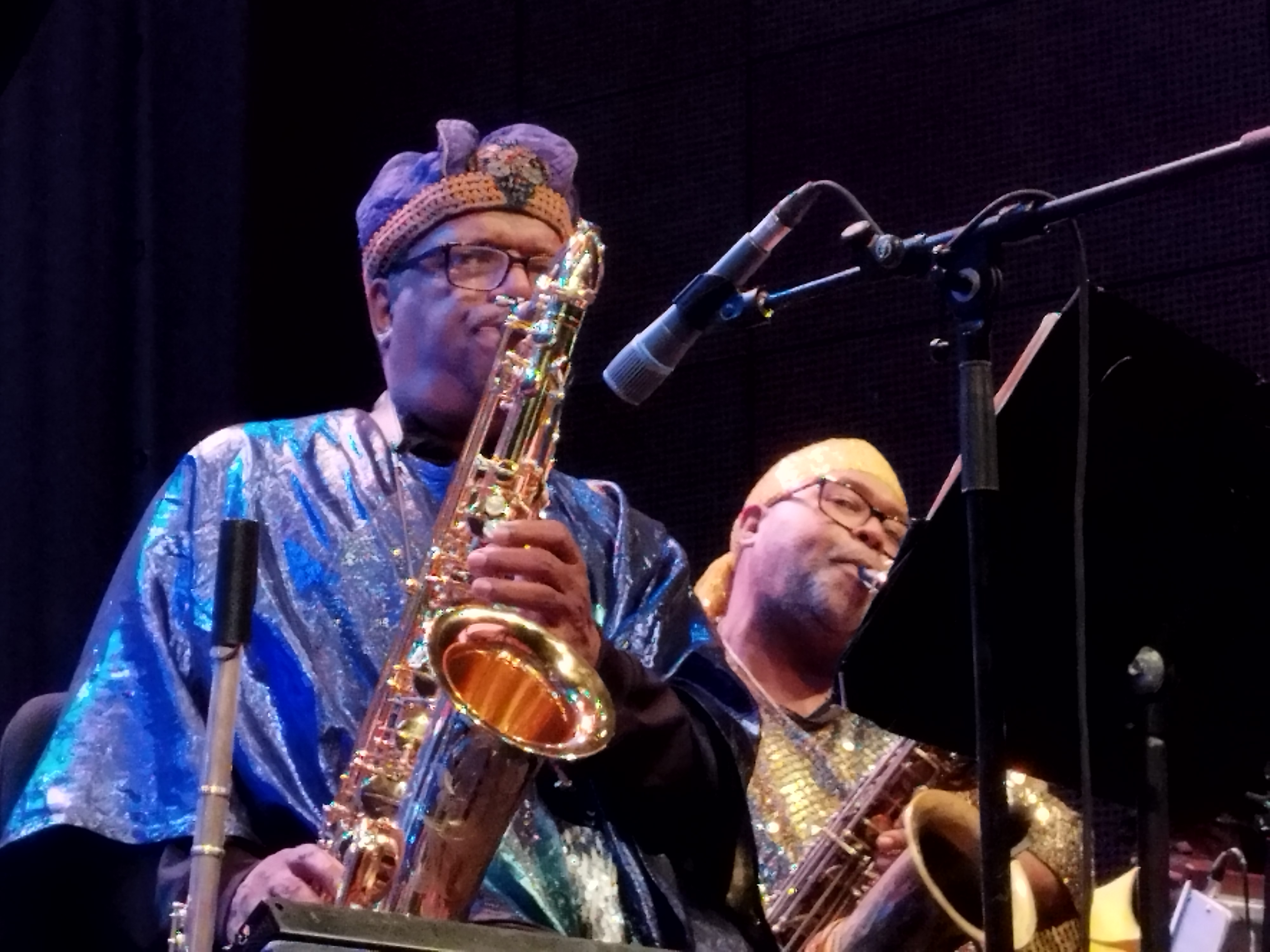
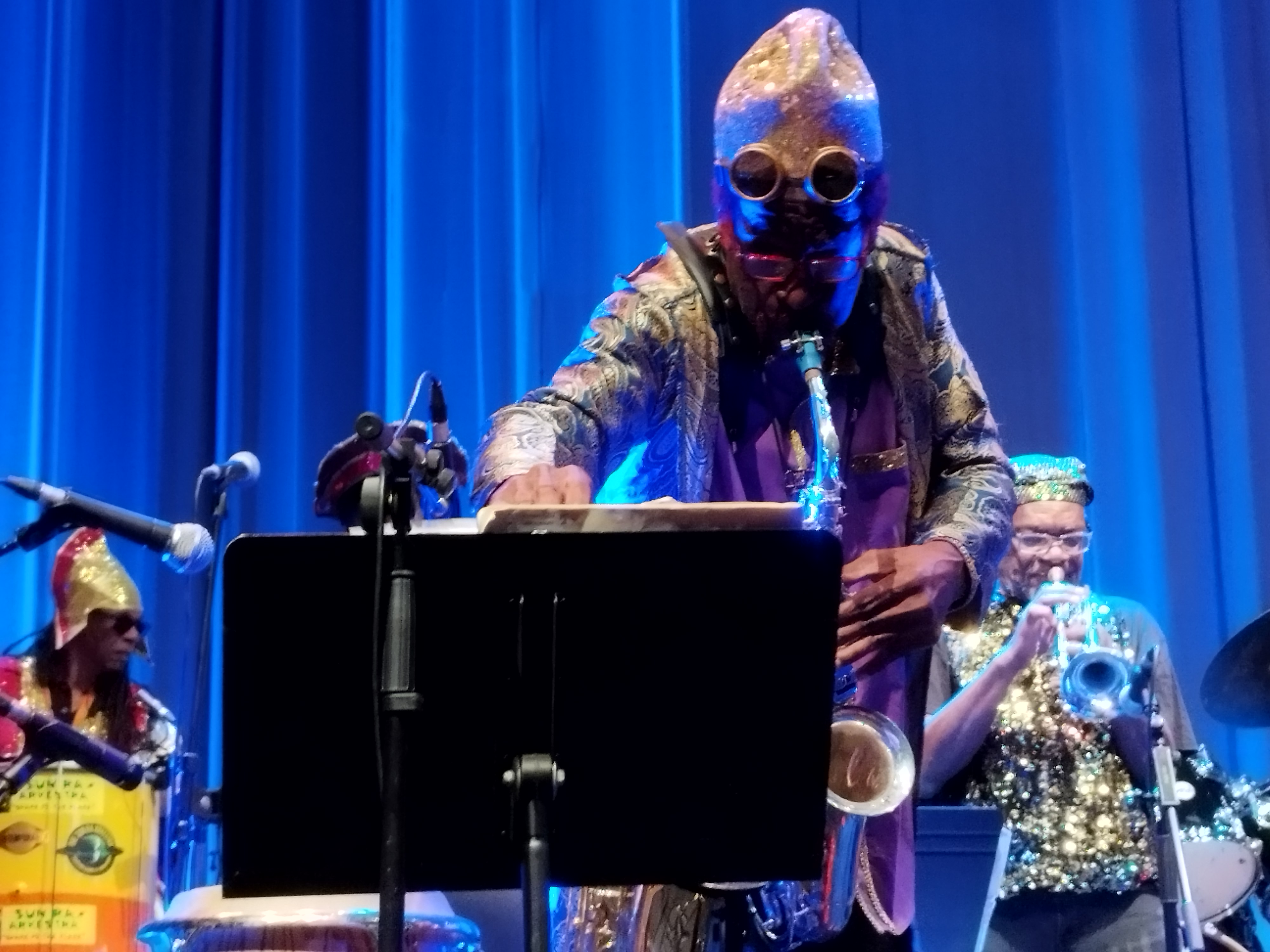
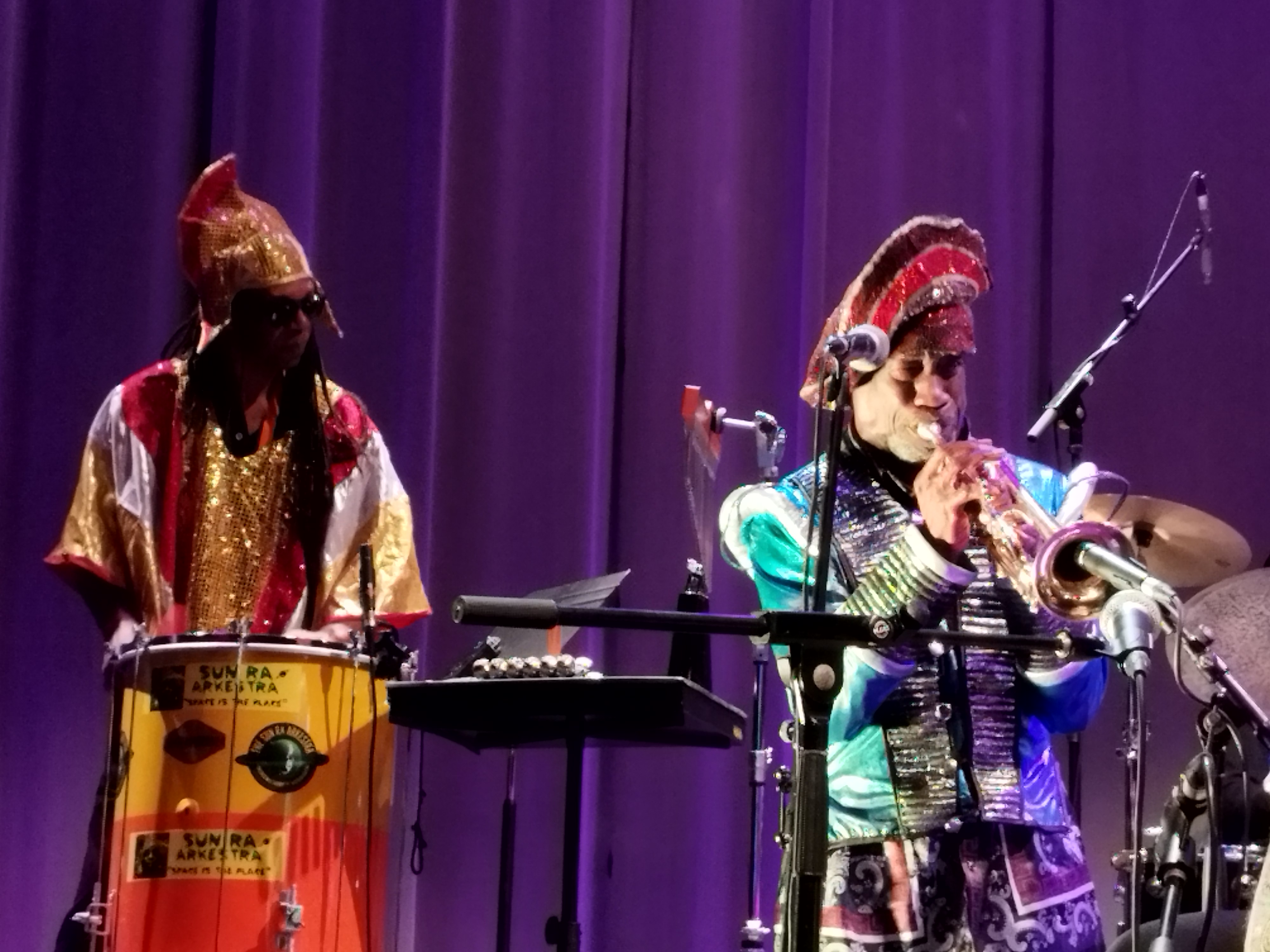
The Sun Ra Arkestra presented itself in Porto, once more, in a rainy Thursday night withinin Outone em Jazz concert cycle.
Before an expecting, sharped ear, audience the Sun Ra Arkestra entered the state in shinny colorful sequins that adorned the retro-futuristic garments of the 13 músicos who, slowly, took their place behind their instruments, before starting what would become a journey into time and intergalactic metaphysical space.
The ochestra, created in the 1950s by Sun Ra, one of the greatest names of avant-garde jazz, and it is now directed by another 99 years old alien, Marshall Allen, brought to Porto the philosophy and cosmic sound of its creator, as travellers from another world with a mission to spread piece, harmony, the cosmos.
At times, the cosmos can, initially, sound chaotic, but nothing is random. That is how the performance started. A construction of a dialogue between instruments with rhythms and somehow dissonant and atonal melodies towards a jazzy exploration, challenging those less prepared for it. Tara Middleton vocal contributions were one more instrument in the orchestra sound, releasing sentences of peace and galactic utopia.
It is in afrofutismo, of which the Sun Ra Arkestra is seen as a pioneer, that the influence in more contemporary jazz is understood, with the incorporation of elements that aren’t natural to jazz like electronic keyboards and synthsisers. It is interesting to highlight that those were some of the musicals elements that caught me ear the most with delightful moments. The Sun Ra Arkestra also gifted those in attendance with more classic jazz big bands like themes making the bodies of the audience to move swing style like.
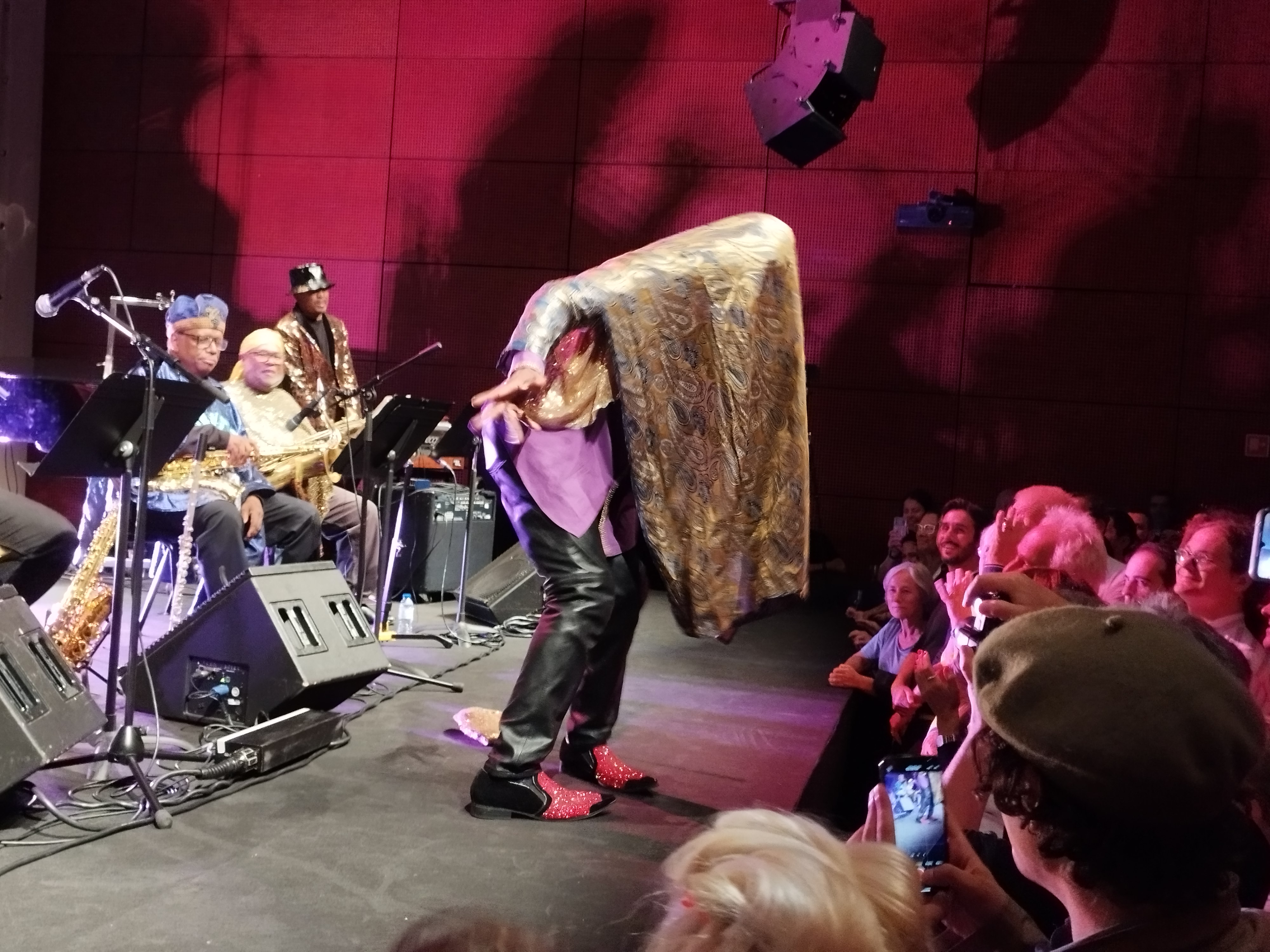
In short, a performance that fulfilled both more traditional jazz lovers as well as avant-garde jazz ones, with high quality musicians, that alternate standing out with their solos with a sunny disposition of everyone on stage and memorable moments. Like when one of the older members of the Arkestra demonstrate dance moves enviable to thoso much younger. Other highlights: Halloween in Harlem, to coincide with the approaching date aproveitando a proximidade da date and a short walk among the audience.
Amazing Songs & Other Delights #52 – The Home edition by David Afonso & Raquel Pinheiro airs tomorrow Monday 23rd, 3-4 (London time) on Yé Yé Radio: https://yeyeradio.com/ (or on the app).
My friend David Afonso has a section on his facebook called Canções de Trazer Por Casa (Home Wearing Songs). I really it as well as his selection of songs. Therefore, I asked him to let me stole a few for my radio programme. He sent me a wide assortment from which I picked nine. He wanted to know if I would pick his favourite. I don’t know. I didn’t ask him what is favourite is. Nothing like a challenge!
Nor does he knows which songs I picked from his batch or what my choices are. Hence, why no tracklist. It is a surprise for everyone. Other than myself, of course. David Afonso is one of the editors of Norte.pt: https://norte.pt// Norte.pt is a blog about Porto and Northern Portugal to which I also contribute to.
Canções de Resistência a celebratory gathering part of Galerias Mira 10th anniversary were a joyful soulfilling evening of collective singing, on stage and on the audience, at times merged as a single voice
Twenty one songs, from seven different countries, five languages. From folk songs which beginnings trace back to the unknown or the XIX century to an assortment of key XX century songs. If the night was cold, dark and rainy, hearts and voices were strong, bright, warm, defient, loud or gentle depending of what the words called for, hopeful.
You can hear us all, choir and audience, sing We Hall Overcome – lon the video above – with passion and emotion in a room so full it spilled over to the street so many of us came for the ride. What you cannot hear or see is the downpours that, at times, would bring a shimmering sound into the back of the room, adding another sound and sensory layer to the performance.
There is a lot to be said about a room filled with humans singing along, content, joined by a mutual unspoken, sang, understanding. Many of us think we cannot sing, so out of fashion singing become in our daily lives. For the most part, we can all sing, hum, clap, be rhythmic, rock our bodies. Instrumentation, mostly acoustic guitar, but also double bass, electric bass at its most simple and gentle flute, was generally minimal. An accompaniment to the voices. If the all evening was a pleasure, it was a double plessure for me, after many decades, to re-met composer and songwriter João Lóio – musical director of Canções de Resistência – who was a a key figure of my childhood.
Canções de Resistência no Mira:Choir: Ana Afonso, Ana Ribeiro, Fernando Mota, Guilhermino Monteiro, Inês Salsedas, João Lafuente, João Lóio, Luísa Calado, Manuel Salsedas, Octávio Fonseca, Pedro Ramajal, Regina CastroSound: Carlos Rocha Musical Direction: João LóioProgramming & production: Acúrcio Monteiro, Armando Dourado
Maio Maduro Maio (José Afonso, Portugal); Para Não Dizer Que Não Falei Das Flores (Geraldo Vandré, Brazil); Ay, Carmela (XIX century Spanish folk song, Spain); Se Me Quieres Escribir (Spain); Por Trás Daquela Janela (José Afonso, Portugal); Comprade Juan Miguel (Alfredo Zitarrosa, Uruguay); We Shall Overcome (Pete Seager, United States); Canción Para Mi América (Daniel Viglietti, Uruguay;) La Complainte Du Partisan (Emmanuel d’Astier de lá Vigerie, France); Morte E Vida Severina (João Cabral de Melo Neto, Brazil); Benditos (José Afonso, Portugal); Milonga Del Fusilado (Carlos Maria Gutiérrez, Uruguay); Which Side Are You On (Florence Reese, United States); Canta Camarada (José Afonso from a traditional Portuguese song, Portugal); Canción Del Minero (Victor Jara, Chile); El Pueblo Unido (Sérgio Ortega & Quilapayún,, Chile); Strange Fruit (Abel Meeropol as Lewis Allan, United States); La Lega (XIX century Italian folk song, Italy); Todo Cambia (Castillo “Mudanza” & Julio Numhauser, Chile); Construção (Chico Buarque, Brazil) / Operário Em Construção (Vinicius de Moraes, Brazil); Bella Ciao (Italian folk song c. late XIX century, Italy)








 Mondo Bizarre Magazine