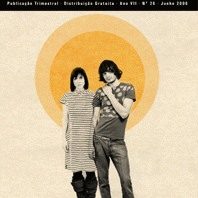
Canção Sem Medo, by Rita Dias and Coro das Mulheres da Fábrica, is the Portuguese adaptation of Canción sin Miedo by Vivir Quintana.
25 November is the International Day for the Elimination of Violence against Women.
I have been on the receiving end of different types of violence, including nearly being killed by my former husband twenty years ago, and by my aunt’s live-in boyfriend a few months ago. But I have also been on the receiving end of violence by women. Like my younger sister, and one of my female cousins. In the name of truth, all four were in an altered state of mind, namely psychosis. It doesn’t excuse the actions. It gives them context.
I agree. However, we have to go much, much, much deeper, and take a different approach from the one we have been following. In my experience, men or women who are violent towards women are often sheltered, and frequently by women. Why? Because they are a significant other, a friend, a loved one, a colleague, a public figure we like. “He/she would never do that” is the usual line.
But he, or she, would, because they do not do it in public. And we are all a little, if not a lot, different in public and behind closed doors.
Today, 25 November, the song will also be performed live by Rita Dias and the Coro das Mulheres da Fábrica in Praça 8 de Maio, in Coimbra, following the silent march Se tocarem numa, respondemos todas (If they touch one of us, we all respond), which sets off from Praça da República, in Coimbra, at 6 pm.
The programme concludes on 29 November at 7 pm at Convento São Francisco, in Coimbra, with the benefit performance Mulheres Sem Medo – A vergonha tem de mudar de lado (Women Without Fear – The Shame Must Change Sides). Proceeds will go to Associação Akto, a Human Rights Association.
But does shame truly have to change sides? And whose shame must change sides? The perpetrator’s? The enablers’? Shame doesn’t tend to lead to great changes. What does?
As hard as it may be to accept, perpetrators need adequate solutions available to them, and they need to use them. Otherwise, they will keep repeating the cycle. Accountability has to be part of that process. Understanding why someone acts violently does not mean protecting them from the consequences.
You can read some of my personal experience here and find out more about the work based on neuroscience, neurobiology and somatic practice that I have been developing at The Listening Room HQ, my men’s practice.
Artistic Credits:
Song: Canção sem Medo
Original Work: Canción sin Miedo, de Vivir Quintana
Portuguese adaptation: Rita Dias
Interpretation: Rita Dias e Coro das Mulheres da Fábrica
Musical production: André Santos
Recording, mix and mastering: Estúdio Pé de Vento
Video Clip direction: I AM Social

