words: Telma Mota (freely translated by Raquel Pinheiro) photos: Ricardo Silva
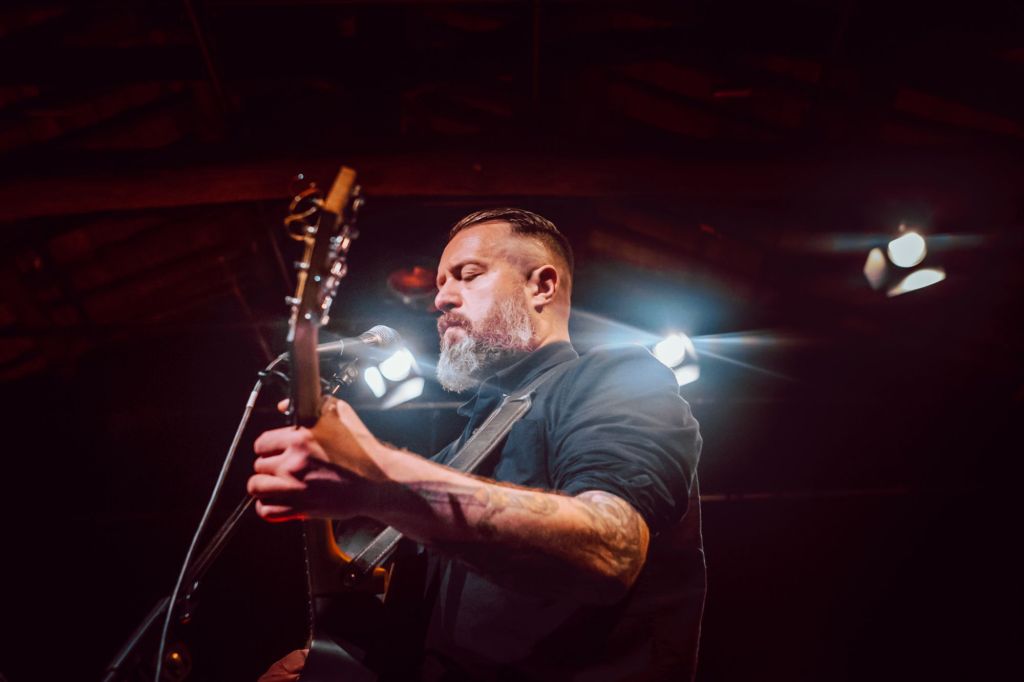
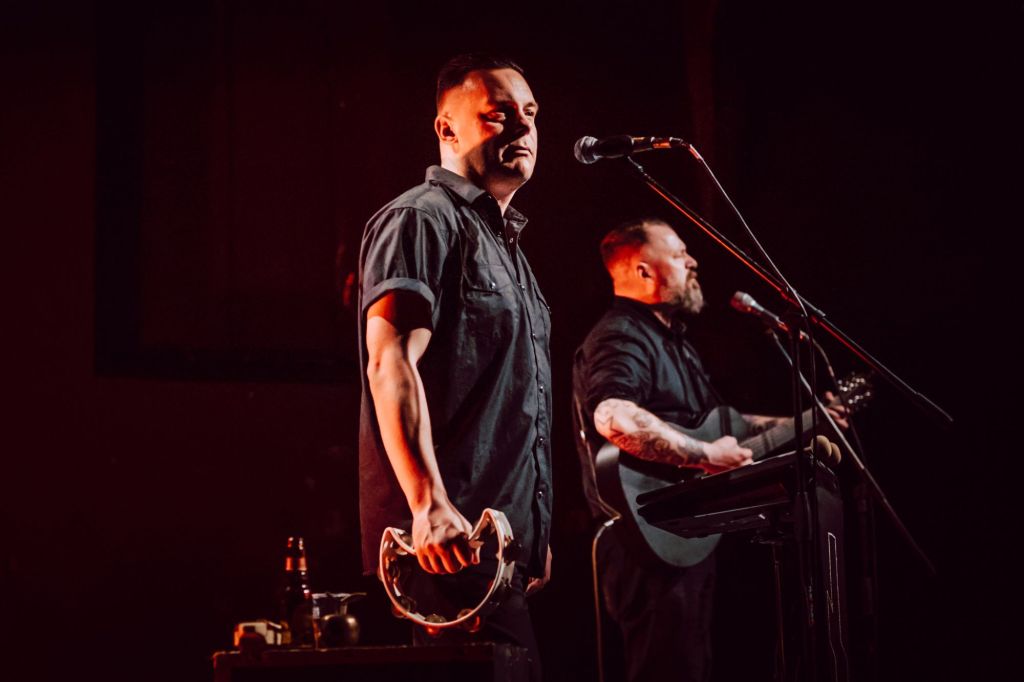
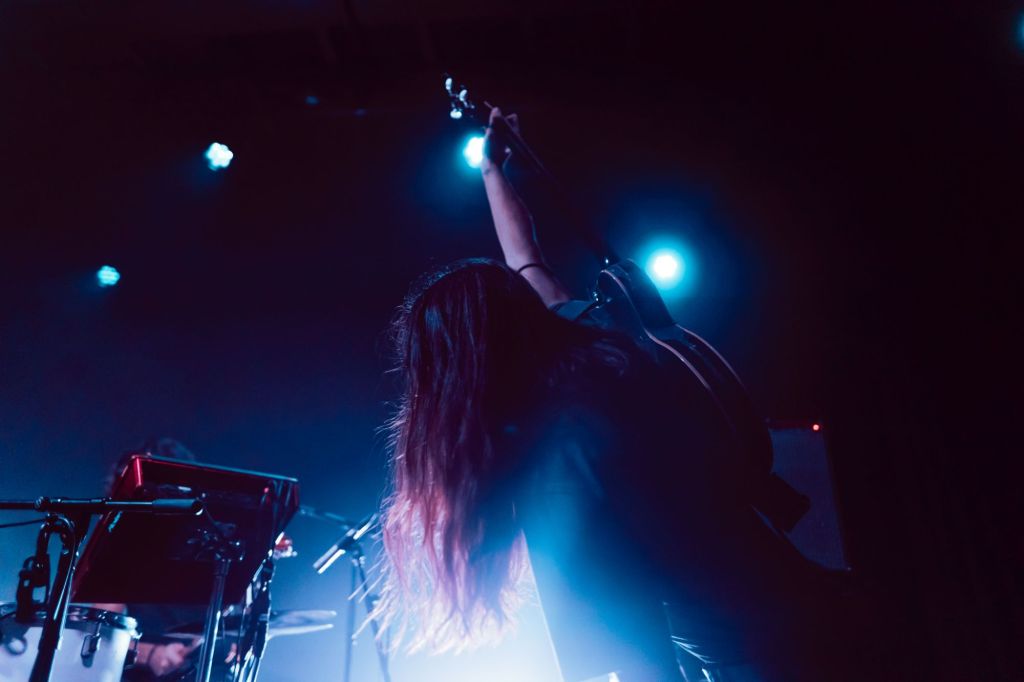
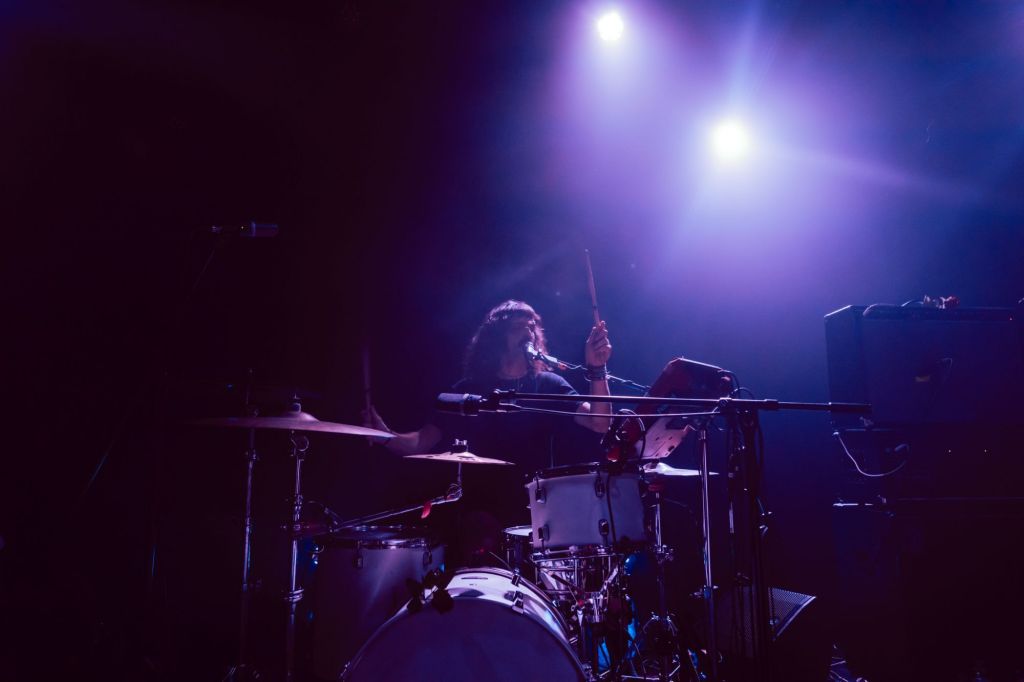
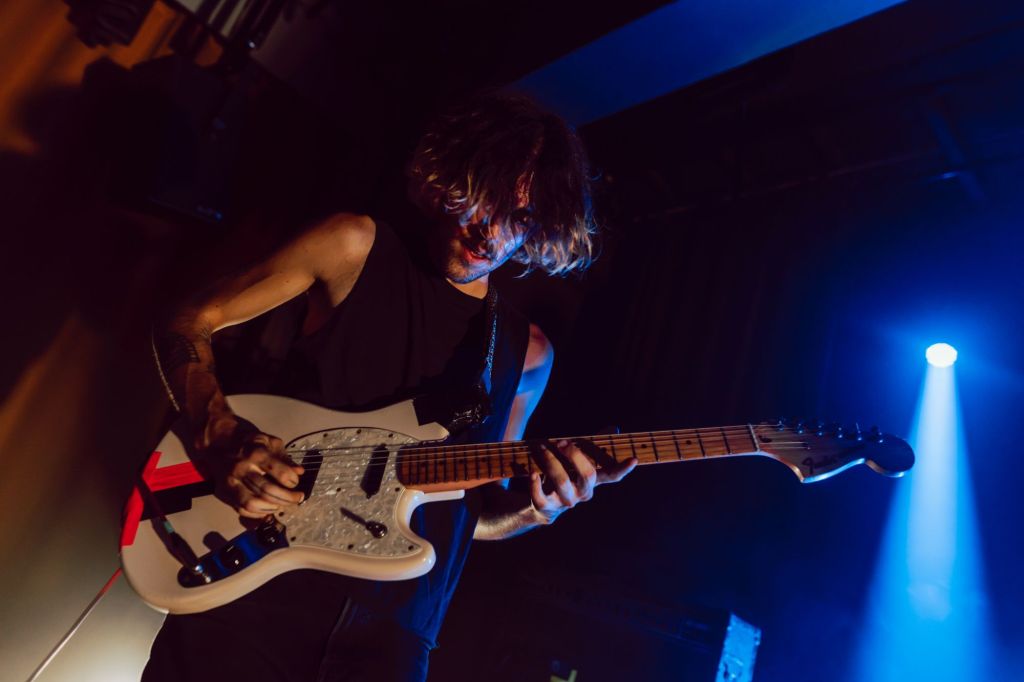
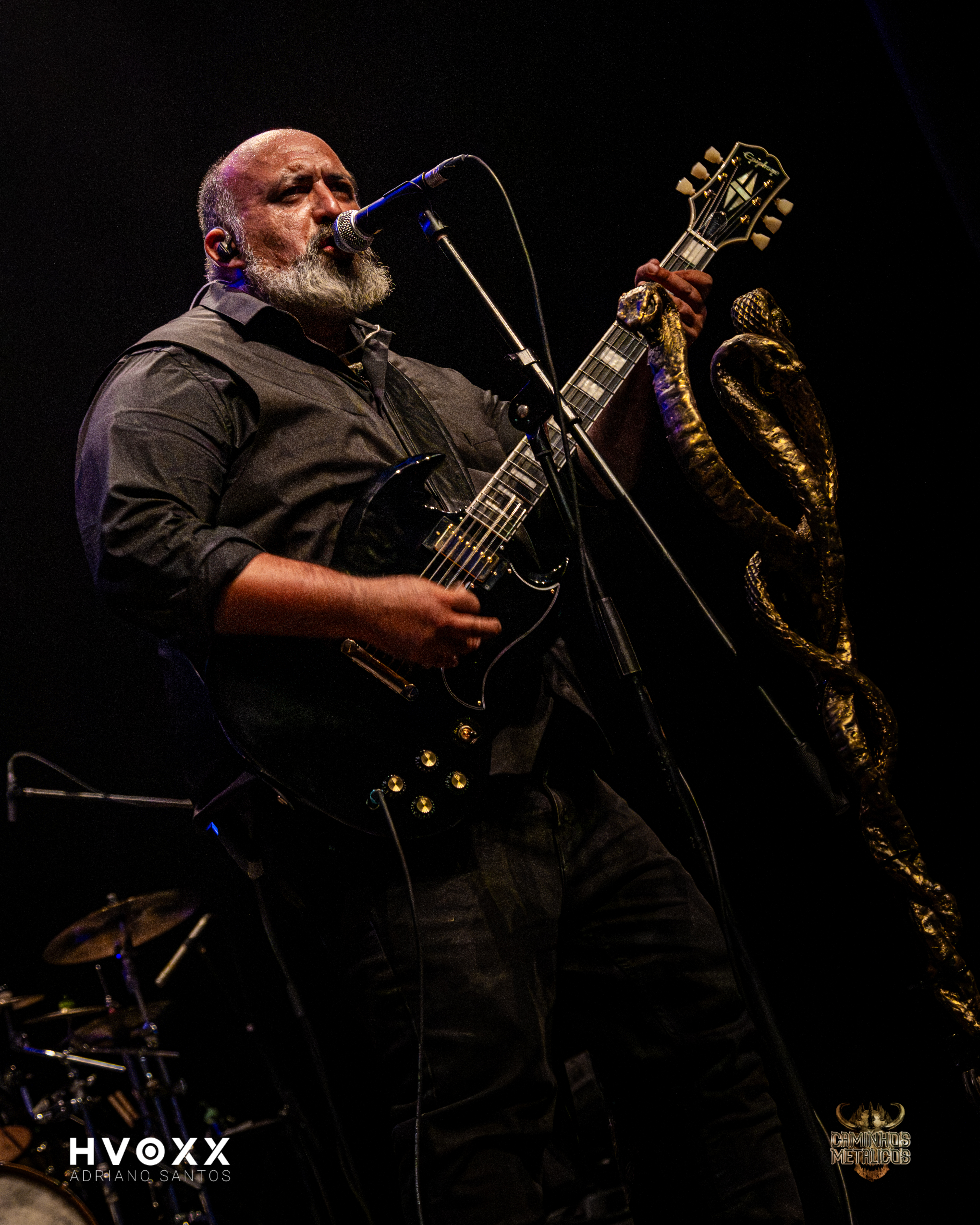
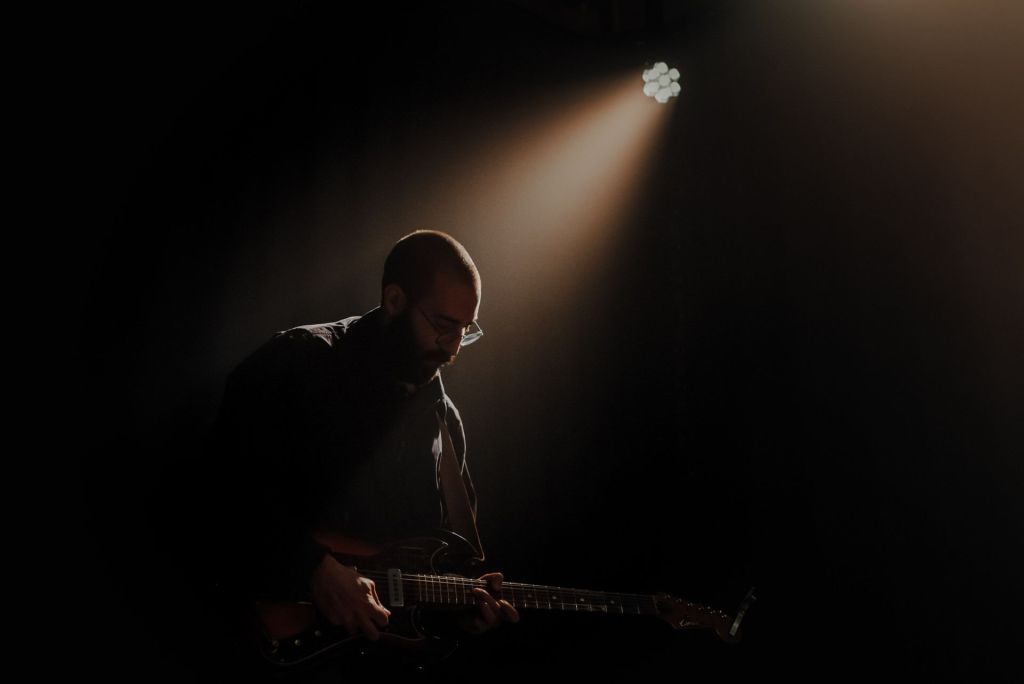
King Dude, or TJ Cowgill, a dark, sombre American Lucifer with an ironic sense of humour, accompanied by Gary Gonzalez, a quiet, shy Orthodox Christian park ranger, delivered a fine concert, as expected, at Armazém 22 in Gaia.
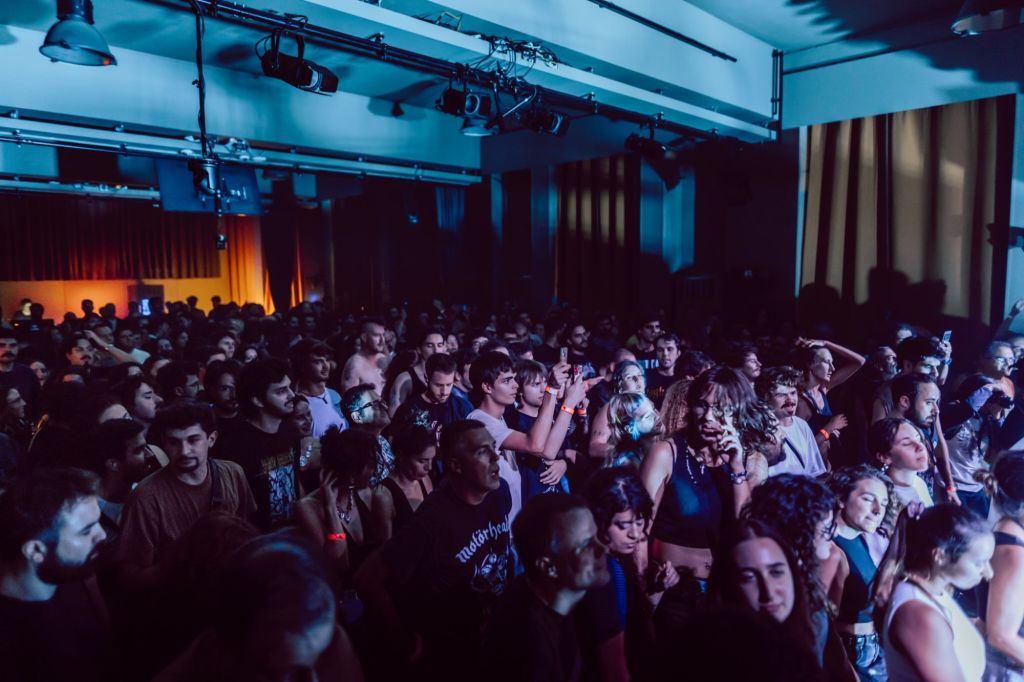
A packed venue, filled with friends from the goth dark folk scene (in this case, with country, blues and metal influences), welcomed this duo with the cult-like devotion and reverence they deserve.
King Dude told some of his stories and shared personal experiences with the warm authenticity that characterises him, in acoustic communion with his loyal audience.
He played eleven songs from his usual setlist, opening with Sunset Skies and closing with Silver Crucifix, leaving the remaining eight songs for the audience to choose.
Iconic songs such as Velvet Rope, Vision in Black and Barbara Anne followed, along with a hellish rendition of I Wanna Die at 69 that definitively stole the last breaths from the most unsuspecting hearts, like a rebel leader of the fallen angels.
King Dude embodies human musical intimacy, with all its fragilities and its crooked, visceral and profound corners.
With his deep, excavated baritone voice, he leaves the true Lucifer’s light on stage, a bard of crossroads whose allegiance remains proudly undefined.
It is always a pleasure to see him, hear him and savour every detail of his songs about love, sex, mortality and spirituality. Love you man!
Distortion, Mosh, and the Macarena: The night MÁQUINA. made Porto shake again
words: Joana Coelho photos: Ricardo Silva
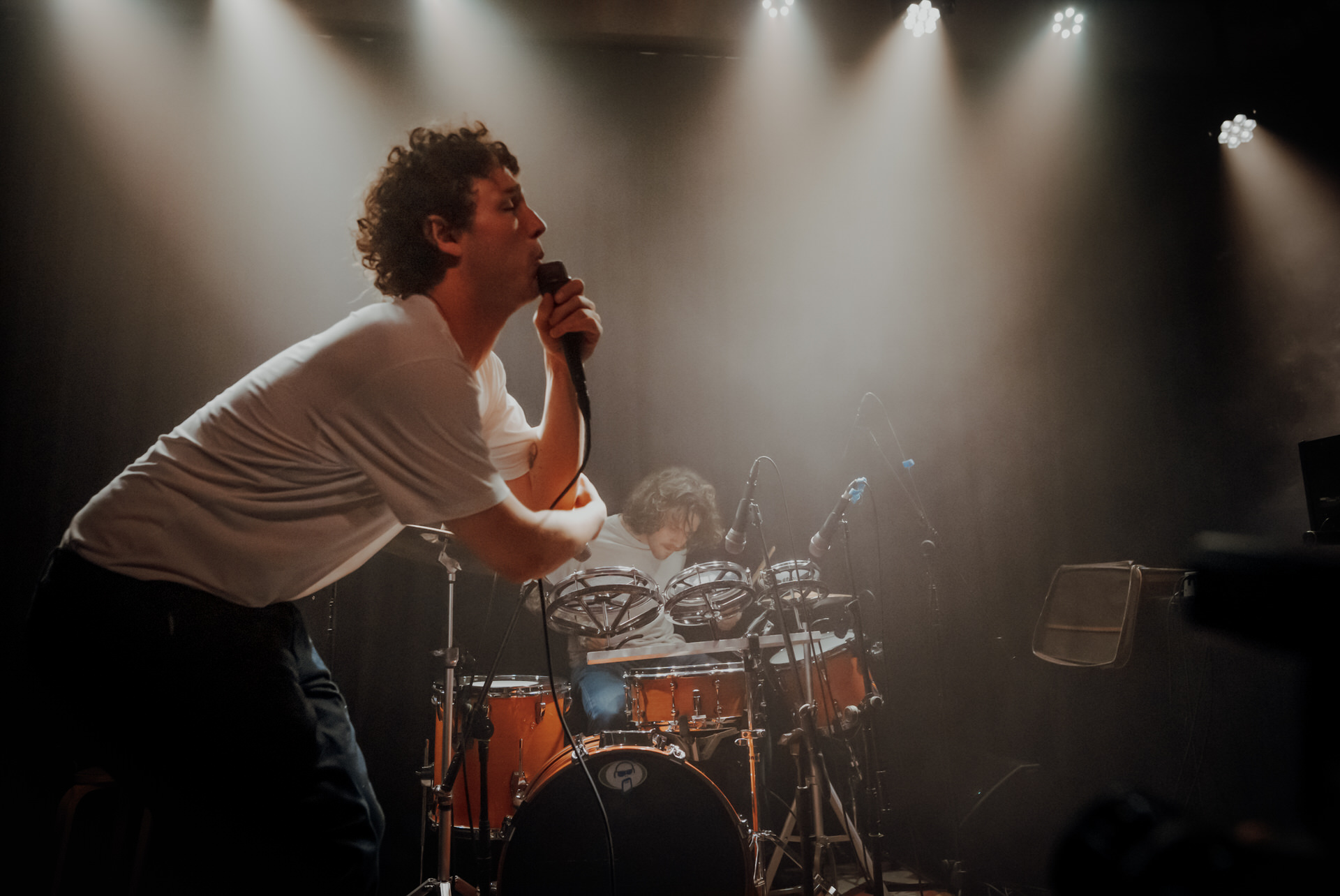
At 10:05pm, with a packed room and a palpable sense of anticipation, MAQUINA. took the stage for a long-awaited return to the Invicta city. Opening hostilities without warning or apology: a raw scream, a wall of distortion, and the immediate launch of a relentless sonic locomotive.
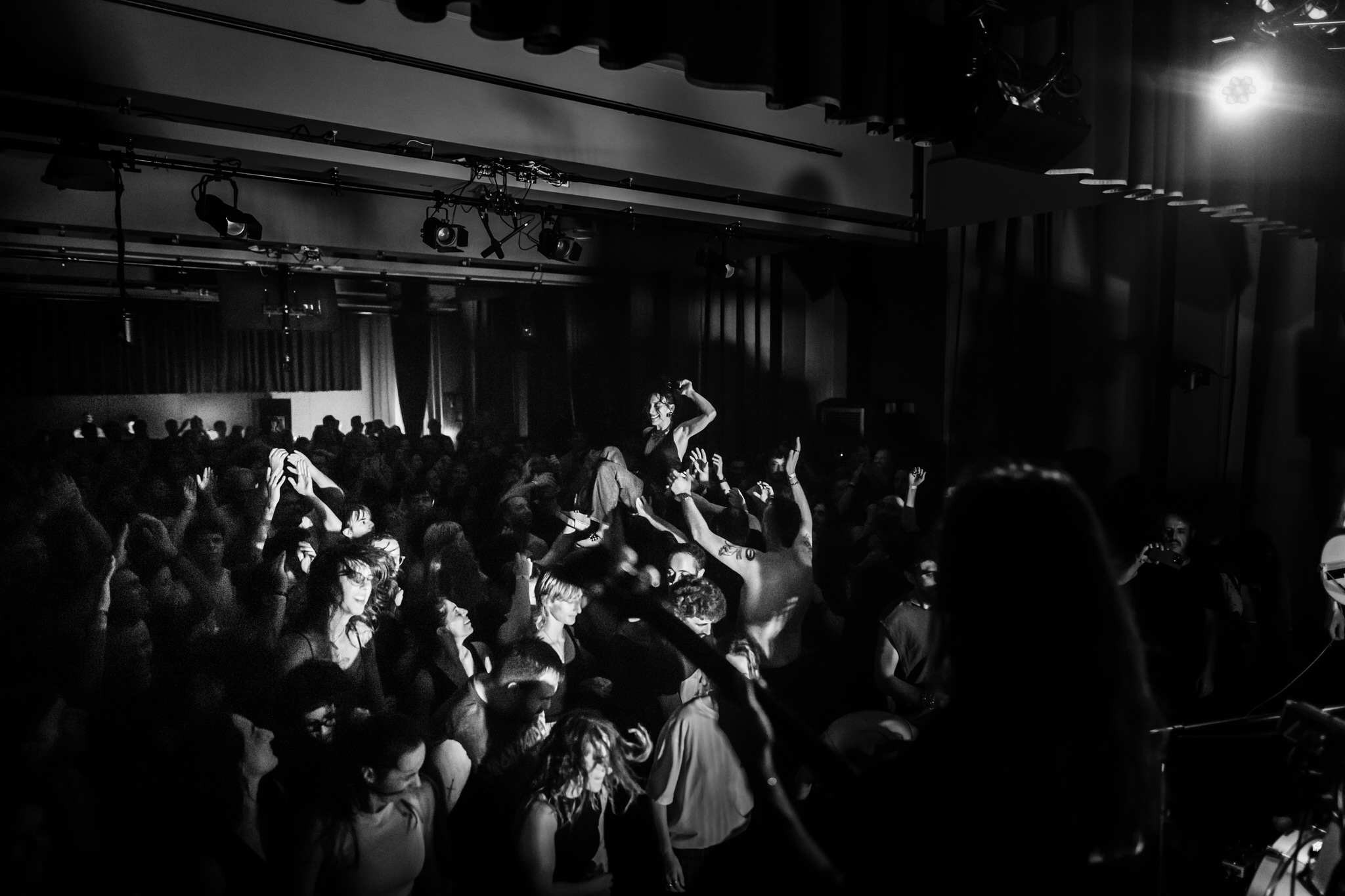
This tour serves as the live crucible for their latest record BODY TRANSMISSION: a devastating fusion where abrasive noise rock, and industrial techno collision-course into heavy, danceable catharsis. By the third song, the venue had already reached its boiling point. Crowdsurfers took over, frenetic dancing spread, and the trio’s signature raw energy turned the space into a non-stop celebration from start to finish. Between continuous dance and a jumping mosh pit, the floor was literally shaking under our feet.
Alongside the hypnotic trance and industrial weight of the new tracks, there was also room for the band’s disarming charisma. Roughly halfway through the set, riding a wave of rhythmic clapping from the crowd, the drummer/vocalist busted out the Macarena moves: because anyone bold enough to drop the Macarena dance earns my absolute respect.
They closed the set with their usual finale, culminating in a collective mosh pit with the entire room jumping in a final burst of catharsis.
Once the show ended, the band once again showed their usual warmth toward fans, welcoming everyone warmly for hugs, photos, and quick chats. After a small pilgrimage to find a pen that would actually write on the album cover, I managed to get my copy of their new vinyl signed by the trio.
Having followed MAQUINA. since the very first concert I caught back in 2023, the level they’ve reached on this album cycle is undeniable. The new material translates into one of the finest live performances I’ve ever seen them deliver: a band at the top of their game, fully committed, and completely tireless on stage. Always an absolute pleasure to watch this trio in action once again.
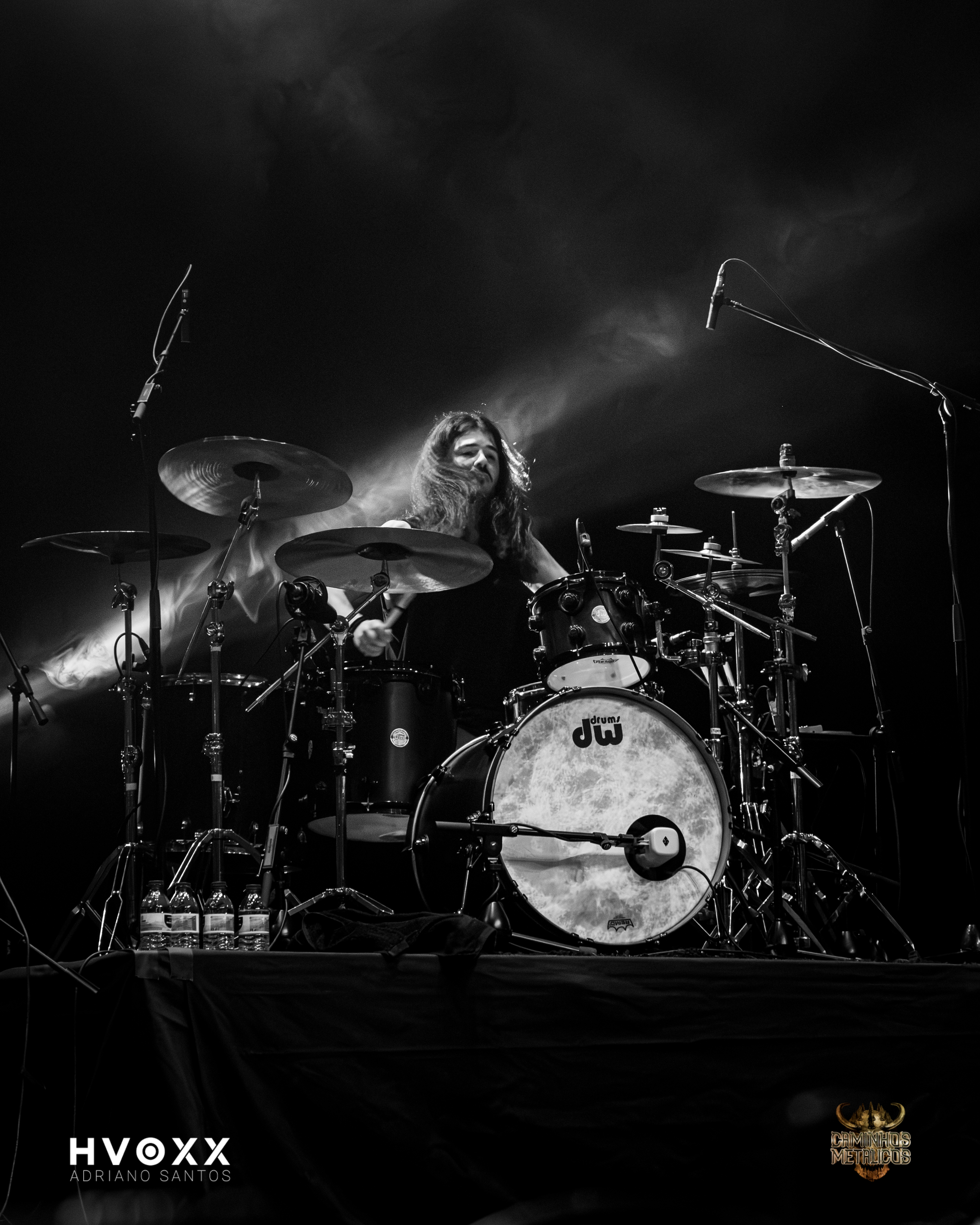
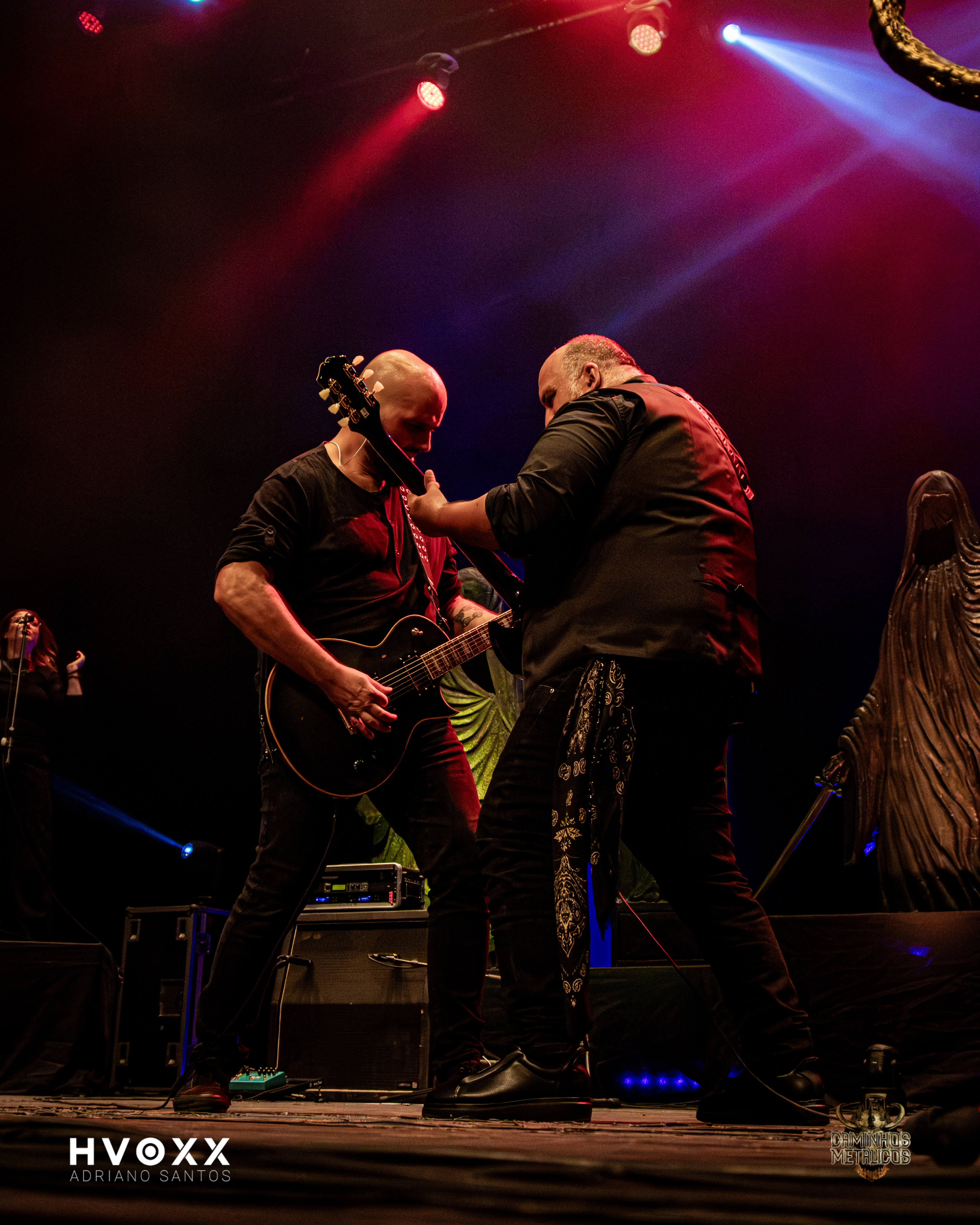
I week ago I was sitting in the front row, right in the middle of the stage, when Heavenwood began their 30th anniversary concert at the Coliseu Box in Porto.
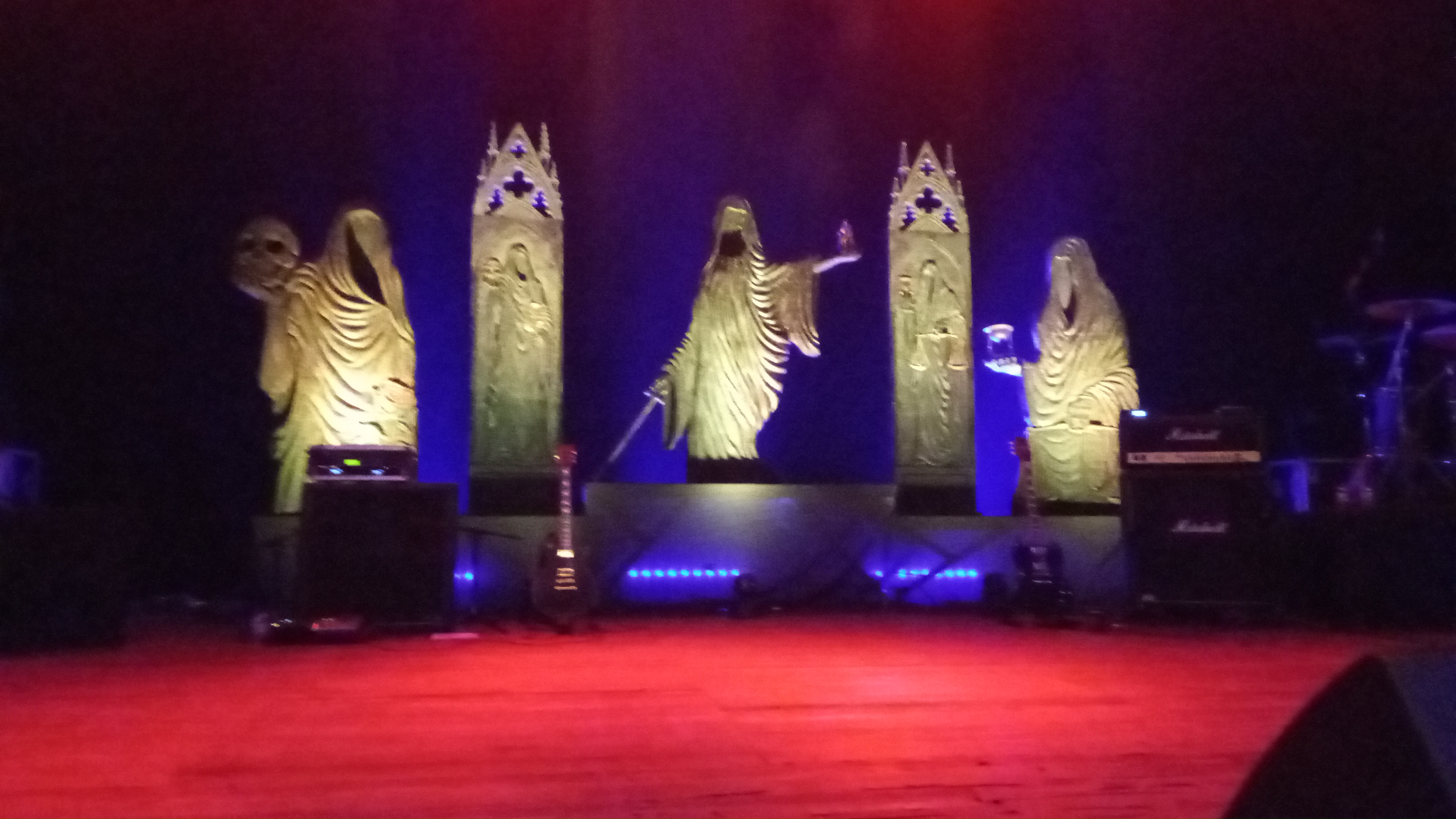
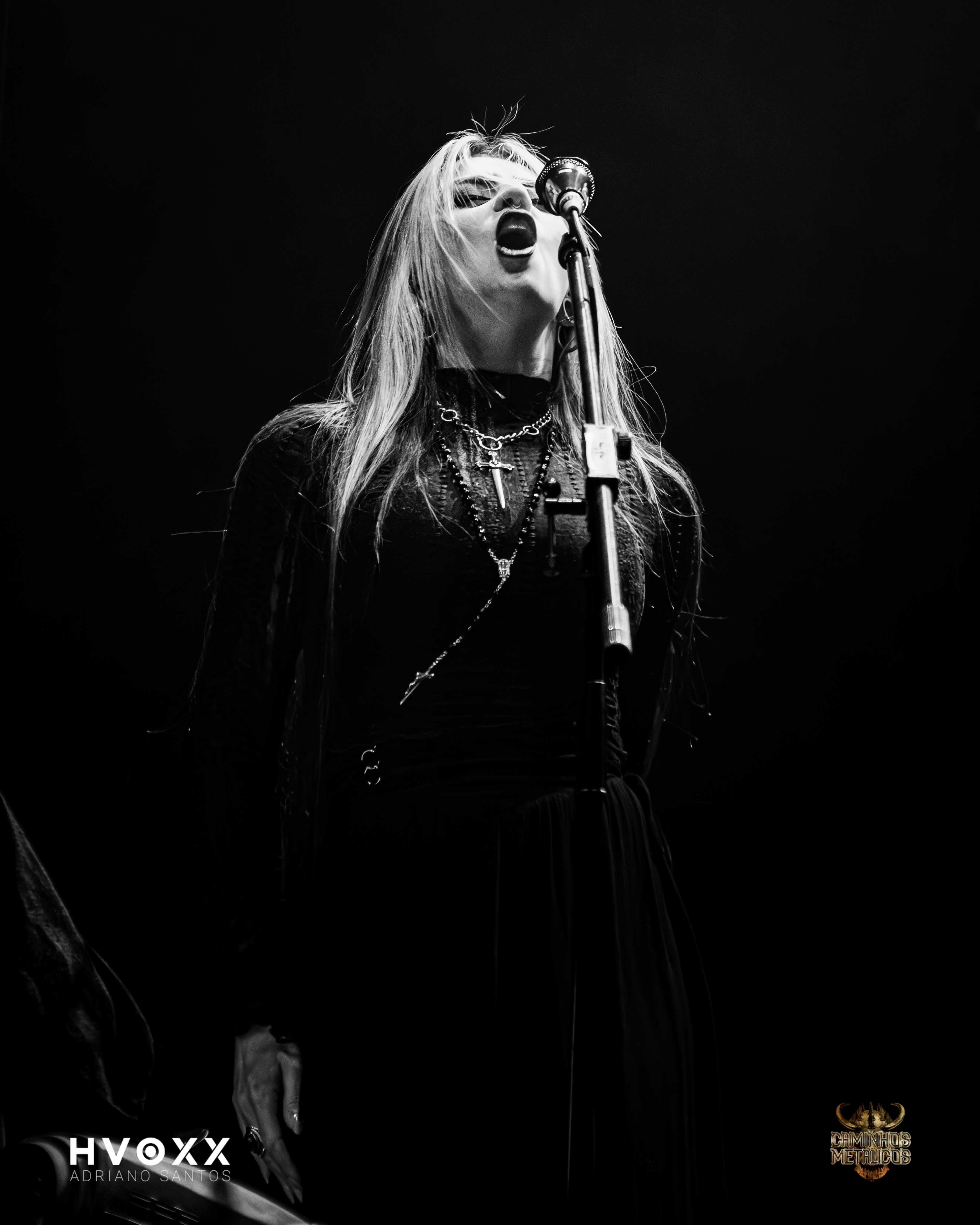
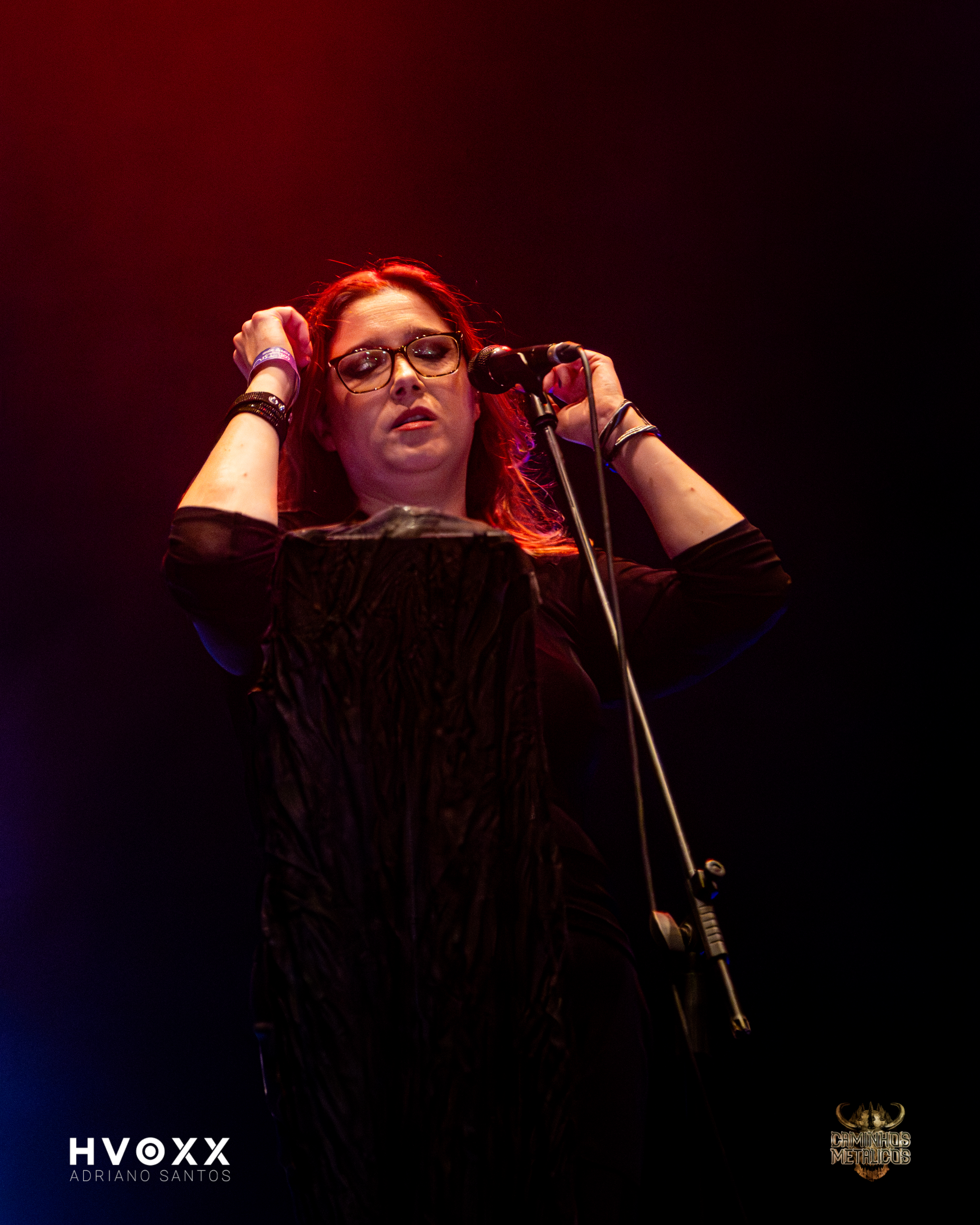
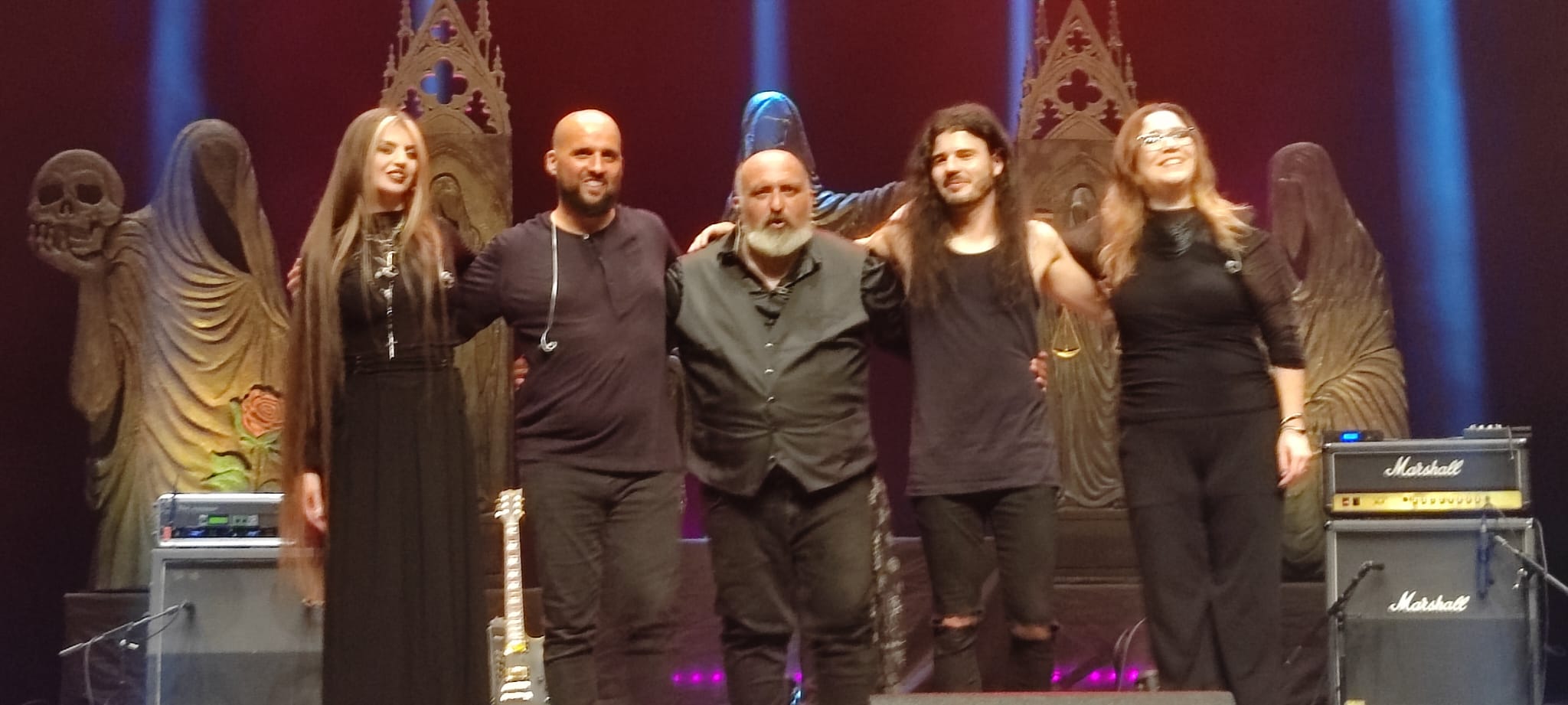
The stage was framed by beautiful sculptures by Helder Cabral, creating something that felt entirely at home with Heavenwood. It was theatrical, completed by the backing vocals and elegant movements of Beatriz Mariano and Sandra Oliveira, without ever taking away from the songs and music. It gave the concert another, ethereal, fairies-and-deities dimension.
I have known Heavenwood since the very beginning, when they were still Disgorged, and have watched them travel a very long way from those early days. Thirty years is a considerable stretch of time for any band. Standing there watching them, the number itself became less important than what was happening in the room.
Heavenwood are often described as melodic heavy metal, and there is certainly a great deal of melody in their music. But there is groove too. A strong physical movement underneath the songs that makes them work not only as something to listen to, but as something to inhabit.
From the beginning, the set moved through different periods of their history, with Death, Moonlight Girl and Morning Glory Clouds giving way to The Empress, The Moon and Since The First Smile, beautifully sung by Beatriz Mariano.
This was particularly amusing for me because Tarot had already been appearing repeatedly in my own life in the days leading up to the concert. I pull a card every day, by hand, from my Giger Tarot, and The Star has been the card that has appeared more than any other over the past four years.
Then, there I was, at a Heavenwood concert celebrating 30 years and found myself surrounded by The Empress, The Moon, The High Priestess, The Sun, The Hanged Man and The Stars, as the band moved through the music of The Tarot of the Bohemians cycle.Sometimes life does have a sense of humour.
The Hanged Man brought Sandra Oliveira to the stage for lead vocals, adding another change of texture to the evening, while Ricardo Dias dos Santos, Eduardo Sinatra and Walter Teixeira carried the band through a set that had both weight and atmosphere.
And the sound. Oh! The sound! By the latter part of the concert it was so powerful that I could feel the floorboards moving with it, and the vibes and frequencies emanating from the stage wrapping me.
I was also having a rather wonderful time air-drumming.
My the eldest of my brothers, who is an actual drummer, was beside me tapping his legs to the music, while the drummer on the other side of the aisle was air-drumming too, even more enthusiastically than him. So there I was, sitting in the middle, flanked by two drummers and joining in.
On the encore there was a great singalong to the magistral and catchy Suicidal Letters, and by the time the curtain was about to fall, Heartquake arrived, and the room had changed completely.
Everyone was standing up and dancing.The seated concert had become a moving room.
That is one of the best things about seeing a band that has been around for thirty years. The history is there, certainly, but it is not a museum piece. It is alive when the songs still move people, when old songs are sung back at the stage, when a room full of people gets up and dances.
Heavenwood’s music has always carried a particular atmosphere, gothic, dark, melodic, poetic, sometimes symphonic, sometimes heavy as hell without ever losing itself.
At the Coliseu, with Helder Cabral’s sculptures surrounding the stage, it had the space to become something else again.
This was not simply a band’s concert marking thirty years.It was Heavenwood inhabiting three decades of music in one of Porto’s most special concert venues.
Heavenwood: Ricardo Dias dos Santos – founder/guitarist/composer/vocals Band Members: Eduardo Sinatra – drums Walter Teixeira – guitar Special Guests: Beatriz Mariano and Sandra Oliveira – backing vocals and lead vocals on Since The First Smile (Beatriz Mariano), The Hanged Man (Sandra Oliveira) Sculptures: Helder Cabral
Setlist: Death Moonlight Girl Morning Glory Clouds The Empress The Moon Since The First Smile – lead vocals Beatriz Mariano 13th Moon The Lightning-Struck Tower Shadowflower The High Priestess The Sun The Hanged Man – Lead vocals Sandra Oliveira Rain Of July The Stars Frozen Images
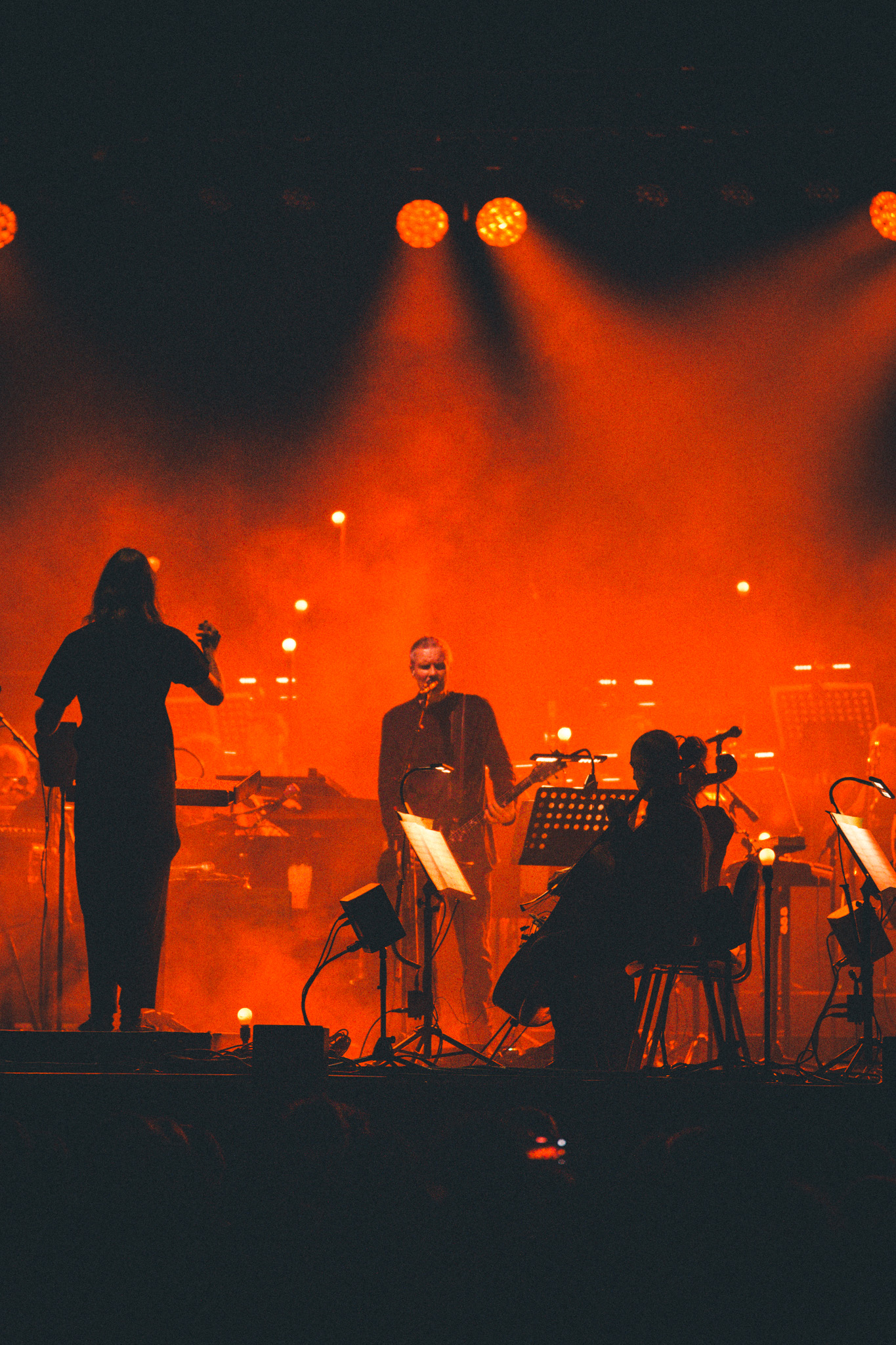
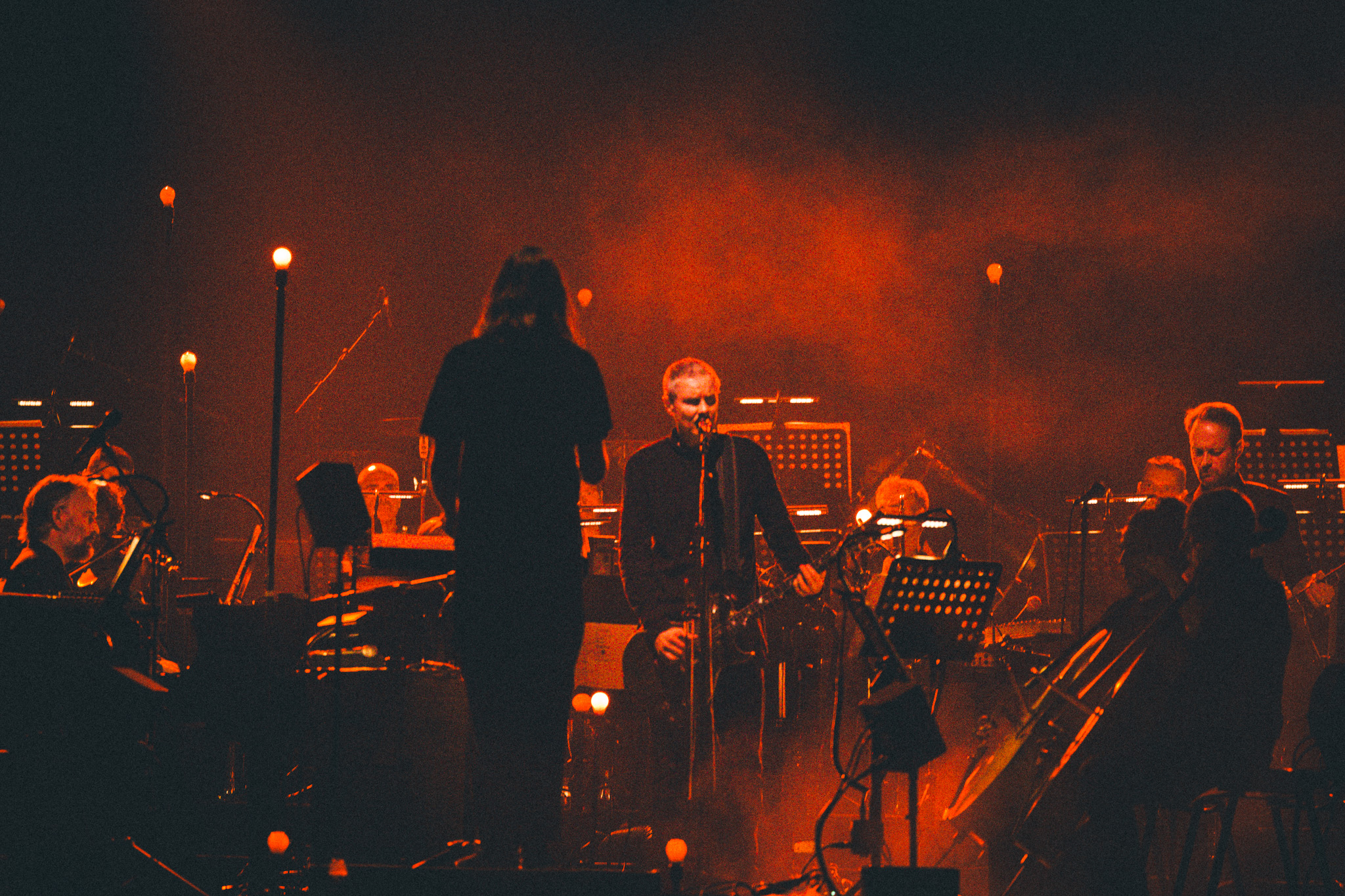
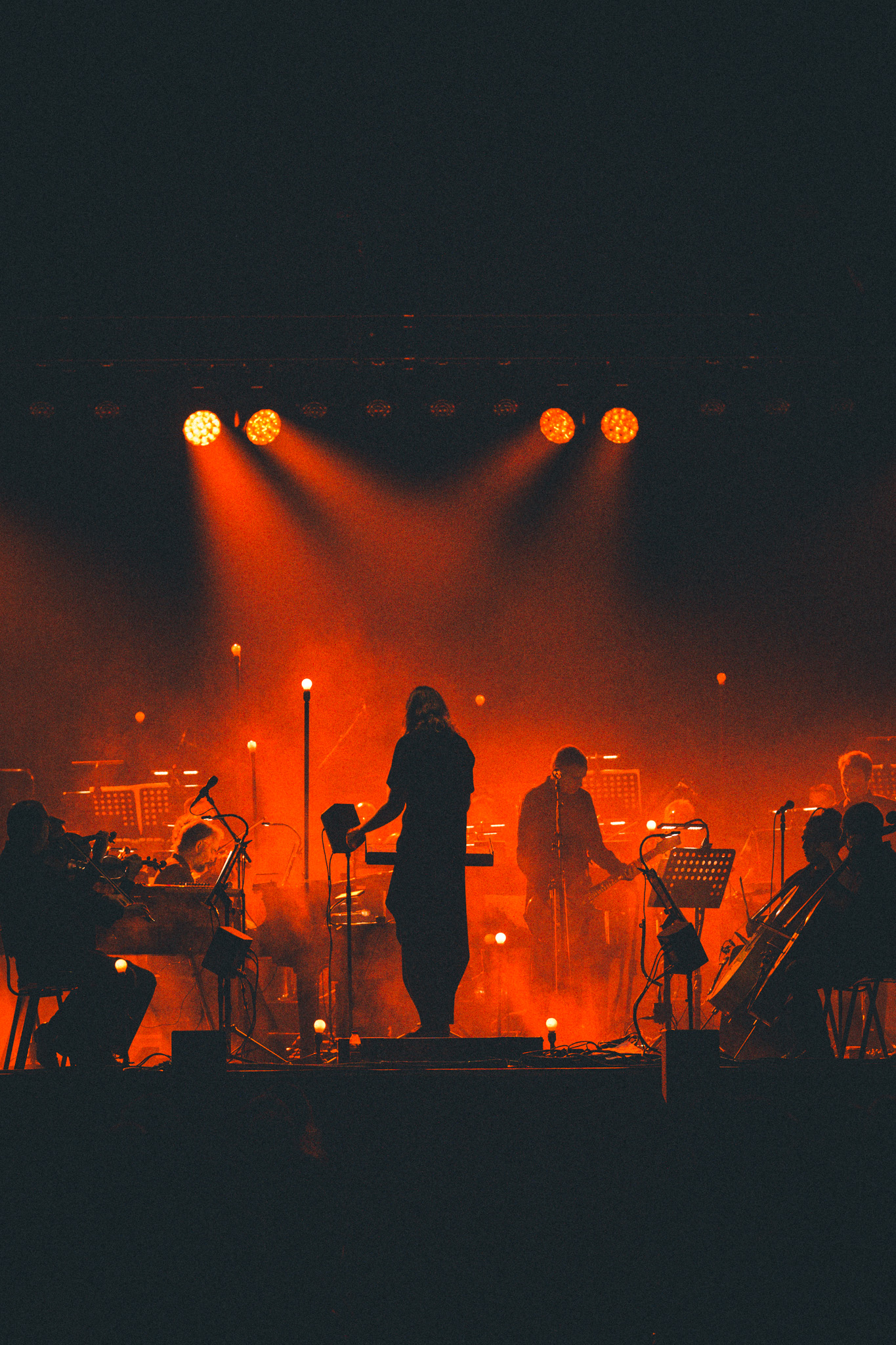
A friend wisely advised me to pack extra tissues for Sigur Rós’ concert – a warning I foolishly brushed off as dramatic. Yet, as the concert began at 9:15pm inside a completely packed venue, the sweeping strings of Blóðberg took hold, and tears were already streaming down my face before the opening piece even finished.
For over three decades since forming in Reykjavík in 1994, the Icelandic post-rock icons – celebrated for Jónsi’s signature bowed guitar, soaring falsetto, and otherworldly lyrics in Icelandic and Vonlenska – have built a legacy on ambient, cinematic grandeur.
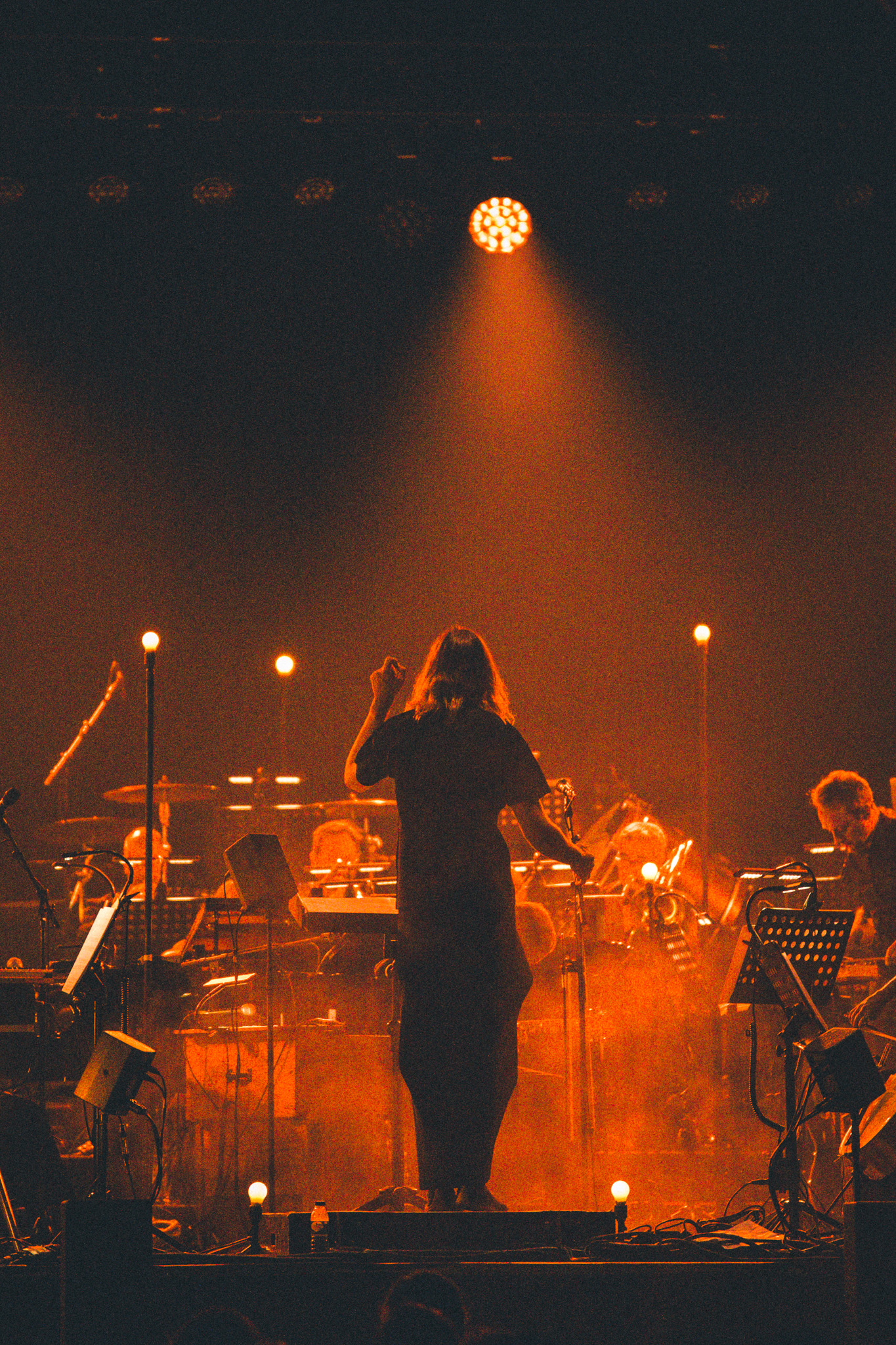
Hearing that catalog backed by the Orquestra Sinfonietta de Lisboa felt like the ultimate realization of their vision. Every added layer of instrumentation continuously elevated Sigur Rós’ already stunning compositions into soaring symphonic experiences across two profoundly emotional sets.The first set unfolded with remarkable intimate power.
By the fourth song, 8, the mood grew intensely emotional as bright, radiant lights flooded the arena, perfectly mirroring the sheer brilliance and clarity of Jónsi’s voice. Von followed as one of the night’s emotional peaks, drawing passionate applause, but it was with the seventh piece, Starálfur that the texture dramatically transformed.
The instantly recognizable opening notes sparked immediate warmth across the crowd, and as percussion finally entered the soundscape, it injected a rhythmic surge that had the audience bursting with enthusiasm.
Set I came to an exquisite close around 10:05pm with Varðeldur, featuring a mesmerizing moment where a lyric soloist joined the orchestra, leaving the room spellbound.The emotional intensity only deepened in Set II, which opened to massive enthusiasm with Untitled #1 – Vaka. The band and the orchestra seamlessly balanced delicate instrumental moments – such as the beloved Ylur and the orchestra-focused Sé lest with explosive grandeur.
The undisputed climax arrived during Ára bátur, where the exquisite voices of the Coro Ricercare joined the stage to elevate the music to celestial heights. The choir’s participation brought a staggering, resonant depth to the performance, commanding the most thunderous reaction of the entire night.
That triumphant energy carried seamlessly into Hoppípolla, with choir, orchestra, and band harmonizing in pure euphoria. By the time the quiet echoes of Avalon faded out, the room erupted into a standing ovation that lasted for long, uninterrupted minutes. A fitting tribute to a night of overwhelming catharsis.
Stepping out into the Lisbon night with tear-stained cheeks, I realized we hadn’t just attended a concert, but shared in a rare moment of pure, collective grace.
words: António Carvalho (edited by Raquel Pinheiro) photos: Ricardo Silva
It was before a nearly full audience that the New Yorkers YHWH Nailgun returned to northern Portugal, after their debut at the Mucho Flow festival last November. Despite being dubbed by an American publication as “the last good band left in New York” (an exaggerated title, in my opinion), it’s clear from the first minute that there’s a spark of originality in their sound.
It’s difficult to define, but it seems easy to categorize it somewhere between post-punk and noise, a wide field in which some no wave bands from their city moved in the eighties. Their music is strongly anchored in Sam Pickard’s drumming, with its fast, elaborate and highly percussive rhythms (the use of rototoms helps immensely), inviting bodies to move.
Zack Borzone’s guttural voice and stage presence are other key elements, although the words he utters are difficult to understand. The sound of Saguiv Rosenstock’s highly processed guitar, achieved with a huge array of distortion pedals, is angular and dissonant, functioning almost like a second voice.
Dissonance is also present in Jack Tobias’ synthesizers, in a tone that is sometimes urgent, sometimes serene. The combination of these elements, meticulously interpreted, ever present and full of shifts and small explosions, results in something that confirms the cliché “first you find it strange, then it becomes ingrained.”
They began by playing their second album, released weeks ago, which curiously is only 11 minutes long and has 10 tracks, all around the minute mark. I even think they played it in its entirety, just like the tracks from their debut album that came after, released last year.
Zach immerses himself in his lyrics, as if exorcising inner demons, which contrasts with his angelic and contemplative pose between songs, looking at the faces in the audience. In less than an hour, they left people wanting more, as if they could deliver it and we could process it.
They have a somewhat mysterious and haunting appeal (perhaps that’s why the legendary 4AD recently signed them) and are the result of a successful experiment, such is the unique and cohesive outcome.
They’re not a band for the masses, but there will certainly be a vast minority who will want to get to know them and exchange strangeness for familiarity.
words: Paulo Carmona (edited by Raquel Pinheiro) photos: Daniela Tedim
Ladies & Gentlemen — welcome to the celebration of sound.
I cannot remember attending a concert at the Porto Coliseum, and there have surely been well over fifty by now,with such outstanding sound. And this is precisely where I want to begin. Credit must be given to the entire team of musicians and technicians who allow us to experience music in its purest and most beautiful state.
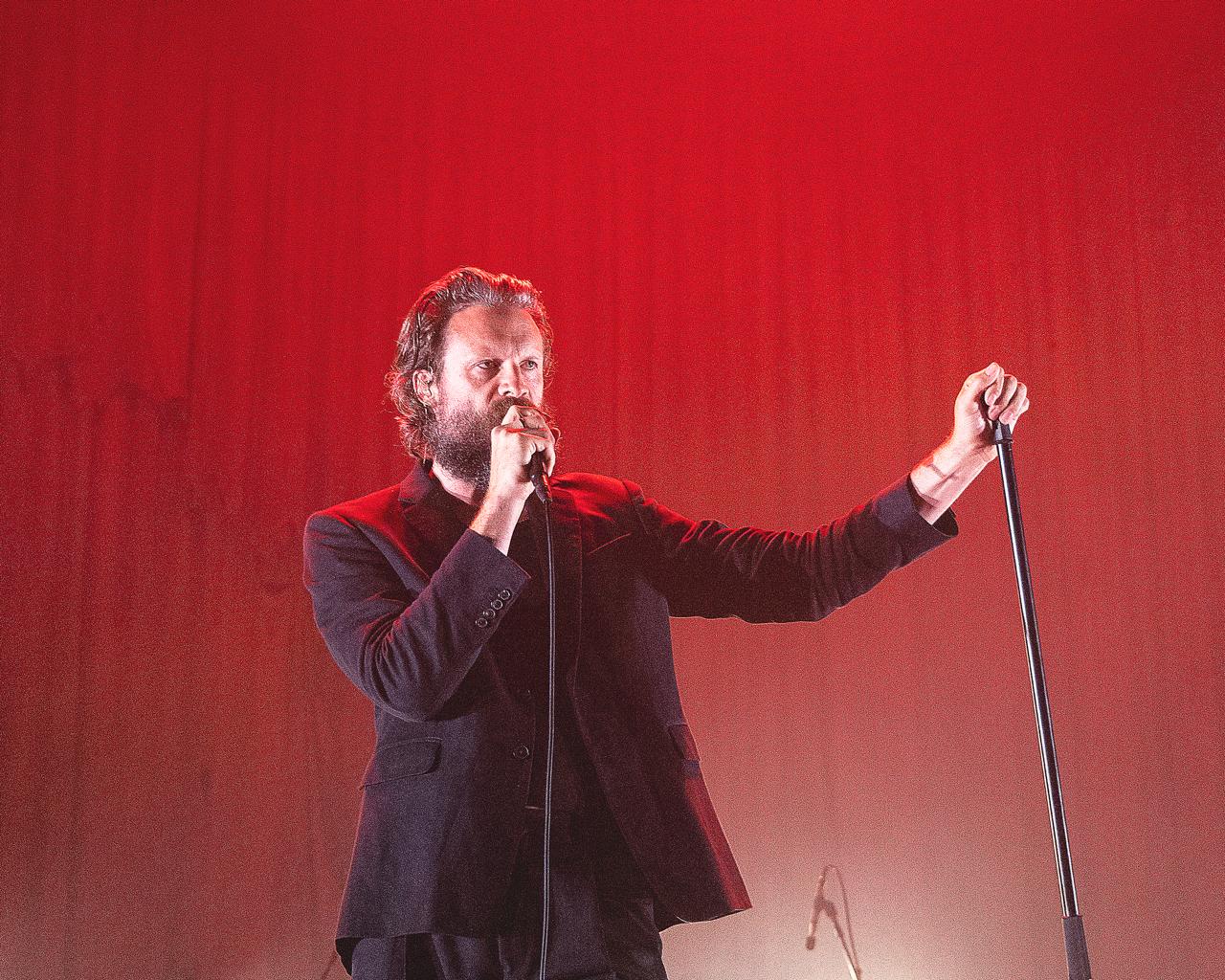
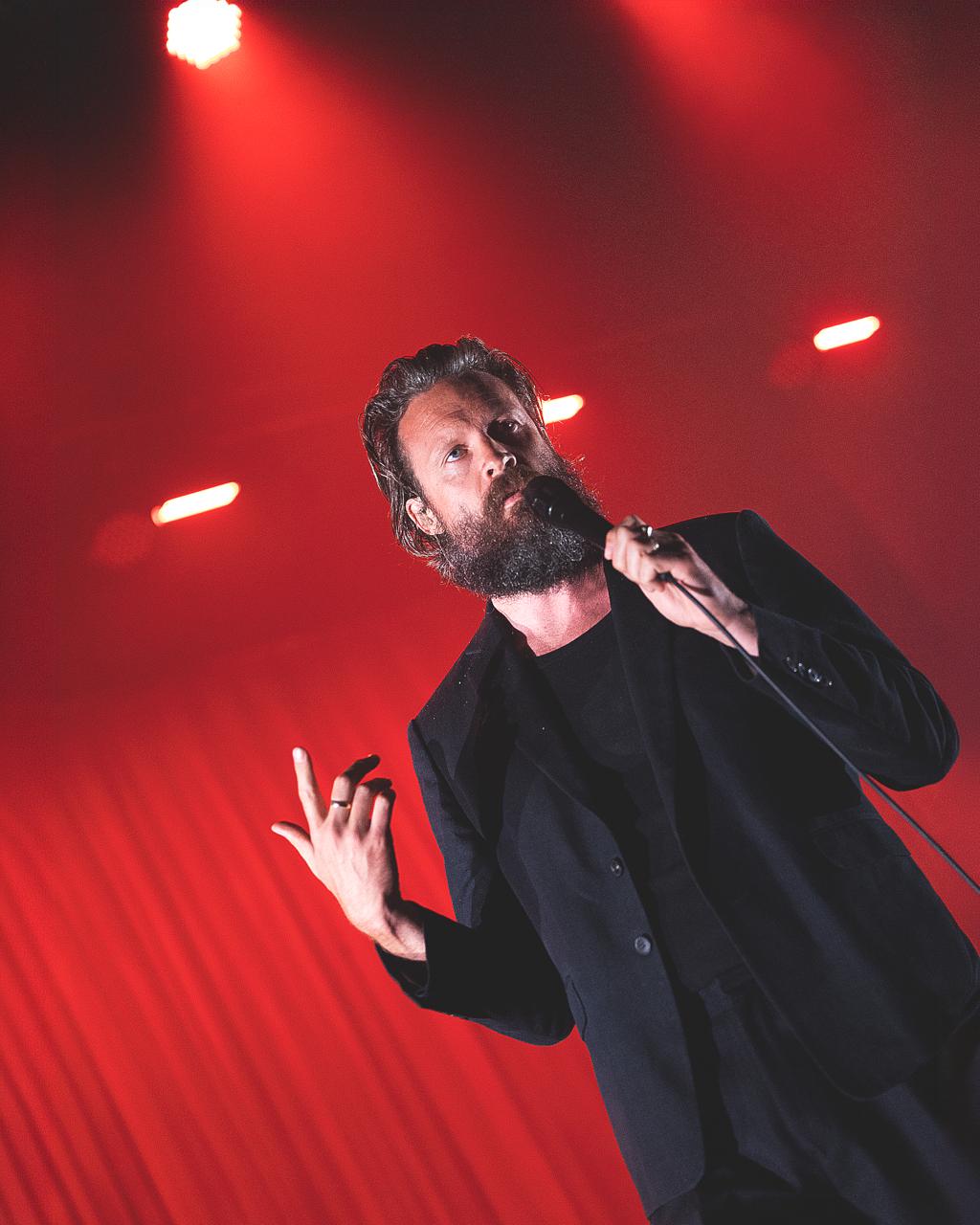
Father John Misty appeared on stage in all his musical splendour, surrounded by musicians capable of performing at the very highest level of what I consider quality music.
What happened there was magic. It was moving, overwhelming, and capable of making the hairs stand up on the head of even a centenarian with no hair left to stand. Everything in that music was perceptible, everything was tangible, everything was everything.
A consummate performer, possessing the natural poise of his essence as a cult artist, he wandered across the stage like a siren whose song captivates the audience with a visceral diplomat’s passport.
With a set built around 21 songs from his already long career, which from the very first second sent the audience, who almost completely filled the Coliseum, into raptures, there was no shortage of favourites such as Mr Tillman, Chateau, Buddy’s Rendezvous, Mental Health, the joyfulness of Novel contrasting with the nostalgic introspection of Magic Mountain and the agonised, warlike energy of Payoff in flashes of rhythmic poetry. She Cleans Up, of course, and finally the magnificent Mahashmashana.
That scarlet red backdrop, the deep blue tones and the lighting did the rest, and everything was simply… just perfect!
words: Paulo Carmona (freely translated by Raquel Pinheiro) photos: Vítor Neves
Novos Românticos
A punch to the gut of the patriots. That’s what it is.
Any self-respecting lusitano, with a clear sense of their country’s history, recent or otherwise, will feel the almost unbearable weight of the stark, unvarnished reality served up by Novos Românticos. The silver platter is the sound, let that be clear.
This isn’t just music, it isn’t just musical aesthetics. It’s intervention, it’s agony, it’s the near-psychotic despair of someone who feels the weight of Portugalidade. Someone disillusioned with an Abril that seems ever more distant, with fewer and fewer reasons for pride.
David Félix is the man on duty, presenting himself to the audience as a kind of modern-day guru, fully prepared to press on the wound until it bleeds.
He carries an intrinsic ability to command attention: monochord vocal delivery, the sinuous movement of his body to the measured pulse of an electronic post-punk, hypnotic, corrosive, built on pre-recorded loops of guitar, drums, bass, keyboards, and samplers. He drifts across the stage, almost unsteady, faintly lascivious, but the message lands. That seems to be what drives them, and they achieve it with precision.
They performed material from across their repertoire, with a strong focus on their full-length work, Criptopátria. Worth highlighting are Pátria, Mesa Posta, and a very original version of the iconic Joy Division’s Love Will Tear Us Apart.
Bastonada @ Mondo Bizarre Magazine/Vítor Neves
Bastonada
Bastonada closed the night, delivering verbal and musical blows with their interventionist Electro Punk, edged with rap. It’s pure energy from beginning to end, without a moment’s respite.
They’re young, intense, sharp, and they fire off their songs as if the world were ending tomorrow.
The instruments are always front and centre, and their masked vocalist is a force of nature.
The insolent anger of their youth, combined with the level of competence in their instrumentation, points to a project with real substance and a great deal still to give. It will be interesting to watch.
Concert clips and photo galleries on our Instagram
words: Paulo Carmona (translated and edited by Raquel Pinheiro) photos: Daniela Tendim
Suede are like a top-quality Port. Once “vintage”, forever vintage. The years pass and the quality improves unequivocally. They never disappoint, never waver, never compromise. Whenever they step onto a stage they are completely focused, always ready to give their best, and their best is of a very high standard.
As it was at Super Bock Arena, in Porto, where they came to present their latest album – Antidepressants – to their newest friends and to those who have followed them for years. A quick glance around the room was enough to realise that Suede captivate every generation.
If Simon Gilbert and Mat Osman are the band’s unquestionable maestros, thanks to their experience and talent, cohesive and brilliant in their rhythmic execution, then Richard Oakes and Neil Codling provide the stylised melodies that shape and define the Suede sound.
As for Brett Anderson – the lead singer – he ought to be the subject of a scientific study. A remarkable performer, an absolute stage monster. He seems to run on batteries that never run out, radiating an emotional energy capable of stirring a bear in the depths of hibernation. I would say he is a teenager recycled at supersonic speed. The audience adores him, every gesture, every mannerism, every swing of his body.
From the setlist chosen for this show, it must be said that they swept across their vast repertoire, with particular emphasis on songs from the latest album — very well received by the audience, it should be noted — but also including the epic and iconic songs of old, songs that belong to all times. I would highlight Trash, Can’t Get Enough and Everything Will Flow, which drove the crowd into complete delirium, and, of course, The Beautiful Ones, which figuratively brought the whole arena down.
Brett did not confine himself to the pit and ventured straight into the middle of the crowd. Amid shouts, tears, applause, hugs and kisses, he somehow managed to slip back onto the stage to close the concert in total apotheosis.
Grab your glasses, and yell from the bottom of your lungs! Cheers, Suede!
The Band: Brett Anderson – lead vocals Mat Osman – bass Simon Gilbert – drums Richard Oakes – guitar Neil Codling – guitar, keyboards, backing vocals.
Setlist: Disintegrate Antidepressants Trash Animal Nitrate We Are the Pigs Personality Disorder Sabotage New Generation Filmstar Can’t Get Enough June Rain She Still Leads Me On Shadow Self Trance State The Wild Ones (acoustic Brett Anderson & Richard Oakes) Everything Will Flow So Young Metal Mickey Beautiful Ones Dancing with the Europeans
words: Marcos Leal (edited by Raquel Pinheiro) photos: Telma Mota
Primitive Reason’s concert a week ago at Hard Club was far more than a return to the stage, it was a statement of vitality.
The band celebrated the 30th anniversary of Alternative Prison, an album that shaped the Portuguese alternative scene and continues to resonate powerfully across generations. In addition to the songs from the celebrated album, the setlist included other classic songs, and even a previously unheard live one: Sancaro (The Death of the Gaupameis).
The classic lineup – Brian Jackson, Guillermo de Llera,Jorge Felizardo, Mark Cain, and Abel Beja – reunited once again. From the very first minute, the chemistry felt intact, the presence was powerful, and the energy was contagious, making Hard Club pulse with excitement, especially among those who had lived Alternative Prison in the prime of their youth, now in their fifties and parents themselves.
The band’s signature fusion – rap, punk, hardcore, reggae, and ska – proved it still works and still spreads its infectious energy. The audience, made up of longtime fans and newcomers alike, responded with intensity, creating the kind of atmosphere Primitive Reason have always cultivated: participatory, loud, and emotional.
I watched with a smile as that generation jumped and moshed as if they had stepped back in time, despite the intense heat inside the packed Hard Club Room 1. Sweat and nostalgia were everywhere.
All the members of the band showed musical cohesion and a strong sense of unity, clearly surprised and energized by the audience’s displays of devotion. Drummer Jorge Felizardo even joined the crowd for a mosh. Not even the small technical issues at the start – particularly with Brian Jackson’s vocals – disrupted the performance.
The concert was part of a larger celebration that also featured bands like Bad Tomato and Hetta. These choices reinforced the dialogue between generations and the lasting influence of Primitive Reason on Portuguese alternative music.
A memorable concert, filled with history, energy, and identity. Primitive Reason proved they remain relevant, intense, and capable of setting a room on fire like few portuguese bands can.
For those who grew up with Alternative Prison, it was a journey back in time; for those discovering them now, a revelation.
The band ended both performances revitalized and with a clear desire to return to the stage soon.
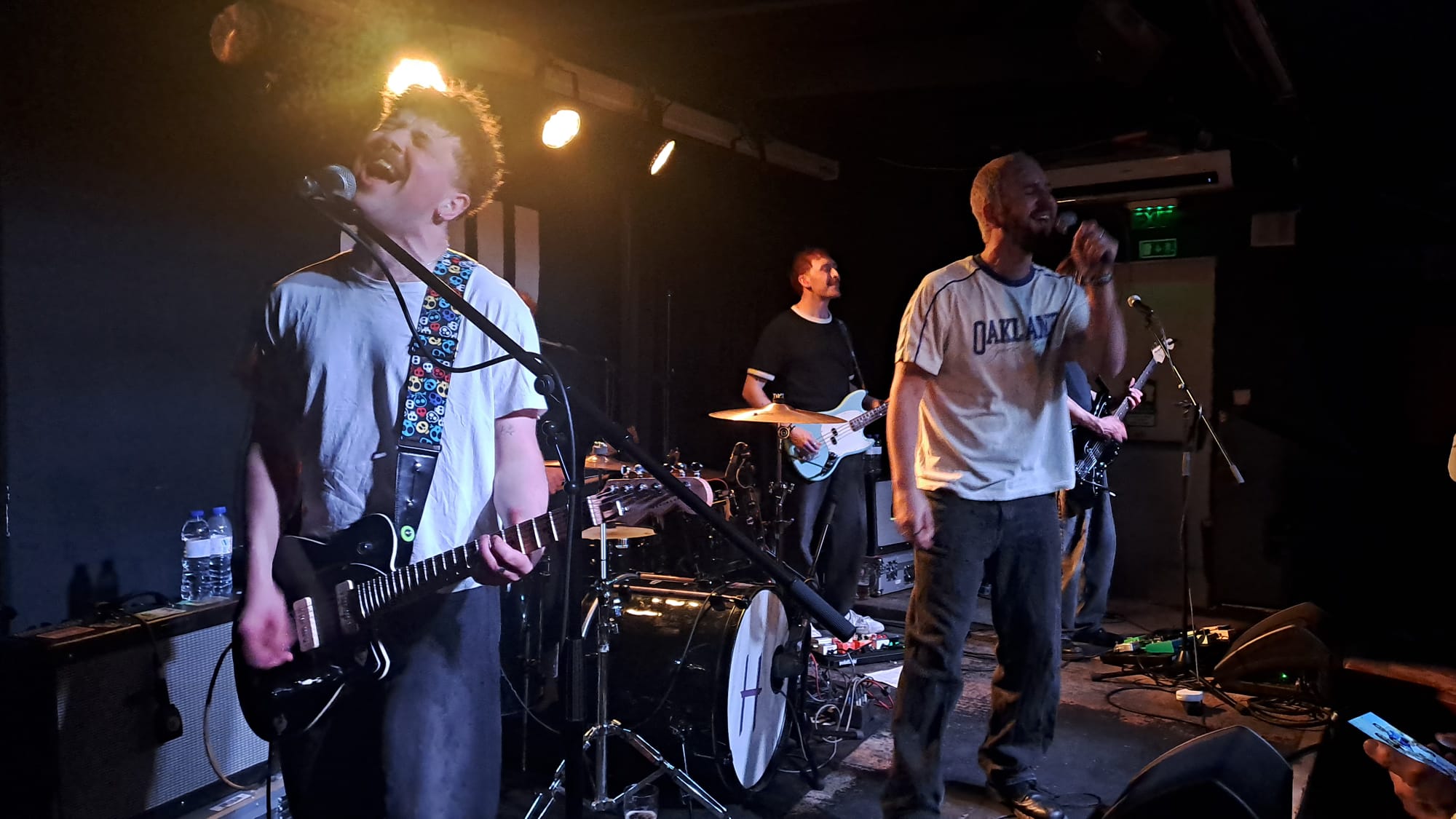
words: Paulo Carmona (freely translated by Raquel Pinheiro) photos: Paulo Carmona
For those who, like myself, enjoy live music, I have this question: Is there anything more pleasurable than going to see a concert by a band you know little or almost nothing about and being surprised by a bomb of energy, good vibes, interaction, commitment, and high-quality musical competence? I guess not!
The Scots Humour are what you call: A hell of a band!
They come on stage with the nonchalance of a bunch of kids and leave it with the mojo of first-rate rockers who have accomplished their mission with distinction.
The room was far from full, perhaps half capacity. Fortunate were those who left their homes on a Thursday night and headed to Maus Hábitos in Porto to welcome them.
Humour’s post-punk is contagious and electrifying. Powerful guitars, a well-marked and sustained bass, cohesive and distinctive drums, and a delirious voice. And up to this point, everything is within what one might expect from a band operating in this field.
The difference lies in the composition, the dynamics, the truth of the lyrics and the performance. Everything very well achieved and finely honed.
The agony of the riffs in the verses gives way to warm, soothing melodies in the choruses, in a kind of emotional roller coaster. This can be heard in almost every song, from Neighbours, with which they opened, through Memorial and Dirty Bread, to Plagiarist, with which they closed the concert.
The name of this band could not be more fitting. The band’s kindness and friendliness win over the audience.
In conversation with the band’s good-humoured frontman – Andreas Christodoulidis – I asked him what drives them in this world of songs. His answer was unequivocal: “We want to give the audience good songs, full of energy, good lyrics, and with that get some good feelings going. That’s what we’re here for.” If that was their intention, they achieved it even better than they imagined, because that was exactly what I witnessed.