Love, Time and the Art of Making Songs
interview by Raquel Pinheiro; kindly transcribed by Daniela Pinto
Norwegian singer-songwriter Sondre Lerche returns to Portugal in November for three intimate solo concerts in Lisboa (12), Aveiro (13) and Arcos de Valdevez (14), with support act by Francisco Fontes, marking the beginning of an extensive tour across the United States and Europe. With just his voice, guitar and stories drawn from more than two decades of music-making, the performances will offer a different perspective on songs from Acrobats and his wider catalogue.
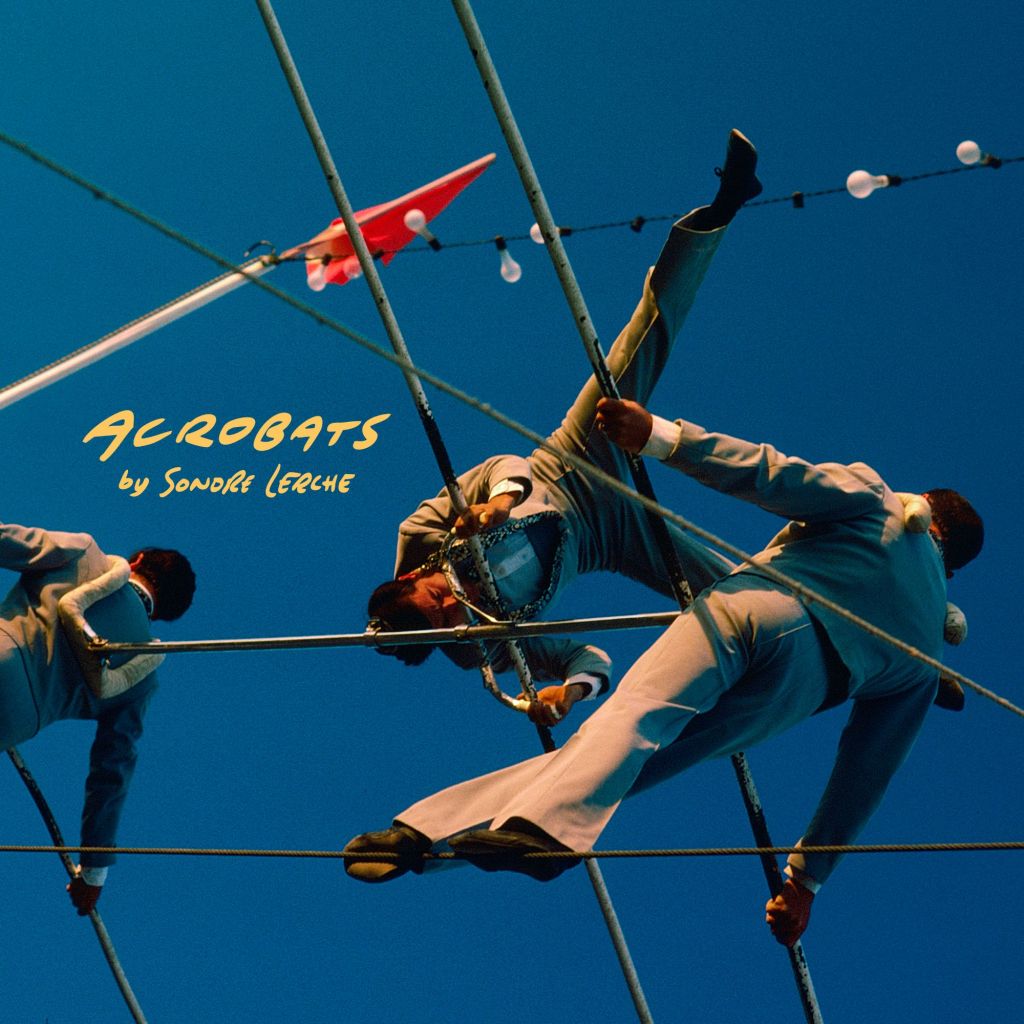
Released in August, Acrobats is an eight-songs album that moves between tenderness, expansive musical arrangements and moments of considerable emotional intensity. Love is its recurring presence, but not one removed from the world around it. Against a backdrop of violence, uncertainty and human suffering, Lerche finds personal happiness and intimacy to be meaningful acts of defiance.
In this conversation, we talk about the gradual discovery of an album’s identity, the challenges of finishing a song, the value of collaboration, the influence of film and theatre, and the perspective that time brings to songwriting. We also explore what happens when a song returns to its simplest form: one voice, one guitar and an audience.
You’ve described Acrobats as a declaration of love against cynicism. Love seems to be a constant presence throughout the album, even though the songs approach it in different ways. Was this something you consciously set out to explore, or did you recognise it as a common thread as the songs came together?
When I started recording, or when I started writing this album, I didn’t know what the central theme was going to be. I don’t think I ever do. So you just start writing. And maybe you have one or two sketches already left over from something else, and then that gives you a little bit of a feeling.
I do make a playlist of music that I’m interested in, that I feel I gravitate towards. And I send that to my musicians and my producers so that they can tune in to what I’m into and what I think is relevant to this work that we’re going to do. But very, very rarely does it end up being like that.
And so, any ideas I might have of what I want to do, very often you end up doing something different. It’s only towards the end of the recording, when I’m mixing the album, that I start seeing the big picture. For Acrobats, I recorded as many songs as you find on the record, so it’s only then I start seeing: what could the album be? What is the theme that ties these songs together? And what songs do I want on this record?
No, this theme I didn’t know. It just happens very gradually, and you start seeing a theme.
You’ve spoken about the apparent contradiction between the increasingly dystopian world around us and the beauty and peace we can find in our private lives. You even describe falling in love as an act of resistance. How do you make room for both realities in your songwriting without allowing one to overshadow the other?
It’s a feeling. All of this is a feeling, it’s instinct and feeling. So, with Acrobats, I found that when I tried to write political songs, I couldn’t do it. But when I tried to write love songs, the world sort of came creeping in, you know?
I found that the world was looming in the background, the ugliness of the world, the times that we live in: the war in Ukraine, the genocide in Gaza, all these crimes, really. We call them wars, but they’re crimes against humanity. And all of them are now so documented, you know, they’re live-streamed. The worst things that I’ve ever seen done to humans, I’ve seen on Instagram in the last four years.
And I wish I didn’t see it, but that violence is sort of the backdrop of this album, which is mainly an album about love and desire and hope and very pure things. But that is my happiness and my personal joy.
And that’s, I think, what I mainly wanted to write about. But when I wrote about that, sometimes the ugliness of the world would creep in. And I allowed it to happen because, if that’s where the song wanted to go, sometimes, you know. And then you have ridiculously happy songs like Follow The River, where there’s nothing bad in the world, you know. But, yeah, it just felt natural and it felt good.
I felt I was able to combine personal joy, which becomes an act of defiance when you see how terrible the world is for so many innocent people.
Acrobats moves between moments of great tenderness and passages that feel almost overwhelming in their grandeur, sometimes within the same song. Yet even at its most dramatic, the music retains a certain simplicity. How do you find that balance between intimacy and scale when you’re writing and arranging a song?
It’s just feeling and instinct. When I write the songs, I write them alone. I sit alone, and I sort of arrange them in my head, just the way I play them on my acoustic guitar. Then I play the song in the studio for the musicians or the producers, and we arrange things together.
We try out things and I ask for offers, you know, ideas. People can make suggestions. And I’m finding the right balance all the way until we’re done mixing the record. A lot of the arrangements are finished in the mixing, because that’s where I will start muting things. “No, take that out there, but bring it back here.”
So the arranging and the balancing of the record happens until the very end. And then it’s just a feeling. I’m looking for the feeling of balance in my universe. This is the only universe I can control.
And also, sometimes I’ll be rewriting lyrics in the studio when I’m doing the vocals. I will get a feeling of, “Ah, that line is not, it doesn’t sing right, it doesn’t feel right, it doesn’t sit right.” And so I’ll rearrange the lyrics. Sometimes, when we’re mixing, I will have rewritten some of the lyrics and then record it at the very end, that line, just that line, or that word.
It’s’s happening all the time, and that’s all about finding the balance, to where it needs to be. And so it happens the whole time through and until, boom, okay, let’s – this is as good as I can get it now. It’s just, you go crazy.
You wrote about the long struggle to finish Little Kids, including the moment when a line you’d written earlier suddenly opened up a way forward. How do you know when to keep pushing a song, when to leave it alone, and when it has finally become what it needs to be?
Some songs keep you guessing. And maybe with some songs, you want them to be finished. So you kind of insist that this is OK. “This is it. This is it. Good. It’s done. It’s great.”
But over the years, I’ve become better at understanding when I’m bullshitting myself, when I’m trying to let myself off the hook. And Little Kids was the perfect example, where I just thought, no, this is not good enough. This chorus, this melody is too good to let anything else not match that level. And it was especially the lyrics and the verses that were problematic. So I ended up rewriting all the lyrics in the verses, and also the melody.
I don’t know, I just had such high hopes for it. But it’s tricky because once a song is very difficult, like Little Kids, it becomes a problem child. And the more you try and fail, the more you are kind of ruining the chances for the song to be fulfilled. So I was surprised that Little Kids survived, but I rose to the challenge and I did it.
And I think it’s one of the best songs I’ve ever done. I think it’s probably the best song I’ve heard this year, if I’m being honest. I haven’t heard anyone write a song better than Little Kids this year. But of course, I wrote it, so my view is completely crazy. But I think it’s a very good song. I shouldn’t say this loud. But now I do.
And to add to question number four: when to leave it alone. This is very important also.
Because it’s very important that you make the song as good as it can get. But, there’s an art to knowing when to leave it alone, and that’s kind of what I’m trying to master. I think I’m pretty good at leaving a song alone in the studio. I kind of know when I have to back off and be like, “Oh, this is good. This is good enough.”
In songwriting, it’s trickier. In songwriting, it can be tricky. But, it’s just a feeling. You’re looking for that, “Ah, yes, boom.” And then you just got to see the next day if it sticks, you know, if you still feel that way. And then usually it’s good. It’s done.
The eight songs on Acrobats occupy quite different musical spaces, from the delicacy of Love Is All to the nine-minute Follow The River. When you bring a collection of songs together, what makes you recognise that they belong on the same album? Is that identity something you can hear from the beginning, or does it emerge gradually?
What makes you recognise that they belong on the same album? Great question. Is that identity something you can hear from the beginning? No. This emerges gradually. This emerges gradually.
That’s why I record. I write more than I record, and I record more than I need. And then whatever is left will probably overlap with my next project. I don’t hear that identity from the beginning. And sometimes I think I do. And then two years later, when I’m putting the album together for real, the song I thought was the most important song leading towards the new album is not even going to be on the album.
So this has happened many times. I sort of let go of this notion that I know. It changes. And then, with time, it’s usually more about lyrics, themes, what stories belong together.
And with Acrobats, there were two, maybe three songs that maybe would go on this album or the next. One of them was a song called Absolute Love, which didn’t in the end make the album. And then another one was a song called I Was Born Last Night. And then, in the end, I realised when we were mixing that the song “In The Time Before I Knew Her Well” — that’s the song that needs to be on this album.
And then there was Life-Changing Love. That was not supposed to be on Acrobats. I thought it was finished, but I didn’t think it was going to be on the album. I thought it would be on the next album. And then my girlfriend, my fiancée, Hilda – she’s heard Life-Changing Love, and she doesn’t get too involved, you know. She knows I do what I want when I put together the record. But she heard that song and she said, “Son, that song has to be, that’s urgent. That song has to be on this album.”
And her reaction was so strong, so I put that on. And that meant that a song I was working on called Love Will Not Ask For Your Permission was left off the album also.
But hopefully they will have a rich life later.
Acrobats brings together several long-time collaborators, different producers, orchestral musicians and players from other musical backgrounds. How do you decide which parts of a song should remain entirely yours and which might become more interesting when another musician takes them somewhere you hadn’t imagined? Has collaboration ever changed your understanding of a song you thought you already knew?
You know, when I’m in the studio in the beginning with the musicians, my band, we know each other so well. So, with the core group, I’m just looking for any suggestions, any ideas people might have when we’re doing it. We set the tempo, this is the structure, and then I may play something and say, “Well, this sound here on this record, I like the sound of this instrument.” And then people go… I’m just collecting ideas, really, for when we’re arranging it together.
And the producer also has so much to offer. So we’re all doing it. But then, once we have the basics and we have the colour of the song, that’s when I might send it to someone who is not in the studio, to a guest musician or to an arranger, you know, to Sean O’Hagan, who’s done string arrangements for me since Faces Down. Someone who’s not in the studio – I’ll send it to them and say, “Hey dude, can you bring your colours, basically?”
And then, when we’re mixing, I can edit the offerings, because sometimes people give you very generous gifts. It’s too much, but that’s great because I can pick out what I need.
Collaborations like that can change your understanding of the song. It can bring something out of the song that surprises you, you know.
Sean’s string arrangement on Little Kids is just perfection. I think we used absolutely everything he did. Usually, he’s a very generous arranger, and usually there’s some stuff we leave out for dynamics, but I think we kept everything. It was just so complete, so beautiful. And it elevated the song.
I want to say also the harmonies on How Much Of This Was Planned. Marianna , a friend of mine, I asked her to follow me, you know, shadow me through the song vocally, but never repeat herself. Always change. And she sent me what you hear on the record back. And I think it’s just incredible. It elevates the song completely, and it becomes also a symbol of the lyric, you know. So that’s great. Thank you, Marianna.
Your experience playing Christian in Moulin Rouge! The Musical brought you into a different kind of vocal performance. Did that experience change your relationship with your own voice in the studio? And when you’re writing a song such as “Drive Me Away From You”, how do you approach the balance between the voice as a storyteller and the voice as an instrument?
I think one thing I brought into this record was just having expanded my voice, my capacity as a singer, which I did in Moulin Rouge. I had to. In the musical, there’s no room for subtlety, so you have to be really strong. Even when the character you play is weak, the projection has to be very clear, very unambiguous.
And that is something that I think you could say about Acrobats. It’s very clear. It’s very strong. Primary colours, and also the performances, my singing and the songs. So, yeah, I think vocally I changed from doing Moulin Rouge, and I wanted to use that in these songs.
Drive Me Away From You is a good example because I used this new range. I could sing higher and stronger. And I used that when I wrote that song, thinking, well, okay, how high can I go? “Drive me!” You know, with power.
I wrote that song to sort of explore this new voice. So that’s cool. That was fun. Then now, of course, I have to do it on stage. It’s tricky.
There’s a certain continuity between the romanticism of your debut, Faces Down, and the love songs on Acrobats, even though the person writing them has changed considerably. When you revisit the romanticism of your younger self, do you still recognise yourself in those songs? And what can you write about love now that you couldn’t have written at twenty?
Absolutely. Acrobats feels like a full circle. It feels like returning to my core. And that’s not to say I have been away from it, but it has been developing.
I’ve been stretching, and I’ve had love and I’ve had disappointment and I’ve had confusion and I’ve had sorrow and desire, you know, all these things. And it has changed how I write and how I think. The thought process in my life is what informs the songs.
And now that I’ve landed in this love, this new life that I have in Oslo with Hilda, I think it’s like returning to the core that I had as a teenager when I wrote Faces Down, when I fantasised about how life could be. “Oh, what a world this life could be.” Obviously life is different from how you fantasise about it, but there’s a core inside of me that is constant, I think, even with all these new experiences.
And that is something that I think comes through on Acrobats. The romantic core is, in a way, fulfilled or victorious on this album.
And what can you write about love now that you couldn’t have written at twenty? That’s the thing. Even when I write a song like Little Kids, which is about experiences I had when I was 16 and 17 and 18 and 21 and 22, I couldn’t, for some reason, write about those experiences then. Not in the way I could now.
Because you need distance. You need to understand. You need to see it clearly from a distance. And that is, you know, you need time and distance. And then suddenly you see the bigger themes and the bigger picture of your own life.
You’re too confused, not just because of age, but just because you’re too close to what’s going on. So you write other things. You write in effect, sort of. Which is truthful also, but it doesn’t necessarily have great perspective. It just is responding in the moment.
The great thing about time and space is that you can understand yourself better. You understand your partner better. Why this happened, why it had to be this way. And so you can be much more empathetic and graceful in your understanding of everything.
And that’s, you know, a song like Little Kids is all about that. Having empathy for yourself and for your partner. No matter who did what and what transpired.
And I think that’s a beautiful thing about growing older.
Your music brings together influences and ideas that don’t necessarily belong to one genre or tradition. Beyond music itself, are there books, films, visual art or other experiences that have recently changed the way you see the world or approach your work? Is there an influence you’ve carried for years that you still haven’t found a way to use?
Oh, constantly. And I rely on this. I seek it out. In music, in films particularly. Music and film. I wish I read more books, but I have a bunch of books that I should read. Visual art, definitely.
It takes time for all these influences to become active, in a way, in your work. It took me many, many years for ambient and abstract music to become active in my work. I listened to it for years and years, and I didn’t find an outlet in my work until, you know, probably around the Patience album. Then it started becoming really relevant to my work.
Is there an influence I’ve carried for years that you still haven’t found a way to use? I’m sure there is, but I can’t remember what it is.
Nowadays, I find film to be very helpful. It gives me a lot of room to think when I go to the movies. And I think about music and I think about stories, and I start editing lyrics.
And I think about themes. Films are really great at collecting, you know, embracing themes or, like, yeah, finding clear themes and clear metaphors. So, yeah, film probably more and more in the future.
You’ve spent much of your career moving between different ways of making and performing music, from intimate songwriting to ambitious recordings and theatrical performance. What continues to excite and challenge you about making music after all these years? Is there something you still want to explore that you haven’t quite found your way towards yet?
On one hand, the more you do it, the better you get at it, but the harder it gets, you know, because the standard keeps going up, at least for me. And so your demands are tougher to meet, you know, your own demands that you give yourself. But the better you get at something, the more opportunities I see. I see more possibilities. It doesn’t mean I can reach those ambitions always.
I see more opportunities to make music. There’s more possibility in my view.
And that just makes me excited, and it makes me want to do it because I can see if I just work harder, I can do it. I can see it in a way because I’ve done it before and I know what I’m capable of. But also, well, I know what I have been capable of. And then I know that it’s possible because I’ve done it.
I have thought so many times that there’s no way I can do better than what I did yesterday. And then I’ve done it. And it’s so hard. It makes it harder, but you know it’s possible. And that makes it fun. It’s such a strange thing.
And is there something you still want to explore that you haven’t quite found a way towards yet?
Absolutely. So many things. And there will be more. I keep dreaming about making a song that justifies being 17 minutes. A story song that musically and lyrically would justify being that long.
And the inspiration behind that is classical music, really. And that’s not to say it would be a classical piece. But when you hear Gustav Mahler’s Second Symphony, you know, it’s an hour and 27 minutes. And it just has to be all that. It’s a lot of music, but it has to be.
And it’s like, wow, it’s so incredible to me.
And I work in smaller form, you know, pop songs. And then sometimes I’ll have a lot to say, like on Avatars of Love and some of the longer songs on Acrobats, but it’s only because this is the only way I can say this. And so there’s no point in doing it unless you feel it’s justified.
There are some themes that I feel like, oh, I could really talk about this forever. Maybe, but, we’ll see, we’ll see.
You’re returning to a solo format for this tour, with your voice, guitar and stories from more than two decades of work. What does performing a song in that setting reveal that a fuller arrangement might conceal? And when you play songs from Acrobats alongside older material, do you hear connections between different periods of your life that weren’t so apparent when you originally wrote them?
Great question. You get to the core of it, right? I get to return to the way I wrote the song. I wrote the song on my guitar, sitting here with the guitar in my lap. And I got excited that I could go into the studio and do all these things.
But the song, and this is true the older I get, I am much more thorough in the songwriting when I write songs now alone. So I know the song works. I know it.
It used to be that I went to the studio to find out if the song works. When I go into the studio now, I know that it works. And so that is what I’m able to, sort of, that core, I’m able to share with the audience when I perform solo.
And I love that. And that’s what I started out doing when I was a teenager. I got really good at performing solo. And so I really believe in that, that you can find so much dynamics when you perform solo.
It’s great. I love it. And it’s not, it’s something other than a band concert or an orchestral concert, but I don’t think it’s less valuable. I think it’s just as valuable, and maybe even more, because you are able to reveal something truthful and naked about the song that maybe you conceal in the studio when you arrange it for an orchestra or whatever.
You are able to connect different periods of your life and themes, make them very clear. You know, suddenly an old song will have a new partner in something, in a very naked, stripped-down way. You will see, oh, these two songs are not as different as you might think because they sound different on the record, bu,t they are very similar. And I will show you how when I play it solo.
It’s so joyful. Really, really great. I take great pride in playing these songs solo.
Sondre Lerche – Live in Portugal
Sondre Lerche’s solo tour begins in Portugal, supported by Francisco Fontes, with three performances:
12 November, 21:30(9:30pm): Auditório da Reitoria da UNL – Universidade Nova de Lisboa, Campus de Campolide, Lisbon
13 November, 21:30(9:30pm): Teatro Aveirense, Aveiro
14 November, 22:00(10pm): Casa das Artes, Arcos de Valdevez
The performances will bring Acrobats and songs from across Lerche’s career into an intimate voice-and-guitar setting.